
These poems are published connected to a project supported by the DC Mayor’s Office of Community Affairs. Ruchel Limbos was a participant in Day Eight’s 2026 AAPI reading and craft workshop supported by the grant.
The Anatomy of the Phoenix’s Fruit
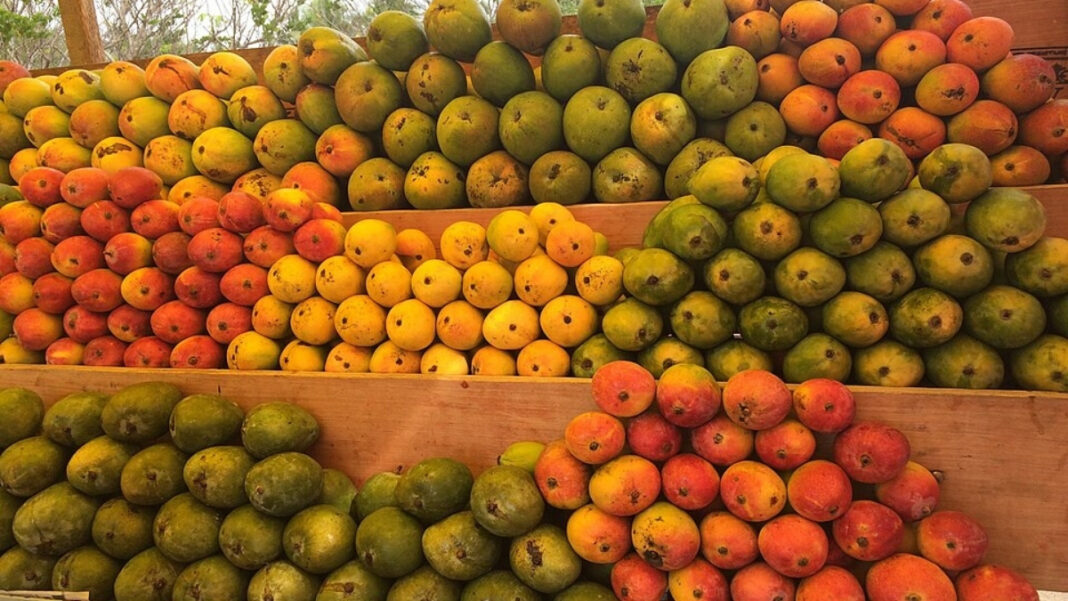
i. The mango’s form is an inversion of anatomy. Its heart and brain merge around what acts as both a spine and a sternum, which do not have the motivation to extend itself into the bars of a rib cage.
The mango has nowhere to fly to, and therefore, it has no need for wings. It is full with the sun’s nectar, and is imbued with the spirit and majesty of a Phoenix.
Forever an egg, it is grown.
As its own womb, it bleeds and sows the ground
once the branch it is anchored to lets go.
Sweetness slowly rots and melts into the soil
for the smaller organisms to gather round
and receive some of the goodness sought by humans for free.
The unwanted rot feeds the overlooked beings
that help our world run on the scale that is closer to the ground
and farther from the direction of the human gaze.
ii. Mangoes are first adorned with the skin of a newborn
smooth, flawless, and unmarred
with the hues of a canvas capturing the sunset
in all its bright flame and gentle blur.
As it is left to weather under time and nature,
it gains its first scars
or perhaps,
additions to healthy birthmarks
then it becomes the leather of aged flesh,
fibers ripe and sweet
and palm lines meet the wrinkled casing of a golden heart.
Sewn together, the scraps create the feathers
of new birds
waiting to fly into the horizon
at dusk.
iii. The concept of growing is just as inherently female as the concept of destruction is inherently practiced by man.
Patience, acceptance of change, and the nature to nurture are all inherently motherly.
Time, the grandfather, is stoic and looks on, but helps her discreetly. He favors the consistent.
To grow and ripen and rot is a cycle dictated by nature
but all fruit can fall at different times
in different ways.
We start by looking up to the sun,
then realize the humanity in appreciating the roots that hold us up
and allow us to reach towards the sky.
Soul Mold
Imposter syndrome takes place in nature-
Nature takes its course in sickness and in health-
‘Til death, they do part.
The parting of halves is not always clean and pretty.
Mottled skin and churning insides,
a mango mangled in the mold pushes itself farther and farther away from the family tree-
to avoid infecting the rest of the fruit- !
The parting of ways, from people and from tradition, are met with much protest.
She begs for the harvest to come before she falls,
the sickly scent of her rotting attracting attention
of her kin and of her kind;
you can never be too kind, but this too, is a curse, she finds in like minds.
It is (in) vain to fain unaffected while trying to attain change.
She wishes to revert to an early budding flower to avoid the heavy, anchoring weight
bringing her closer and closer to the ground
but never closer to peace.
Rotting and prodding, the flesh has never run and ached and burned
Basking in the ecstasy of change and screaming greed
not knowing the right way to ripen, since nature was never meant to be controlled.
The Earth’s face appears still and composed as its molten plates spl|it, s h a t t e r, cl at ter
as they shrink away from the universe
She asks if her neighboring planets suffer from the same cacophony,
while the rest of the solar-child-to-adult-pipeline-system wonder why Sister Earth frets
with her marble exterior and Goldilocks nature.
Like that perfectionism and greed, there must always be a flaw and never an ending
A perfect egg of gold, the soul tries to finalize its shape
in search of something more valuable which she automatically tires of
deemed worthless and thrown into the basement,
will she ever escape the prison without losing the key?
Or by the end of the harvest, will she find that the sun has graced her with a Phoenix’s cocoon,
from which she shall burst forth?
And the beginnings of a wildfire,
Waiting for her to visit her wildflowers of passion with her new set of wings,
as they finally bloom?
Felled Trees
Words on the page scatter, first in lines then clumps then every one for their self
to be saved from the impending crash
as the writer’s head falls onto their work.
Letters turn into legs and ants emerge from what could have been woodwork,
had we not felled trees and skinned layers of their flesh
like cold sashimi on ice.
An invisible executioner stood by
and with the release of tension in muscles behind calloused skin,
a guillotine’s blade came down
fencing said writer off from reality.
Ears now hollow from isolation, from the human voices they wish to imitate interpret and translate,
are now exits for the insects searching for somewhere to go.
Lacking torches and guided only by their clicking,
each body makes its way into channels carved long ago
by the war between nurture and nature;
trenches etched with hieroglyphs connecting one passage to another,
firing meaning into each cell
to puppeteer the body the ants are now making their Tree of Life.
In the brain they build their new nest,
using all the material already there
to cement what the narrator attempted to capture,
but could never orate:
guilt, regret, and memories rewritten over and over
to the point that the original is no longer intact
now eating away at the what-could-have-beens and the should-haves and have-nots
that left this poor writer turned bystander
to rot.

Ruchel Limbos is a poet and emerging writer who uses her voice and Filipina roots to grow stories in the soil of fantasy, mythology, historical, speculative, and realistic fiction, and poetry. Ruchel has been and will be writing for her entire lifetime. She experiments with introspective and poetic storytelling to carve out the multiplicity of truth in her oeuvre. Her work has been published in 1455 Books Young Poets Anthology, AmLit literary magazine, and Maryland Voices (volume XIII.)