
This poem is part of the special section, New Poems of U.S. History, reflecting on the 250th anniversary of the Declaration of Independence selected by editors Carolivia Herron, Summer Tate, and Robert Bettmann. You can read more about the section on the Day Eight website here.
“If Phillis Wheatley stood for anything, it was the creed that culture was, could be, the equal possession of all humanity. It was a lesson she was swift to teach, and that we have been slow to learn. But the learning has begun.” – Professor Henry Louis Gates, Jr.
At seven you were captured and enslaved
sent half a world away from all you knew
to Boston, where a wealthy merchant’s wife
acquired you cheaply, wanting household help
She named you for the ship that sealed your fate
thus forced the memory of its dark role
it took you where you never chose to go
and left you to endure and overcome
The woman’s teenaged daughter tutored you
and soon you showed precocity and skill
in English, Latin and the Bible you
astonished many with keen intellect
You soon wrote poems of beauty and renown
you dazzled those who read the published verse
made known by she who bought you, who then sought
to gather your poems into a true book
Despite admirers who would fund the work
there were loud voices questioning your gifts
and doubting you had authored these bright words
demanding that you prove yourself to them
They put you through a sort of oral trial
where you were questioned closely. No one knows
what they or you said at that conference
but you won their endorsement of your worth
Your fame and popularity still failed
to give you long security. You died
in poverty, bereaved of all three born
to you, and faced your earthly end alone
After one hundred years the memory
of your work still lived on. But even then
there were harsh critics who condemned your words
not that you could not, only that you should not
have written what the modern mind despised
they looked for anger and found only grace
they sought resentment and found gratitude
they said you were too white to be admired
Frost wrote that when the howling mob is led
to carry praise or blame too far, we must
choose something like a star to stay our minds on
you lived this truth before these words were penned
I see you, Phillis Wheatley, even now
your authenticity outlives the spite
and shining through our history, black or white,
two hundred fifty years and more, your light.

Julia Denton is a retired librarian who grew up in Atlanta and now lives in northern Virginia. She is part time caregiver for her younger son, 40, who has lifelong disabilities. Last year she completed the Diploma in Creative Writing at Oxford University. Her work has been published or is forthcoming in One Art, The Ekphrastic Review, Anthophile, and The Road Not Taken.
The author recommends the following web page for more information about the history in this poem: https://usinfo.org/usia/usinfo.state.gov/usa/blackhis/s032602.htm
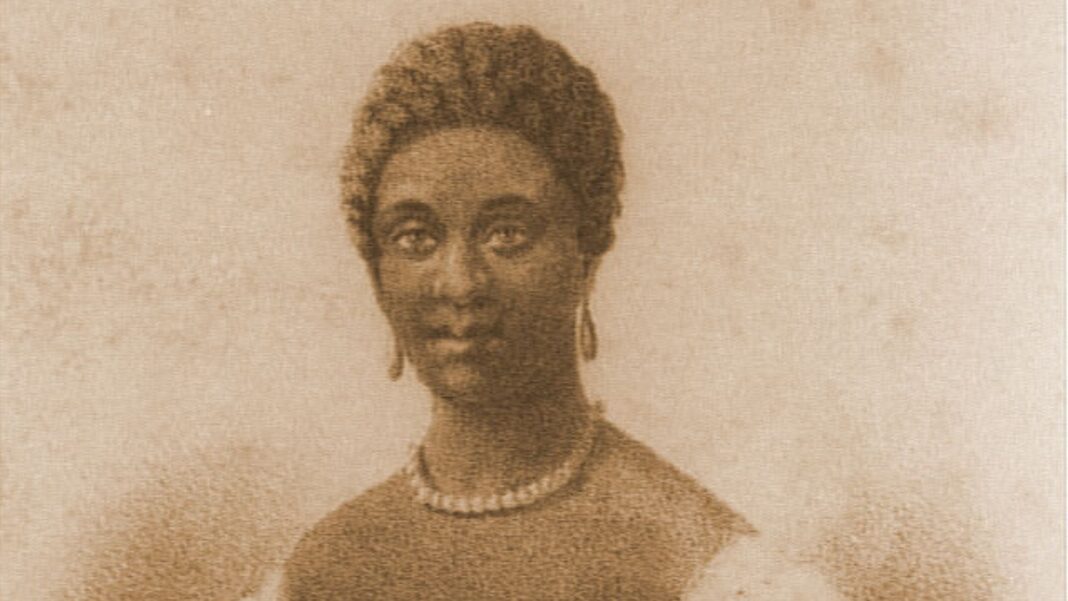
Featured image pbs.org, Public domain, via Wikimedia Commons