
These poems are part of the special section, New Poems of U.S. History, reflecting on the 250th anniversary of the Declaration of Independence selected by editors Carolivia Herron, Summer Tate, and Robert Bettmann. You can read more about the section on the Day Eight website here.
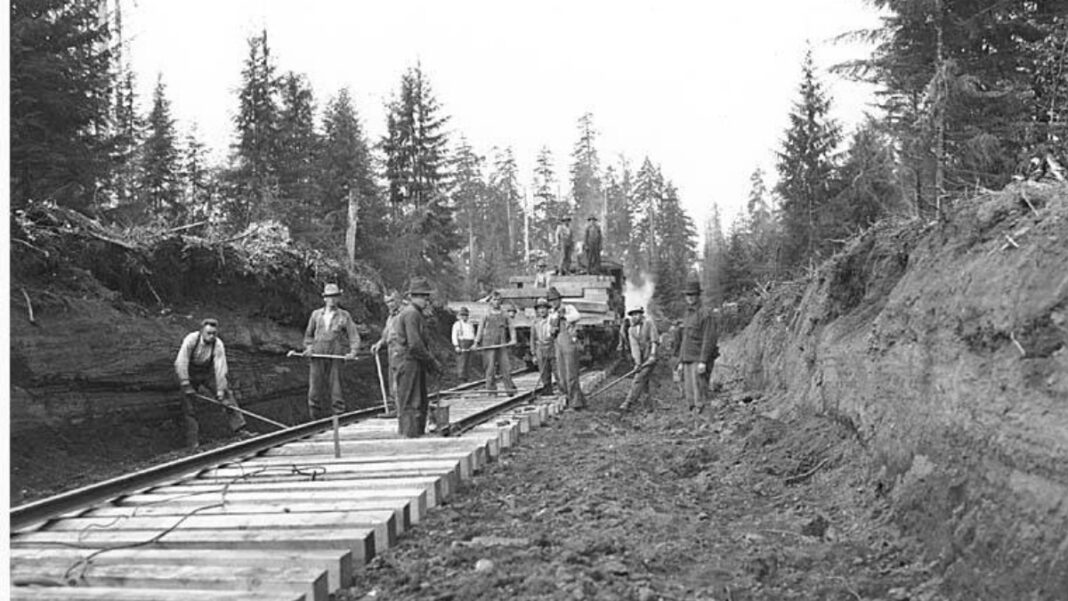
Chinese Railroad Worker, Sierra Nevada, 1867
We were called hands.
As if we were not also
backs, lungs, names carried across oceans.
The mountain did not welcome us.
It held its snow like a warning,
its granite like refusal.
We carved through it anyway—
powder, fuse, breath held
between heartbeat and explosion.
They say the railroad binds the country.
They do not say
how many bones were laid beneath the ties,
how silence travels faster than trains.
We struck once—
did you know that?—
laid down our tools,
our hunger louder than dynamite.
For a moment,
the line stopped.
For a moment,
we were more than labor.
Then the work resumed,
as history prefers.
Still—
when the train passes,
listen:
in the rhythm,
there is a second pulse.
Zitkála-Šá, Boarding School, 1890s
They cut my hair.
It fell
like a language I could not retrieve.
The scissors spoke
a doctrine of order,
of sameness dressed as salvation.
I learned their hymns,
their letters,
the way silence is rewarded.
But inside,
my mother’s voice remained—
a low drum,
refusing translation.
They called it education.
I called it forgetting under supervision.
Still,
I gathered what I could:
stories hidden in margins,
songs folded into breath.
I wrote
so the words would not vanish,
so the child they renamed
would answer to herself.
America is a schoolroom
that does not always know
what it erases.
But listen—
the names return.
They always return.
Selma to Montgomery, March 1965 — Bridge
The bridge remembers weight.
Not just footsteps,
but the decision to continue
after the first blow.
We walked knowing
the road was already written against us,
its asphalt a thin argument.
Tear gas blooms like a false spring.
Horses, batons, the grammar of force—
and still,
we moved forward,
each step a refusal
to remain a footnote.
You can measure distance in miles,
but not in courage.
You can count the marchers,
but not the generations
gathered in their stride.
On the far side,
nothing was finished.
Freedom is not a crossing,
but a practice.
Still—
that day,
the nation narrowed
to a span of steel and will,
and we became
the line
history could not step around.
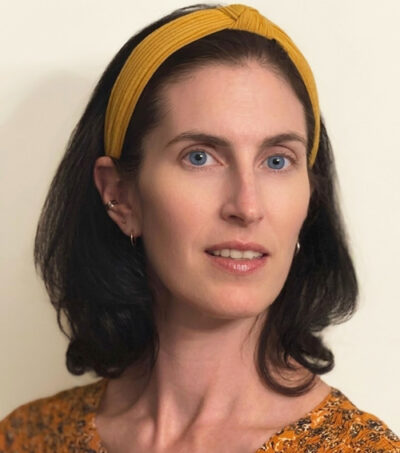
Jennifer Freya Helgeson’s writing explores themes of memory, loss, nature, and human resilience. She holds a PhD in Environmental and Developmental Economics and has authored several peer-reviewed publications, co-edited textbooks, and published in several media outlets. Her poetry has recently appeared in “Tension Literary,” “Pacific Review,” “The Woodside Review,” “Plants and Poetry Journal,” “Two Thirds North,” and other anthologies. She enjoys gardening, dancing, experimenting in the kitchen, and spending meaningful time with her dog, close friends, and family.
Featured image Clark Kinsey, Public domain, via Wikimedia Commons
.jpeg)