
Self-Portrait
after Adam Zagajewski
Between dead heading the lilies
picking blueberries
and arranging the fruit plate,
half my July morning passes.
My village is not strange to me.
I have not been hurtled from city to city,
nor lived among strangers
whose languages I did not know,
just stumbled from one college town to another
in the Midwest. My father,
torn apart by wars and depressions,
salvaged memories from his century
as Zagajewski’s father did from his. At night,
when Patric and I steam the squash
we find under the fans of prickly leaves
in Alan’s garden, we listen to the three tenors,
whose voices seduce us, just as they do the fans
who go mad under a Roman moon
at the Baths of Caracalla. Other nights,
Bruce, after a life in rock ‘n’ roll,
sings Pete Seeger’s old songs.
I don’t know the elements of music:
weakness, power and pain, as Zagajewski does.
I marvel at the fourth element that has no name.
I want to swim into it as I do the poets’ music
which shocks me, like ice cold hands around my breasts.
The thoughts of the philosophers
are not precious to me. I watch my fellow creatures:
a woman a decade ago who swirled an orange shawl
around her black curls on the cliff above Longnook.
The ocean pounded below. Sometimes,
paintings call to me and I enter them,
in a wonder at being chosen.
I love Patric’s wit, his grizzled beard,
the way he touches me. On Sundays,
my sons call from far away. I rock
them in my empty arms. My father
is dead. I cry for my country
and dance to sad songs.
I’m a child of air and water
with a touch of earth,
oblivious of plans or endings.
This is the life that—so far—
belongs to me.
The Midnight Drive-in
When Ralph Roos,
already packing for the seminary,
invited me to the midnight drive-in,
I laughed and told him:
My mother will never let me go. But
with all his 18-year-old authority,
he insisted, and she said yes.
Ralph Roos’ mother stomped
to church each morning
on legs like pillars.
My mother’s ankles were slender.
She overslept and we were late for mass.
Tell Sister it’s my fault, she moaned,
stuffing us into boots
and ill-fitting mittens.
We hurried past Mrs. Roos,
fingering her rosary in a back pew,
lips pressed tight.
Mrs. Roos is a good woman,
my mother always said sadly.
Had Ralph Roos caught some look,
perhaps of pity, in my mother’s eyes?
His tongue pushed past my lips
and my 14-year-old world tilted
like the screen outside the windshield.
He left for the seminary in a week.
What did he do with my kisses?
With his wild boy longing?
My mother nodded to Mrs. Roos on Sundays.
The Big One
Men always think
it’s not big enough.
Where is the man
with the big one?
Our grandfathers tell
how his piss
shook the beans from a fence
one moonless night.
They say our grandmothers
yearn for him still.
Did they see him once
in a locker room
or did some spiteful woman
taunt them with tales of him?
He haunts us all,
this phantom lover,
the one our men fear
will fill us
as they never can.
He is very busy, this big one,
first in the bed of the neighbor’s wife
then slipping away from some milkmaid
left drowsy and content
on a bed of hay.
But the neighbor’s wife denies him
and the milkmaid says
it was only a nap in the sun.
And when a woman knows
she has found him,
when she holds the perfect lover
in her arms,
he bolts upright and says:
“So, I’m not big enough for you.
So what!”
After Bly’s Poetry Reading
When my hair was still red,
curly and wild,
you walked over
in a jean jacket
and leather boots.
Looking tough,
playing it cool, I thought,
but you spoke, gently,
perhaps sensing my wariness.
“What did you think of Bly’s reading,”
you asked, and waited
for me to answer.
The crowd swirled around us
and you waited.
Outside, an amusement park,
a merry-go-round from other times,
painted horses. Still you waited,
with no anxiety or humility,
towering above me
though I didn’t feel small.
And I spoke
and you listened.
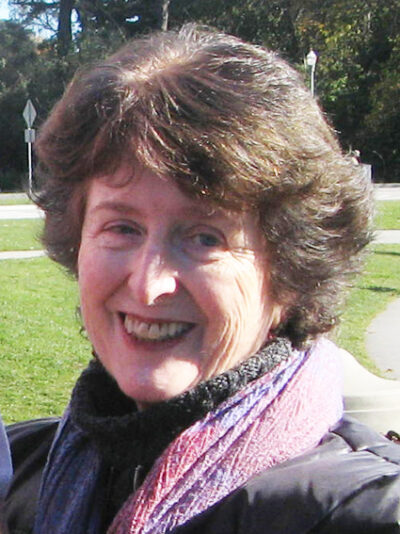
Mary Ann Larkin is the author of That Deep and Steady Hum (Broadkill River Press) and six poetry chapbooks. Her work has appeared in The Greensboro Review, Poetry Ireland Review, New Letters and other journals. She co-founded the Big Mama Poetry Troupe, based in Cleveland in the 1970s, which performed from Chicago to New York City. Larkin has taught writing at a number of colleges, most recently at Howard University, and written for NPR, NIH, Foundation News and others. She attended Yaddo and the Jentel Foundation. A co-founder of Pond Road Press, she published Jack Gilbert’s Tough Heaven: Poems of Pittsburgh.
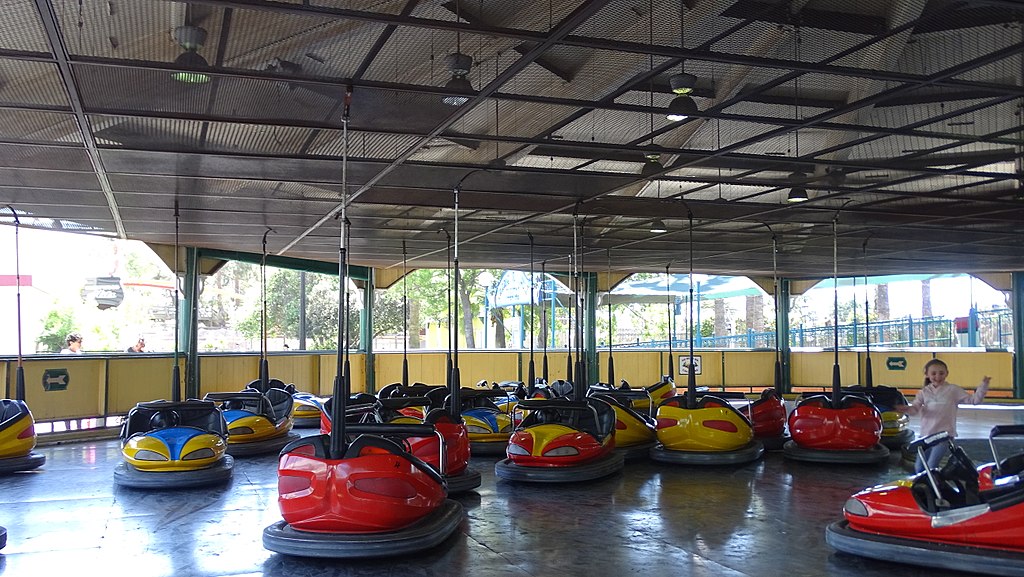
Featured image in this post is, “Wheeler Dealer Bumper Cars” by METRO96, licensed via creative commons 2.0 via Wikimedia Commons.