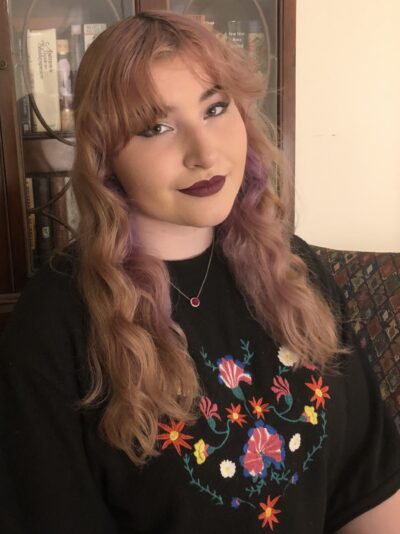
Marsha Olitsky is a poet living in Philadelphia. Bourgeon is delighted and honored to provide a home for her first publication. She writes:
Growing up with dyslexia writing and reading was always a struggle for me. I remember as a little girl crying in the kitchen to the point I was gasping for air. Reading was like torture. I avoided writing like the plague. As I grew I gravitated more and more to writing as an outlet of expression. I never let misspelled words or horrible punctuation stop me from accomplishing my goals. After some encouragement I have chosen to submit some brief writing. I am praying for the opportunity to prove to myself and others the only limits we have are the ones we imply on ourselves.
Image: Open Road by Adam Ward, CC BY-SA 2.0 <https://creativecommons.org/licenses/by-sa/2.0>, via Wikimedia Commons
Do you remember what you told me when you broke the cartilage
of my comp notebook, the royal blue one with those speckles, the
poems to your height, you burned it in your palm and told me to
take a dive like a swan, long neck stretched out for biting concrete,
and still I looked both ways before you crossed the street, I still paid
attention to the level of your shoulders, I still did, I still do, love you?
Maybe not. You’re so busy with your backaches and sneers,
I feel bad for you in all your strength. Your lonely, lonely strength.
Always breathing ash, you never let your tongue go unburnt, you
wait for it to purple on the grill, while you hold my neck down to
it, I’m tired of it, the fake thin, choking walls you build to stop me.
Do you ever get tired of hiding? Are you drinking enough water?
Damnit, I do. Still hold you, that is. Through all the smoke.
In spite of ourselves,
I am sick with it, the sting
of old sandbox love
Virginia Laurie is a student at Washington and Lee University whose work has been published in LandLocked, Panoply, Phantom Kangaroo, Short Vine, Tiny Seed and The Merrimack Review.
The last time I held my father’s hand, I was seven years old.
Standing over the grave of a grandfather who was now reduced to continuous headstone.
He came to me once in my dreams, I knew it was him even though it could have been anyone leading me up those winding stairs knowing I could never keep up.
I don’t remember my mother. Like someone robbing a bank and forgetting about the money.
That only child way my younger siblings were counted among my collectibles.
Chase the squirrel, the acorn. That sublime idiot laugh of the clunky dander child.
How my father replaced the graveside flowers and told me not to forget, but the mind is a fickle pickle.
This long comfortable shag between my toes. Sparklers for arms so we can all be fireflies on special occasions.
Flowers on my shorts, I must be in bloom
Flowers on my shorts, I must be in bloom, many blue flowers like some strange lost kindness reaching out from twisted elbows, that light purple watering can showerhead sprinkle, a light dampening like the Spring thaw carpet dawdling underfoot, initials carved in a backyard tree that decided to leave themselves behind, that boxy buck-knife historical record which almost always promises forever and never delivers and my shorts, your bloomers sepals, petals, carpel and stamen – Death is a kind of completion, hopefully it is not the only one, even if it is the most final.
Deep Pockmarks
In the back of a black town car speeding through the piping hot neon guts of nowhere.
All the bags in the trunk like a body wanting out.
Tinted windows just before midnight.
The driver with a face full of deep pockmarks, so that you look away and think of distant minefields expecting damage.
Choke up a forgotten cloud of smoke from the hairy underarm tropics.
Climb into a bed that may as well be a coffin at altitude after the elevator up.
Each beep a flighty cricket sold on this sprawling urban song.
Nowhere left to look but the view. Meant to sell, sale, sold…
Individual tiles in the shower as though colouring book Communism has a long way to go.
Ryan Quinn Flanagan is a Canadian-born author residing in Elliot Lake, Ontario, Canada with his wife and many bears that rifle through his garbage. His work can be found both in print and online in such places as: Evergreen Review, The New York Quarterly, Bourgeon, TheSongIs.., Cultural Weekly, Red Fez, and The Oklahoma Review.
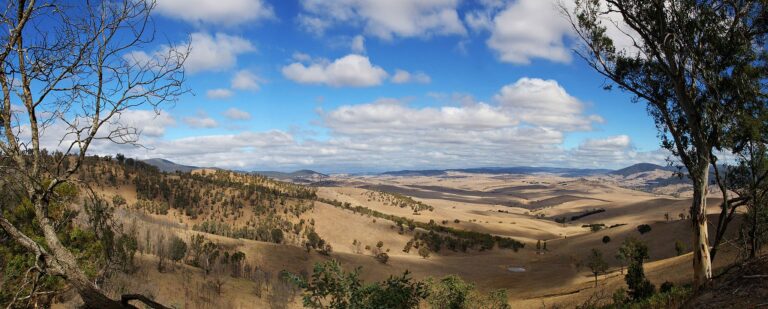
Image by Norbert Schnitzler, CC BY-SA 3.0 <http://creativecommons.org/licenses/by-sa/3.0/>, via Wikimedia Commons
Now I can see my life with new eyes, leaving the east for the west, bringing me closer to the sky, close enough to feel cosmic drops from April meteor showers, but not far enough away from the vigorous winds of change in spring that must remain.
Close enough to feel the wind from the full wingspread of a Cooper’s Hawk, and like birds of prey, we attempt to touch the sky each day, edging closer to our dreams, facing sunsets through our reflections in two way mirrors.
How close is our sky? measured by the deepness of our love, or calculated in the patience from time spent waiting, as we grab at pieces of clouds falling like manna.
We are closer to the sky, when we close our new eyes, and imagine our old wings, left for us by the ancestors who like birds of paradise, embodying the beautiful plumage enticing us to fly.
Tori Collins has been influenced by the power of words, the work of James Baldwin, Gwendolyn Brooks, Maya Angelou, Sonia Sanchez, Toni Morrison, Langston Hughes, E. Ethelbert Miller, and most recently Chicago based poet Leslé Honoré and National Youth Poet Laureate Amanda Gorman. Poetry has been a rediscovered cathartic release for Ms. Collins since the start of the pandemic in 2020. She enjoys serving her country as a transportation policy analyst with the US Department of Transportation, nevertheless her true work focuses on racial equity and addressing issues of oppression, poverty and marginalization. Her poetry speaks to these issues and promotes healing through self-love. Recently, her poem “The State of My Statehood” was published in the Southwester and in August of 2020, her poem, “From Pandemic to Protest” was featured in The Poetic Hill section of HillRag. Ms. Collins has been a resident of the District of Columbia for 7 years and she currently enjoys living in the Navy Yard/Capitol Riverfront neighborhood.
Image by User:Fir0002, GFDL 1.2 <http://www.gnu.org/licenses/old-licenses/fdl-1.2.html>, via Wikimedia Commons
No smell matches
Just after a spray
The water taken quickly
The thanks immediate
They tell the truth
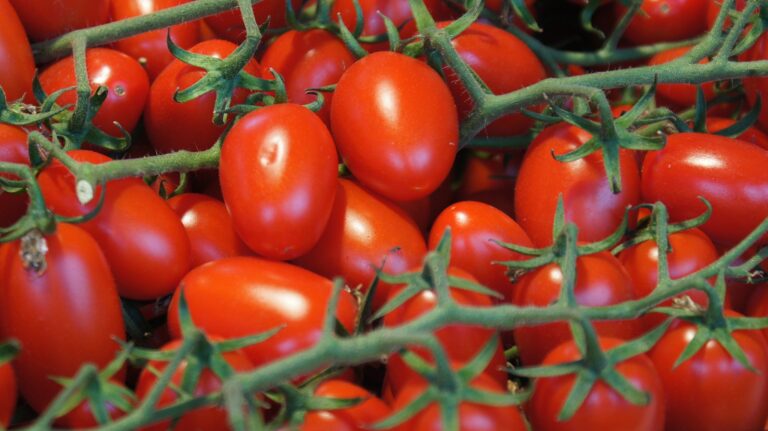
This universe of tomatoes
Persisting in dry baked days
Eager to exceed the highest
Expectations
And then doing just that
So versatile, in their
Category that stands
Them
Alone
Start the day with them,
say hello
Admire
Water,
Shift their stand to
Take in the sun
as they eagerly
Couple with other delights
To bring taste, aroma and
Health, beauty
And such lush joy
It is a pattern
You may wish to follow
They tell you what in
the world is
Coming
If you listen while you water
They stand tall and
Lean with the sun, not to it
They come in many shapes
And sizes
And tastes
Yet remain one universe
If someone calls you
A sweet tomato
Feel honored
Tom Squitieri is a three-time winner of the Overseas Press Club and White House Correspondents’ Association awards for work as a war correspondent. His poetry appears in more than 30 publications, in the book “Put Into Words My Love,” in the film “Fate’s Shadow: The Whole Story” and in Color: Story 2020. He has taught writing, journalism, media studies, political systems and realities, foreign policy, and practical street knowledge at Washington & Jefferson College and American University, and writes most of his poetry while parallel parking or walking his dogs, Topsie and Batman.
Image by domdomegg, CC BY 4.0 <https://creativecommons.org/licenses/by/4.0>, via Wikimedia Commons