I must grow leaner With thought and age: from wine to Water, beef to broth.
Between here and there, Should a man of decline choose Prayer over repair?
When my final choice Is finally made, one more Comes around again.
Oldness (triple haiku)
I’m old, and yet grand – Of fables that raise a name And remain. . .I claim.
I’m old and better For it: less guess and excess; Less conquest and rue.
I’m old, but able To seize the last refuge of Weakness for satire.
When (triple haiku)
In the shadow of Contrasts, the older I get, The simpler I mean.
I grew tired growing Older, so I decided To lie low instead.
It is not enough To know how the world works – we Should also know when.
In excess of 50 poetry journals, plus numerous newspapers, have published J. Chester Johnson’s poems. Outlets/venues include: The New York Times, Literary Matters, Best American Poetry Blog, Poets House, Harvard College, Trinity Church Wall Street, Troubadour (London), and the BBC, among others. Recent poetry books by Johnson are St. Paul’s Chapel & Selected Shorter Poems (2010) and Now And Then: Selected Longer Poems (2017).
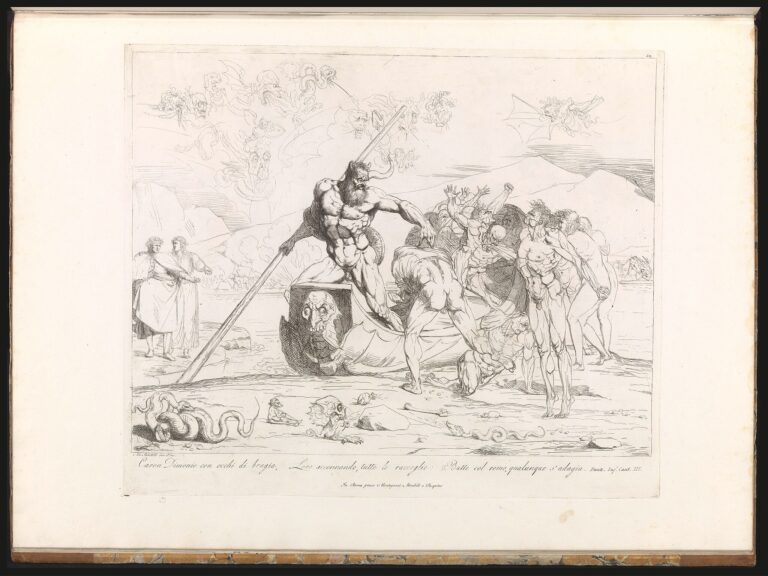
“Charon, the ferryman of the dead, his hand on the boat-pole, calls me now: ‘Why are you tarrying? Make haste, you hinder my going!’ He speaks impatiently, urging me on with these words.” Alcestis (255) Euripides
Inside, your heart weakly beating, rigors rising, wounds weeping – they are sad, too, overwhelmed, out of options – and you are at the end of your bones. Outside, it is late in the yellowed afternoon. Beyond windows and walls, beyond buildings and borders, in the gray misery of the river, is the skull-adorned bony spine of the boat we all know. As your first-born, and, now, your guide down this particular path, I am also out of options, with nowhere else to go.
I should have money to lend, extra funds of any kind. You suggested I save, but I didn’t listen, so I have no coins for your journey. Let’s not pay Charon anyway! We can just say we are lost and blame my bad map skills. Or proclaim we are on the outs: we won’t join queues, follow his rules. Still, you seem resigned, ready for the river, on your way to slip through. Don’t give in to him! Stay with us on this side; don’t make the grim choice to cross forever.
So let’s not pay Charon! I don’t mind being haunted if you don’t mind a hundred years wandering around down and out on the riverbed. We love purgatories, right? So many cautionary tales come from crowded limbos: those delicious, treacherous spaces. Perhaps you met Charon before, were introduced, briefly, so you know when it is your time to cross the river it won’t include me. Charon isn’t confused by my presence; he knows this is our first nodding acquaintance.
In the late afternoon, they come in and prepare you. In the late afternoon, comes sullen Charon in his precarious boat. Expecting his tip. But I won’t let him touch your bones. Would never let him touch your bones.
If you get in, in there, in his makeshift boat, you will never be out here, on the outside, again.
Please don’t say you’ll pay Charon! He’s ugly and surly and nobody likes him. Don’t look at him or meet his knowing gaze. Go no contact! I’ll be all about keeping Charon’s chaos under control, organize the future within an inch of our lives because organization insists on more time. If you get in, you will be beyond the realm of my vision. If you get in, he will whisk you away! And I know why you won’t let me dip in a testing toe or two: I wasn’t raised to be charming; I have nothing to barter or trade.
In the late afternoon, comes churlish Charon in his flat, low boat. You pull your eyes open, so you can see me, one last time, keenly, bright, in the artificial light. Sometimes night comes early. Soon it will be too dark to see. I am here, outside, where I will keep an eye on the world for you. Oh, but inside is my own heart, my own organs, my own bones! For now, they are still ripe and whole. You board the boat; Charon has lost all patience, and it is time to go.
At the End of My Bones
Who were these bones for if not for you. Watch me and wait for the wearing away. Slim, long, thin on the scan: hairline fractures everywhere. You’ll slice your fingers open following the patterns, so don’t trace my splits at the neck, the thighs, the hips. Sharp points at the turned-up collar. Bonds broken between bumps and bones. Shocks in back. Small breaks in spaces. Sudden collapse. This won’t end well. Neither surgery nor medicine will fix this mess.
Who was this body for if not for you. I wait my turn while you watch and wait for the wearing away. Stay with me. Our uneasy relationship with memory. Still, imagine us the way we were. Everything in its place then. Pulling its own weight then. Those whole dull-edged bones, covered top to bottom with smooth skin. So soft, so lovely. Watch and wait for what happens next and when. We won’t wait long for it to set in. Watch me wearing away.
Naomi Bess Leimsider’s poetry book, Wild Evolution, was published by Cathexis Northwest Press in June 2023. In addition, she has a poetry chapbook forthcoming from Finishing Line Press in Winter 2026. She has published poems, flash fiction, and short stories in numerous journals. She has been afinalist for the Acacia Fiction Prize, the Saguaro Poetry Prize, and the Tiny Fork Chapbook Contest. In 2022, she received a Pushcart Prize nomination for fiction.
From construction paper layered in pipe cleaners, uncooked noodles and cotton balls;
to cardstock trimmed for business cards, in neat stacks or sweaty palms;
to printer paper taken from the office for a pile of resumes fed on home ink—
our shell grows thin.
Soon, I’ll be as flimsy as onion-peel falling from my fingers, translucent as parchment paper baking in the oven, growing loose in skin and fucks to give.
Culinary science
sand-crumb constellations wash away in pearly tips as sea lice leap on a bed of beached carrot-peel seaweed stretched beside mushroom-slime kelp baking in LED sun— sea foam blows like tumbleweeds across the frothy shoreline which blubbery seals chase in their floppy gallops while slippery fish slide down black holes of hungry whale throats, teeth like tines, but it’s the prehistoric, noodle-legged jellyfish who keep all in line.
Felicia Clark is a literary fiction and creative memoir writer, poet, and author of her debut book AWAKE: Poetry for the Healing. Her work has also appeared in literary magazines, newspapers, blogs, and multi-authored books. Felicia lives as a nomad in a house on wheels with a home base in the heart of Wisconsin, where she was born and raised. Follow her at FeliciaClarkAuthor.com or @measurelifeinbookmarks.
Featured image in this post is, “Santa Monica sunset and ferris wheel” by Peer Lawther, licensed via creative commons 2.0 via Wikimedia Commons.
I’m going to sponsor a punk
rock concert: in exchange for
a ticket, everyone who comes
is given a musical instrument,
chairs on the stage so people
can sit and listen as well as play
favorite songs, but you say all
they’ll make is noise, cacophony
is the word. Precisely my point,
I reply. I once knew a guy who
formed a garage band named
Dow Jones and the Industrials,
their breakout songs, published
in The Toe Jam Review, were
“I Wanna Hold Your Hardon”
and “I Wish I Was in Dixie,”
the name of the homecoming queen
known to twirl a mean baton
at this school somewhere
in a Middle American suburb
with a lot of two-car garages
and more punks pounding their
drumsticks than drums, if you
know what I mean.
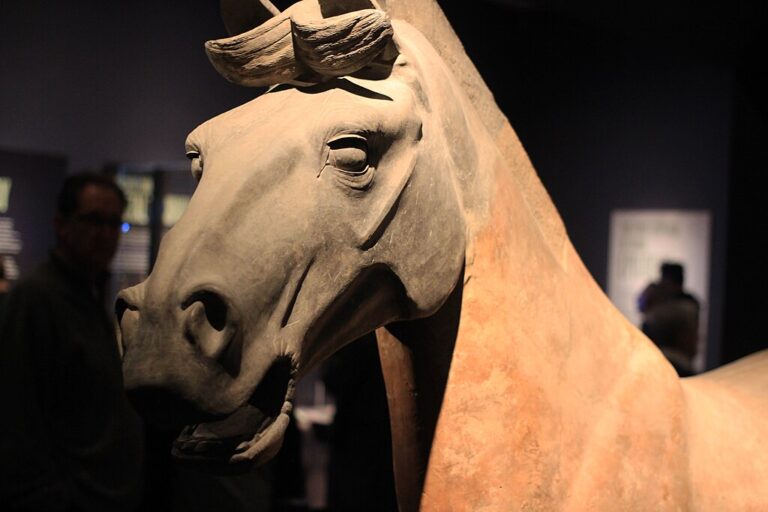
Horses and War
God created imperialism
by giving horses dull teeth.
When they chew on grass
they pull it up by the roots,
thus destroying their land
for grazing, causing a need
to move to greener pastures,
no matter who lives there.
Horses have eyes on each
side of their head to keep
on the lookout for big cats
and other dreaded predators.
Yet for thousands of years
they were essential in human wars,
since victory was usually on
the side of the bigger horses.
Often wars were started to steal
the horses of some men in order to
fight battles against other men
to gain more horses and land.
It wasn’t until World War I
that petroleum replaced grass
as the fuel of war, yet we all
know what happened when
at the start of World War II
brave Polish cavalry rode out
to confront a German blitzkrieg
by a host of panzer divisions.
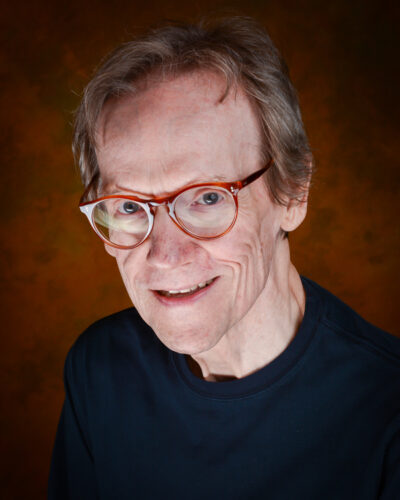
William Heath has published four poetry books: The Walking Man, Steel Valley Elegy, Going Places, Alms for Oblivion; three chapbooks: Night Moves in Ohio, Leaving Seville, Inventing the Americas; three novels: The Children Bob Moses Led (winner of the Hackney Award), Devil Dancer, Blacksnake’s Path: a history, William Wells and the Struggle for the Old Northwest (winner of two Spur Awards and the Oliver Hazard Perry Award); a book of interviews: Conversations with Robert Stone. He received a Lifetime Achievement Award from Hiram College. He lives in Annapolis.
Featured Image: “War Horse” by Don McCullough under the Creative Commons Attribution 2.0 Generic license.
dried out creek bed dry stacked stone the limbs of a woodstove, relatively ancient scattered leaves dropped off their rusty hinges the vestigial chaos of the penultimate backup at the crematorium sun-white shade of last year’s turtle shell matching the bone of the underside of the oak pamphlets littering last centuries’ street fallen early this year navigating the skeletons of june wineberry canes, sparse a testament to the desperation of the deer; chewing thorns in the drought the way the powdered bloom dusting the canes catches the glow in the low winter light i wish my bones would glow like that i think my bones are starting to glow like that
refolded envelope #2
the purple-stem cliffbrake lashes framing the smoky eyed boulder lichen beat on the limestone below waiting for that shale sky to remind them of that night back in the devonian when their mud was the same mud folded over itself feet between thighs
Emma Loomis-Amrhein is a trans writer and naturalist who is particularly enamored of birds and moths. Her work tends towards poetry but occasionally appears in essay. She primarily writes about the margins and marginalia. Her debut collection of poetry, evening primroses, (April 2021) is available from Recenter Press. Her poetry has been nominated for Best of the Net and Pushcart prizes, and resides in over a dozen publications. She lives in rural, southern Ohio.



 William Heath