Home Blog Page 18

Ode to Spouses of Diabetics and How They Find Us by Ephraim Sommers

This poem is published as part of the Amplifying Disabled Voices special section, selected by editors Christopher Heuer, Marlena Chertock, and Gregory Luce.
 

ODE TO SPOUSES OF DIABETICS AND HOW THEY FIND US

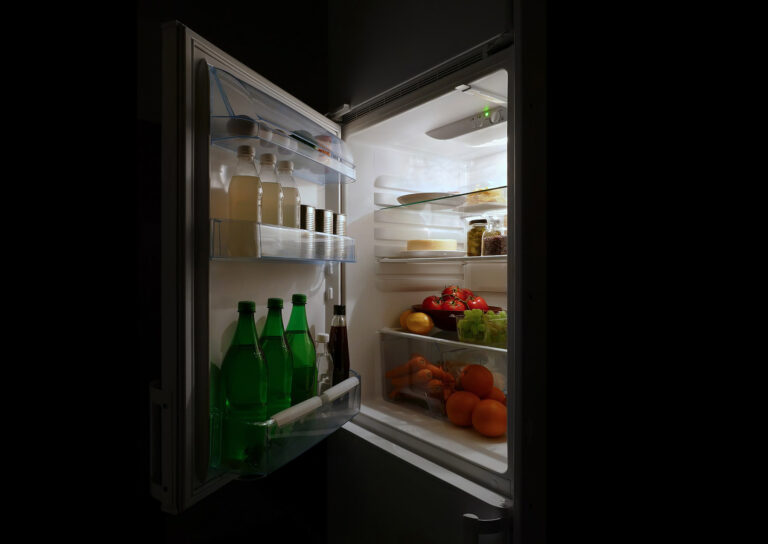
in the darkened kitchen
at 3:16AM
in our underwear shirtless
spotlit by the light
of the open fridge
our right hand wearing
a whole rotisserie chicken
like a winter mitten
like an edible oven glove
a scattering of exposed bones
across the linoleum all around us
like the leftovers of already been hatched insects
a few cracked pistachio shells
like oversized birdseed
and two opened rectangles
of naked white cheese
are waiting to be bitten into
on the white windowsill
while a squirt of mustard
on the microwave’s see-through face
dribbles down in slow-motion
and we diabetics are half drunk
not on booze
but on two dizzy
and opposite truths
the brief half-open window
where treating low blood sugar means
eating whatever savior we want
in the name of survival
and what a joy to abandon the nuisance
of nutritional charts
to wherever they tumble
out of existence
because we have returned to the heaven
of unencumbered eating
and always our lovers watching
like quiet shepherds in the background
like rock band managers
one eye on their lover on stage
one eye on their lover’s glucose monitor
themselves in their own polite dance
between when to let us paddle further
into the pantry
and when to throw us the grappling hook
to pull us out of the deep
so holy so so holy
are our lovers
who keep chaperoning us through
this delicate dodging of our own deaths
because what brief windows
between deadly tidal waves
all of us together as couples must rediscover
the muscles to open up wider and to laugh inside
and to laugh outside too
for what has been dangerous
on this tiny night
in this little minute
will now be survived
so back to this brief delight
of us diabetics at 3:17AM
beside the cool cherry pool
of a gallon of Greek yogurt
or a whole cherry pie
or a half a tray of cold lasagna
on the counter
and all of the waters
tasty and calm and wide open
and all of us about to shallow-wade
no handed
and with our whole faces
as if snorkeling
and without thinking finally (thank you)
right into every single one

Ephraim Scott Sommers is Type-1 Diabetic and the author of two books: Someone You Love Is Still Alive (2019) and The Night We Set the Dead Kid on Fire (2017). Currently, he lives in Rock Hill, South Carolina and is an Associate Professor of English at Winthrop University. He is also an actively touring singer-songwriter. For music and poems, please visit: www.ephraimscottsommers.com.

Featured image in this post is, “Open refrigerator with food at night” By W.carter – licensed creative commons via Wikimedia Commons.
Surgery by Makena Metz

These poems are published as part of the Amplifying Disabled Voices special section, selected by editors Christopher Heuer, Marlena Chertock, and Gregory Luce.
 

Surgery

Waiting is the worst part. Time feels like a guitar
being tuned in my chest, the string winding

tighter and tighter until the nylon snaps. I grieve
in flat notes. My mind’s out of tune. My scars

carry the dissonance. My head hurts –
my throat plucks anxious melodies. A sharp

smell of astringent goes into my IV.
The doctors are blue as a ballad. A rhythm

taps through fingers. Tools are prepared.
My hand is held and in 10, 9, 8-

the anesthesia echoes. While I sleep, I listen
to the music of bone saws and scalpels.
 

Makena Metz is a writer and songwriter for the page, screen, and stage. She has an MFA in Creative Writing and MA in English from Chapman University. Her prose and poetry have been published with The Literary Hatchet, The Clockhouse Review, For Page and Screen, The Fantastic Other, The Bitchin’ Kitsch, Arkana, Strange Horizons, and many more. Find her work on Chillsubs or @ makenametz on social media and check out makenametz.com.

Featured image in this post is, “Fire breathing “Jaipur Maharaja Brass Band” Chassepierre Belgium” by Luc Viatour, license via creative commons, wikimedia commons.

Two Poems by C L Bledsoe

These poems are published as part of the Amplifying Disabled Voices special section, selected by editors Christopher Heuer, Marlena Chertock, and Gregory Luce.

This Is How the World Ends

This is how the world ends, cringing
from the noise of my upstairs neighbors.
Elephants are no longer endangered. Just once
I wish I could sleep the night. This is a lie;
Id like to sleep every night and every day.
I never want to leave the apartment again.
Is that their fault? Why not.
This is how the world ends, wearing the same
pajamas a week in a row. Watching Star Trek
reruns on a loop. The world doesn’t end,
it just cycles through a new terror. Someday,
the sun won’t shine for you. Probably some
day this week. Fridays are particularly tricky.
This is how the world ends, never on time.
Just waiting for something to happen.
It will whether you want it to or not.
That’s the thing about the world. It just
keeps going.
 

You’re Dead

You’re dead, and I pulled a load of laundry
out of the dryer and set it on the floor so
I could dry my pants.
You’re dead, and now no one will tell me
the plot of an episode of MASH.
I got my heart broken, and I have to do my taxes.
I drink all day, and you found Jesus.
You’re dead, and we can’t afford a stone.
You’re dead, and I don’t fit in my suit anymore.
At the grave, my cousin kept talking about how gray
my beard is. I’m surprised he was sober enough
to notice.
You’re dead, and I have to move to be closer
to my daughter.
My boss set up a weekly meeting, and three-quarters
of the time, we all log in and wait twenty minutes
while he never shows.
You’re dead, and I told you what you meant to me,
but it feels like not enough.
You’re dead, and I forgot for a little while
that this is the real world.
 

Raised on a rice and catfish farm in eastern Arkansas, CL Bledsoe is the author of more than thirty books, including the poetry collections Riceland, The Bottle Episode, and his newest, Having a Baby to Save a Marriage, as well as his latest novels If You Love Me, You’ll Kill Eric Pelkey and The Devil and Ricky Dan. Bledsoe lives in northern Virginia with his daughter.

Featured image in this post is, “Kanapownik (Couch Potato) Wroclaw dwarf 02” By Pnapora – licensed creative commons via Wikimedia Commons.
Two Poems by Tessa Augustyniak

These poems are published as part of the Amplifying Disabled Voices special section, selected by editors Christopher Heuer, Marlena Chertock, and Gregory Luce.

What Do You Offer?

An unseen force lingers at the horizon,
holding its silence like a blood oath,
written into the hollows of our hearts,
older than their questions, older than them.

They ask me what I do,
as if my worth is something to be weighed,
pressed between their fingers like a coin,
held to the light to see if I am real.

Their smiles stiffen at my answer,
a withering bouquet laid on the grave of their interest.

They do not say it,
but the words bloom in their silences,
black mold behind the wallpaper,
a sickness in the walls.

Lazy.
Burden.
Waste of air.

The state casts its shadow,
offering me a door that only locks from the outside.
A dignified death, a merciful vanishing.
The papers call it kindness.
The doctors call it relief.
As if breath is borrowed,
and those who cannot labour must pay it back in full.

A flicker on a screen.
A whisper in a clinic.
They have always been good at sorting.

Skin color.
Chromosomes.
The shape of a skull.
The slowness of a step.

The blade has never changed.
Only the names on the list.

They speak in soft voices,
say it is best, it is kind,
but I hear what they do not say—
Some weeds should never be watered.

They do not know—
or perhaps they do, but look away—
that their body, too, is a waning thing.
Their hands will one day quiver.
Their voices will falter,
spines will curl,
the machine will spit them out,
brittle-boned,
useless to the empire they built.

One day, the world will turn to them and ask—
What do you do?
What do you offer?

And the silence will taste like rust.

And above them, steady as the turning earth,
He stirs.
Watching.
Waiting.
He does not forget.

Long before they built their altars to power and profit,
before they learned to hate what they could not use,
His hands shaped the helpless from the dust
and called them good.

They will be ash.
He will remain.

And so will His love—for both me and you.

In Sickness and in Health

I cannot be the kind of wife
they whisper about in grocery aisles—
aproned and effortless, kneading dough with delicate hands.
Never soft-lipped, never silk-wrapped,
never the kind to make life easy.
I move like a storm you never tried to outrun,
break like the tide and pull you under,
and still, you never ask me to be less.

And still—
when my bones ache like wind-beaten branches,
when pain presses into me like a second skin,
you gather me up, weightless in your arms,
carry me through the hush of evening,
like something fragile, lovely—
a petal you refuse to let fall.

When my mind circles the same thought until it frays,
when my body betrays me in ways I cannot name,
when weariness burrows in like an unshakable chill,
you listen—you lean in,
as if every syllable is a secret,
as if I am the most fascinating story ever told.

When exhaustion wrings me dry,
leaves me trembling,
you press your lips to my forehead,
whisper my name,
stay beside me in the dark
until the worst has passed.

And when I am sharp,
when the ache of existing turns me cold,
when I am distant—lost in the fog my body makes—
you are patient, steady.
You know I will come back,
and you wait for me like you always do.

I wish I could be more for you,
the kind of wife who rises early,
who cooks, who cleans,
who makes life feel easy.
But in the quiet, when I curl into you,
when my fingers trace little hearts into your skin,
repeating the shape like a ritual,
a rhythm I can hold onto,
when I give you all that I am—
you remind me:

You, my love, were never looking for easy.
You were looking for me.

Tessa Augustyniak is a Canadian poet whose work blends raw lyricism with haunting imagery to explore faith, survival, and the quiet resilience of the unseen. Her work unapologetically rebukes ableist narratives, giving voice to those the world too often dismisses. Through poetry and unshakeable faith, she transforms struggle into something fierce: an assertion that even in suffering, there is meaning, beauty, and resilience. Her words are both a revolt and a revelation, a voice crying out against the lie that only the strong deserve to survive.

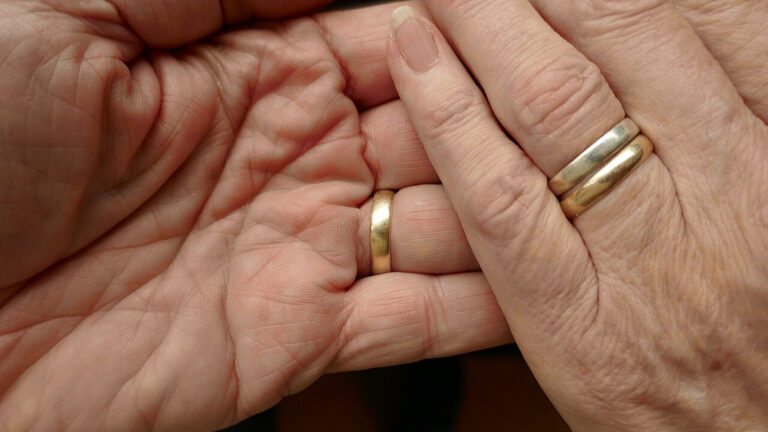
Featured image in this post is, “Wedding vow P1070616” By RF Vila – licensed creative commons via Wikimedia Commons.

Two poems by Addy Lugo

0

Addy Lugo is a finalist in the 2025 DC Poet Project, an annual open-to-all poetry competition created by Day Eight to support and surface exceptional poets.


The Smithsonian archive has pictures of Matthew Shepard’s teeth

I wish that Matthew Shepard was a HR Manager living in San Diego.
I wish he woke up with a hangover from too much white wine.
I wish he cut himself shaving.
I wish he kissed his partner goodbye, noticing their coffee breath.
I wish that a bird shit on his windshield.
I wish that he got to his office late enough to get side eye from his boss.
I wish that he would find spinach stuck in his teeth—embarrassed that no one told him.
I wish that someone would steal his soda from the fridge.
I wish that someone could back into his car by accident and leave a note that just says “sorry.”
I wish that he could sigh when he answers a call from his mother and father—
That he could tell them white lies about his weekend—
Yes, he was taking care of his yard and yes, he was going to visit soon.
I wish that he’d get to happy hour six minutes late—
That he’d pay full price for two gin and tonics.
I wish his partner would ask “what do you want to do about dinner?”
And the weight of the day would hit him like a train—
He had almost forgotten he was hungry.
I wish that he would tip the delivery man even though he forgot their side of fries.
I wish his cheeseburger was cold and had pickles when he asked for “no pickles.”
I wish he’d feel guilty for forgetting to call his best friend this week,
That he’d crumple up a grocery list from last week, and use the next page of his notebook
To write himself a reminder: “Get Michele a birthday gift.”
I wish that he could bring his hand up to his jaw in pain and dread going to the dentist.
I wish that his favorite picture of the Duomo fell off his bedside table and cracked—
That he could tell his partner that he’d buy a new frame tomorrow.
I wish he could dream about showing up to work without pants.
I wish that he could wake up to the same pain in his jaw at 3am—
Trudge to the bathroom and pop a couple of Tylenol.
I wish he would squint at the bathroom light and bare his teeth in the mirror, studying them,
Notice that they’re not as straight as they used to be—and not as white,
But he’s been keeping up with flossing and his gums don’t bleed anymore.
I wish he’d struggle to fall back asleep, mentally making a list
Of all the things he’d forgotten to do yesterday that could wait until tomorrow.
I wish he could think about tomorrow and cringe.
I wish he could think about tomorrow and dread his morning alarm.
I wish he could wake up sweating, remembering that tomorrow is his anniversary.
I wish he could scroll on his phone for overpriced flower arrangements—
That his partner would get up for their spin class
And catch him looking up how early their favorite bakery delivers.
I wish his partner would chuckle, and kiss Matthew on the forehead,
That he’d say something passive aggressive and sweet like “you’ll get ‘em next year.”
I wish that in the morning light, that Matthew could fiddle with his ring and wonder
How he got so lucky—how he deserves someone, anyone, in this life,
When he can’t seem to get anything right.
I wish a shooting pain in his jaw could bring him back to the present,
That he can’t forget to call the dentist today.

Sin Eater

Have you ever heard of the Sin Eater?
A human hungry enough to eat the bread
off a dead man’s chest,
cleansing the dead of their sins, absolving them, allowing them
into the kingdom of heaven
with one simple act–

maybe someone else would call it mercy.
Most of the time it was an obligation–
to chew the bread, drink the draft, and collect a sixpence,

a penance maybe.
They believed that when you die, sins could sop up,
collect at the pool of your sternum–

that a person could sit on your coffin and eat a supper
of atonement and self-emulation
not to call themselves a saint,

but to save you from yourself.
Instead of being rewarded for their selflessness,
they were seen as outcasts–someone to be feared.

Can you imagine the sacrifice?


The day that he dies,
I will not be surprised to find
the bread on his chest–

stale, charred, and crusted,
Resting on his ribcage, waiting for someone
to release him of his sins–

It will not be he who places the meal
on his own body
but his children–

Those who cannot stand to think that
someone they love could suffer for eternity.
Their eulogy will be mostly an apology.

And I cannot live with myself
thinking about the blackened crumbs sticking
between his own daughter’s teeth.

It isn’t penance, selflessness, or obligation
but maybe mercy– because the sins of a father
should not outweigh the livelihood of his kin.

So I will sit on the coffin,
let the flour flake off in the palm of my hand,
guard the casket with gnashing teeth

and cruel tongue–protecting his daughter’s
from a legacy that will outlive them.
I will try to let my mouth water and hum,

willing myself to take the first bite.

Addy Lugo is a mestiza poet from Charlotte, North Carolina. A graduate of Guilford College, AmeriCorps, and FEMA Corps, she was Austin Poetry Slam’s Women’s Individual Champion in 2018 a member of Austin Poetry Slam’s first all femme, all queer-identifying slam team, the Freshfemme Class. She lives in Washington, D.C. and works for the Smithsonian Science Education Center as an Inclusion Program Specialist. A believer in service, she hopes she can represent her community with her actions, accountability and, most of all, her words. She has been published in the Greenleaf Review and additional magazines.

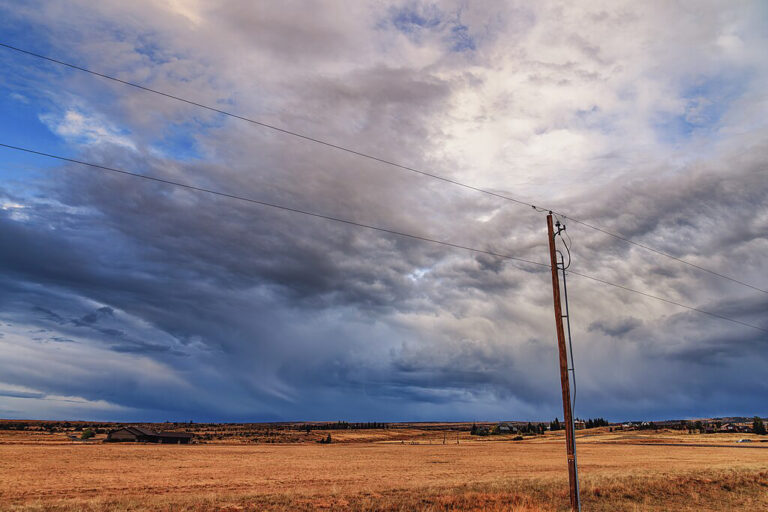
Featured image in this post is, “Land near where Matthew Shepard was left to die in Laramie, Wyoming, as photographed on October 2, 2023” By Tony Webster – licensed creative commons via Wikimedia Commons.