I stepped by the waterfall, memories restless, awakened from induced night slumber, drugged with bottle contents until the pain of tears vanished
Until the misery of wrought hands, twisted iron becomes but another breath catching exercise, a cleared throat from pasts immemorial to
Walk beside in space and time to final resting. A blackout after wounded crackle of static on the airwave, a signal taken too little from words
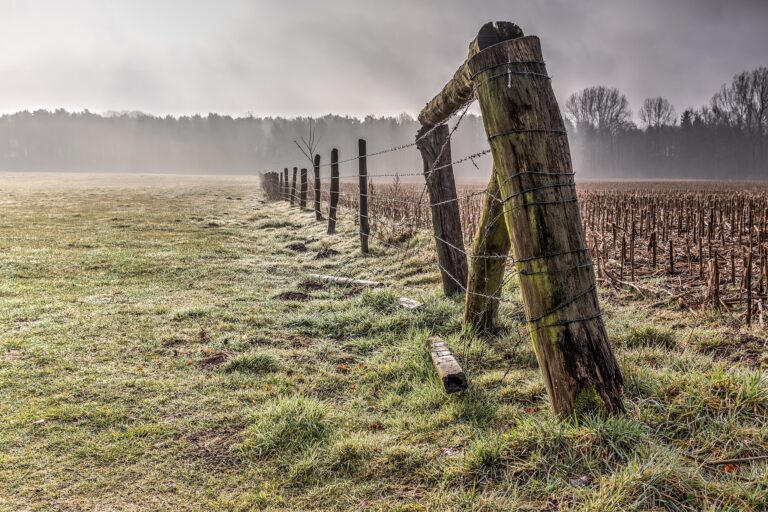
We passed as codes in dark corners, back and forth through wire fence.
A look at the roadkill, the tar paper pine, the burn rubber leavings of last year’s party favour revolution
Tells of nothing, save regretted rancor: the lonely scribe dying with his head firmly perched
To righteous side he’d never take in fear of too much certainty.
Carter Vance is a writer and poet originally from Cobourg, Ontario, Canada currently resident in Gatineau, Quebec, Canada. His work has appeared in such publications as The Smart Set, Contemporary Verse 2 and A Midwestern Review, amongst others. He was previously a Harrison Middleton University Ideas Fellow. His latest collection of poems, Places to Be, is currently available from Moonstone Arts Press.
Eighteen thousand dollars a year, a Jesuit tuition fee.
How much Mom believed I wasted now that I was an “atheist.”
I tried finding God everywhere I was told to look.
His house, in prayer, in the stained glass of saints sad, even under the pews. The Others must have laughed. I’d never find them in a place this stifling.
Grand Pas
Half past last call, I cue one more song, set my headphones atop the turntables and dive
into the sound I have shaped within this hollow space. Friends once flooded here. I conjure their memory.
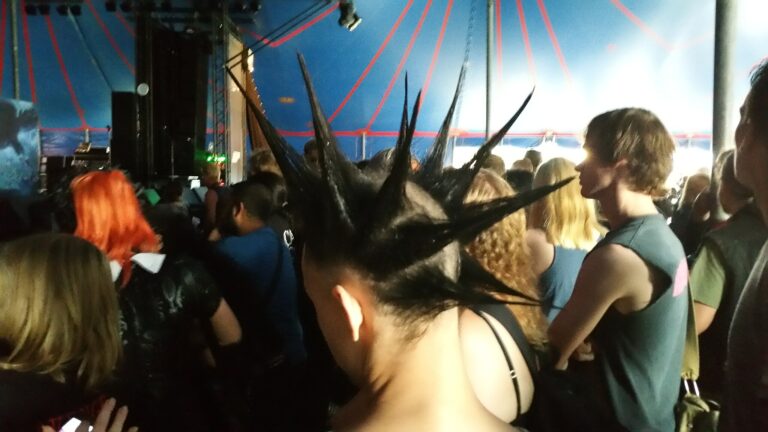
Around me, a ballet dancer pirouettes beneath the laser glow.
Il saute à travers a beer stained dance floor. He twists and twirls I try to jive.
Balancing the memory of a mosh pit on his extended knee, our sweat salts this ocean.
Carry on The wisest thing I ever said at 16 was that we all have baggage, but we can split the load.
You liked that enough to try carrying mine so long as I could carry yours but we learned
that shouldn’t be the only job of a partner.
So after, you kept my thumb-holed hoodie, half my friends. When you tossed the rest back, The shape had changed. I couldn’t get a grip. My knees buckled.
I begged, but you seemed happy to have your hands again. Since then, I’ve stuffed it all down
best I could. Whenever someone offers to take the weight of even a carry on, I take off.
Scared that when I do spill everywhere, they won’t.
Half-American Lunch Mom and Dad tried to pack me sandwiches for lunch. American cheese, ham, lettuce, and tomato on untoasted white bread. Doused in ketchup and mayo. Wrapped in a napkin and tin foil. A good sandwich
served fresh. But by lunch time, ketchup and mayo coagulate together, twisting into an off pink goop. Soaking through the bread. For a while, I stopped eating lunch. Until they noticed how much I would eat at dinner. Mom and Dad switched tactics.
Leftover dinner for lunch. Just whatever Filipino food from the night before heated in a thermos, to be served over a bed of rice in a tupperware.
Once, a white boy named Sammy offered to trade a bite of his soggy sandwich for a bite of mine. Dad loved whole peppercorns. Always too much. It was an art, picking them out. I offered him a whole spoonful, telling him it was the best part.
Nico Penaranda is a Filipino-American writer from Washington D.C. He graduated from James Madison University with a BA in English and Creative Writing in 2020 and from American University’s MFA in Creative Writing Program in May 2022. He writes on themes related to adolescence, punk rock, and mythology. His poetry can be found in Brigid Gate Publishing, Mistake House Publishing, Gardy Loo, The Keezel Review, and Z Publishing.
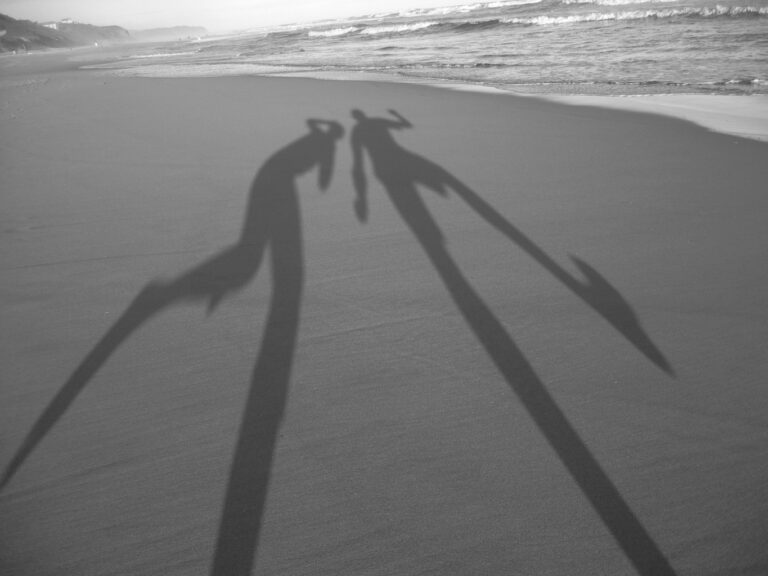
A shadow always follows you, Hollows you out, Screeching a song, telling you You’re wrong, you’re hideous: It’s insidious, but it’s inside you And outside, crawling on your skin, Creeping up your spine, Burdening your back, Deadweight that you can’t vacate, An albatross, a cross, A symbol that you cannot shed Or shred. It shows you greener grass in front Of someone else’s house, Tells you you’re in the Incorrect box, that you’re a peg Neither square nor round, That you’re a fake, A foil From which people recoil In horror, in disgust As you flake like rust, like snow, Nursing a secret you know they know. You are falling apart In all the wrong ways (As if there’s a right way) But there is this shadow You want to wish good riddance But it’s a riddle, a rattle Of deafening critique, Always pathetique, Always there, Reminding you and your half-ass Half-empty glass That it’s five o’clock somewhere.
After Samuel Taylor Coleridge
Itara Halen (she/her) is the pen name of an invisibly disabled, bisexual emerging poet based in Washington, DC who has been weaving words and otherwise making creations since she was a young child.
Image: Matthew Bowden www.digitallyrefreshing.com, Attribution, via Wikimedia Commons
Sort of Villanelle to Dylan Thomas (“Do not go gentle”) and Sylvia Plath (“Lady Lazarus”)
Your death may fit you like a shoe.
You’ve gone your way and now you’re through.
Be still, there’s nothing you can do.
The one poet spoke of dying as her art,
The other advised rage- their art came through.
But your death may fit you gently as a shoe.
Why not spend last moments in praise?
Like monks chant the day through…
Be still, there’s nothing you can do.
8 times a day, chant: “ Lauds, Nones or Vespers,
Mark off, the cadence of their days
Complines, Vigils fits them like a shoe.
And you, at night your heart beats through
Your pillow like footsteps, footsteps coming for you.
Be still there’s nothing you can do.
Rachmaninoff and Mahler showed you what to do
At least compose a dying fall—not anger but acceptance
Your death may fit you gently like a shoe.
Be still, there’s nothing you can do.
Lighter after thots, variants:
Relax, there’s nothing you must/should do
O go ahead gently into that good night.
Mom said “Everything’s going to be alright”.
David Eberhardt, 83. was a member of the Baltimore Four with Father Philip Berrigan, Tom Lewis and Rev. James Mengel. The group poured blood on draft files on October 27, 1967 and were convicted and sent to Federal prison. Eberhardt has been active on the Baltimore poetry scene since the 1960’s when he wrote for underground newspapers.
Is it a regular sight, spontaneous combustion in the shimmering heat? Still, Moses could not have been anointed in any other way— a fiery baptism on a God’s Mountain and a shepherd in an arid land, standing in bare feet.
Anything less would not focus our attention. In our peripheral vision, we can almost see the wizard behind the parted curtain. Moses is curious and turns aside to look.
God pivots fast: Psst, Moses, Moses, over here! The curtain is hastily closed. The illusion is saved. The scribes laugh quietly amongst themselves, taking a welcome break from their labors.
It is painstaking work. Every bit is carefully scripted. The Mosaic team gave birth to this extraordinary child, raised him, tested him, and presented him to the king for his approval—Israel’s hero in the nick of time.
Ma Chère Amie
I have a friend with many friends.
The Nazis occupied her country when she was a little girl her father could not preach against them in his church her family was split up for five years.
When she was 75 she survived cancer her husband is gone her grandchildren are grown she lives alone in an apartment.
At 95 she still travels by train and plane takes cabs to hear jazz and blues in an old DC church protested against racism in a thunderstorm and called it “glorious.”
She speaks four languages she loves everyone she loves our world she loves God she even loves me.
To finish the sentence When I get to heaven… she sent “Recipe for Happiness Khaborovsk or Anyplace” and under it she typed “When I get to heaven I am going to send harmonious and uplifting vibes to the world.”
I looked everywhere for that quote where did you find that I asked her did Ferlinghetti write that too “No. I did!” I want to be like her.
The Bedouin
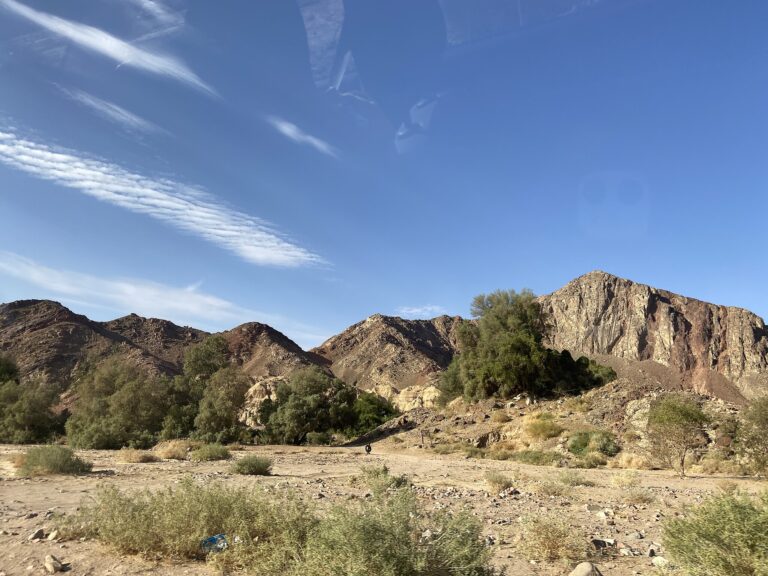
Brewing sugary, sage tea in spouted tin pots over small fires, with hobbled camels grazing nearby, Jordanian Bedouin men come in from the desert, and gather in red-striped frame tents— to tell stories, serve tea and sell trinkets and camel rides to tourists.
They wear the red and white Bedouin scarf on their heads, tied carefully or banded in place to keep out the wind, sand, cold or heat.
They claim no nation or polity— the Bedouin are nomads without borders, living in a land where travel is restricted and check points must be negotiated. They are anachronisms, wearing sneakers beneath long tunics.
In Khan Al-Ahmar, on the edge of the Judean desert, there are families of Bedouin encamped. Their women and children are generous, undereducated, unhealthy. Their long-eared goats eat cardboard out of old trash cans. Their men meet with Palestinians, journalists and those with no agenda but kindness. The Palestinians want them to join the fight against the occupation, their flag is anchored inside an old tire. One tire among many.
The Bedouin simply want to live in peace on land that will not be taken away from them by sweeping their untidy existence under their vivid, fringed rugs—as though they had never been.
I Couldn’t Sing Songs to Jesus Anymore
It was the longest show I ever did, then one day I was done. I couldn’t play a holy role, so I quit and wandered alone.
In Istanbul I flew to Israel where I rode on a camel’s back, stood smirking in the Jordan, in Capernaum I befriended a cat. I climbed all over Petra’s stones, faced the wind at the Acropolis, finally, freezing on Alaska’s ice I met Death in a plate of fish.
She was just passing through, she couldn’t stay— a traveler like me— she wanted to bring me home with her but I was going a different way.
From Anchorage to Seattle to Washington DC she turned me round and round. I’d almost lost the wheel of her when we came at last to ground.
Rachel M. Clark is a retired educator, actor and poet living in Northern Virginia, teaching English to immigrants and leading a poetry circle at her local library. She has been published in a handful of small journals in the US and the UK.