Home Blog Page 20

Two Poems By James Toupin

This poem is published as part of the Amplifying Disabled Voices special section, selected by editors Christopher Heuer, Marlena Chertock, and Gregory Luce.
 

Pain Clinic

The patient, recidivist to treatment,
stoic but not quite spartan,
prepped and stretched
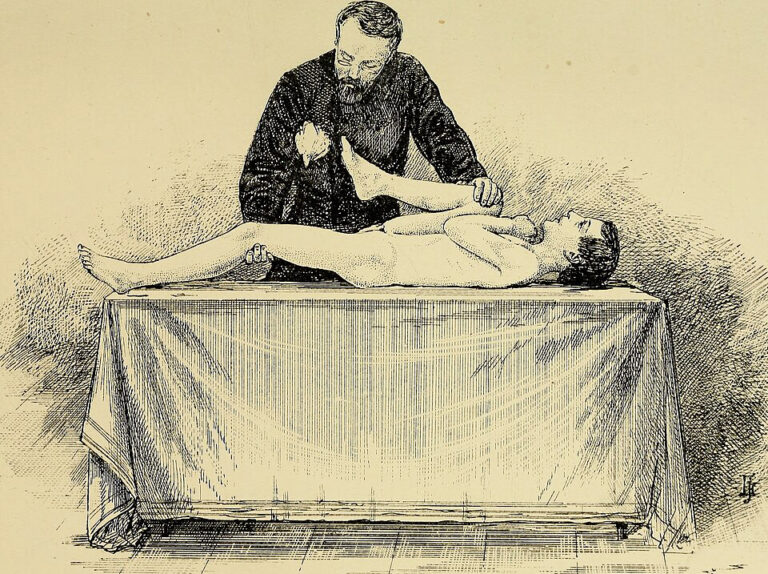
on the therapeutic torture table
to gladly accept the pain that,
it is said by the adepts,
can cancel out his pain,

emits
despite gulped breath
and gritted teeth
grunts against initial probing,
and then, third injection piercing bull’s-eye,
lets go a loud groan
not expressed: pressed out.

Theirs the experiment,
his the experience:
To whom, at any rate,
would I call out, here amongst
the touters of cure,
pals of the palliative,
legatees of the leech?

He apologizes, not that he could
disappoint those attending,
who hold no expectation of him,
but by his terse sorry
to own to the shame
that shows
he expected more of himself,

and is caught offguard
when the doctor accepts:
Next door there’s a new patient
he hopes has not heard.
The poor guy, it is implied,
might be warned off.
All must keep quiet to keep hope.
 

Severities

1

I am what you are riddled with,
when you are riddled,
the flowering of your greatest depth.

I make you turn toward me,
make you close your eyes, the better to see me,
so you see only me, who cannot be seen.

Though I make you think
you have abided too long in the light,
still I prove you to yourself:

You know no one else can place me,
until you let them know.
And yet I care no more for you

than the moss for the wall. I want
to be myself, now and now and now
endlessly, and yet seem to be you.

If I can be deadened, do not be fooled.
Who, after all, am I?
Only to heal is to solve me.

2

What clues them in,
I’m never aware of.
I can be walking along,
someone who knows me will say,
I can tell: it’s bad today.

Hitch in the step,
lean, lurch, or limp,
It’s subtle. I hadn’t known myself,
but when I’m made to mind it,
there it is: they’re right.

I know it real
outside in.

James Toupin, retired general counsel of the US Patent and Trademark Office, has published poems widely in journals and anthologies, including in Pleiades, Nimrod and Beloit Poetry Journal. His first book of poems, Upon the Century Called American, appeared in 2024 from Main Street Rag Press. He is also a published translator, of Selected Letters of Alexis de Tocqueville on Politics and Society, and writer on legal topics.

Featured image in this post is, “Diseases of the hip, knee, and ankle joints and their treatment by a new and efficient method”, 1875, by Hugh Owen Thomas, licensed public domain via Open Knowledge Commons and Harvard Medical School via wikimedia commons.
Two Poems By Laureen Summers

These poems are published as part of the Amplifying Disabled Voices special section, selected by editors Christopher Heuer, Marlena Chertock, and Gregory Luce.
 

When I Was 69

At age 69, I wondered how I should feel
when 69 was the position I could never manage
while making love or the number of poems
whose words were lost before they touched
the page. Sixty-nine thousand is probably
the number of times I wished my disability
would disappear –

Sixty-nine hundred must be the number of walks
I have taken when I put aside my worries
to enjoy the world around me.
When my husband told me, sixty-nine million times
that he loved me.
Must I always be in doubt because I am not like everyone else?

My body has its challenges.
Spastic muscles
ease with exercise;
long walks with a rollator
do not define who I am.

I will take my body
wherever it wants to go.
Pain or no pain; slow movements
Shaky hands, numb thumbs.

Off we go in cars, trains, and planes.
toward the mystery of unknown places
I will not pander to stranger’s looks.
My body is fine; I will keep it with me.
 

Just Another Day

I awake to greet a day
when my body does not yell at me.
Muscles settle peacefully in
legs, arms, back
my face does not show the worry
that often keeps me awake
In the late hours of the night.

Today I dress in pretty clothes
Earrings dangle from my ears
Does anyone really believe
an aging, disabled woman cannot
be beautiful?

I go into the city
My 4-wheel rollator will take me everywhere.
A textile show
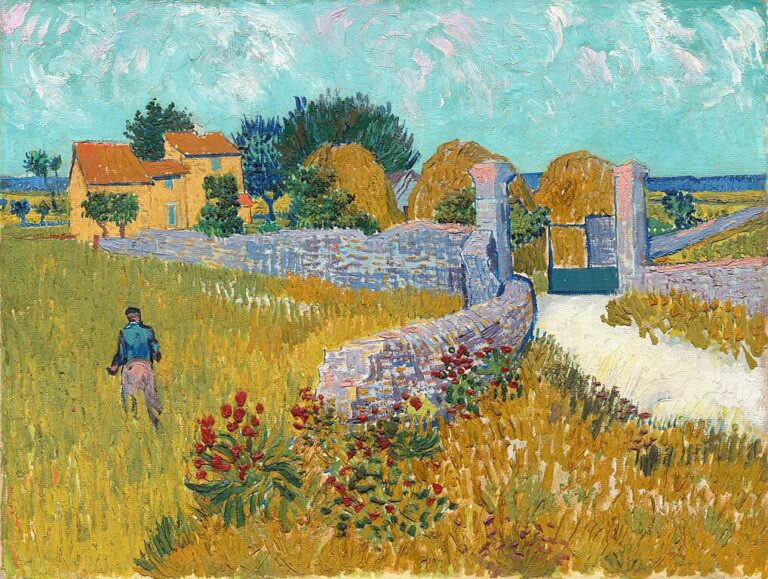
A Van Gogh exhibition
New fiction in my favorite bookstore

A friend meets me for lunch
Pasta with truffles
Chocolate bonbons with vanilla cream
She cuts my food
I ignore the condescending looks

‘I have to go’ she says
Just as we begin a real conversation

I get lost on my way home
stopping strangers for directions
They don’t wait for me to finish speaking
thinking I am homeless
or want their money.

I find my way as sun begins to set
delighting in sounds of evening
Shadow’s reflection on my hand

As a 77 year-old woman with Cerebral Palsy, since birth, I have been writing poetry since my college days. My poems attempt to portray my various life experiences with hints of humor and a love of nature. I try to express both my resilience and wonder at the various reactions to my body from others as well as myself. Still working, I am the Project Director of the Entry Point! program, sponsored by the American Association for the Advancement of Science, which connects undergraduate and graduate students with disabilities to industry, government and industry partners for consideration of placement in summer internships. Over 500 interns have secured graduate degrees in their fields and/or are working scientists. Married for 48 years, I have a marvelous daughter, son-in-law, and two amazing grandchildren, 11 and 14. My first chapbook, “Contender of Chaos” was published in 2020. “The Tree and Me” was published in last year’s Mid-Atlantic Review, and three poems were recently published in the online journal, Wordsgathering.

Featured image in this post is, “Farmhouse in Provence” by Vincent Van Gogh, public domain, image via National Gallery of Art via Wikimedia Commons.

Ode to Spouses of Diabetics and How They Find Us by Ephraim Sommers

This poem is published as part of the Amplifying Disabled Voices special section, selected by editors Christopher Heuer, Marlena Chertock, and Gregory Luce.
 

ODE TO SPOUSES OF DIABETICS AND HOW THEY FIND US

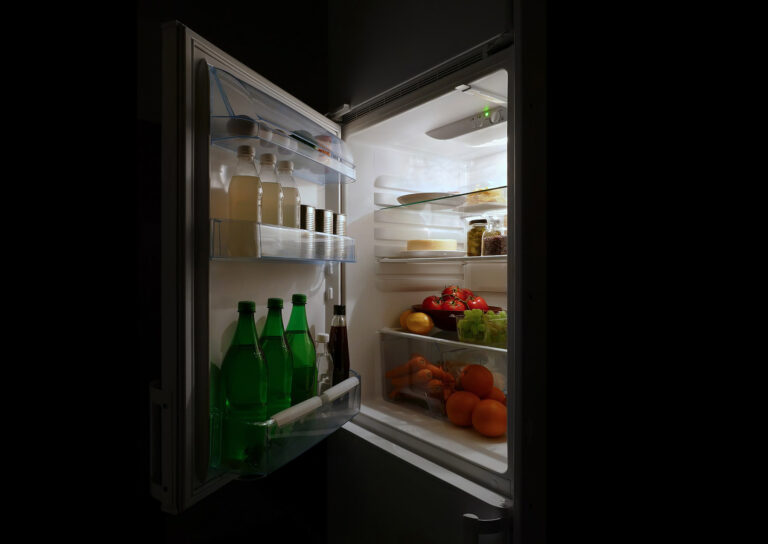
in the darkened kitchen
at 3:16AM
in our underwear shirtless
spotlit by the light
of the open fridge
our right hand wearing
a whole rotisserie chicken
like a winter mitten
like an edible oven glove
a scattering of exposed bones
across the linoleum all around us
like the leftovers of already been hatched insects
a few cracked pistachio shells
like oversized birdseed
and two opened rectangles
of naked white cheese
are waiting to be bitten into
on the white windowsill
while a squirt of mustard
on the microwave’s see-through face
dribbles down in slow-motion
and we diabetics are half drunk
not on booze
but on two dizzy
and opposite truths
the brief half-open window
where treating low blood sugar means
eating whatever savior we want
in the name of survival
and what a joy to abandon the nuisance
of nutritional charts
to wherever they tumble
out of existence
because we have returned to the heaven
of unencumbered eating
and always our lovers watching
like quiet shepherds in the background
like rock band managers
one eye on their lover on stage
one eye on their lover’s glucose monitor
themselves in their own polite dance
between when to let us paddle further
into the pantry
and when to throw us the grappling hook
to pull us out of the deep
so holy so so holy
are our lovers
who keep chaperoning us through
this delicate dodging of our own deaths
because what brief windows
between deadly tidal waves
all of us together as couples must rediscover
the muscles to open up wider and to laugh inside
and to laugh outside too
for what has been dangerous
on this tiny night
in this little minute
will now be survived
so back to this brief delight
of us diabetics at 3:17AM
beside the cool cherry pool
of a gallon of Greek yogurt
or a whole cherry pie
or a half a tray of cold lasagna
on the counter
and all of the waters
tasty and calm and wide open
and all of us about to shallow-wade
no handed
and with our whole faces
as if snorkeling
and without thinking finally (thank you)
right into every single one

Ephraim Scott Sommers is Type-1 Diabetic and the author of two books: Someone You Love Is Still Alive (2019) and The Night We Set the Dead Kid on Fire (2017). Currently, he lives in Rock Hill, South Carolina and is an Associate Professor of English at Winthrop University. He is also an actively touring singer-songwriter. For music and poems, please visit: www.ephraimscottsommers.com.

Featured image in this post is, “Open refrigerator with food at night” By W.carter – licensed creative commons via Wikimedia Commons.

Surgery by Makena Metz

These poems are published as part of the Amplifying Disabled Voices special section, selected by editors Christopher Heuer, Marlena Chertock, and Gregory Luce.
 

Surgery

Waiting is the worst part. Time feels like a guitar
being tuned in my chest, the string winding

tighter and tighter until the nylon snaps. I grieve
in flat notes. My mind’s out of tune. My scars

carry the dissonance. My head hurts –
my throat plucks anxious melodies. A sharp

smell of astringent goes into my IV.
The doctors are blue as a ballad. A rhythm

taps through fingers. Tools are prepared.
My hand is held and in 10, 9, 8-

the anesthesia echoes. While I sleep, I listen
to the music of bone saws and scalpels.
 

Makena Metz is a writer and songwriter for the page, screen, and stage. She has an MFA in Creative Writing and MA in English from Chapman University. Her prose and poetry have been published with The Literary Hatchet, The Clockhouse Review, For Page and Screen, The Fantastic Other, The Bitchin’ Kitsch, Arkana, Strange Horizons, and many more. Find her work on Chillsubs or @ makenametz on social media and check out makenametz.com.

Featured image in this post is, “Fire breathing “Jaipur Maharaja Brass Band” Chassepierre Belgium” by Luc Viatour, license via creative commons, wikimedia commons.

Two Poems by C L Bledsoe

These poems are published as part of the Amplifying Disabled Voices special section, selected by editors Christopher Heuer, Marlena Chertock, and Gregory Luce.

This Is How the World Ends

This is how the world ends, cringing
from the noise of my upstairs neighbors.
Elephants are no longer endangered. Just once
I wish I could sleep the night. This is a lie;
Id like to sleep every night and every day.
I never want to leave the apartment again.
Is that their fault? Why not.
This is how the world ends, wearing the same
pajamas a week in a row. Watching Star Trek
reruns on a loop. The world doesn’t end,
it just cycles through a new terror. Someday,
the sun won’t shine for you. Probably some
day this week. Fridays are particularly tricky.
This is how the world ends, never on time.
Just waiting for something to happen.
It will whether you want it to or not.
That’s the thing about the world. It just
keeps going.
 

You’re Dead

You’re dead, and I pulled a load of laundry
out of the dryer and set it on the floor so
I could dry my pants.
You’re dead, and now no one will tell me
the plot of an episode of MASH.
I got my heart broken, and I have to do my taxes.
I drink all day, and you found Jesus.
You’re dead, and we can’t afford a stone.
You’re dead, and I don’t fit in my suit anymore.
At the grave, my cousin kept talking about how gray
my beard is. I’m surprised he was sober enough
to notice.
You’re dead, and I have to move to be closer
to my daughter.
My boss set up a weekly meeting, and three-quarters
of the time, we all log in and wait twenty minutes
while he never shows.
You’re dead, and I told you what you meant to me,
but it feels like not enough.
You’re dead, and I forgot for a little while
that this is the real world.
 

Raised on a rice and catfish farm in eastern Arkansas, CL Bledsoe is the author of more than thirty books, including the poetry collections Riceland, The Bottle Episode, and his newest, Having a Baby to Save a Marriage, as well as his latest novels If You Love Me, You’ll Kill Eric Pelkey and The Devil and Ricky Dan. Bledsoe lives in northern Virginia with his daughter.

Featured image in this post is, “Kanapownik (Couch Potato) Wroclaw dwarf 02” By Pnapora – licensed creative commons via Wikimedia Commons.