Home Blog Page 23

Four Poems by Hari B. Parisi

Change of Elevation

When we first moved here, birds—
red-headed house finches, I believe,
a family—twittering high up

in the blue spruce that hangs
from the neighbor’s yard. You can’t see
them. The mother’s made sure of that.

This town is where I grew up. Left
at eighteen. I’ve come back. Family
is here. Mountains to the west, broad

roads I used to drive. I’ve been told
it takes two years—adaptation.
I’m impatient to get there.
Not so sure I’ll ever arrive.

The city is gone
for us. How do you grieve the sea,
the Jewish deli on the corner, cheering

from the stands with 40,000 fans,
driving the Saturday streets to lunch with
a friend? Now, three thousand feet up—

no purple jacaranda, no spindly palms,
bent to the offshore breeze. No buzz.
It’s a different kind of lovely.

First Snow

It arrives without fanfare, without drama, at dusk
on a Sunday in late November. I don’t see it come
down, catch a glimpse through a foggy window—

draping the bent fir beside the pond, brushstroke
sweep across the top of the fence that runs between
neighbors, crystalline spikes on blades of browning

grass. It’s been decades since I’ve witnessed the first
dusting of the season. It’s going to snow more in
the coming weeks, months. Winter has not even begun.

There will likely be days when I won’t be able to get out
of the driveway; below zero days with icy streets, when
I’d do anything to be in the tropics wearing a tank top

and shorts; days I’ll pull on boots, gloves, a knitted cap
and fall back into deep drifts, just to feel the penetrating
cold, like I did when I was five. Today, after a long week

of grief and sorrow, questioning what is good, what is
fair, I take it as a sign, this smattering of pebble white,
quiet soothe of it—sleep the night, know I’m still alive.

Strawberries

The metal racks in front of Bi-Mart are jam-packed with baby geraniums,
silver-leafed lavender, red, purple, and pink phlox. Succulents in starter pots:
Hens and Chicks, Turtle Shell, Donkey Tail, Blue Chalksticks. Roses, plain-Jane
shrubs, and saplings in five-gallon tubs, droop from the mountain-high heat.
I twist through the aisles, looking for plants to plug into barren spots in the beds
where perennials died off from the freezes this winter. My husband beelines
for the strawberries, plucks six of the best from a flat, places them in the cart,
stands, toe-tapping, as I round up my choices. At home he plants the strawberries
18 inches apart on a barren strip of gravel-strewn ground skirting the driveway.
After they’re in, he digs through a box of sprinkler pieces, ferreting out plastic
tubing, elbows and heads; sets up a drip system to transport water to the molded
dirt basins at the base of each plant. I sit to his right, wresting clover, dandelions
and errant fescue wedged in a short rock wall. “The deer will eat them, you know.
Strawberries are like dessert to them.” He shakes his head, “Maybe, maybe not.
I like the thought of them being here.” Brought up on a farm, where they raised
their own food; canning, curing, freezing fruits, vegetables, and meats—laying it
all in before first freeze, it’s what he knows. Drip lines are tested and deliver,
ground raked and driveway swept. Twilight has passed. From the upstairs window
I can’t quite make out the strawberries, but I know they’re there, taking root.

We lived in a flat town

in a flat house with a grizzled backyard
open to the dirt and graveled
alley, lined with banged-up
tin trashcans, knee-high weeds:
a stopover refuge for the occasional stray.
The neighbors directly to our south kept
mostly to themselves, the Hunts—
both lanky-tall, with sunbaked lips
and brows, a measured old-school countenance.
He was a lawyer. She baked latticed pies,
grew tulips, daffodils.

The day my father chopped off
the chicken’s head and its body ran
heedless, up and down the alley,
blood spouting, spewing,
and my three sisters and I
unable to utter a word in the witnessing,
Mrs. Hunt walked out her back door,
across her manicured lawn
and brought us popsicles—
handed them to us one by dripping one,
over the low-slung picket fence—
cherry-flavored; icy cold.

Originally published in Cola Literary Review.

Hari B Parisi’s (formerly Hari Bhajan Khalsa) poems have been published in numerous journals, most recently in Atlas and Alice, Paper Dragon and Poetry South. She is the author of three volumes of poetry, including She Speaks to the Birds at Night While They Sleep, winner of the 2020 Tebot Bach Clockwise Chapbook Contest. She has recently moved from the city back to her hometown in the heart of Oregon.

Image: W.carter, CC BY-SA 4.0 https://creativecommons.org/licenses/by-sa/4.0, via Wikimedia Commons
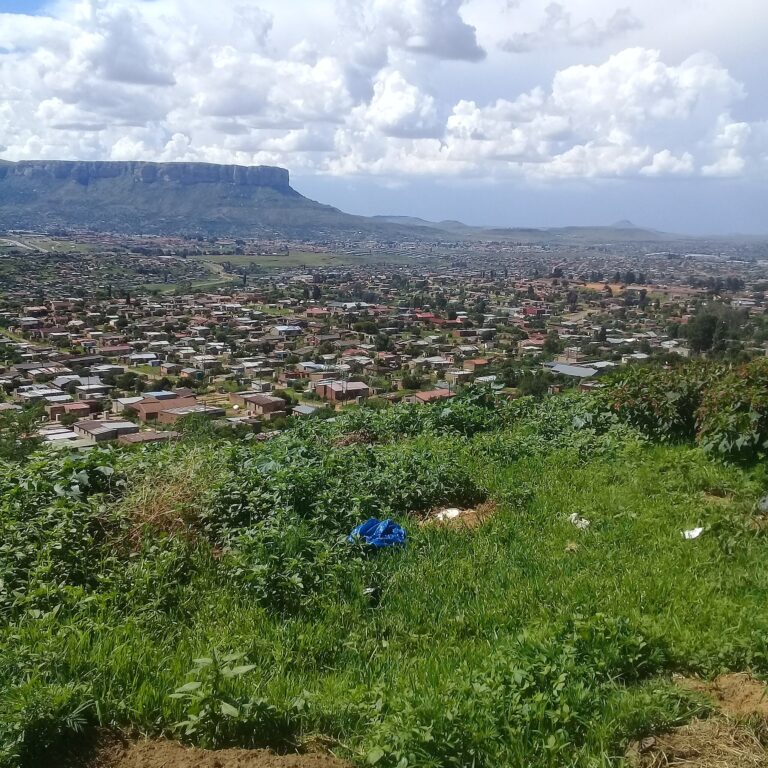
Two Poems by Antreka Tladi

0

ZULU, THE LANCE AND THE LANGUAGE

First, the language refused to enter my ear and be understood.

Instead I chased words around,

words that hovered beyond grasp

and flew like swallows beyond Inanda hills,

 beyond Ixopo mountains

and down to the Umgeni rivers.

Zulu held a knobkerrie and threatened to knock

my head every time I pronounced a word wrong,

Some phrases came crushing down like violent waves

at Isipingo beach or stretched my tongue like a tent

and nailed it upon my teeth.

I remember some time ago, I tried addressing a meeting

of the Indunas at Umthimkhulu in isiZulu – Oh dear me;

It wasn’t my intention to kill those warriors with laughter

“ Uthini Lo muntu?” they asked.

It felt as if my mouth was a jungle –

A dense forest of entwined foliage,

Where it was hard to come to comprehension.

It felt as if my tongue grew a tangle of grass,

The sharp blades piercing my palate.

They didn’t know it was hard speaking Zulu,

It had to do with the clenching of jaws

and the wielding of shields and spears.

WHAT’S THIS PLACE AGAIN?

A herd of cattle still graze in the field

On the plot of land where the authorities

Had proposed to build a shopping mall

Its proposed name on the rust-stained board

Begins to fade and peel away

The windmill that used to supply the villagers

With water

Had since went dry and leans heavily against

An old crumbling concrete slab

And so are hopes and dreams of a community

Hanging in spider-webs

I sit beneath the Marula tree and watch

The black bull in the eye where it graze

The grass is dry – the land parched

The name of the village on the signpost

Had faded away too, a passer-by stops to ask:

“What’s this place again?”

Antreka Tladi was born in Jane Furse, Limpopo, Republic of South Africa. He grew up in Phokwane, Brooklyn where he received his primary and secondary education and currently lives. His poems have appeared in local and international anthologies and journals including the Avbob Poetry Project, Calabash Literary Journal, New Coin and the Otherwise Engaged Literature and Art Journal among others. His debut collection of poetry titled Mother’s Kitchen and Other Places was published in 2023.

Image: Mpele Thokozane, CC BY-SA 4.0 https://creativecommons.org/licenses/by-sa/4.0, via Wikimedia Commons
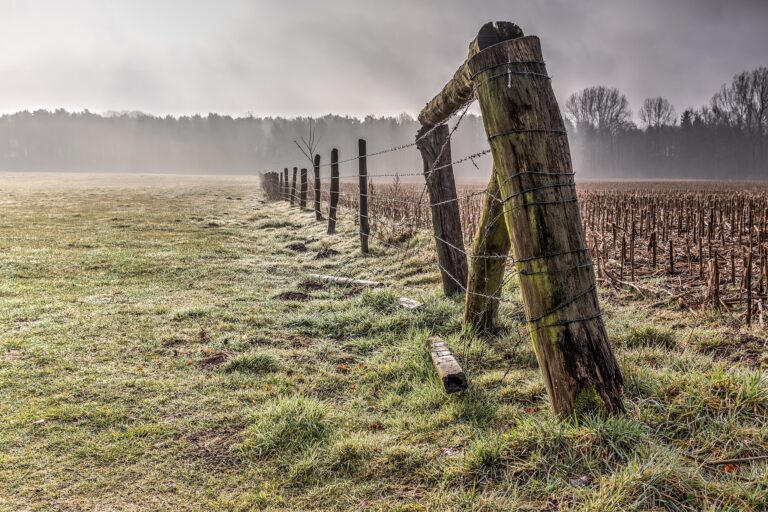
Firework Scars by Carter Vance

0

Firework Scars

I stepped by the waterfall,
memories restless, awakened
from induced night slumber,
drugged with bottle contents
until the pain of tears vanished

Until the misery of wrought hands,
twisted iron becomes but another
breath catching exercise, a cleared
throat from pasts immemorial to

Walk beside in space and time
to final resting. A blackout
after wounded crackle of static
on the airwave, a signal taken
too little from words

We passed as codes in dark
corners, back and forth through
wire fence.

A look at the roadkill, the tar
paper pine, the burn rubber leavings
of last year’s party favour revolution

Tells of nothing, save regretted
rancor: the lonely scribe dying
with his head firmly perched

To righteous side he’d never take
in fear of too much certainty.

Carter Vance is a writer and poet originally from Cobourg, Ontario, Canada currently resident in Gatineau, Quebec, Canada. His work has appeared in such publications as The Smart Set, Contemporary Verse 2 and A Midwestern Review, amongst others. He was previously a Harrison Middleton University Ideas Fellow. His latest collection of poems, Places to Be, is currently available from Moonstone Arts Press.

Image: Dietmar Rabich / Wikimedia Commons / “Dülmen, Kirchspiel, Wiese in der Bauerschaft Börnste — 2016 — 1523-9” / CC BY-SA 4.0For print products: Dietmar Rabich / https://commons.wikimedia.org/wiki/File:D%C3%BClmen,Kirchspiel,_Wiese_in_der_Bauerschaft_B%C3%B6rnste2016–_1523-9.jpg / https://creativecommons.org/licenses/by-sa/4.0/- Alternatively: Dietmar Rabich / https://w.wiki/9AYK / https://creativecommons.org/licenses/by-sa/4.0/https://w.wiki/9AYK, https://w.wiki/_tsVi (Shortlink)

Four Poems by Nico Penaranda

0

The Cost of Belief

Eighteen thousand dollars a year,
a Jesuit tuition fee.

How much Mom believed
I wasted now that I was an “atheist.”

I tried finding God
everywhere I was told to look.

His house, in prayer, in the stained glass of saints sad,
even under the pews. The Others must have laughed. I’d never find them
in a place this stifling.

Grand Pas

Half past last call,
I cue one more song,
set my headphones atop
the turntables and dive

into the sound I have shaped
within this hollow space.
Friends once flooded here.
I conjure their memory.

Around me, a ballet dancer pirouettes beneath the laser glow.

Il saute à travers
a beer stained dance floor.
He twists and twirls
I try to jive.

Balancing the memory
of a mosh pit
on his extended knee,
our sweat salts this ocean.

Carry on

The wisest thing I ever said at 16
was that we all have baggage,
but we can split the load.

You liked that enough to try
carrying mine so long as I
could carry yours but we learned

that shouldn’t be the only job of a partner.

So after, you kept my thumb-holed hoodie, half
my friends. When you tossed the rest back,
The shape had changed. I couldn’t get a grip. My knees buckled.

I begged, but you seemed happy
to have your hands again.
Since then, I’ve stuffed it all down

best I could. Whenever
someone offers to take the weight
of even a carry on, I take off.

Scared that when I do
spill everywhere,
they won’t.

Half-American Lunch

Mom and Dad tried to pack me sandwiches
for lunch. American cheese, ham, lettuce, and tomato
on untoasted white bread. Doused in ketchup and mayo.
Wrapped in a napkin and tin foil. A good sandwich

served fresh. But by lunch time, ketchup and mayo coagulate together,
twisting into an off pink goop. Soaking through the bread. For a while,
I stopped eating lunch. Until they noticed how much
I would eat at dinner. Mom and Dad switched tactics.

Leftover dinner for lunch. Just whatever Filipino food
from the night before heated in a thermos,
to be served over a bed of rice in a tupperware.

Once, a white boy named Sammy offered to trade a bite of his soggy
sandwich for a bite of mine. Dad loved whole peppercorns.
Always too much. It was an art, picking them out. I offered him a whole spoonful,
telling him it was the best part.

Nico Penaranda is a Filipino-American writer from Washington D.C. He graduated from James Madison University with a BA in English and Creative Writing in 2020 and from American University’s MFA in Creative Writing Program in May 2022. He writes on themes related to adolescence, punk rock, and mythology. His poetry can be found in Brigid Gate Publishing, Mistake House Publishing, Gardy Loo, The Keezel Review, and Z Publishing.

Image: Someone Not Awful, CC BY-SA 4.0 https://creativecommons.org/licenses/by-sa/4.0, via Wikimedia Commons

Shadow by Itara Halen

0

Shadow

A shadow always follows you,
Hollows you out,
Screeching a song, telling you
You’re wrong, you’re hideous:
It’s insidious, but it’s inside you
And outside, crawling on your skin,
Creeping up your spine,
Burdening your back,
Deadweight that you can’t vacate,
An albatross, a cross,
A symbol that you cannot shed
Or shred.
It shows you greener grass in front
Of someone else’s house,
Tells you you’re in the
Incorrect box, that you’re a peg
Neither square nor round,
That you’re a fake,
A foil
From which people recoil
In horror, in disgust
As you flake like rust, like snow,
Nursing a secret you know they know.
You are falling apart
In all the wrong ways
(As if there’s a right way)
But there is this shadow
You want to wish good riddance
But it’s a riddle, a rattle
Of deafening critique,
Always pathetique,
Always there,
Reminding you and your half-ass
Half-empty glass
That it’s five o’clock somewhere.

After Samuel Taylor Coleridge


Itara Halen (she/her) is the pen name of an invisibly disabled, bisexual emerging poet based in Washington, DC who has been weaving words and otherwise making creations since she was a young child.

Image: Matthew Bowden www.digitallyrefreshing.com, Attribution, via Wikimedia Commons