Home Blog Page 42

Three Poems by Pamela Huber

0

Migration Shift

Their calls announcing winter came first,
drawing neighbors to doorways and drivers to slow
for the spectacle of a black and white aurora,
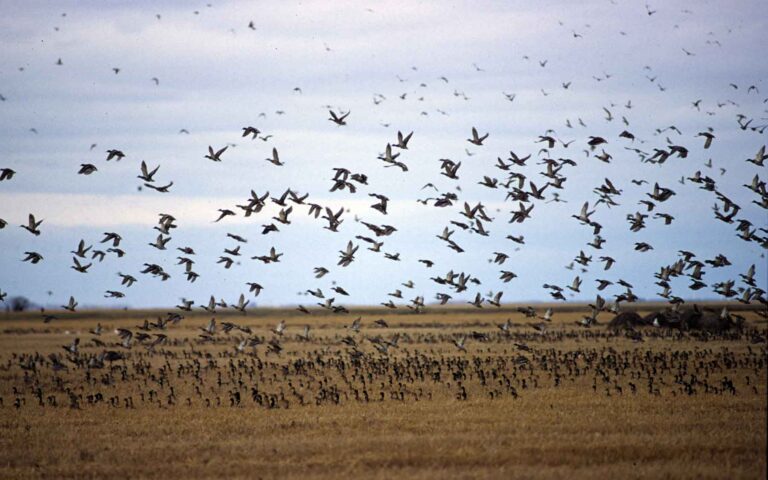
20,000 sleek bodies streaming across the midday sky.
They asked for an audience, a standstill, a chance
to slow and control time.

They drew a sheet over the sky in waves,
tsunamis of feather and squawk set to break
against the shores of Bombay Hook,
marshy heart of the Atlantic Highway, gem
in a diadem of wild touchstones for wintering waterfowl.

Snow geese enjoy the Delaware coast
and her wide farm hips flared with winter wheat.
They’re disappointed each year to return
and find another farm turned to spade and box,
their feasts a bulldozed memory.

When 1,000-fold more fowl
than your grandfather ever saw,
born from overprotection and crop glut,
come calling with 1 million ravenous mouths
ready to turn salt marsh to mud flat
and strip your field bare in two days —
plant radishes instead of wheat.
Their flocks thin the next year.
The salt grass still sways in the thin sunlight.

Neighbors stand in their doorways
looking at the blue sky, wondering,
Where have the trumpets of winter gone?
They whisper, They’re coming later this year.
It must be the warming.
The farmer sets her alarm back a few hours.
She can finally sleep.

Cassiopeia

They called me vain. Boastful.
As if they couldn’t see the stardust
sparkling under my skin.

Creamy phosphorus,
sparkling magnesium,
silver potassium,
the glossy sheen of carbon —
a whole galaxy of potential.
It’s there in the white of my eyes,
in my daughter’s lean arms
miraculous as moringa trees.

They called me vain for seeing
the stars in our blood, as if those
pale sea nymphs fawning over sailors
and never drinking the sun
could rival us. We are queens.
These minor gods and their precious feelings,
hurt to learn that we women have more
strength than they’ll ever know.

What good are men? A vain god to terrorize
a daughter to spite her mother.
A father to sacrifice her. A husband
to abduct her, to save her,
the blood of another woman
still staining his hands. He’ll devour her
before the monster can. And after all
this punishment for not knowing my place
in the order of gods, I am to be cast
into the sky chained to my throne,
unable to hold my daughter
left just out of reach?

No, we can only trust the moon, the one
goddess those sea gods and sailors bow to.
She sits with me as I plunge into the water
each night, helping blot out my humiliation.
But the vain god is a fool, because none
believe it’s in vain to look upon me now.
I am a queen and my throne sits
on the luminous arm of the galaxy.
To gaze at the heavens is to see me.

I am the sky, and women know
that means I am God.

The stardust in my skin will not die.
Each supernova seeds
a new generation of stars
and elements,
and I have two burning inside me.
You’ve seen them with your own eyes.

Come closer. See?
I’ll break these chains yet.

Sussex County

Buoyant: You first learn to swim floating in the West Bay, your mother’s hand along your spine telling you to arch your belly at the clouds, your feet afraid of touching muck bottom where razor clams and crabs wait to slice your wrinkled feet. Your parents throw you into the ocean at the fishing beach, tell you to acclimatize your eyes to salt, absorb its sting but avoid jellyfish and your father’s baited line. Crushing waves teach you to hold our breath, and your father and youpractice in tunnels under Baltimore, as you pass graveyards, 30 seconds, don’t breathe, 60, don’t, 90, don’t breathe until you must. This practice prevents drownings when you’re six, eight, ten. Odd numbers are lucky so you count out the wake of your papa’s boat in sets of three, dive for rings in the campground pool in sets of five. You decide to become a lifeguard so you can swim laps on lunch breaks, holding your breath the whole length of the water.

Marsh: You’ve never met mud you didn’t love, once you got past the smell. Rich tidal flat at daybreak, when the water is low and the reeds wilted. Mud bubbles with thousands of holes where bivalves pucker their exhalations. The sand is sighing, singing, sucking down forgotten seeds carried on the wind. The Lewes canal is hot and dry at low tide, and the fish languor in the cool mud, refuse to bite. Horseflies nip instead. You place your crab pots as close to the grass as your boat will allow, pray not to suck mud into the motor by Love Creek, pole into the soft bottom to gauge depth. You lie on the sandbar under the fishing pier, fingers clutched around
tumbled sea glass, and dream of mud in brackish harmonies.

Migratory: Straight lines down Route 1 South and 50 East deliver you on biannual cycles to your childhood home, the marshland, stomping grounds for millions of migratory birds: egrets, herons and ibis, Canadian geese and sea ducks. Out in the bay, spy unguarded osprey nests scouted by bald eagles, carnivores with wingspans longer than your father, eager for tender spring eggs. In May, seagulls peck and jostle for the wriggling meaty dinosaur legs of spawning horseshoe crabs flipped over in their hunts for mates, their tails failing to right them again. Come October, seagulls return to hover just offshore as turtles hatch from their clutches and sprint blind for the sea. Your earliest migrations are south for annual school trips, summer vacations, the Seawitch Festival and Polar Bear Plunge. When your breeding grounds change, you scout new routes to the east on long weekends that make the migration worth the Bay Bridge traffic. You live to fly through corn country at golden hour, chasing sunsets and outrunning grazing deers’ dusk. But you’re so far west now, it takes metal eagles’ wings to deliver you. Home is not home for long, but you always, on instinct, return.

Pamela Huber is an MFA candidate in fiction at the University of Montana who was raised on the waters of the mid-Atlantic. Her writing has appeared in numerous journals including Atlanta Review, Furious Gravity, and Delaware Bards Poetry Review, and has received awards from Glimmer Train and been nominated for the Pushcart Prize. She lives online at pamelahuberwrites.com.

Image: Travel Manitoba, CC BY 2.0 https://creativecommons.org/licenses/by/2.0, via Wikimedia Commons
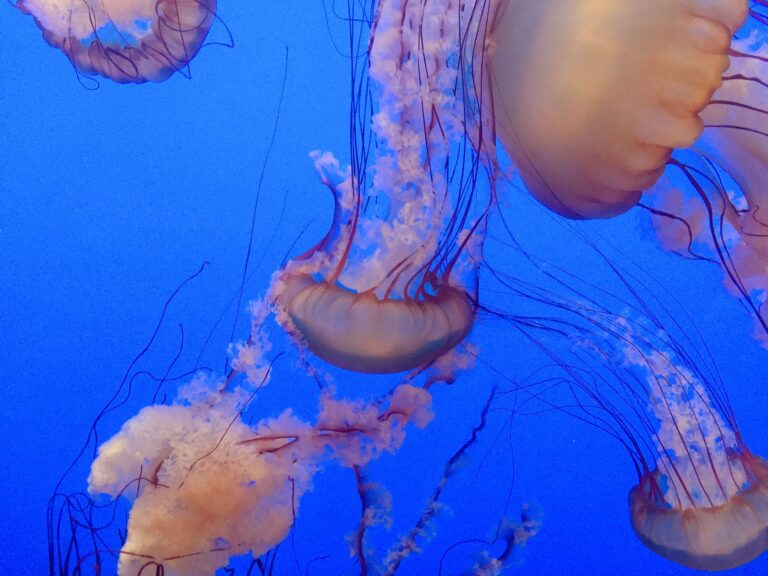
Three Poems by Kristin Kowalski Ferragut

0

Alive on Cuckold Creek I

My thalassophobic daughter monitors
my adventures. I’m known to cross unfamiliar
waters, over my head, with wind, stinging
invertebrates, and at times little steam.

We doubt she could save me from my own wild
or threats below. She resists walking
onto the dock, settles on the porch, immerses
herself in different dangers — TikToks on climate

change, being young and radically considerate.
We doubt I could save her either, my futile
suggestions for 20th century pastimes, my worry
and generosity. But like my mom says before I hit I-95

going 110 kilometers per hour for ten hours,
Call when you get home.
Her old jalopy shakes above 50 and seems
to have narcolepsy. No one points out the inanity

of the ask. We smile and hug and maybe
thoughts of her waiting prop my eyes open
against lullaby of tires in the drowsy last stretch
of Maryland. Maybe my girl looks up from

the news to watch me glide just before being crushed
by the story’s punchline. The ways we save each other,
keep us afloat. As the sky blushes pink, I turn
home to her, despite temptation to head into night.

(Thalassophobia is fear of deep water.)

Alive on Cuckold Creek II

for Coley

In its grazing rock and marsh splendor
nothing invites abandon like water. I will

go in, be rocked, claim buoyancy. I promise
to be careful, as heartened by your concern

as I am the glinting creek. We watch the bloom
of jellyfish from the dock and I understand

to protect my skin. Drag a kayak through muck
until free to glide. Later you ask, Didn’t you

take the dead crabs at the edge as a sign? or how you
fell in mud? Oddly, I did not. My mission
was clear — take to water.

The Great Blue Heron doesn’t flinch as I approach.
He looks into the middle distance, watching
souls mingle with clouds. The reptile I mistake
for a crocodile slithers closer, a spirit guide

past piers and chairs until light peeking from
cabins are left with plastic and metal far behind.
It’s just me, current, and other creatures inhaling
earthen musk in brackish water I scoop with palms,

to sprinkle on limbs and chest, a kind of baptism.

I turn at the dam, row faster toward your waiting. Plan
to step on the dock to subvert mud — Kablooey!

Don’t remember the tipping or the boat-drag-swim
then creep through sludge. You tell me I cursed a lot.

Don’t remember tentacles brushing my arms and legs
but I burn and itch. I remember you ask, What can I do?

You feed me Sun Chips and wine, poke fun. My
foolhardiness and your care level our dynamic; your

growing up and my return to my pre-Mama offbeat propel us
toward hilarity, connection. You hope I learn

a lesson, but it would be a perfect dream to do it all again.
Nothing invites abandon like water. I go in.

Creative Seeing

for Grace Cavalieri

I know the pull to reach into depths
of dark and heavens. I will

grasp soft, pointed truth of a moment,
a movement. Called by her illumination

of space, color. Her name — a smile,
that guides and propels us toward

the action of words. Such a slight woman
to reach her arms around the whole world —

around laureates, the obscure, every bombshell
and mother. Perhaps she descends

from Aliens to whom some credit
ancient wonders, or she is the wonder, making

Poets feel like miracles walking in a world
of miracles; rendering forms supernatural.

If I’m merely a player, may she be the playwright. Even as
supporting character or as a bad guy, I know I’ll glimmer.

Kristin Kowalski Ferragut writes poetry, songs, short stories and essays. She lives in Maryland where she teaches, plays guitar, sings, rides her bike, and hosts the DiVerse Gaithersburg Poetry Reading and Open Mic. She is author of the full-length poetry collection Escape Velocity (Kelsay Books, 2021) and the children’s book Becoming the Enchantress: A Magical Transgender Tale (Loving Healing Press, 2021). Her poetry has appeared in Beltway Quarterly, Bourgeon, Anti-Heroin Chic, Fledgling Rag, Little Patuxent Review, and Gargoyle Magazine among others. More, including her blog, Poetry & Other Mystical Space, can be found at https://www.kristinskiferragut.com/

Image: Photollama, CC BY-SA 4.0 https://creativecommons.org/licenses/by-sa/4.0, via Wikimedia Commons

Two Poems by Allan Ebert

0

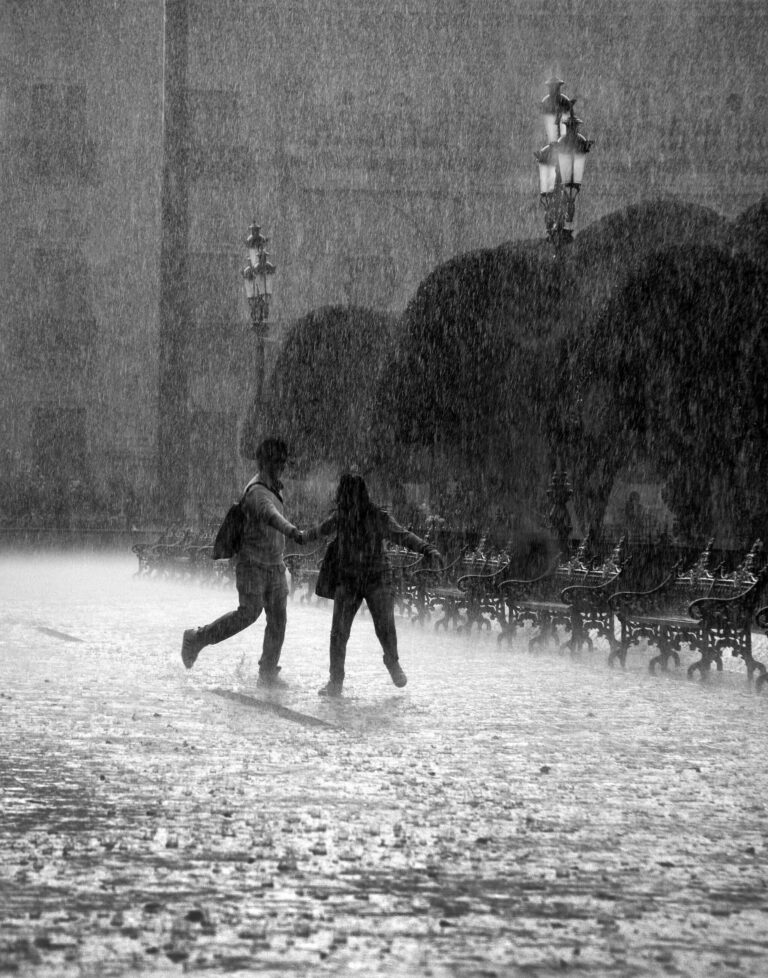
RAINY DAY SOULSONG

It’s time to quiet
the jealous past
find new storms
to rile our blood
one eye
on tomorrow
the other, wise
to yesterday
sharp as diamonds
and the sky opened
to the echo
of an umbrella

Musings

When I lend you a thought

you steal me a line

out of thin air

we exhale the sublime.

Allan Ebert writes: I was published in numerous online and print journals in 2023-2024 including, Samfftyfour; Ariel Chart, Winged Penny Review, The Bluebird Word, and Bourgeon. I have five poems forthcoming in The Academy Of The Heart. My poem, A Pretty Room For My Books, was published in the Mid-Atlantic Review (inaugural issue) and nominated for a 2023 Pushcart Prize.

I write what falls on my noggin (a cancer-surviving boomer) revise, revise, and feel happiest when writing, published or not (although being published is nice!). My motto is based on a quote from James Baldwin, “You want to write a sentence as clean as the bone. That is the goal.”

Image: © Tomas Castelazo, www.tomascastelazo.com / Wikimedia Commons

Three Poems by Joel Vega

0

The Pruning

Deadhead
the ground
where petals lay,

not the blossomed
branch, rivered
& riveted

this garden,
this square
of pear & pine.

Unlock
the pruning knife,
cut the roses

back to thorn,
back to distel,
to angled light.

Be frugal,
light-handed,
bent shrubs

are rain-heavy,
grit-weary,
saddled with

the days
of May’s
cloud weeping.

This June
cuts back
to essential

bone, the boughs
watered
& wounded.

Fold your knees
before the muted
ground, listen

to the sparrow’s
unhinged flight,
this garden’s

early rains,
this garden’s
ear & pain,

steady hum
of the pruning
shears, the shift

of evening light,
moving
like open

palms, across
the tunneled earth,
the silent mound.

Dandelions

Scattered pod,
be electric
on my path,

make me weary
in crowded
company, make

my exit
swift, cleaner
than the sun

shining on
my back,

your
propeller wings,
envy of angels,

their prayers
cannot compete
with the cathedral

of your scattered
seeds. Altar of
filament,

random in
desire,
your lust

for rooting
is earthbound.
I incline to

light’s glimmer,
the side
of lunar shadow

heavy on
the morning dew.
But I confess,

I am neither
friend or foe,
I greet you

as necessary weed,
your face
of thorns, elusive.

Postscript on Dandelions

The garden has only known weeds, and you, slender plant with spiked leaves, your presence is light-powered, sun-chased. Your head a globe of silver seeds and they are multitude, riding the winds, splitting your many-cornered hearts to escape the rootedness of your birth. Who decides the trajectory? The destination? In the books, you are lion’s tooth, edible to many tongues, food for linnets, moths. Your seed-head, spherical, a traveler of secret distances, your taproot a fuel engine, bringing up nutrients for shallow-rooting plants. If you succeed to live over 30 million years, you will succeed to live another million. Your many doors are fluid, open by day and closed at night. Edible your florets, your leaves. From Alaska to Kazakhstan, bring your hairlike mantel, turn your clocks. Bridge the continents, your ruderal species will thrive, on disturbed land they will survive.

Joel H. Vega is the author of two poetry collections ‘Leviathan Days’ (2023), and ‘Drift,’ (2018) published by the UST Publishing House in Manila, Philippines. ‘Drift’ won the 2019 National Book Award for Poetry in English in the Philippines and an equivalent prize from the Philippine Literary Arts Council. He lives and works in Arnhem, The Netherlands.

Image: Fujugu, CC BY-SA 3.0 https://creativecommons.org/licenses/by-sa/3.0, via Wikimedia Commons

Two Poems by Jonathan Lewis

0

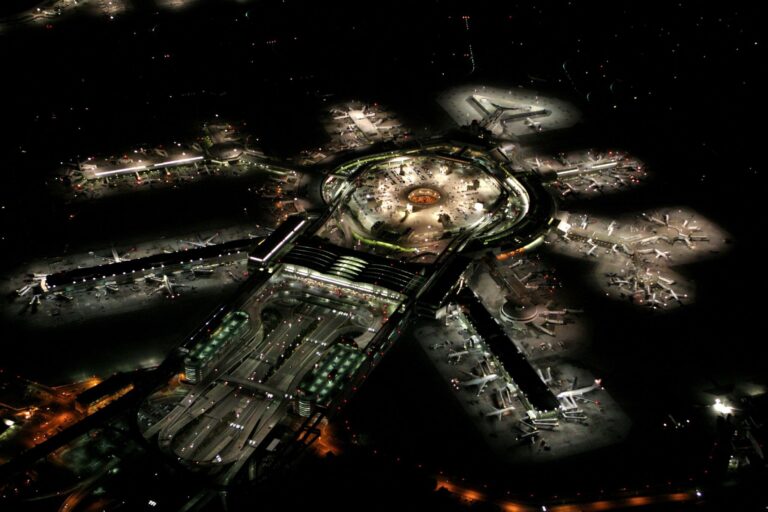
Red-eye

Wake up in harsh lighting,
startled by an announcement.
There is a sudden shift from
eight hours of sitting
to scurrying about your seat.
Pull bags down from bins,
drag suitcases through the aisle,
force your body in a single file
pressed into the jet bridge and push forward
until the tunnel opens up before you.
Welcome to the bright new world
of intercoms and fluorescence.

What to do first? Wait in the coffee line.
Find nourishment. Hydrate.
Bear any last minute cancellation.
Keep going and going
until you reach a soft bed
and a door that shuts out the world.
A transfer is merely a stop
in a city you will never see.
So find an empty chair by the gate.
Breathe in as the first rays of sun
tease your eyes through the window.
An ambient voice is telling you now:
it is time to leave this plane for another.

Memorial, over Zoom

For Ernie

We show up from wherever we are:
the front seat of a car,
a kitchen with an offscreen child,

a windowed living room
in Glen Burnie, bright green
elm trees swaying.

Here is a mosaic formed
of every person you’ve touched.
We look to each other

to glimpse moments of you.
Restoring your story,
we fill it with kindness,

your infectious laugh,
and your giving heart.
When a speaker wraps up,

there is a brief pause.
We each look away as if
to see your face,
just offscreen.

Jonathan Lewis is the author of Babel On, winner of the Lines + Stars Mid-Atlantic Chapbook Series contest. He is editor of the Federal Poet, a recipient of a DC Commission on the Arts and Humanities fellowship, and a winner of the Golden Haiku award. His poems have appeared in Beltway Poetry Quarterly, Hawai’i Review, the Washington Post, and other publications. He lives in Alexandria, VA.

Image: Andrew Choy from Santa Clara, California, CC BY-SA 2.0 https://creativecommons.org/licenses/by-sa/2.0, via Wikimedia Commons