Home Blog Page 72

Two Poems by Richard Peabody

Merton in East Asia

Those days
that carried him

never carried him
far enough

Thomas Merton foresaw
his death in a vision

and still flew to Thailand
on a speaking tour

An accidental
crown of thorns?

Cruel electric
short-circuiting fan

though he was dry
and not wet from a shower

Suicide?

Hardly the done thing
for a man of the cloth

A 19-year-old lover
makes you contemplate

many things
but not suicide

Assassination?

Snuffed by the CIA
as part of 1968’s

poster boy
collateral damage
though it smacks
of Merton in the movies

and countless
conspiracy theories

In photos he is bald
and roly-poly

master of
verbal judo

yoga
zen

hermit
guru

touchstone
like Watts

Ram Dass
or Castaneda

Holy Trappist
Brother Louis

A monk who might
have lived out his days

anonymously
in Kentucky

Yet chose to relay
spiritual keys

A rock star writer,
thinker, believer

Those days
that carry us

never carry us
far enough

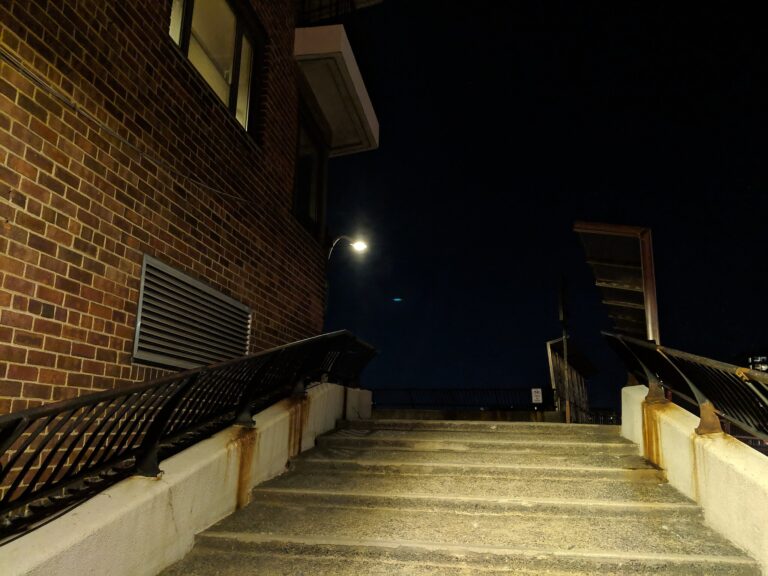
Crepuscular Report

Stairways and gateways
Dead ends

Promenades
Porches and landings

A solitary gizmo

Corruption a la mode

Shameless sinners
draped in burgundy

Leftovers

sprinkled
with copper flakes

Nothing as far
as the ear can hear

Fish on the bottom

Rocks in the shed
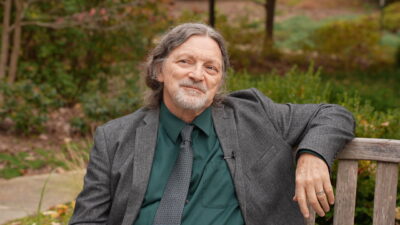
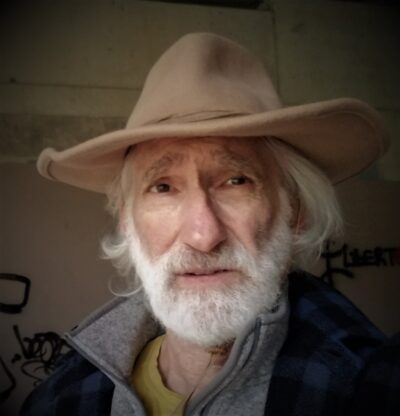
Richard Peabody, born in Washington, DC., raised in Bethesda, MD., and now living in Arlington, VA., is a poet, writer, editor, teacher, publisher. The author of a novella and three short story collections, he taught graduate fiction writing at Johns Hopkins University for 15 years. His Gargoyle Magazine (founded 1976) released issue 76 in August 2022. The magazine has since moved online. His most recent poetry volume, Guinness on the Quay, was published in Ireland (Salmon Poetry, 2019). The Richard Peabody Reader, a career-encompassing collection, was released in 2015 by Alan Squire Publishing, as the first book in their ASP Legacy Series.

Image: aismallard, CC BY-SA 3.0 https://creativecommons.org/licenses/by-sa/3.0, via Wikimedia Commons; author photo by by Caroline Hockenbury

Two Poems by Lenny Lianne

WITH ME AND THE STARS

No one can tie down the stars 
in one place, my father said
as he explained how the summer
constellations were different
from those in December.

The night air was hot and humid
and, half-asleep, I sort of listened
to him point out the shapes and
in which part of the summer sky
to look for these star clusters.

Then he’d tell their stories, 
presenting an impression of whom
the person or deity had been and
the legend of how they’d arrived
in the vast and dark sky.

The soft sibilant rise and
drop in the sound of cicadas
made it easy to sort of sleep
and hard to even half-listen,
yet he never nudged me awake

to pay attention to what he was
teaching, never needed me
to rattle back the lesson.
He was happy to be in the back
yard with me and the stars.

Though I now turn to star charts
and probe the old mythologies
for what he’d already explained,
I’m confident that in the end
he recited the right answers

to satisfy the forty-two gods
of ancient Egypt. Yet I wonder 
how a heart so full of patience 
and love would be in balance
with the weight of a feather.
— But he’d know.


LAUDEMUS
	
Let us praise evolution
that delivered the vulture
with its ugly, bald head

and its inbred protection 
against pernicious bacteria 
as it banquets on rank carrion.

Let us also praise the possum,
often spotted near roadkill.
When attacked, this animal 

falls on its side, lips drawn back,
teeth bared and its beady eyes
half-closed, as if dead or dying.

Now let us praise the grave,
hollowed out by a backhoe, 
the gash in the ground, a narrow 

maw waiting for the lowered
casket.  Throw your handful
of soil on top of the coffin

and say a prayer for the hole
in your heart, the looming
days of dejection, dire nights

tossing between the what-ifs
and the whys, plus the sad truth
of the empty side of your bed.

Pray for an evolution toward calm
acceptance and, when it comes, praise
the healing, hallelujah, the healing.

Lenny Lianne was born in Washington, DC and raised in Northern Virginia. She is the author of five books of poetry including her latest, Sunshine Has Its Limits (Kelsay Books) and holds an MFA in Creative Writing from George Mason University. Lenny is a world traveler, who now lives in Arizona with her husband and their dog.

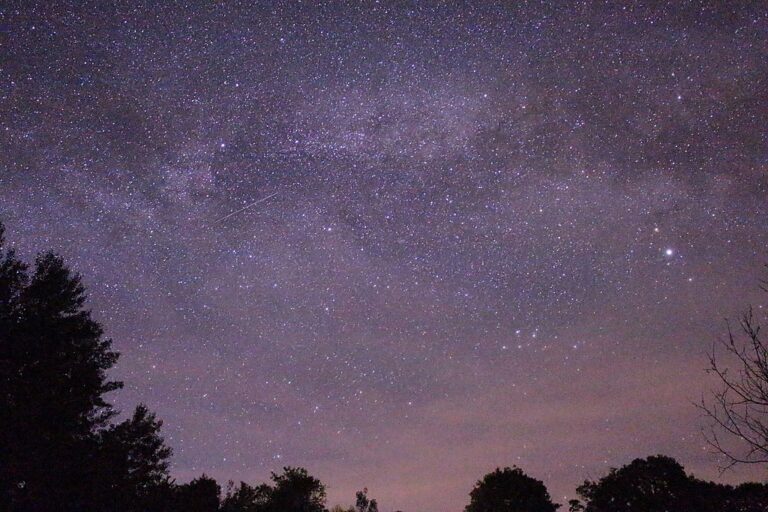
Image: “Night Sky Over the Maple Trees” by Mmfgh under Creative Commons Attribution 4.0 international license.

Four Poems by Alan Abrams

0

Limerence
“The heart writes in indelible ink”
~Steve Almond, “Ecstasy”

I followed you out west,
when I was in despair—
you took me back, reluctantly.
We spent the winter in that tiny
trailer house along a washboard road,
spooning the frigid nights away,
when it went down to five below—
and woke to haloes of frost on
the wall where our heads had lain.

Though that infernal itch
impelled me to move on—
I remember you most fondly
when it goes down to five below.

Stone on Stone
“Caw caw caw crows shriek in the
white sun over the grave stones…”
~Allen Ginsberg, Kaddish

Headlights lit in the middle of the day
we follow the man (who I’d now call young),
borne in heavy traffic through the heart of town
to a district of deceptive winding roads
and project housing with trampled lawns,
shattered bottles, and enumerable crows
that ignore the iron gates
guarding a deep narrow lot.

There, a phalanx of dull grey stones,
some leaning this way and that, all
advancing toward a chapel of yellow brick.
This is our destination.

He’d said to me, not long before
I want to die
knowing full well I agreed,
suffering as he did,
and for so long.

I still get lost whenever I return
to snatch up a chunk of gravel
from where we park, to place it
in remembrance on his stone.

Stone on stone, over the bones
of the man I called my father.

I Could Forgive Him
“When the night talks to you, you gotta listen… Look at that moon. Listen to that desert.”
~Robert Boris, Electra Glide in Blue

I was not made for abuse,
no, I was meant for a gentler hand
on my throttle, and a boot with
more finesse on my shifter.

But when I got to know him,
those sorrowful destinations
I took him to, those crazy friends
and troubled women he hung with,

I could forgive him. He needed
something to take his anger out on,
so it might as well have been me.
Truth be told, I got to enjoy it, like

that night he and Tony closed down
Mr. Henry’s. With a head full of
vodka, he took the hairpin turns of
Beach Drive so fast it dragged

my footpegs. Or when he held my
engine at redline, down the long hill
to the Wilson Bridge, his warm
belly laying flat on my tank

I couldn’t help but give him all I had.
How proud we both were, when my
spedo needle froze at one hundred
and ten—I never knew I could go

so fast. But that night he met Ilene
I was so sure he was going to get
laid, until he blew the turn and
dumped her in the weeds. She

seemed like a nice girl, a good head
on her shoulders, who might have
done him some good. They weren’t
hurt, but my forks got bent. He

patched me up, damn it all, with second
hand parts that didn’t match. Like
Ilene, it was too much for me to bear;
not long after, I threw a rod along

a lonely stretch of Route 66. Perhaps
a better man, with a warm garage
and a lighter touch, who loved
me for my classic lines, would

have kept me going. But I’ve seen
both coasts, and the Gulf of Mexico,
blasted up dirt roads in the Rockies.
I’ve crossed blistering deserts, and

fired up at five below. Would I trade
all that for the nice garage, and
pleasant Sunday rides? Not on
your life! Just let me rust away.

Peace Piece
Ode to Bill Evans

Peace
may be within
you find the peaceful
easy feeling when you
love hate is easy love is
hard without peace
in your heart

Peace
you can’t have
if you can’t give
peace you can’t give
if you can’t love
peace you can’t find
if you can’t know
peace won’t happen
if you can’t
make

Peace
know find
love make
give
us

Peace

Alan Abrams has worked in motorcycle shops, construction sites, and architecture studios. He has lived in the heart of big cities, and in the boonies on unpaved roads. His poems and stories have been published in numerous literary journals and anthologies, including The Innisfree Poetry Journal, The Rat’s Ass Review, The Raven’s Perch, Bud and Branch (UK), LitBop, and others. His poem “Aleinu,” published by Bourgeon, is nominated for the 2023 Pushcart Prize.

Image: pyntofmyld, CC BY 2.0 https://creativecommons.org/licenses/by/2.0, via Wikimedia Commons

Three Poems by Meredith Holmes

I Can’t Resist Entering Wa Harmony *

to Look at the Butterflies Again

They transcend being wall art with a price tag

and seem to flutter to life under my gaze. 

The stunning visual music of the butterflies

ricochets from shadowbox to shadowbox:

Luna moths — three across, three down.

Whites – sand, oyster, and paper white

arranged with colors on the diagonal

from black-veined and green-veined whites

to whites with orange-tipped wings.

Black swallowtails, some with teal markings

some slashed with emerald-green.

Sulphurs: green clouded, orange barred,

and lemon-yellow cloudless.

And last, the Blue Morpho, immense

and alone in his archival sarcophagus

a coloratura blue, visible from planes

flying at 35,000 feet

and rare in the animal world.

*Wa Harmony was an interior design store in Provincetown, Massachusetts.

My Childhood In Twelve Sentences

In the golden rectangle, a + b of our back yard, I wept inconsolably

at the fence confining me to b.

My mother and I left for the A&P on foot in March and arrived in November, 

just as snow began to sift from a pewter sky.

After the wobbly old card table, our new dining room table was a vast continent,

the five of us sitting so far apart, we felt like heads of state.

The green ’49 Ford and I were contemporaneous and inaugural — first car, first girl. 

 Beyond that, the analogy breaks down.

A big bully – unregulated and unopposed – made me miserable for one year.

Very early in the morning on the day my oldest brother was to leave for college,

I woke up crying, but could remember no bad dream.

The paper on my bedroom ceiling was blue with white stars.

A few of us neighborhood kids were ascetics, going barefoot in April

to toughen our feet for the summer ahead.

My parents sold the ’49 Ford to a hot-rodder who painted it black and drove it

all around town.

I did not understand why we stood by and let this happen.

My father and I agreed that the swirl of stars above the sycamore tree

must be the Large Magellanic Cloud.

For my tenth birthday, I got riding lessons, and twelve girls screamed one horse-crazy scream, lifted me onto their shoulders, and carried me out the front door.

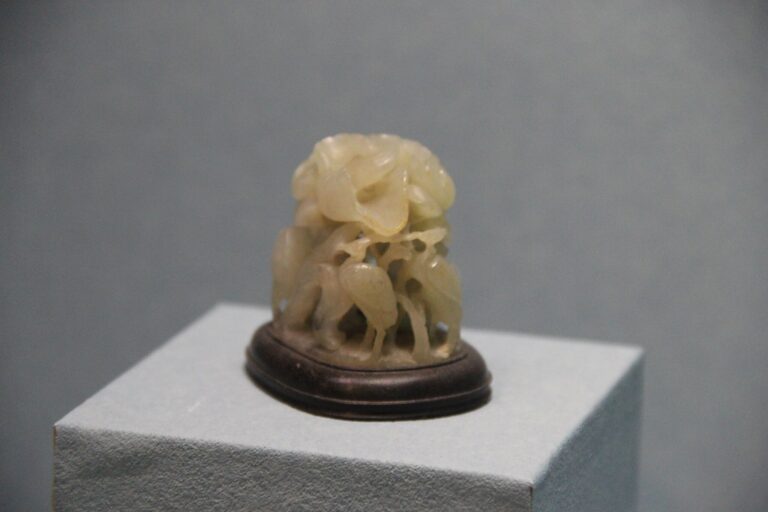
Jade Horse, (1600s) Chinese Miniature Collection

He could heave to his feet any second, but he has inspired an upland meadow where snow has finally melted into earth, and he likes the feel of damp, new grass on his belly. He’s color — glossy white, with a luminous green undercoat — the field is field. He tosses his head and creates cool mountain air and an April sky — a few cloud wisps in a high, blue dome. It’s easy to imagine him running — that gravity-defying gallop, folding and extending, folding and extending, slender legs carrying the great gleaming body. But right now he is lying down, legs tucked under him, flicking his tail at the first flies in this world he has made.

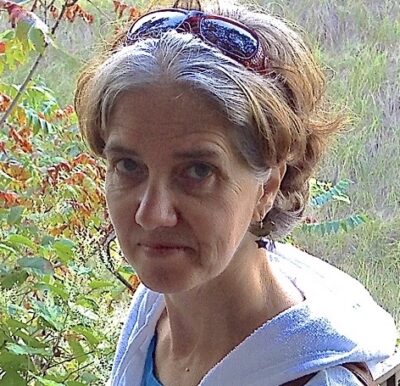
Meredith Holmes grew up in Moorestown, New Jersey, but has lived in Cleveland Heights, Ohio for many years. In the 1970s, she was a member of “Big Mama,” a feminist poetry theater group that performed nationally and published two collections of poetry. In 2005, she was chosen to be the first Cleveland Heights poet laureate. Pond Road Press published two collections of her poems: Shubad’s Crown in 2006 and Familiar at First, Then Strange in 2015. Meredith’s poems have been published in a handful of journals and several anthologies. She is a freelance writer, specializing in workplace issues and women in science, engineering, and politics.

Image: Gary Lee Todd, Ph.D., CC0, via Wikimedia Commons

Two Poems by Ann Christine Tabaka

As Moon Beams Fade

The tiger prowls at night,
hunting moon beams as its prey.
Wandering apparitions sail the darkness,
searching for a place to rest.
Landing past dawn, 
they evaporate with the sunrise.
Streaks of red paint the imagination.
We look beyond our own sight.
Stories once told to children
no longer find a home.
What is real and what is not
are questions for the ages.
We cannot hold on to dreams
that perish in the light. 
Time does not belong to us.
Wisdom has its worth.
We pack our bags and walk away,
never looking back, 
as moon beams fade before our eyes.


Traversing Rough Seas

Sorrow follows joy / as night follows day.
But in the first glimmer of daylight, sorrow
begins to fade. You were torn from my womb
50 years ago, my beautiful fair-haired boy. I
still feel the ache of your departure, knowing 
it was not meant to be. The loving & longing 
would not let go. You were the ocean, violent 
& wild / a ship traversing the storm. I was a 
beacon calling you home / a light searching
through the dark night. Scuttled on rocks
you drifted aimlessly until you found your 
way home to port. Joy follows sorrow / as day 
follows night. The raging storm subsides.

Ann Christine Tabaka was nominated for the 2017 Pushcart Prize in Poetry; nominated for the 2023 Dwarf Stars award of the Science Fiction and Fantasy Poetry Association; winner of Spillwords Press 2020 Publication of the Year. She is the author of 16 poetry books, and one short story book. She lives in Delaware, USA. She loves gardening and cooking. Her most recent credits are: The Phoenix; Eclipse Lit, Carolina Muse, Sand Hills Literary Magazine, Ephemeral Literary Review, and many more. Visit her website.

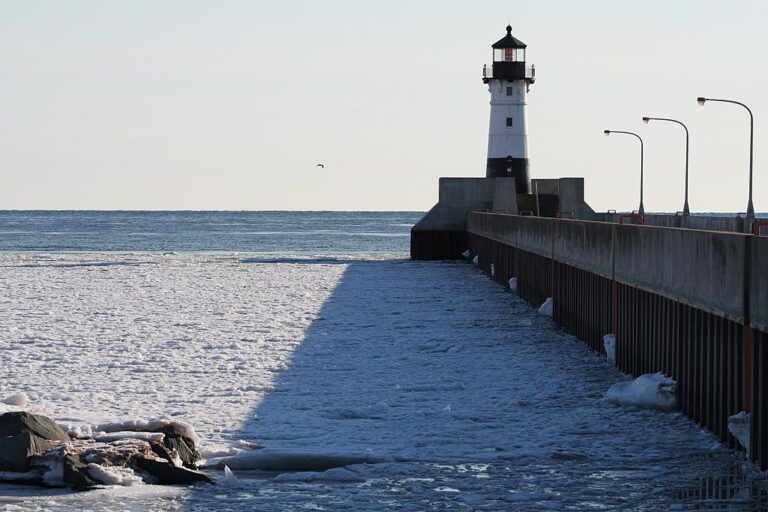
Image: “Lighthouse and Shadows” by Sharon Mollerus under Creative Commons Attribution 2.0 Generic License.