Life’s routine is like a straightaway on a country road On and on, beyond our sight, it continues and sometimes looking down that road makes you wonder if it will ever end Most of the time you just keep driving I just keep driving We just keep driving But at some point, one of us will get brave decide to open the door and jump whether that means suicide or liberation – both. It will be at a crossroads where the devil with a smile on his face waves his red flag to those he deems worthy One of us will open the car door abandon fly free prove him correct in his assumption And one of us will drive on always looking back in the rear-view until the road ends – dead. Then is when the realization will come that we missed a sign way back in the beginning back when we first turned down this road
Mummified
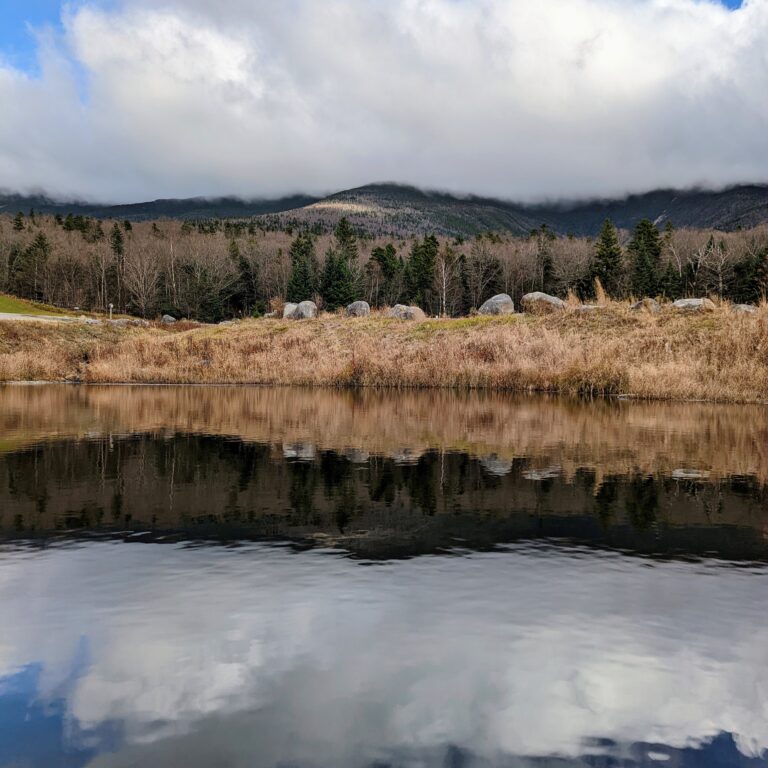
In this place of cold air shifting clouds and rocks waiting to roll underfoot the grasses the wildflowers sway quietly mummified – still present but empty
And you feel moved beside the nearly still pond to pick a reminder for yourself to pick a papery bouquet that will then sit silently in a dry vase on your bookcase
You pick a reminder that it’s so much simpler to collect to hold a bouquet of mummies – flowers when they no longer thirst – than it is to watch life leave than it is to trust new life after love is lost
Chris Biles currently lives and works in Washington D.C. where she enjoys playing with the light and the dark, and losing herself in music, anything outside, and some words here and there. Chris was a finalist in the 2022 and 2023 DC Poet Project, was honored by the Monologues and Poetry International Film Festival with an official selection in 2021, and is published in a number of literary magazines, journals, and anthologies in print and online. You can find her at marks-in-the-sand.com / Instagram: @marks.in.the.sand
For today, or maybe even an hour, or no longer than the time it takes to read this poem, put aside “profession” as another word for “persona.” Stick your naked hand in the chamber pot of your identity and swish around the contents, though they be old. It’s okay to be afraid, to be thoroughly aghast. Note what sticks and what repulses. You’ll have time to scrub the sludge off at the end. Do not retreat to the injustices of childhood. Do not splash around like this is a game. Reach to the bottom, stretch into the cold until you’ve made contact with what lies down below. You may need to be elbow-deep in order to press your hand down flat. Once that’s done, let the contents settle. See if you can withdraw your arm without rippling the surface. Watch the muck drip from your fingers, plink, plink, plunk. Take a breath: what stinks is what’s ripe as well as what’s rotten. Shake hands with the very next person you meet as if to say…
To Be or Not to Be on Ganymede
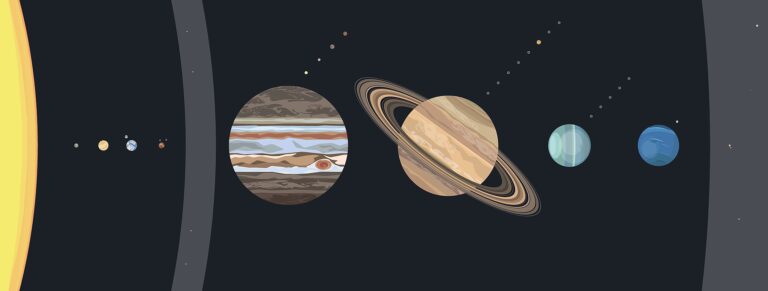
Exist at an outpost or risk the black hole, this is the choice which lies before us, whether we consign ourselves to staying on the biggest moon in the solar system or rocket ourselves into the vast unknown – phasers and light sabers blazing – even as we recognize our post-colonialist fervor comes with a human bias. To analgize, to coma, to nothing less than less then less unless…
The unconscious is a poor escape from pain for the body was built for pain as much as pleasure; the mind, for emotion, not logic alone; the seventh sense goes undiscussed. To disappear, to close one’s eyes; to close one’s eyes and ears, to hibernate the soul in a slumber inundated by images and urges engineered by machines that fall outside control. What dreams may come? And will they be ours or will we foolishly think so?
We’re the idea made flesh in a flash, eternity atrophied, the Sufi grain of sand (or salt?) by way of Andromeda and the Small Magellanic Cloud. With blue pills, sexbots, and misapplied data from HAL, the system has failed us. Immeasurably. Our purported progress has been stripped of love, and law as a merciful thing. Where are the stars not destined for oblivion? Why do we giggle at the cyborg clown in a bromide codpiece? Or is this a case of the chronic hiccup?
Origination: Unknown.
Afterwards
Indubitably, there’s an afterlife outside remembering, nostalgia, and the prayer. There are other dimensions and forthcoming forms of existence as sure as there are other religions. You may not find yours. No need to rush. You’ll find out what’s what. You’ll see what’s coming as soon as it’s done.
The Hollow Vessel
So this is what? A regulated rising to reveals already shown? A triple-checked subsistence, an unchecked poisoned power, a cushioned seat that boosts one off the floor but fails to break down nonbiodegradable remains that feed the fire and the flood? So this is home? Because the radiator clanks out the ice-cold breath? Because the central air cools prison walls? Because the keys most valued are ones which are strictly meant to unlock doors to realms hitherto half-known? What good’s a safe deposit box which cannot hold what can’t be written down or cut? Where is the key that unlocks lives in houses made of glass?
A literary grantee of the Cafe Royal Cultural Foundation and Curious Elixirs: Curious Creators, Drew Pisarra is the author of “Infinity Standing Up” (2019) and “Periodic Boyfriends,” two collections of homoerotic sonnets published by Capturing Fire Press. Additionally, he was a participating poet at A Gathering of the Tribes two-day reading marathon at The Whitney Biennial 2022: Quiet As It’s Kept and has had his poems published everywhere from “Food & Wine” magazine’s website to “Analog” sci-fi magazine.
There are times when I see Something odd, like A purple satin bra on a yellow fire hydrant on a street corner Or an antique white bassinet on the side of the road Or No Trespassing sign in the middle of an impassable thicket And I think
Oh no– Reality is glitching again.
Someone is going to have to issue A patch Or do a hard reset On the observable universe.
The fragments are getting out of hand.
Maybe it wouldn’t be so bad, though I would miss all my favorites, preferences, habits, and memories. It would hurt to lose all that data. But I admit it would be wild to look in the mirror, see Status circles swirling where my irises should be Until the blur clears and reality snaps back into fresh definition And I turn to look at you and say
We’re all set! Let’s get started.
At the graveyard at Sandy Spring Meeting House
At one point a friend in the society of friends Decided the headstones with names, birth and death dates Were an affront to God, so he removed all of them overnight And stacked them up behind the meeting house.
After some discussion, they were put back, But not all ended up in the correct location. Death solves a lot of problems but apparently Mistaken identity isn’t necessarily one of them.
Perhaps they all worked it out down there and adjusted Or just got used to a new identity. Maybe their earthly identity lost all meaning, and they moved On, and never noticed the drama.
Mostly likely they’re still laying quietly, Taking this all in with everything else And just like their living counterparts Being quiet together until someone is moved to speak.
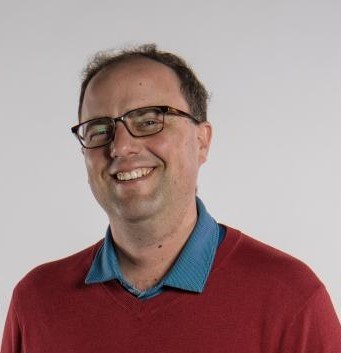
Jeremy Lawson was born in Maryland, but has lived in Washington D.C., Virginia, North Carolina, California and New Mexico. He is a big fan of too-long novels, travel writing, and hard-to-classify books. He is working on writing something that doesn’t have much shape yet. Wish him luck.
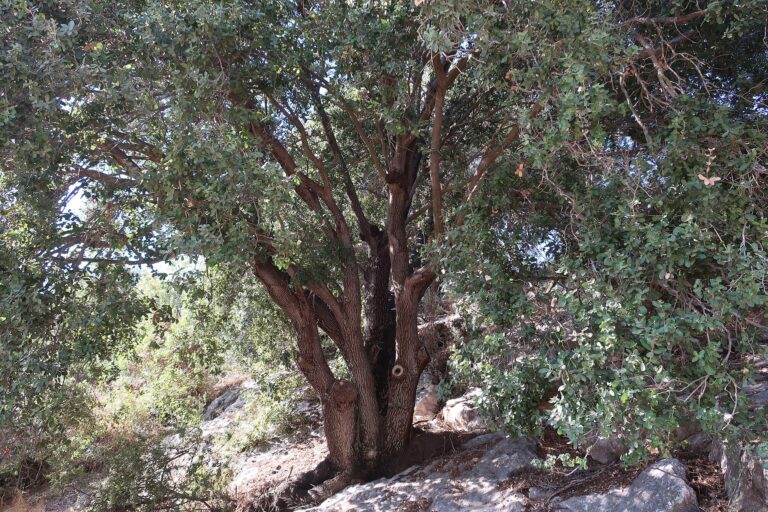
I am sitting under the tree my great-grandparents planted, together, the day he went to war.
Strangers own this house now and were nonplussed or moved by my request to spend some time here. The tree is an oak,
not big by oak standards; only a century has passed since they fought the war to end wars, and a century
is but an oak’s childhood. It is a stately tree, planted near no other, and has grown tall
and broad. My great-grandmother was seven months pregnant that day with my grandmother.
There is a picture, taken by a neighbor, an old sepia photograph. A man in uniform,
his young bride, her hands on her stomach, his arm around her, the seedling in the middle. Their last
day together. He sailed for France. A month later she died in childbirth.
Glimmerings
The candle flame is real. I know I am real because it burns me.
Sometimes I cry myself to sleep with the lights on, but I am not afraid of the dark.
One night we sat around the bonfire in the Oregon desert. Too close was too hot; too cold, too far away. That night I learned about love.
I came to Phoenix because my life was over. I chose it for its name, a place for a new start.
I placed my palm on the plexiglass, inches from the tyger in the Baltimore zoo. I felt no heat.
Here on the edge of twilight I stand half in, half out of day. My left foot is the sunset’s child.
I sleep in a room filled with red light from the vacancy sign outside my window. Even eyelids cannot keep it at bay.
I often see the light at the end of the tunnel just as I am learning to love the dark.
See how sunlight gleams off the dome of the corn-filled silo?
When I was a boy, I wished on the first star. I do not remember if I stopped wishing when I found you, or when you were gone.
Marc A. Drexler grew up in Iowa, and has lived in Maryland or DC since graduating from Johns Hopkins University in Baltimore in 1981 with a degree in mathematics. He believes strongly in non-hierarchical organizational structures in which everyone is equal. He worked for fourteen years at the Maryland Food Collective, and is currently a member of the Earth Collective, the group of roughly 8 billion people who make all the decisions on how we interact with our planet. He has been a Community Teaching Assistant with the on-line Coursera class Modern & Contemporary American Poetry (ModPo). He writes poetry to express with words what cannot be said with words. Locally, Marc has had a poem selected as a Split This Rock Poem of the Week and appeared in the Maryland Writers Association’s 2020 Poetry Contest anthology Maryland in Poetry. Since the beginning of the pandemic he has been exploring the hiking paths and neighborhoods in and around the parts of Seneca Creek State Park near his home in Gaithersburg. He is more satisfied by routes which complete a loop rather than retracing the outward path in return.
March The muscularity of your siloed silhouette laid itself on my shadowy desk one day, with white open palm on my tan arm—as if your body was fashioned as pulley elevating me, with robotic release of self and selflessness, to an outline of us. Now your hand is a response to my hand; opening or closing instinctively on demand like a Venus flytrap fluttering in newfound domesticity, tamed, by the soothing squelch of steadfast soles on oak floor in the am and your tangerine peals of laughter in the pm —banquet of sound of tip taps of laptops and hip hop on our background box—provoked me to see beauty even in the day-old residue of your blessed brewed tea. And so, having unbuckled two habits to tailor them to cohabit, I take your hand and wear it on my heart (lace sleeve), enduringly and endearingly, with vows as forever fashion.
May
But when fashion is forever and the wearer transient, the fashion is fashioned into something once inhabited. It’s not forever, but still in time.
You become the fading smell left behind in our silver silk sheets, the yellow sweat stains on the underarms of your white cotton vest, the tear in your threadbare socks, farewell tears on your four eyes, and a belt you fancied around your throat far more than your waist.
I now style myself from the absence of yourself, as a lone figure of mourning in timeless black— black lace tights you can’t peel off, a dress that hugs, and wrinkled knee-high boots that walk your wake.
The ring re-designs itself from occupier of the fourth finger of your left hand to a platinum pendulum pacifying my neck.
My hands do not grope each other in prayer. I can’t feel, touch nor see your familiar form. But I will your physical strength to my mind as a muscle memory of us and dad walk me down the pews, through the tearful covid masked hues, to the lilied podium where – as keeper of your memory, planner of a wedding that wasn’t and a funeral that was – I say I do (love and let go).
Technificance
Let’s live behind the curtains? Only out, we go, with the trash to carton cappuccino Amazon seas and back to our 600 sq ft of terra firma. Cool off, take a deep dive into communal pool of data – navigate the high seas of the internet and Zoom the borderless – then mount two screens side-by-side and squint go(o)ggleyed into new-fangled binoculars.
Geo-block the deck, put on headsets It’s time to stow the masses and get metaverse passes.
Don’t peak behind the curtains— Inside, you stay, to mull their müll. Mutti says architecture of sky is freed of 80,000 kg flying furniture, minimalism suits sky best, with stretches of white-on-white, flecks of blue we no longer imbue our hue into the apertures of the CO2 ceiling, the horizon is now a flat image and the clouds only exist in Azure, vitamin D is procured from selfie stars low in light terabyte, but the sun is yet to set on the trending filters of day.
Best believe. And lungs will feel the ambition of Paris deal and rewind to cheerful green.
Draw the curtains. Shutter the shops. Ground the sky. Draft in the supertankers, store the oily glut. Haul the trucks, stockpile the corporeal guts. Put on your sea legs, don construction masks, pause with ease of war fought for headscarf. Tiananmen, Tahrir, Taksim – our stolperstein is killer without face, killer of public space, incubator of net states.
Duckduckgo – we query – how to inject an economy of wanton abandon, of institutionalised trust out of stock, highly leveraged with no herd immunity to herd mentality that s[t]imulates liquidity by capitalising inequality?
When the upward curve flattens and gets its margin call the big reveal is the world template built behind the wall.
The long smell
It’s summer and gas leak particles root to the bottom note of the foggy bottom and rise from the recesses of the mind, through the ubiquitous AC and blunt humidity, the wharf’s salty catch of the day, the mall’s crisp cut green. It’s the subversive stillness of a seductive summer sauntering off the sidewalk and sideways to me.
I saved the season’s last inhale for the night I met you. I was led by the nose to get dressed up that day, in fragrant white notes, bouquets of black, and morello-stained lips. A fierce foraging through scraps of unrecycled outfits.
First sight gave hope to second sight. Of a future no longer dressed with mind, but undressed by heart; con gusto, bil-qalb. I exhaled and inhaled, remembering to breathe, as we became passenger to playful palms that interlaced the other and took off, thereafter.
Holding hands led in airplane mode for a while—frequently, then moderately. Exclusively and almost always unapologetically. To single-handedly block the white noise of external distraction that saps romantic energy like mental open tabs and paused dating apps. But we weren’t in low power mode. We were on high frequency.
Senses, of which we have 5, are heightened when one is on standby. We were in active listening mode to each other’s tender touch. My skin had sprouted olfactory sensibilities set off by you. Your smell was a fragrant flashback to something I simply knew. Your touch was like gaining something never thought lost – Nostalgia – lived like it’s a verb in the present tense, nostalging.
Love was on the nose, but you couldn’t smell it. So senses, of which you had 4, became just 3. Without smell, you lost sight of us and I lost your touch. Mediterranean Tense is what you began to make of me because future tense is what I hoped to make of you.
I sniffed for love until past tense is what became of us.
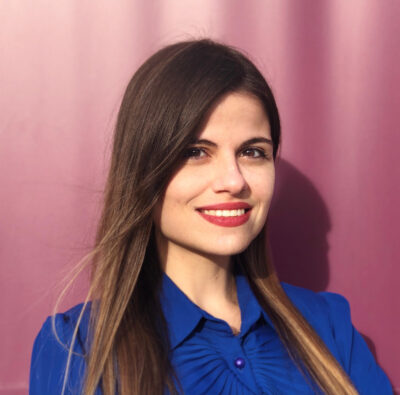
Kristina Miggiani writes: I am a Maltese lawyer and poet, working in the area of financial integrity. I currently work at the IMF and in my free time I ardently journal, write poetry, and practice yoga. I have won some national poetry and story slam competitions, but the process of writing is the best reward. I have been writing poetry since I was 10 years old—as a hobby that helped me find my voice and guiding me to my career as a lawyer.
Image by Unstable.atom – Own work, CC BY-SA 4.0, https://commons.wikimedia.org/w/index.php?curid=78183214