Home Blog Page 81

a february afternoon with rumi and bach by Craig Flaherty

a february afternoon with
rumi and bach

thick crust dense walnut bread
he tears to add to the lamb stew
carrots onions peas a stock
of pureed turnip kale lamb pan
drippings and a kiss a sprinkle
of malbec wine she glides
onto the opulently pillowed
settee under the orange purple
green throw she had crafted
crocheted with cotton yarn
a unique design from wales
serpents’ entwined heads
with splayed tails writhe
her book of illustrated poetry
illuminated greygreen by
the adjacent window she reads
languorously pausing to sigh
let her thoughts’ edges wilt
her muscles’ tension shudder
into stillness
he takes himself to the sunroom
tosses two blankets over the
baby grand lights the cinnamon
incense candle anchors the light
clicks the brass goose neck lamp
opens two collections flips a few
pages settles onto the bench and
depresses the sostenuto pedal
solarium softened wafers of
snowdusted clouds largo cushions
to the ear a repeated motif begs
delicate ornament
naked treebranches bow in and out
of the passing banks of fog turning
to february flake
cascades of starry motifs answer
the damped earth’s throaty turns
she closes her eyes the poems
slide between her waist and
the brocade face of bacchus nymphs
wooden goblets lifted in the sunny
glen of a contrapuntal trio rifting
the passing pheasants’ ruffled fog
bound path
in the dry pungent dark a touch
a pinch a caress the bounding rift
of lines lift into a new key the poet’s
voice glad leaping love the thin
slippery swelling of spring at her
touch the notes wander among
the chords of the ancient chorale
the joys of desiring waystations
of sleep the moored solarium casts
off melodies evaporate into echoes
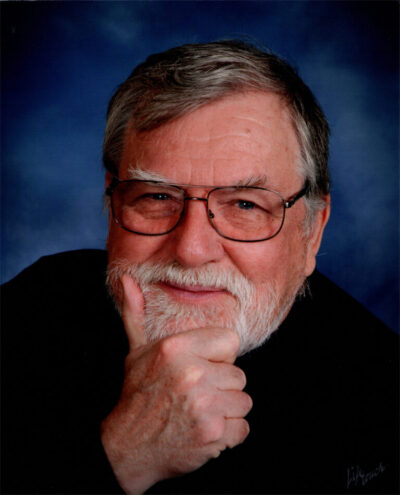
Craig E. Flaherty, writer of poems, reader at poetry groups, publisher of Coastline Window Poems, The Nature of Light, The Glossy Family, presenter at the Takoma Park Thursday Poetry Reading, poetry group leader, member of Writing a Village. His poetry has appeared in Viator and The Raven’s Perch. A lifelong  performer of church music, organist, carilloneur, pianist with Dotke Piano Trio, husband, father, grandfather, and accompanist to Jordyn Flaherty

Image: Asaavedra32, CC BY-SA 3.0 https://creativecommons.org/licenses/by-sa/3.0, via Wikimedia Commons
Three Poems by Lisa Couturier

In Florida, Visiting My Father Who Has Parkinson’s and Dementia

Like sand dunes, his cheeks are sliding away and his white hair has collected
in tufts of downy feathers, like a seagull’s, today. Sometimes, he meets my gaze
with eyes grey as a newborn’s, and as gentle, as though he’s a changeling—a man
ancient with clarity, sincerity, a man as wise as a child made of questions.
Still, Mother repeats her rules: “He can’t walk far; don’t tell him what’s
happening; he doesn’t know what he’s saying.”
But can’t he; doesn’t he?
We walk in the hot breeze. He shuffles toward the shade of his pretty palm trees,
toward the wild orange skies of birds we watch splash down in green ponds,
while he asks: “Who will come help me?”
He wonders, “What did I do?”
He says, “Someone picked me for this.”
Followed by, “Why?”
And concludes, “I wasn’t a bad boy.”

CALLING MY FATHER

After I leave you, I allow
days, sometimes weeks, to
go by without calling,
convinced I’m doing you a favor.
I think I make it easier if
you don’t have to work
so hard looking for all the
words you lose trying to
talk to me. If I don’t call,
then you can continue
to forget me & I can
stop wondering what you
might have meant in
everything we already said.
If I don’t phone, you won’t be
sad when I say goodbye.
If I don’t phone, you won’t cry
and I can’t ever hang up.

Ghazal: RED BANK

He was a Vet and she was pregnant when the newlyweds left Boston for Red Bank,
where new motherhood alone on a foreign Jersey shore made her abhor Red Bank.

He worked the coastal radar station, woke at dawn to fish in the sea. His memories
of sharks and seagulls tell me he would’ve someday liked to live again near Red Bank.

Ask her about the child she raised by the windy green water and she’ll recall hand
washing diapers, laundry on the line, dirty dishes, and boring Red Bank.

My father used to say I’d sit on his shoulders to see Manhattan across the bay.
I went to work there after leaving my parents, who long ago left poor Red Bank.

Waves of those years return on the rare days now my father can recall my name, —,
and asks if we can go to the Florida beach he remembers as pure Red Bank.

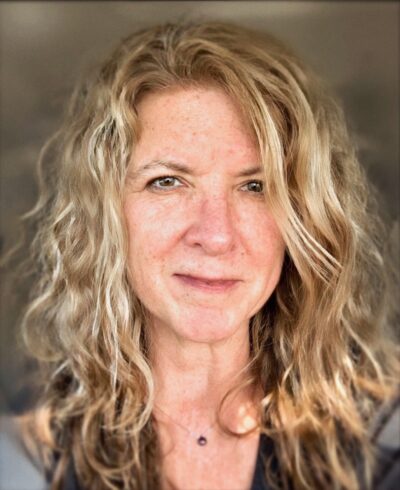
A 2022 finalist for the Annie Dillard Award in Creative Nonfiction and a 2012 Pushcart Prize winner for her essay “Dark Horse,” Lisa Couturier is author of the collection of essays, The Hopes of Snakes (Beacon Press), and the chapbook Animals / Bodies (Finishing Line Press), which won the 2015 Jean Pedrick Chapbook Prize from the New England Poetry Club. She is a notable essayist in Best American Essays, 2004, 2006, 2011. Currently at work on a hybrid manuscript about Parkinson’s as well as a memoir about her ex-racehorse, Couturier is writer with the Sowell Collection in Literature, Community and the Natural World, an archive at Texas Tech University. She lives in Dickerson, Maryland, on Montgomery County’s acclaimed Agricultural Reserve, where she keeps her six horses and is an Associate Artist at Riverworks Center for the Arts.

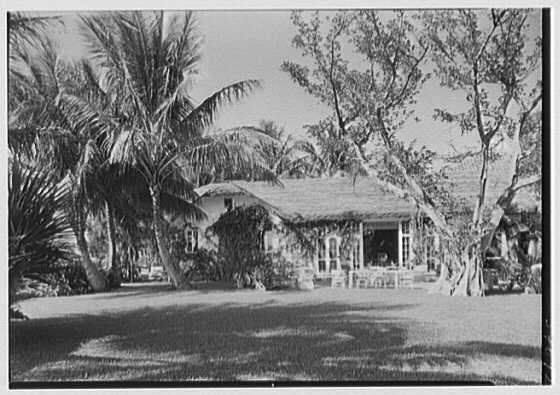
Image: Gottscho-Schleisner Collection, Public domain, via Wikimedia Commons

Three Poems by Patric Pepper

Earth

Down here on Earth we live in craziness: plants eat air,
light, water and dirt; animals eat plants; animals eat animals;
plants eat animals; people eat people, plants, animals,
and the inanimate Earth herself; ravenous insects eat us all
as we eat them. So, we welcome a rainy day like today.

Rain fills our hearts with wishes for healthier days, the lives
we’d like to live like a child counting cows in Mr. Bean’s field
as she looks out the window in class instead of paying attention.
Down here on Earth,

I myself, as it rains today, daydream back to my old pal Sam
and his dog, Roscoe, a prince without papers. How they loved
each other, how Roscoe was Sam’s special pal, and vice versa.
Where are they today? I never had a dog, but me and Roscoe,
we got on well. Sam and I would pick off his ticks, and pet him
down here, on Earth.

Roscoe Brings Sam a Present

One summer day, Wendell, Sam and I sat on Sam’s back porch
in a fog of boredom, when Roscoe, Sam’s mutt, brought him
a baby rabbit. “Roscoe!” Wendell, shouted as if horrified,
“What have you got in your mouth?” Roscoe merely—gingerly—
held the baby rabbit in his teeth, then presented it to Sam.

Sam took it from Roscoe’s jaws, the jaws of life, and held it up
to his face. Wendell poked his head in to investigate as well,
as with one silent finger Sam stroked the rabbit between its ears.
One summer day,

like any other summer day lost in the middle of endless July,
Sam, Wendell and I thoughtfully examined a small handful
of palpitating fur, its rabbit ears and nose, its rabbit mouth,
a face staring back with brown rabbit eyes, a face amazed
as us, as Roscoe panted in the building heat, examining Sam—
one summer day.

Me and My Cat

I pull the front door of our house open, pulling
the storm door shut with its breath.
Straightaway, as if he’s not an apparition in my mind,
my old cat sits on silent haunches at my feet.

His name was, accidentally, Angelica. Was there ever
such a being in my life as an orange
and white tabby cat? I vacantly wonder. Absolutely.
The tabby M on his forehead. M
for my cat. M for mistook at birth to be female
a few days before Christmas—thus, Angelica.

So, we called him Angelica. He sits and stares, now,
at the front yard, the busy street beyond,
while his small breaths, as if a saloon door
swings in his throat, puff in
and out, in and out, to slightly fog the great glass pane
of the storm door.
House. Door. Open. Shut.

Year in year out. Day after day. Ad infinitum.
For a limited time only.
I ask Angelica, “Angelica, would you rather
have a brief electrifying life
dodging tires and bringing home murdered birds
for me to bury in the backyard?
Or would you rather stay inside today, live forever,
while I bring you six-packs
of ‘Adult Urinary Hairball Control Cat Food?’ ”
“Arf!” cries Angelica. And we both chortle,
“House, door, open, shut.”

Patric Pepper has published two poetry chapbooks, Zoned Industrial, and Everything Pure as Nothing. His full-length book, Temporary Apprehensions, was a winner of the Washington Writers’ Publishing House (WWPH) Poetry Prize. His work has appeared most recently in Barrelhouse (book review), Feral, Gargoyle, The Northern Virginia Review, and This Is What America Looks Like, the 2021 WWPH anthology. A DMV native, he splits his time between Washington, D.C. and North Truro, Massachusetts.

Image: Isoda Koryūsai, Public domain, via Wikimedia Commons

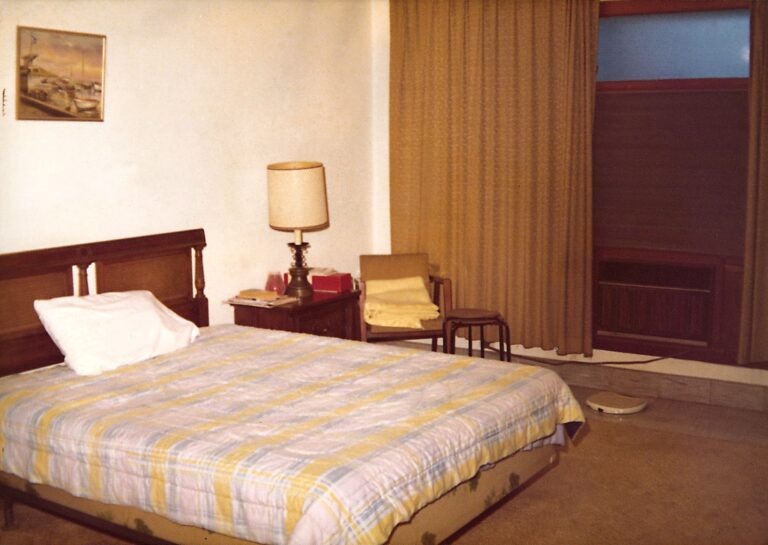
Oath For My Son Made Upon A Full Bed by Ellen Sazzman

Oath For My Son Made Upon A Full Bed

Crawling under the covers, parting their spooned figures, I am
oblivious to what may have been interrupted, my parents’ rough sheets
an ocean rumpled into crests and troughs in early morning light.

Once I hear of life’s whispered facts, a truth I desperately want
to reject, the scene of that snuggling is drowned until my son’s own
attraction to the heat of parental bodies.

The rescued memory of my parents’ double bed swims back to me.
No longer boundless but a narrow raft framed in mahogany and
barely wider than the length of a body – a careless stroke could knock

one overboard. How could my parents have slept soundly for a half century
on that mattress full with the weight of shed skin, unseen parasites, quiet
tears, above squalling springs while the house falls to pieces around them?

And what of the practice of the family bed, children never sleeping apart
from parents. Should I have permitted my son to share our queen bed?
Do children learn better or just sooner? What lesson is left to teach my son?

Let me be the mattress, home stead to absorb his injuries. Let him
pillow heavy into me and contour a canal to slide through a second time,
emerging unscathed, as when I first held him, held you, held

Ellen Sazzman is a Pushcart-nominated poet whose work has been recently published in Peregrine, Delmarva Review, Another Chicago Magazine, PANK, Connecticut River Review, Ekphrastic Review, Women’s Studies Quarterly, Sow’s Ear, Lilith, Common Ground, and CALYX, among others. She was awarded first place in the 2022 Dancing Poetry Festival, received an honorable mention in the 2019 Ginsberg poetry contest, was shortlisted for the 2018 O’Donoghue Prize, and was awarded first place in Poetica’s 2016 Rosenberg competition. Her poetry collection The Shomer (2021) was selected as a finalist for the 2020 Blue Lynx Prize and a semifinalist for the 2020 Elixir Antivenom Award and the 2019 Codhill Press Poetry Award.

Image: Uncredited, Public domain, via Wikimedia Commons

Three Poems by Áine Greaney

I’m from 

potholes in the bóithrín road
limestone walls 
whitethorn bushes 
aged fields and mossy stones 

drip-drip hedges before
a blue farm gate 
apples rotting under orchard trees 
old windows and doors beneath 
a thatch roof that leaked 
brown rain onto night homework.  

A muddy path pocked with
cattle tracks 
old stables before more fields 
and a family dump 
full of rusted pea tins and other junk 
that we rescued to display along the longest rock
for our long, long days 
of playing a game called “village shop.”


Death of a Friendship

That winter she flew transatlantic west and
I flew U.S. south
to a beachside motel 
and sunny cafes where, 
she said, our American waitstaff
are too smiley-chatty and that I’m
way too friendly back.  

That week I was not thinking  
of that day when we met 
at convent school
where, 30 years ago, she led me across a room
for strawberry sweets that 
made mouths and days and months bloom 
bright and red. 
 
That last night in the motel kitchenette 
we drank wine 
we ate shrimp and sauce that 
turned our mouths bright red 
until she set down her wine glass
to say: 
Do you ever even hear yourself?
Like, why emigrate here
if you’re going to still talk so Paddy Mick?

That moment when I whispered, Your words really hurt
When I begged, Can you please stop?
when I watched her rock 
back in that chair to laugh 
at what I’d said and, later,
those sleepless hours in my motel bed 
when I mourned all things that I’ve let 
linger past their date
for death.


House of Make Believe

As if there’s never been an immigrant ship
a maid’s frilly cap 
American children, grandchildren
transatlantic letters and flights back. 

Today, six decades after that ship set sail
it’s as if Yankee Auntie had never been a girl
chasing through these Irish fields or
laughing in this thatch-roof house where, now,
there is only
her blue-tinted hair
her Yankee words that 
draw me right there
to listen at that door.  

“Gee! What a cute little kid!” says she 
Then, sitting there in their Sunday best 
My mother and grandmother  
turn, smile, agree 
as if they are not vexed at me
as if, later, I won’t get punished for this and 
as if we don’t all live 
in a house of make believe. 
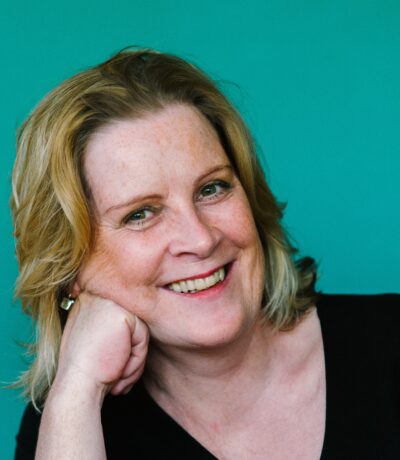
Aine Greaney, blond white woman with black t-shirt on green background.

Áine Greaney is an Irish native who now lives in the Boston area. In addition to her books, her short essays, stories and poems have appeared in Creative Nonfiction, Salon, The Boston Globe Magazine, Another Chicago Magazine, The Wisdom Daily, Grey Sparrow, The Mindful Word, Tendon and other publications. After a long hiatus from poetry writing, she (gleefully) returned to lyric writing during the pandemic lockdown. Visit her website.

Image “Fork in the road, Crucknacolly, Co. Mayo” from Jeremy Durrance under the Creative Commons Attribution-Share Alike 2.0 Generic license.