Home Blog Page 87

Two Poems by Allison Smith

0

All 281 Days

It has been exactly 281 days
since I last wrote of yesteryears,
of DEFCON Level 5 fuckery,
of pain, of harm, of shadows;
with the knowing commentary of…”it’s been years”.


It has been exactly 281 days
since I last wrote of it / them;
tired of hearing the words “bitter,” “stuck,”
“forgiveness,” “trust” —
tired of hearing of how control is tied to metaphorical write-offs,
tied to grace left unearned,
tied to worth as a person
in a sickening equation of misunderstood dynamics.


My bones do not stop remembering;
the occasional relentless need to be awake, awake, awake
in the oddest hours of the day.
“Soldier’s Watch”, they call it,
except I’m the only one who can detect the mines,
gotten damn good at it, all these years later…
…but they are there.
Quiet tendrils I am aware of.
Quiet unease and recognition that things haven’t been the same.
It took a long time for the men around me,
whom I adore, cherish, look up to
to stop walking on eggshells they didn’t crack;
took a long time for the halved family tree
to feel more safe than it did sad,
for the “dead girl” to be okay even when it went unasked.
And it all sank in
so
comfortingly.
Like warm blankets just fluffed and dried,
warm smiles, arms, and sweet movie nights.
But the mines still linger, though there’s fewer these days,
the memories still whisper of the things they’d say.
This isn’t bitterness.


This is being okay and making it work.
This is knowing exactly how to balance,
how to breathe, how to anticipate, how to soothe,
how to chatter in a way that carefully under loads,
carefully undershows.
This is knowing the darkest parts of a person,
to be shattered,
and to somehow not be quaking in fear.
Any more.

Of Crickets & Minefields

Mother tells me not to forget I was born hearing
as if scarred lines on my ears do not speak for themselves.
I guess she noticed I was growing up quicker
and thought I wouldn’t remember when the
silence started to ring its own bells.


Mother tells me of a world that is changing,
surrounded by Everests hushed in white gowned sighs.
Their clinical language is a tongue left lacking:
“progressive mixed” – a funeral dirge spaced in time.


Mother tells how I was never supposed to be here,
to walk these expensively plain college halls or hold a degree,
Mother knows, Mother knows, of molds I am breaking
and the rough hewn path I must carve for me.
Every time, I imagine Mother smiles somewhere softly,
perhaps at “our” river where the fish skim the sky.
She cannot measure the gulfs that yawn menacingly,
can only dream of an expedition scouting party made up of two;
Mother tries, Mother tries, but she is hearing
her silence left to blend with the crickets singing adieu,
lost its way as the snowflakes fell, kissed the earth,
like the sound sauntered out in goodbye;
when asked why she cared that I arrived as hearing
she couldn’t navigate minefields left entombed,
medical records narrating the march of encroaching doom.


I sleep under ever-watchful Luna in the silence
as Mother cries, Mother cries all through the night;
A journey of two left for one to complete –
between two worlds who each hold no reckoning;
puzzle pieces irreparably cut to inappropriate size.
To live in this unspoken space of checkerboard black and white
is to know unattained joy etched against both sides.
To be born hearing and to leave without,
to enunciate clearly and still have to shout –
of reveries lost and prayers tossed aside;
deaf or hearing,
to which am I?
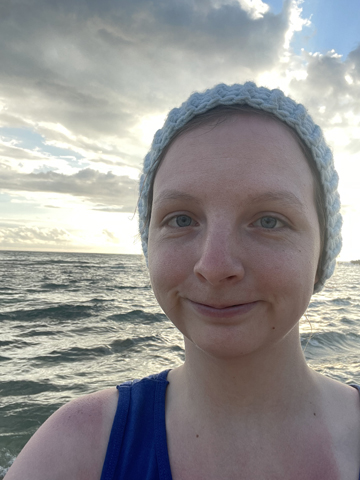
Allison Smith writes: Originally from the Southeast Texas coast, I am now living and based out of Northern Virginia. As a writer, I have been active since the age of 13. When I was 16 and 17, I became Deaf and the topics around the world of disability are often the subject or partial subject of my writings. Now married, I work full-time as a high school Special Education teacher, striving to make a difference in this world in any way that I can.

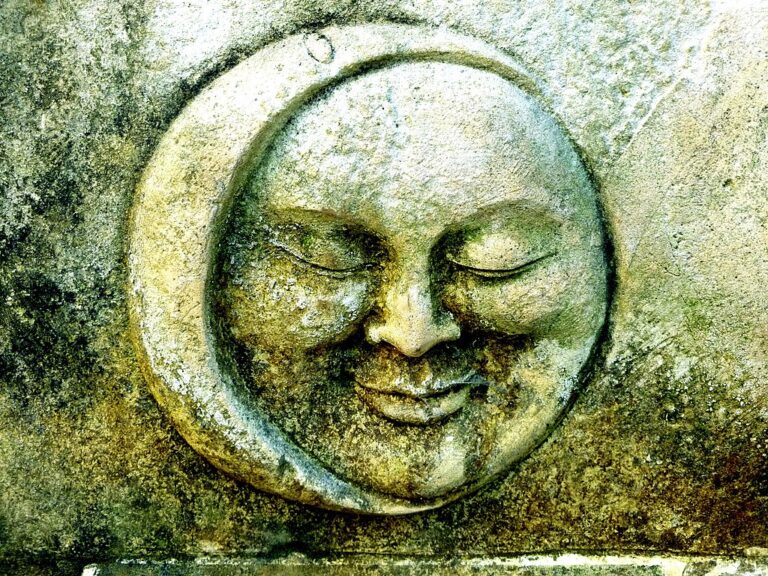
Image by Nicolas girard-bissonnette, CC BY-SA 4.0 https://creativecommons.org/licenses/by-sa/4.0, via Wikimedia Commons
Two Poems by Michele Keane-Moore

0

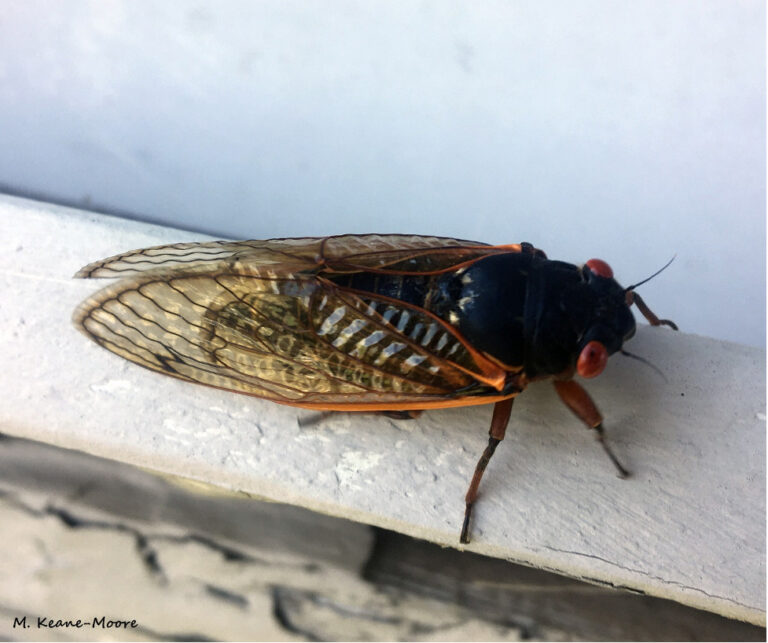
Brood Covid

We have been underground
For what feels like forever
Sucking on our cell phones
As if they were tree roots.
Now the time has come
To put aside masks,
To emerge once again
Beyond our closed safe doors.
We crawl out pale and waxy,
Fragile as if unfamiliar
With our post-pandemic bodies.
We need to take fresh air into our battered
Lungs and gradually strengthen.
Then we will gather once again
In large fertile groups and
When the moon rises
Together, we will sing
From the tops of our trees.

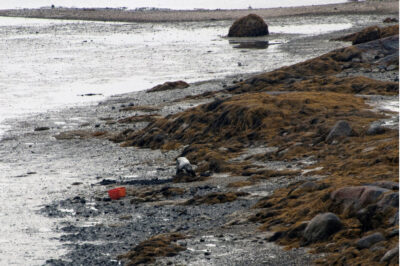
The man-gull

The man-gull only appears at low tide
Out on the mudflat with his rake and torn clothing.
Bent and digging for clams,
As his brethren circle and call.
Like the other gulls, he returns to the same patch
Again and again during the season
Avoiding people.
He follows only the tides
Showing up about forty minutes later each day
Sometimes in sunlight
Sometimes in rain
Sometimes lit by the moon.
He digs steadily
Appearing to take no notice
Of his surroundings except the rising water
That drives him closer and closer to the shore edges.
This morning, I saw him pause briefly
to stare down a herring gull
Communicating in a language known only
To those who take their livelihood from the sea.


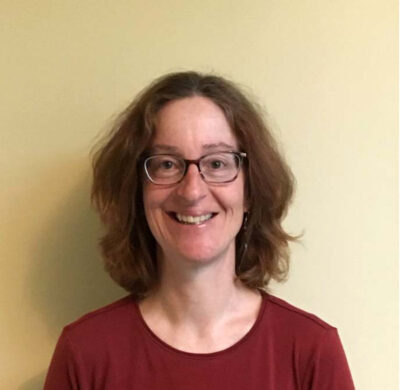
Michele Keane-Moore is an avid birder and photographer who takes her inspiration from the natural world.  She teaches biology as an adjunct at Western New England University and tries to get outside every day.  

Images courtesy of the author.

Two Poems by Ryan Quinn Flanagan

0

The Yellow Door

By ramrod fleet, by coonskin cap,
walking contraband visits the shops,
in this one and out that one,
purchases wrapped under arm or carried
in tiny gift bags that festive ornament dangle
just feet above hurried gum-stuck pavement
and I with this tea spout, a personal waterfall,
in this cozy linoleum womb which must now stand in
for dying mother, this recidivist’s way I return to the window,
checking to see if that yellow door across the street is still there;
the train runs off with all its passengers on the hour,
no quick getaway for our stoic yellow friend –
out front and first over the top,
how long must a man steep before all the flavour
leaves him?

The Guests

Mrs. Markey has invited many factions over.
Storming up her kitchen, the smell is awful.
And soon the guests will arrive.
I keep peering out from behind heavy brown curtains.
A moth-eaten housecoat done up around sagging middle.
Imagining all manner of party favours and place settings.
A parade of lipstick and disingenuous niceties.
Warring submarines parked all over the street.
Jiggling Jello molds up the front stoop with a false precariousness.

And later, that fraudulent tippled gang-cackle.
In this repurposed Barcalounger, I sit in the dark.
The stillness of old pipe smoke upon these rooms I forget to live in.

Ryan Quinn Flanagan is a Canadian-born author residing in Elliot Lake, Ontario, Canada with his wife and many bears that rifle through his garbage.  His work can be found both in print and online in such places as: Evergreen Review, The New York Quarterly, Bourgeon, TheSongIs.., Cultural Weekly, Red Fez, and The Oklahoma Review.

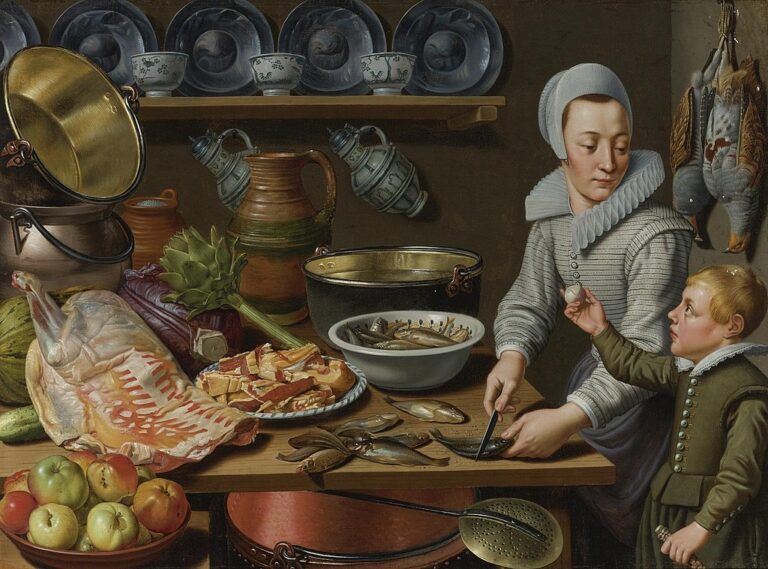
Image: Floris van Schooten, Public domain, via Wikimedia Commons

That Winter Afternoon by Michael Gushue

0

In the third grade, I sat in the last row.
Chalk dust whisper down the slate blackboard.
The radiators hammered like anvils
throughout the morning. In the distance
pile drivers pounded creosote poles
into frozen ground; the frigid air throbbed
with each blow. Blackbirds chirked and shook snow
clods from firs and poplars. Cars hissed through
streets of slush and runoff as shovels scraped hard
at the gritty sidewalks. The wall clock clicked seconds.

After the last bell’s clatter, we went in pairs
to the cloakroom, shoved our arms down
our jackets’ damp corduroy sleeves
and tugged galoshes over our wool socks.
We walked in rows down the dim-lit hallway,
a tunnel where the floor’s sheen had the blur
of dull ice. Outside, the school’s frosted-over
bricks released us from school towards home.

I climbed over ragged hills of exhaust-gray
snow bulldozed in mounds at street corners,
squinted against the bright sting of the clouds’
slate-colored light. A cold wind stole into my coat.
Frigid water flooded the crosswalks and leached
through my shoes. I reached home, the door unlocked.

The downstairs was still. The blinds and shades
were drawn but ice glare leaked in from the air
outside, and dust motes hung, suspended.
Quietly, I walked up to our second floor.
In the hallway, the weak bulb dulled the gold
and white swirl of patterned wallpaper.
The worn carpet muffled my steps as I slid
past my room to the corridors’ end. Where
I found her empty bed behind the door.

Michael Gushue is co-founder of the DC-based nanopress Poetry Mutual Press. He curated the BAWA poetry reading series in the Brookland and Capitol Hill neighborhoods of DC, and wrote the Vrzhu Press Poetry & Arts blog, Bullets of Love. His books are Pachinko Mouth (Plan B Press), Conrad (Silver Spoon Press), Gathering Down Women (Pudding House Press), and—in collaboration with CL Bledsoe—I Never Promised You A Sea Monkey (Pretzelcoatl Press). He lives in the Brookland neighborhood of Washington, D.C.

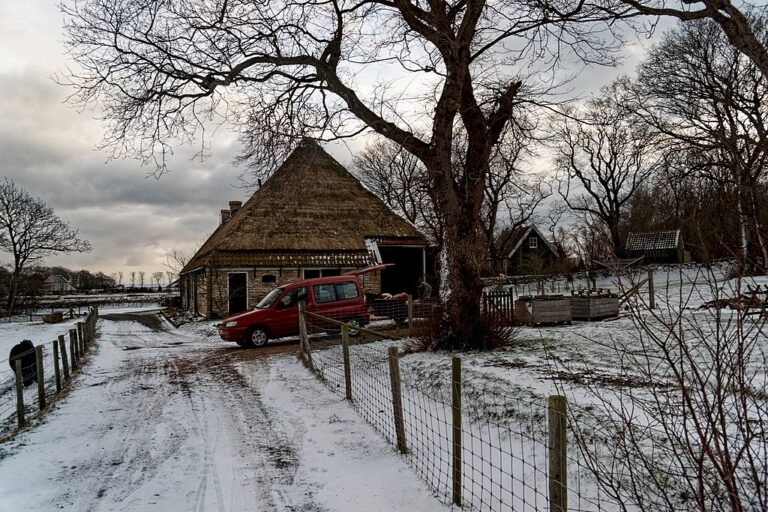
Image: Txllxt TxllxT, CC BY-SA 4.0 https://creativecommons.org/licenses/by-sa/4.0, via Wikimedia Commons
Still Mourning on a Foggy Morning After Grandma’s Funeral by Joan Leotta

0

Clouds weep on the
Windows adding their sorrow
to my unchecked sadness.

Sun tries to dry
sky’s tears, shine through
but fog shrouds sky,

effectively blocking
any warmth from penetrating
its thick, gauzy dampness.

Dark twig hands of leafless trees
offer no comfort of autumn color.
Tears washed away all their joy.

It seems only right that
Grandma died in November,
when all nature could mourn her.

Joan Leotta plays with words on page and stage. She performs tales featuring food, family, nature, and strong women. Her writings are in Snapdragon, Ekphrastic Review, Pinesong, The Sun, Brass Bell, Verse Visual, anti-heroin chic, Gargoyle, Silver Birch, Ovunquesiamo, Verse Virtual, Poetry in Plain Sight, Punk Noir, Yellow Mama, and others. She’s a 2021 Pushcart nominee, received Best of Micro Fiction, 2021 (Haunted Waters), nominee for Best of the Net, 2023, and 2022 runner up in Frost Foundation Poetry Competition. Her chapbook, Feathers on Stone, is coming in late 2022 from Main Street Rag. She is a member of the North Carolina Poetry Society, a member and area representative for North Carolina Writers Network and on the stage side of her work, member of, and as the coastal area representative for NC’s Tar Heel Tellers and coordinates Poetry Workshops/Readings online through her county Arts Council.

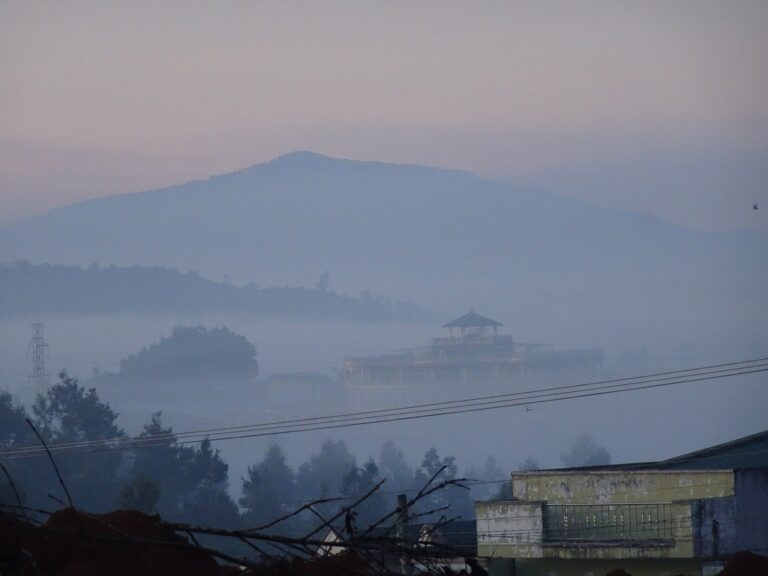
Image: Viet Anh, CC BY-SA 4.0 <https://creativecommons.org/licenses/by-sa/4.0>, via Wikimedia Commons