
Home Blog Page 89

Shadow is the Corpse of the Sun by Jane Rosenberg LaForge

0

Shadow is the Corpse of the Sun

After an installation by Ralph Lemon

The corpse of the sun
     is a shadow,
squalid and hitting bottom
     to be made tactile
to the soles of a pair of girls,  
     beset by imperfections
of skeleton and nervous systems,     
     playing on their father’s smooth
patio, circa the years before the problems
     began. The sun does not die
in quantifiable intervals, but in eras,  
     plasmic cycles of heat and release
set off by decisions as firm as fluid 
     that fills the architecture of spheres
and square roots; or as random as tilted 
      hips, pigeon toes, hormones colluding 
with the absence of strict instructions
      for the pulses and inhibitions;
it’s never pretty, but to some it’s occasionally
      monumental. We could make a study
of these conditions, much like a grandmother’s 
      collection of costume jewelry, outsized 
simulations of mineral wealth, wrangled into 
      awkward metals, much like an adolescent
mindset re-enlisting a central event long after  
      it’s defined by modern medicine. 
If you remain within the shade too long you
      might learn the role gravity shares with 
electromagnetics; that there is no ladder 
      to scale up to the celestial bodies 
so you could untwist the rungs, wrench 
      out the crossbars you find offensive;  
emancipate curves and ellipses into
       the clarities of linear distances 
because that happens only in books your mother 
       read to you with a promise that if you go
to sleep and stay that way through the night,
       you will arise refreshed and curious 
about what the day has to deliver
      even if it is a scaffold howling through
the solar storm, the usual kiss
      of emptiness. 
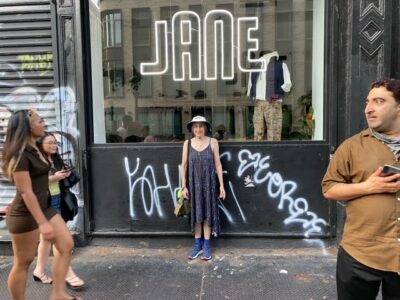
Jane Rosenberg LaForge is the author of three full-length collections of poetry; four chapbooks; a memoir; and two novels. Her fourth full-length collection will be My Aunt’s Abortion, from BlazeVOX [Books], in 2023. More poetry and fiction are forthcoming from Pirene’s Fountain, Thimble Literary Magazine, and The Adroit Journal. She also reviews books for American Book Review and reads poetry for COUNTERCLOCK literary magazine.

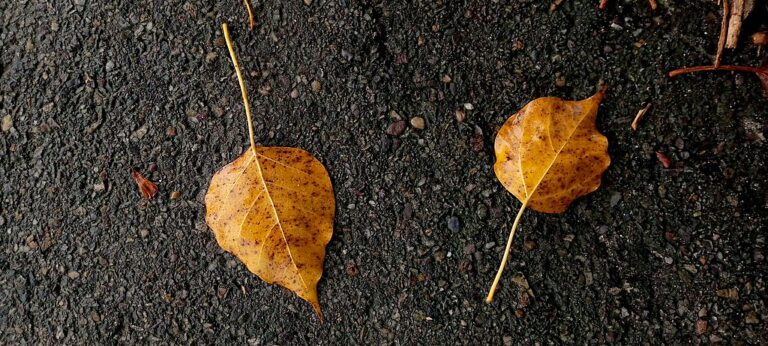
Image: Ozma, CC by 2.0, via Wikimedia Commons.
Two Poems by Casey Catherine Moore

Calliope Teaches Me How to Write

It’s dusk, and these hallowed grounds
are motionless and silent
Orange radiates from the horizon,
and the oak trees loom like shadows
of old professors
In the distance, a blue jay chirps at the wrong time
She doesn’t know that now, she should be still
Self-care is necessary like the rain for oaks, so
I keep rooting my toes in the soil
and raising my eyes up to the sky
Calliope says, “Pick your hands up
and put them on paper.
Get out from under these shadows.
Plant your seeds now in the dark.
Remember the calm when new
growth sprouts up.”

Manic-Depressive Cycles

C racked
I mpulsive
R abid
C areless
E scalating
A psyche that is
split, that shifts and spins
Tears and laughter, sometimes
simultaneous—depths, peaks
—sometimes voices
Always questioning feelings
Always trying to suppress
what will bubble up to the surface after
ages of suppression
My obsession
envelopes around you, curls
up your nostrils and down into your lungs
It’s wet but not heavy, you never feel full
It’s a Fire that starves everyone of Air
My obsession
is coated with burgundy sugar
It feels good going down
as you are wrapped in cellophane and
suffocate,
from inside and out.
Flourishing:
When the parts are moving in sync,
when there is balance,
when synapses are firing,
but not on Fire,
When the wave recedes back
at shore break, when I feel my feet
sinking, but supported, moving,
but without movement.
C alm
I ntuitive
R ising
C aptivating
E arnest.

Casey Catherine Moore is a bipolar, bisexual writer, high school teacher, and activist. She holds a PhD in Comparative Literature from the University of South Carolina with a focus on Classics, Latin poetry, women’s and gender studies, and queer theory. Her writing centers gender and sexuality, particularly queerness and gender divergence, dis/ability and mental health, pop culture, LGBTQ+ rights, educational equity, and other social justice issues.

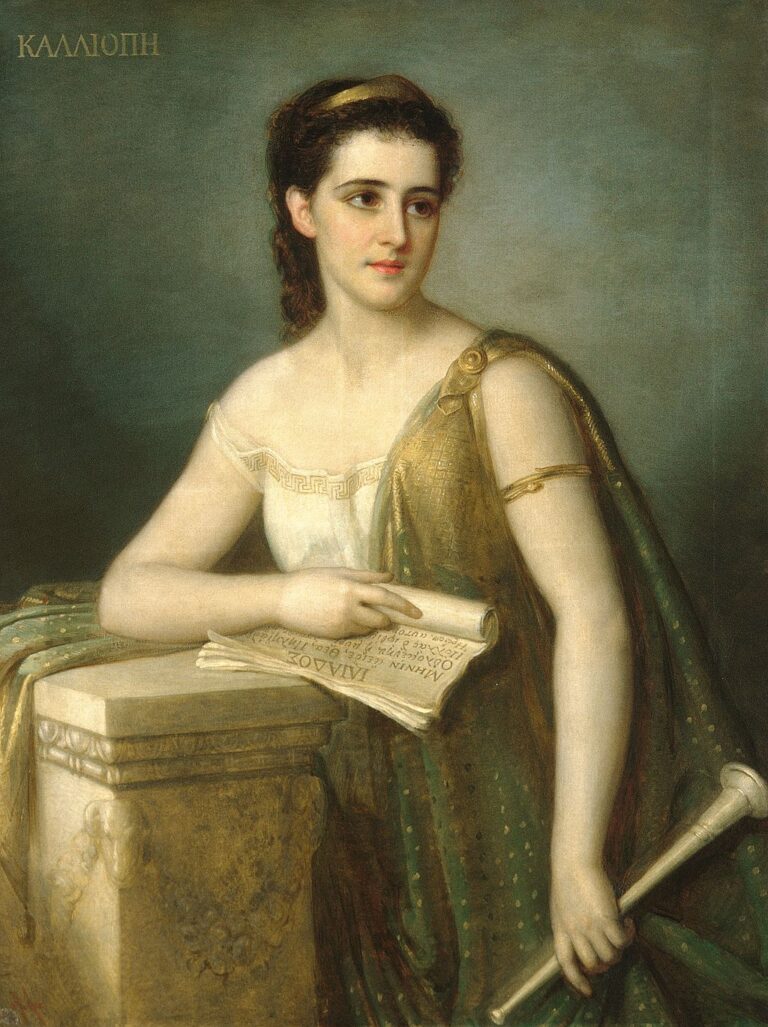
Image: Giuseppe Fagnani, CC0, via Wikimedia Commons

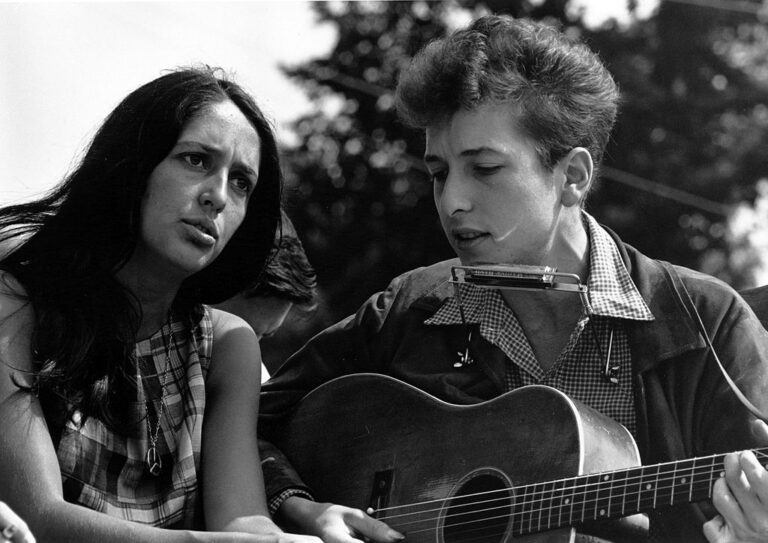
Joan, Bob and Ginsberg by Anant Dhavale

Joan, Bob, and Ginsberg

If you had known Joan and Bob

you would have said they were such crazies –

her hauntingly beautiful voice

his wildly cataclysmic fantasies of words

floating o’er rows of dancing girls

though often devoid of coherence

high on the euphoria of their drunken age


and there, in these frenzies of stupor and pain and trance

Ginsberg read his poems

of protest

and the madness of his times


who knew we would walk again

after these many years

into the same turmoils


but where are the voices of protest

as strong as

Ginsberg’s

as poetic


the seventies weren’t that long ago folks

if you find the grand Inquisitor

relevant still


I may have written a few poems

here and there

but it doesn’t matter much


for these are different times, though the agonies remain


we like memes

and cat videos and take selfies

find our gullible nirvanas in seeking nods

and discuss our lives in YouTube comments


and though I like Joan and Bob

I would much rather sit and read

Ginsberg’s poems

of madness

and protest


but that’s beside the fact

that the times have changed


though the agonies remain

Anant has been writing poetry since his late twenties. He attempts to explore the intricacies of the human mind and the cultural milieus that it breathes in through a conversational style of poetry. His poems seem to emanate from an urgent and pressing need to ‘word’ the abstract. He occasionally tends to omit punctuation from his poems, in part to preserve the urgency and flow of words. He blogs frequently at www.newagepoems.blogspot.com and publishes his poems on social media apps such as Facebook and Instagram. Anant lives with his wife and son in Herndon, Virginia, and can be reached at anantdhavale@gmail.com.

Image by Rowland Scherman, Public domain, via Wikimedia Commons

Three Poems by Lenny Liane

Little Creatures

The teacher who looked ancient
to her circle of first graders
leaned forward and explained

that the typical lightning bug
was simply the twinkle
in an angel’s eye, the only part

of our guardians God allowed us
to see, and in the small
classroom where we learned

the sound of each vowel
and a vocabulary of simple
words so we could read

the unassuming adventures
of Dick and Jane who ran
with Spot while their little

sister Judy sat with their cat,
the butter-colored Puff,
all this seemed right and good.

Later in the season of the lawn
sprinkler and popsicles,
we’d wait in the dark

for the chants of crickets
and cicadas to pause and even
when the moon was white

as milk and as disclike
as a sugar cookie, we looked
for those little creatures

that glittered with irresistible
flickers of green and gold light.
Yet sometimes we just sat

and mulled over how many
guardian angels visited here
and if they all belonged to us

or if some were on vacation
while others stopped by
as part-time bugs.

Walking Away
Languedoc

The gate is open, the pebbled path
between weathered stone walls, old,
and Mother is walking away.

In the middle distance,
a chiseled-brick archway
over a lane that’s long been dusty

as no wind has come along
lively enough to sweep back
and forth between the aged houses.

Mother’s a tourist in this region
where, if a person said Yes
in the vernacular of troubadours

and radically Christian Cathars
rather than in the Parisian patois
used by invading northern nobility,

she might’ve been marked for death,
along with entire families and towns,
slain by bonfire or the sword.

Mother’s been able to say Yes
in a handful of languages.
Yes, to a marriage, to children

and to a dynamic accumulation
of days and, lately, Yes
to whatever waits ahead.

The breathless blue sky
above the down-sloping village’s
hillside and its castle in ruins

are nowhere in view. Only the walls,
the open gate and the path on which
Mother is walking away.

The Last Word
after Jack Gilbert

When the angels came, he was working
on the Sunday crossword puzzle.
He’d filled in “apple” for forbidden fruit
and, down from the first letter,

penciled in “agape” in the squares,
then stopped, caught more off-guard
by the incongruous intersection
of greed and ungrudging goodwill

than by the two sinewy, winged figures
who looked like extras in a Zeffirelli film.
All he asked was could he continue
the puzzle. Both angels shrugged

so he took up his pencil again.
The two drew near, leaned over him,
close enough for him to discern
the faint scent of his favorite flowers,

lilies of the valley, those delicate bells
that never ring. Hemingway, one said,
pointing toward a five-letter space.
Donne, the other countered dryly.

“But I have so much more to finish,”
the man mewled, showing them
a baffling expanse of vacant spaces.
By the time he put down the final

letter, the sky had given its last
rosy show of the day and the man
said he would slip on his sweater.
When the angels led him toward

a brightness, he tried to let go,
arguing, “I don’t know if I gave
the right answers.” No one does
was the angels’ reply.

Lenny Lianne was born in Washington, DC, and spent over forty years in the “A” suburbs of Northern Virginia: Arlington, Annandale, and Alexandria. She holds an MFA in Creative Writing (Poetry) from George Mason University and her poems have appeared in regional, national and international journals and anthologies. She’s taught the writing of persona and ekphrastic poems as well as the ode in workshops on both coasts. One of her poems was chosen by Dorianne Laux as a finalist for the 2021 Steve Kowit Poetry Prize. Lenny lives in Arizona with her husband and their dog.

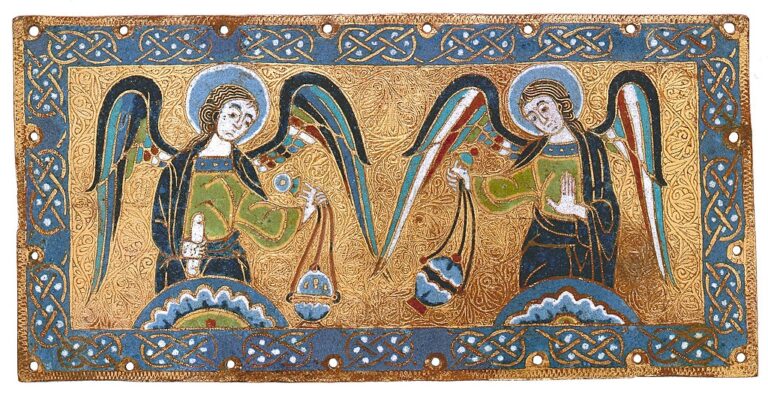
Image: Metropolitan Museum of Art, CC0, via Wikimedia Commons

Two Poems by Ann Bracken

Inner Compass

Golden shovel from David Whyte’s poem “Sweet Darkness”
“…anyone or anything that does not bring you alive it too small for you.”

It could rain anything
during the night—leaves, perhaps— or
maybe you dream of anyone
speaking a riddle that
you can answer. In what language does
a cardinal call? You yearn for time not
designed by Techie gurus who bring
unending yet pointless updates to you.
None of them will keep you alive
until your imagination is
free to understand that too
many things feel small
because a cramped vision is useless for
the world that calls to you.

Stone to Sand

Time works slowly—the rounding of mountain peaks, the way it turns stone to sand. Was I born at the beach? It’s as much home to me as it is to the seagulls and the sand pipers. When I walk near the ocean, it’s as if I’m a selkie yearning to swim deeper, find my treasure under the waves. I have been every color on this shore—a pink and white newborn, a red, Noxema-covered child building castles, a tan, sun-soaked woman floating in front of a cresting wave.

This beach knows my life’s secrets. The lonely teen struggling to be cool while the lifeguards swooned over her friend, the mother teaching her toddler to kneel in front of the breakers, suddenly seeing why her child was terrified at their crashing. The woman, walking in the moonlight.

Now I meditate to the sounds of waves at dusk and lick salt from my reddened skin. Wrapping myself in a towel, I savor the turn of another day. Whatever comes next will be a blessing and a joy. Time works slowly—the rounding of mountain peaks, the way it turns stone to sand.

Ann Bracken has published three poetry collections, The Altar of Innocence, No Barking in the Hallways: Poems from the Classroom, and Once You’re Inside: Poetry Exploring Incarceration. She serves as a contributing editor for Little Patuxent Review and co-facilitates the Wilde Readings Poetry Series in Columbia, Maryland. She volunteers as a correspondent for the Justice Arts Coalition, exchanging letters with incarcerated people to foster their use of the arts. Her poetry, essays, and interviews have appeared in numerous anthologies and journals, her work has been featured on Best American Poetry, and she’s been a guest on Grace Cavalieri’s The Poet and The Poem radio show. Her advocacy work promotes using the arts to foster paradigm change in the areas of emotional wellness, education, and prison abolition.

Image: Chiring chandan, CC BY-SA 4.0 <https://creativecommons.org/licenses/by-sa/4.0>, via Wikimedia Commons