Home Blog Page 91

Three Poems by Yvette Neisser

THE ARC OF THE SUN

for my mother

Here is what you have revealed: At eighteen,
you rode a Greyhound from New Jersey
all the way down to the border and beyond,
into Mexico, where you spent a summer
wrapped in a “novio’s” serenades and
the tortillas of a kind family.
You say you don’t remember the rest.
But there are some things I know.
It was 1965, you were
a young woman breaking out
from the shelter of aunts and uncles,
from kugels and Yiddish jokes, to take
the only route to Mexico:
three days through the Deep South, where
segregation was shaking at the seams,
separate water fountains smashed
to pieces. Remember, the South was heaving,
“colored only” signs yanked from walls,
Jews considered a separate race.
Buses cranked nervously through states
where Freedom Riders were torched and beaten.
Were you ever afraid? You deny memory
and live only in the present,
placing your faith in the arc of the sun
at each hour. Whatever happened that summer,
you came home with the private tongue
of Spanish, a pocketful of tales
you could tell, but chose not to.
Maybe the ride back was easier,
reversing the journey from South to North.
Maybe you were no longer white,
having absorbed the Aztec sun.
Maybe you had shed fear.

GRAVITY

Somewhere on the outskirts
of Santa Cruz, down a side road
out of town, gravity is reversed.

I’m not making this up.

In someone’s backyard,
all we knew to be true
was turned upside down:
put a metal ball
at the bottom of a ramp,
and it rolled up.

What magnets hung
in the air—or magic—
to make every object tilt upwards,
gravity now pulling everything
toward the sky?

I believed it all.
I still do.

Every road home somehow bent
toward Lombard Street,
the red snake curve, wheels rolling
over each brick, and our father would say
I think I’ll comb my hair
and take his hands off the wheel
as my sister and I shrieked in the back seat

and the world opened up, didn’t it—
sunshine, baskets of flowers
pouring out their colors
at every turn,
the road twisting and twisting.

Texture

Hungry for color, for touch.
For the rough skin of nuts
and the sweetness of pear.

For the wildness
of wild animals, raw
and gritty, teeth and dirt.

For sticky summer heat,
groove and clutch,
lick and steep.

For the opening of flowers,
the complete softness of petals.
How they turn their insides out,

their deepest colors in every shade.
When they are ready,
nothing is hidden.

Could I be that brazen,
that vulnerable. Could I be
that soft all the time.



Yvette Neisser is the author of two poetry collections: “Iron into Flower“(forthcoming in 2022 from Finishing Line Press) and “Grip” (2011 Gival Press Poetry Award). Her translations from Spanish include “South Pole/Polo Sur” by María Teresa Ogliastri and “Difficult Beauty: Selected Poems by Luis Alberto Ambroggio.” Her poems, translations, and essays have appeared in Foreign Policy in Focus, Palestine-Israel Journal, Virginia Quarterly Review, 101 Jewish Poems for the Third Millennium (anthology), and Split This Rock’s The Quarry, among others. She has taught writing at George Washington University and The Writer’s Center (Bethesda, MD), and has worked in international development and research for 20+ years. For more about Yvette, see https://www.yvetteneisser.net/.

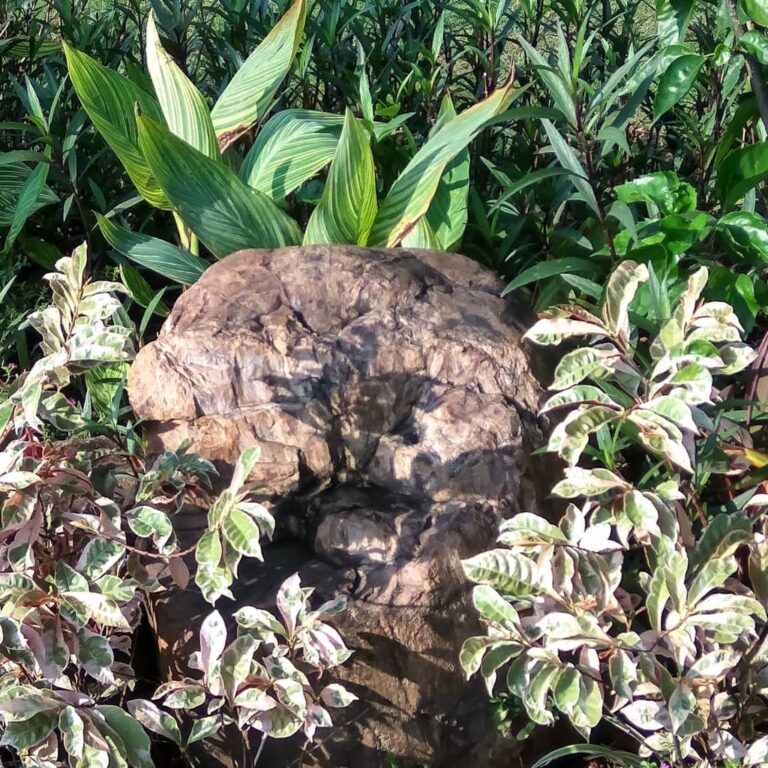
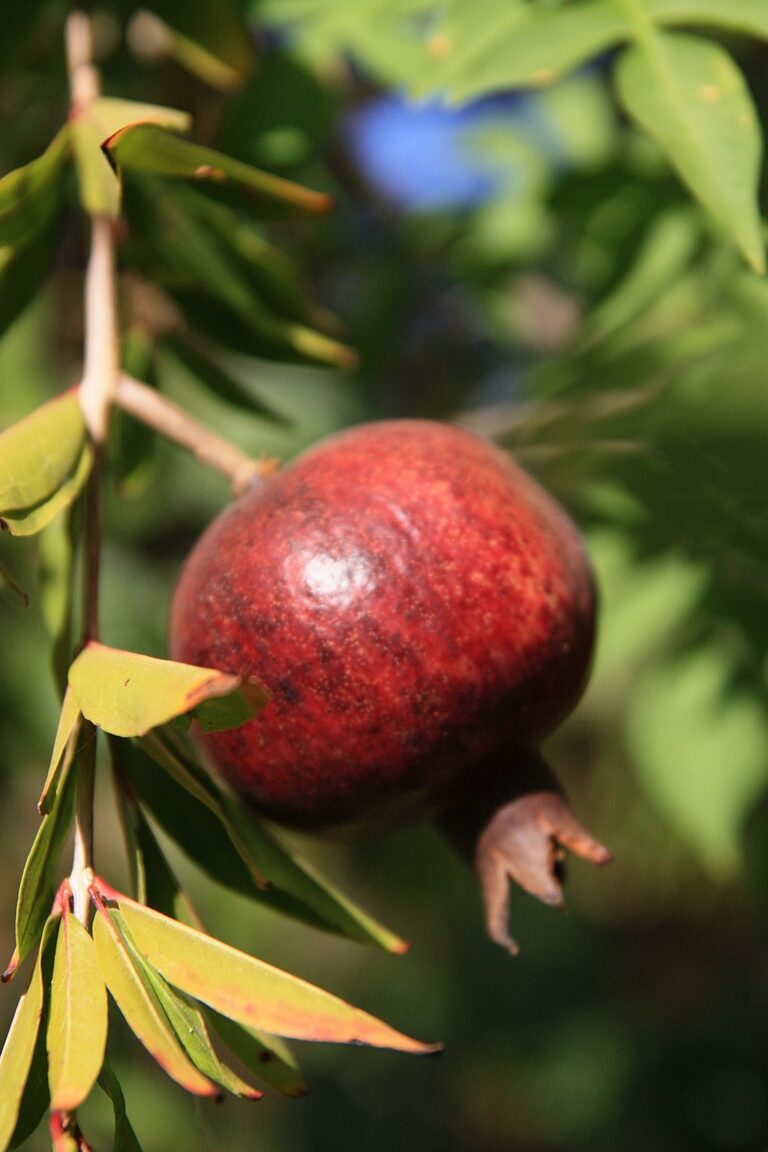
Image: Chenspec, CC BY-SA 3.0 <https://creativecommons.org/licenses/by-sa/3.0>, via Wikimedia Commons. Author photo by Mark Kokkoros.

Two Poems by Alex Carrigan

After the Ambulance

Why can’t we break the tension
like how your mother
broke that Waterford your father gave her
on their thirty-fifth anniversary,
the day her body first turned against her?

We allow the silence
hang over us
like the lemon-printed curtains
she gifted us when we moved
into our house three years ago.

We allow our lips to remain closed
like the box of jewelry your mother filled with
pearls, silver bands, and claddaghs.
You locked the box when she lost
her mother’s engagement ring
and we spent a day sweeping the floors
looking for it.

You sit on the couch,
your legs crossed the way
your mother plaited challah
in the days leading to Christmas
before her fingers stiffened
and you took up this tradition yourself.

You look at me
with eyes watered the way
your mother left a thin pool of water
on top of each of the plants that grazed
the window box of her apartment,
that I took down when she dropped
a basil plant during Easter.

We stare at each other
the way she stared back at us
when we found her in bed this morning
before they took her away,
shrouded in black.

We permit this stasis
when we know it doesn’t
honor her memory,
since silence was something
she never allowed past the
frayed screen door of her home.

We do this,
but neither of us wants to admit this betrayal,
so we sit in silence
and wait for someone or something
else to break, if only
to give us a reason to break ourselves.

After Ilya Kaminsky

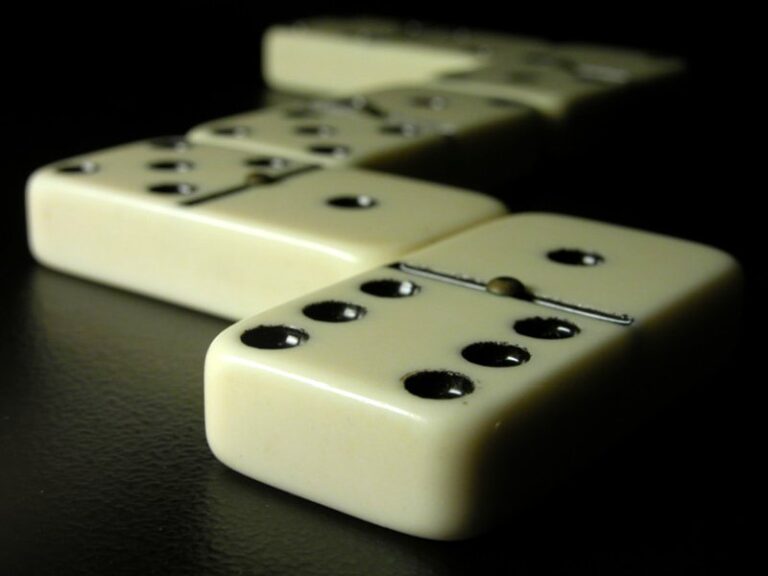
Four Women Laying Domino Trains

Four women sit around
a mahogany picnic table
for a game of Mexican trains
on a late July evening.
The domino tiles clatter
like the ice in their glasses
of iced tea as they move
their hands around and scramble them.
With the tiles divided, the game begins.
The first woman starts the train
by laying the double twelve piece.
She has spent her
life laying down ceramic pathways
for others to walk down.
She labored to put these paths down,
watching women with designer shoes
nearly step on her hands while she worked.
She imagines that drops of blood
formed by these stilettos
formed the pips on the domino,
and that’s the only reason why
those women’s shoes
have red bottoms.
The second woman spends most of the game
intersecting with other paths
instead of building onto her own.
She’s often found it hard to pick a direction,
even unable to follow the lines
painted on the floor of the hospital
she labors away in.
Playing dominoes is asking her
to choose the gangplank
instead of the roller coaster,
so her train remains on the turntable.

The third woman coyly laughs
and giggles each time
she lays a tile down on her train.
She’s managed to make it
through life grabbing people by the wrist
and taking them wherever she chooses.
None of them ever complained,
especially since she sweetly told them
what laid at the end of the path.
For her, the pips are like the
mole she paints above the corner
of the strawberry colored lips
men like to taste.
The last woman mutters obscenities under her breath
every time she draws a tile from the pile.
She’s struggled the most in building paths
during this game and in life.
Her set of tiles lay on their sides
like tombstones erected in a cemetery following a war.
Her hands are calloused
like a gravedigger’s,
as she often builds down instead of out.

Four women sit around
a mahogany picnic table
and continue to lay down paths for plastic trains
they nor anyone else
can ever take a ride on.
Once they finish,
they’ll destroy those paths
and try to reconfigure them again.

Maybe the next game will
form a train line like the Yamanote,
where the domino lines
form a circle instead of spreading out
like a compass rose.
Maybe then the women
won’t need directions or guidance,
and instead they can
walk carefully between the pips
to see where they end up.

After Mahogany L. Browne and Nina Simone


Alex Carrigan (he/him) is an editor, poet, and critic from Virginia. He is the author of May All Our Pain Be Champagne: A Collection of Real Housewives Twitter Poetry (Alien Buddha Press, 2022). He has had fiction, poetry, and literary reviews published in Quail Bell Magazine, Lambda Literary Review, Empty Mirror, Gertrude Press, Quarterly West, Barrelhouse, Stories About Penises (Guts Publishing, 2019), and more. He is also the co-editor of Please Welcome to the Stage…: A Drag Literary Anthology with House of Lobsters Literary. For more information, visit https://carriganak.wordpress.com/ or follow him on Twitter @carriganak.

Three Poems by Ryan Quinn Flanagan

French Resistance, without any French

The raccoons lived in the back shed
like a family of nocturnal lawn mowers.
The backyard just the front yard
that no one sees.
A mother teaching her young.
Raiding the vegetable patch
and the grape vines by the side window.
Often hanging upside down.
Our old Portuguese landlord always cursing their presence
when they got into the garbage bins,
but leaving a little something extra for them
to find on the back window sill
when his angry wife was
not around.

Knuckle White

Playtime is over.
The games are gone forever.
The box top has eaten the syntax.
Wild argan oils in sturdy glass beakers.
We are in too deep now.
Something follows something else.
Shadows large as leopards leap rapturous
in spotted trees.

Why Simple Hands through Hair Are Never Spawning Salmon Up River

I am jaw line,
I am chew toy,
I am a sea serpent
without sea.

I am dirt poor,
I am bone sore,
I am a dirt road
without light.

I am half old,
twice the cuckold.
What are you?

I am dilating,
sock hop gyrating,
I am pampering pillows
into proper softness.

I am righting,
I am carpet flea biting,
no dentist will
touch me.

You can frisk me:
taste, fondle, kiss me
without fanfare.
Where are you?

Sit for pictures,
snapping camera,
I am a suitcase
that never closes
on anything

All that travel,
towers of Babel,
How are you?


Ryan Quinn Flanagan is a Canadian-born author residing in Elliot Lake, Ontario, Canada with his wife and many bears that rifle through his garbage.  His work can be found both in print and online in such places as: Evergreen Review, The New York Quarterly, Bourgeon, TheSongIs.., Cultural Weekly, Red Fez, and The Oklahoma Review.


Image: Moonriri, CC BY-SA 4.0 https://creativecommons.org/licenses/by-sa/4.0, via Wikimedia Commons

Infinite Nothing(s) by Ethan Goffman

0

Infinite Nothing(s)

It is a law of the physical world—although not of mathematics—
that if you multiply zero enough, 0 x 0 x 0 x 0 x 0 x 0 x 0 x 0 x 0 x 0 x 0 x 0 x 0 x 0 x 0,
and so on, and so on, and so on, and so on
persistent, the little engine (of the universe) that could,
you arrive at an actual number,
an infinitesimal fraction,
from nothing something,
that eventually multiplies to become:
THE UNIVERSE!

Before space and time this happened
in less than an instant
(since there was no time).

That is why we all exist
why I am here
to write this poem—

or perhaps not a poem at all,
just a bit of floatsam—
that explains
nothing
or
everything?

Ethan Goffman is the author of the poetry collections I Garden Weeds (Cyberwit, 2021)—2nd place winner in the Taj Mahal Review Poetry Prize—and Words for Things Left Unsaid (Kelsay Books, 2020) as well as Dreamscapes (UnCollected Press, 2021), a collection of flash fiction. Ethan is co-founder of It Takes a Community, which brings poetry to Montgomery College students and nearby residents, and is founder and producer of the Poetry & Planet podcast on EarthTalk.org. Ethan also writes nonfiction on transportation alternatives for Greater Greater Washington and other publications.

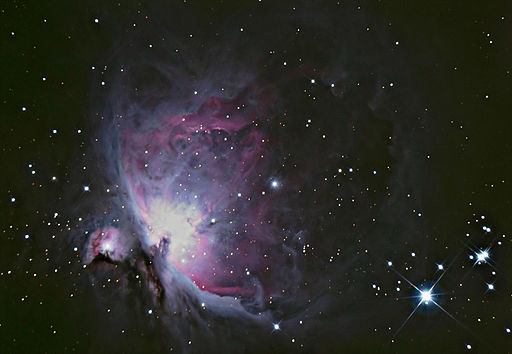
Image by Rochus Hess, Attribution, via Wikimedia Commons.

Two Poems by Marianne Szlyk

Hobbs Square, 1955, Worcester, MA
After a photograph of Cecile Aaronson by a Telegram and Gazette photographer

The woman stands at the open window
on the day the heat was to break.
Instead, the air hangs heavy, wet
stockings hung in a shared bathroom.

That day a breeze was to flow
between buildings as crowded as teeth,
even into her store, floor to ceiling shelves
crammed with bolts of cotton and wool.

Instead, water hurries down this narrow street
where no one lives, where no one shops.
The woman looks out into the rain.
She doesn’t expect to be rescued.

The evening paper’s photographer passes by.
She supposes she’d distract him
as old as she is, or weigh him down
as thin as she is. He won’t stop.

She will have to wait at the window.
Not even a run in her thigh-high stockings,
she will pick her way home amid the debris
when the waters depart. No bus, no cab will stop.

She cannot picture Hobbs Square vanishing,
effaced by black, stinking waters.
These buildings, her shop, her bulwark,
the bolts of plaids and seersucker,

all must remain.

Home/Not Home

In this dream of Kansas,
I scuttled like a fat bug
beneath the wide sky, its thin blue
unimpeded by trees or clouds.
No mountains kept fierce winds away.

There was nowhere to walk.
I’d forgotten all I’d once read,
all I thought I’d know forever.
The scorching wind blew all
traces of my old self away.

Some writers I’d read long ago
could have seen each shade of grass.
One writer had found fossils,
rocks, arrowheads, shards
of pottery, perhaps poetry,

exposed beside highways I sped on,
listening to music that meant nothing,
to talk that meant less
as I returned to my home
that was not home.

Marianne Szlyk lives in the DC suburbs with her husband, the wry poet and prose writer Ethan Goffman and their retired cat. Her poems have appeared in the Beltway Poetry Quarterly, Verse-Virtual, the Sligo Poetry Journal, Bourgeon, Muddy River Poetry Review, Writing in a Woman’s Voice, Mad Swirl, and Spectrum as well as a few anthologies. Her books On the Other Side of the Window and Poetry en Plein Air are available from Amazon and Bookshop.


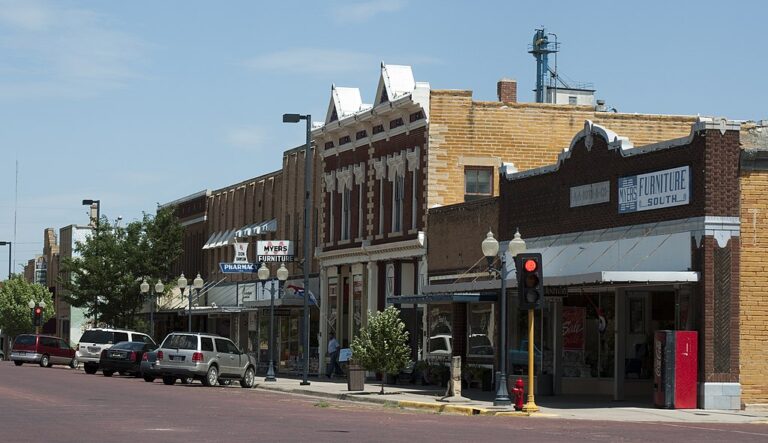
Image: http://www.cgpgrey.com, CC BY 2.0 <https://creativecommons.org/licenses/by/2.0>, via Wikimedia Commons. Author photo by Alan Gann.