I am sorry for not listening when you told me about your mom; Cancer is hard, and I was trying to eat my lunch. I am sorry for not sticking up for you, and for nodding my head when you told me you got seizures. Simple kindness is hard – not just for me, but for everyone except you. You, man of bug-eyed Boris Karloff stares, of touching people from behind when you don’t expect they’re not expecting you, of drinking two milks for lunch, of telling the ladies over the intercom that you’ve just cleaned the bathroom, so please be careful. Ashton up front says that she’s scared of you. I say I am, too. What I don’t say is I saw your mother the other day, hands wrapped over your shoulders, eyes closed, giving you a blessing before you wandered into work.
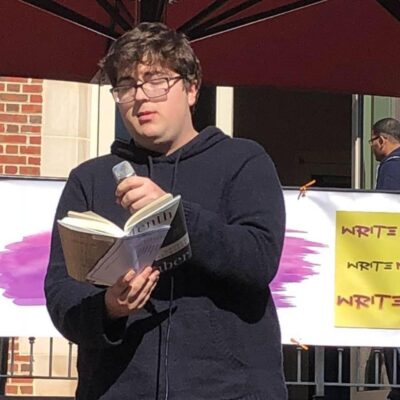
Jasey Roberts is a Creative Writing / Literary Studies double major from southwest Virginia.
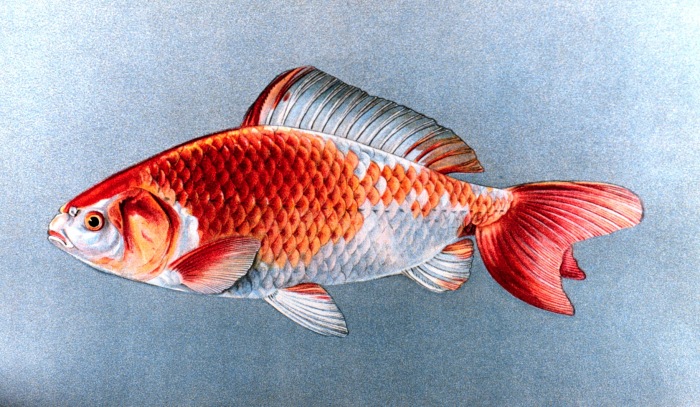
Image by David S. Soriano, CC BY-SA 4.0 <https://creativecommons.org/licenses/by-sa/4.0>, via Wikimedia Commons
In these modern times, I confess to forgetting, on occasion, that rhinoceroses aren’t dinosaurs. Nor extinct—at least, not yet. That they live in this world, somewhere, that I could be on a plain, someday, and the grasses part and: rhinoceros. The same can’t be said for triceratops; I forget, sometimes. Nature is to blame, in all her thriftiness, the way she reuses her designs. Thrift is the why of male nipples, why the juice of a coconut separates like milk. Peaches and skin bruise just the same. Sharks are more human, genetically speaking, than they are fish. Under certain circumstances naked mole rats grow like yams. You can’t turn off your skin. There are plants so sensitive they can’t bear touching and rock closed, like anemones, or fainting goats, or anything that wants to disappear awhile. Triceratops, rhinoceros–ten million years apart, twinned, doomed, and earthbound. So tell me: to what epoch will your skeleton belong? What were the things that you forgot while learning how to fly?
Mirror, with Questions
Have you ever been so hungry for metaphor that you forgot winter exists, these months to be endured in a body with a stomach and hands? Have you stood on the thin ribbon road of now, with all the bad and good to happen and that has sloping away steeply on either side, the envelope of your body still sealed at the flap and filled yet with blood and electricity?
What do you owe a seed you decide to sprout, a pit fished from the trash and jammed into the soil?
What do you owe a child whom you have kidnapped from the safe land of never?
Domiciled
That week, I searched the meaning of a peck of apples and how to manage my dog’s decline, his failure to sleep for nights and nights. I searched the pies, sauces, and butters four pecks—a bushel—would make. It was September, almost autumn; I taught the children Blake’s Tyger, read them his Lamb, two ideas of creation. We had our flu shots and drive-through burritos from the Taco Bell. I learned that to domicile always seems, in practice, to take a passive form. Lift the fruit and twist it, the orchard woman said through her surgical mask. If it doesn’t come easy, it’s not ready.
Jacquelyn Bengfort is the recipient of fellowships from the DC Commission on the Arts and Humanities and the Martha’s Vineyard Institute of Creative Writing. Her chapbooks Navy News Service and Suitable for All Methods of Communication are published by Ghost City Press. She will join the Iowa Writers’ Workshop in the fall of 2021 as a candidate for the MFA in poetry.
Dale S. Brown is the author of I Know I Can Climb the Mountain, a poetry book which sold out its first edition of 1,000 copies. She is the author of four other non-fiction books and many articles, including one that was published in the Washington Post. Over 200 of her poems were published in literary magazines and newspapers. She read her poetry at The Folger Library, Martin Luther King Library, Georgetown Hospital and many other venues. She has read each year for Poetry Café, a program of the Arts and Humanities Division of Georgetown University. Her most recent featured reading was for Words Out Loud in 2020.
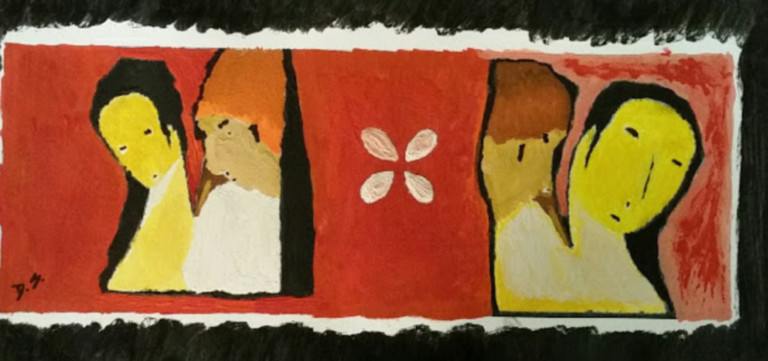
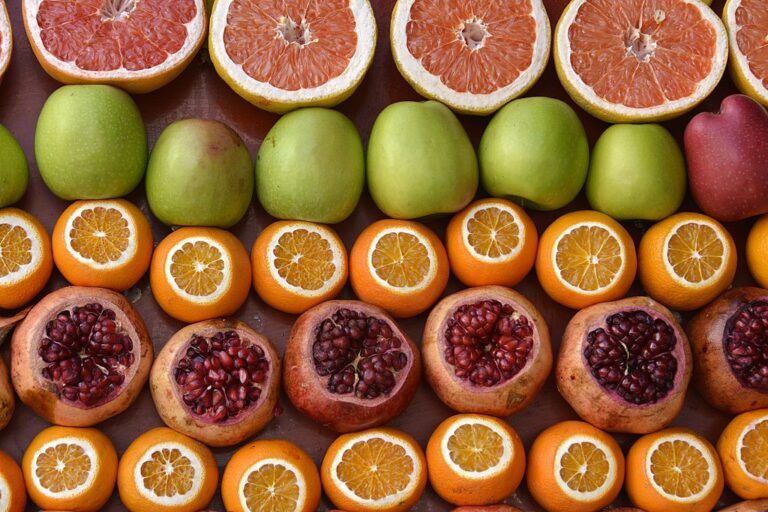
Image by Shinnosuke Matsubara, Public domain, via Wikimedia Commons
The Birds Busiest Before Dawn North Carolina, January 7, 2021
America, can you still hear us? Caged, mournful, what songs echo empty streets after all ballots have been cast? Crying to join a chorus that does not march, conducts cacophonous chatter, forgets birdsong in a forest of Babel, crows roosting on fenced streets.
I jump in a car, head south to meet the sun each morning, pelicans plucking fish too shallow to survive my own spine curved in a crescent mimicking moon seasons with washed-up gastropods, cuttlefish, ammonite, who know I left the city too quickly, thinking water would save me
What are the dolphins up to this morning? I wonder, both of us far from barbed wire, armed or not, angry or not, ocean-less, tripping on dry land the army of onlookers cannot divide themselves from the body politic, seduced citizens, a nation of tit worshippers shaking hips faster and faster to squealing violins, out of tune trombones playing anthems for the god of white liberty— while underwater, creatures click to themselves deepwater zen laughs at our din of bullets and ballots, defiant, endless noise.
White Space
This time When you arrive, I want to tell you everything sitting cross-legged on the bed we made love (can we call it that?) after so many years, isn’t it? when you cross the threshold, with raspberries, oranges, sweets I suck on after you’ve left pages for me to flip through, imagine you in their lines white space—what of it? enjambment is a learned behavior each line a world brings me closer softly those lips grow more familiar breasts pressed against me I expand my lungs inhale the weight of you letters too light, rare books endless journals burning yet, printed across your ribs permanence my fingers brush promise, to endure longer than poems what love letter will we leave? when the door shuts behind you, dates in my fridge, smells of you follow me for hours through every lunar crest some cycle we return to sometimes I am dark and you the light moon showing faces to the world below who thinks we are two phases, my body a crescent in your arms.
The Duties of a Lover
The satisfaction of pulling down your mask. your face into mine, quickly washing when you go. I wait to be alone. time when sun streams. writing freely. a duty to myself. to celebrate myself. sending emails from my nest. only for bird eggs and hatchlings who happen to survive the spring fall. ground scavengers mad for worms, insects, seeds. I’ve moved on. ready for the next season. myself. glassed irises reflect every twilight. dropping feathers for strangers to muse upon. carrying generations in my wingbeats. for centuries I’ve built hangars in mountain passes. overlooks higher than human lungs sustain. legs give up far below. craggy terrain defiant to scrupulous steps. waterless bodies, these mountains. tear up shoes. crack frail bones. little boys build camp sites. warm flames, sedentary things. myself. careful to send cooling clouds, rain showers, pull green tendrils from the earth for meals. lick a little stardust. dance in a wide circle. grow up as basil beneath your feet. myself. a hand you never held. scented, you fail to take me with you. tremors quake. little fires lit quick. gulp the last of the coffee. incense burned in the bathroom. door slams on the way out. baby bird, what song? myself. exhale you in the smoke.
Leda Painted During the Pandemic for Ilse
So in love with baby bird helping it transition into the next life I missed.
six swans ruling Central Park’s Boathouse lake slink past seven Contact Tracers,
white outstretched wings gilded with history warring winter, frozen fires, all of us sitting
cross-legged on planting grounds stroking soft soil where nurtured artichoke sprouts
might one day defy curfews like me, an owl natural as night bellowing
black bodies be saved, richness restored, I’m always dragging my Art around in cases,
never reading even a paragraph, writing a single syllable before pouring protest energy
into the streets taking videos, photos, getting sunburnt, saving baby birds from their nests.
Sara Cahill Marron is the author of Reasons for the Long Tu’m (Broadstone Books, 2018), Nothing You Build Here, Belongs Here (Kelsay Books 2021), and Call Me Spes (MadHat Press 2021), and is the Associate Editor of Beltway Poetry Quarterly. Her work has been published widely in literary magazines and journals such as Meniscus, West Trade Review, Cordella, Newtown Literary, and Lunch Ticket, and other anthologies, available at www.saracahillmarron.com.
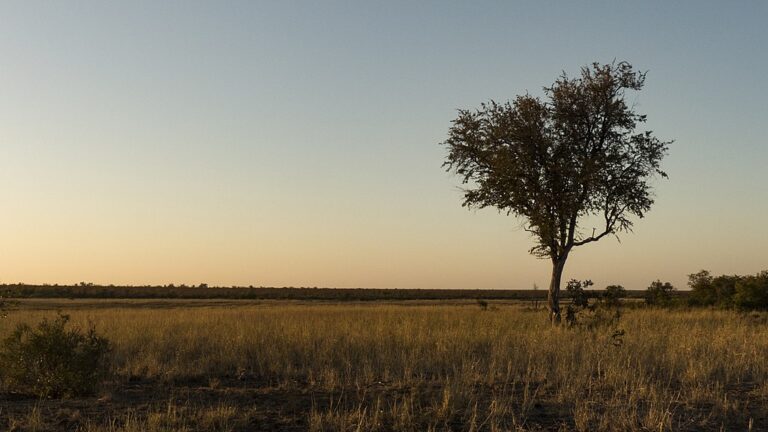
Image by Miomir Magdevski, CC BY-SA 4.0 <https://creativecommons.org/licenses/by-sa/4.0>, via Wikimedia Commons