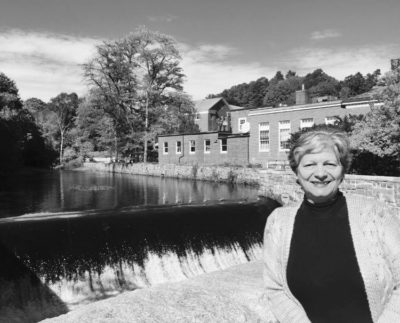
Morning dew falling on locks like overgrown caterpillars
Crawling to crystallized captivity
Your smile
Sunrise evaporating what moisture remains
I won’t always remember the night
But tucked in the grey folds
Your hips play crescent hillsides
The sun peeking from behind your lips
There is something unforgettably mystic about you
This
A marvel as baffling as frost flying through a cloudless
Sunday brunch
As timeless as each second spent in your presence
As infinite as the space between
For every coat of dew fallen on a night forgotten
There is a cherished morning
Cleaning cobwebs and evaporating what moisture remains.
When You Are Lonely
go to a restaurant become a regular don’t sit at the bar minglers roam that pasture grazing on fresh meat and ripe fruit
table for 1 in a normally busy section make friends with your servers tip them well in the midday gold rush you are a flash in the pan shimmering in a river of entitled fish say please even though they are paid to take your order thank you is the cherry on top of a meager salary tip them well
when you are lonely don’t sit facing the door avert your gaze more hope is lost when seeking an exit every glance a stolen breath a wasted beat that could have been used thinking about paying bills a potential vacation that book you’ve been meaning to write …ahem… Read
when you are all nerve endings and thumb tacks visit a restaurant that knows your flavor although it is your servers job to be cordial you will be single far too long to turn down forced kindness from strangers
So We Chase
Our great-great-grandparents wanted to escape So they chased freedom.
Our great-grandparents wanted their rights So they chased equality.
Our parents wanted heaven So they chased the high.
We want it all…
So why does it feel like we are standing still?
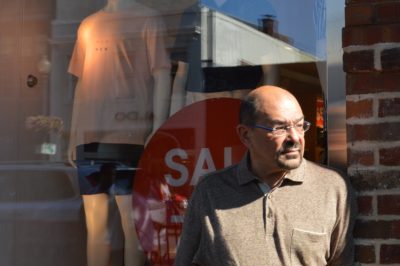
Dwayne B! aka the “Crochet Kingpin” is a DC native poet, activist, breakdancer, and fashion designer. He is one of the hosts of DC’s longest running open mic series, Spit Dat DC, as well as poetry host captain for Busboys and Poets (450K location).
In addition to featured readings at every Busboys and Poets location, SAGAfest Iceland 2015, Spirits and Lyrics NYC and Manassas, Woolly Mammoth Theater, and the C2EA “We Can End AIDS”, Dwayne’s short form poetry prowess led him to win the Best Haiku Award at the 2011 National Underground Spoken-Word Poetry Awards (NUSPA). His work to increase HIV awareness through spoken-word garnered recognition from the Congressional Black Caucus Foundation, BBCAmerica, the Discovery Channel, and The Washington Post.
Ultimately, his goal is to force his audience to feel. He tends to meet goals. When not documenting his life through poetic meter, he can be found on the metro making scarves and hats, or singing karaoke.
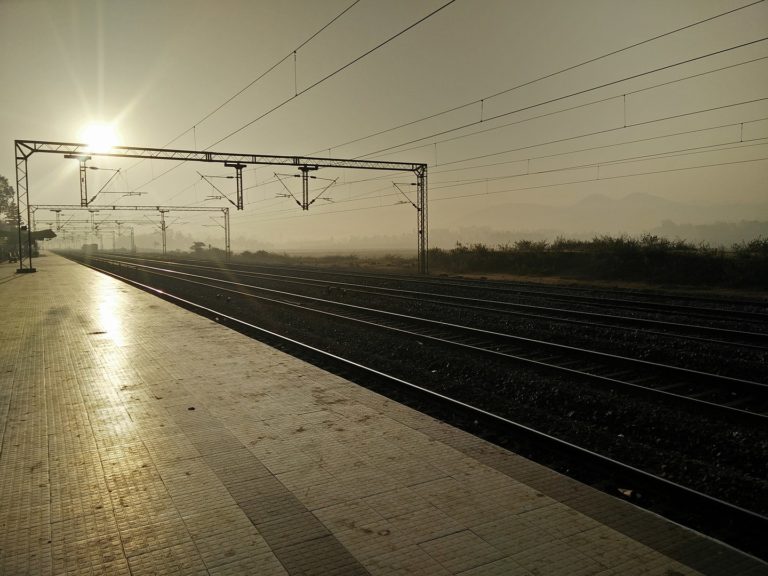
Image by Sudha.ghanta – Own work, CC BY-SA 4.0, https://commons.wikimedia.org/w/index.php?curid=60142670
A secret: all the oceans are one ocean And the ocean looks the same everywhere. Nevertheless, let us praise the white hour, When the depths disappear and the sea Becomes a rippling sheet under spun sugar skies. The white hour, when sailors grow quiet Thinking of infinity, or thinking of whatever Is to eat on the mess decks tonight.
The ocean looks the same, worldwide, And after white comes slate blue, then black And star-pricked, and praise be the trail Of bioluminescent cousins of our ancestors Glowing silent behind the ship, sometimes Leading stray helicopters home to roost. Sailors read their charts, dead reckoning Under red lights, faces carnelian and perfect.
It is one ocean, but you cannot know it, you Should not trust it; it aims to swallow you; it will. But still, all praise to the water in its vastness. Remember a night that the lookout heard whistles And for hours we looked for people in the waves. And for hours we found nothing, turning slow circles, Lowering boat after boat. We doubted the lookout. We ended the search. She demanded to know:
Well, then, what did I hear? I heard something. What did I hear?
Originally published in A Common Bond II: An ASAP Anthology
Great Bitter
Fifteen ships sailing northward and slow, Full of eggs and fruit and raw cowhide And the plastic toys that outlive us all, Forced to anchor in the Great Bitter Lake. 1967. The Six-Day War. The Suez Canal, Stoppered by scuttled vessels at either end.
Call it the Yellow Fleet—the sand, you know. Shipboard life is routine. It seemed a holiday at first: Organizing movie nights and boat races, Designing stamps that Egypt honored. But in time, Crews were consolidated and men went home, Their vessels shrugged off and left in the desert.
Think now about the sayings we have for ships. For example, how they pass in the night. How uncomfortable, then, these beasts must have been, Bedfellows for those long years. Little wonder too that, Unused to such a committed life, anchored in place, they let themselves go.
I want to help you understand How like a body is a ship, how ships decay. Only two, Münsterland and Nordwind, Arrived home on their own engines, and That was 1975. Which leads me to this benediction: Ashes to ashes, steel to rust.
Originally published in A Common Bond II: An ASAP Anthology
Jacquelyn Bengfort lives in Washington, DC. She has received fellowships from the DC Commission on the Arts and Humanities and the Martha’s Vineyard Institute of Creative Writing, and is the author of the chapbooks Navy News Service and Suitable for All Methods of Communication.
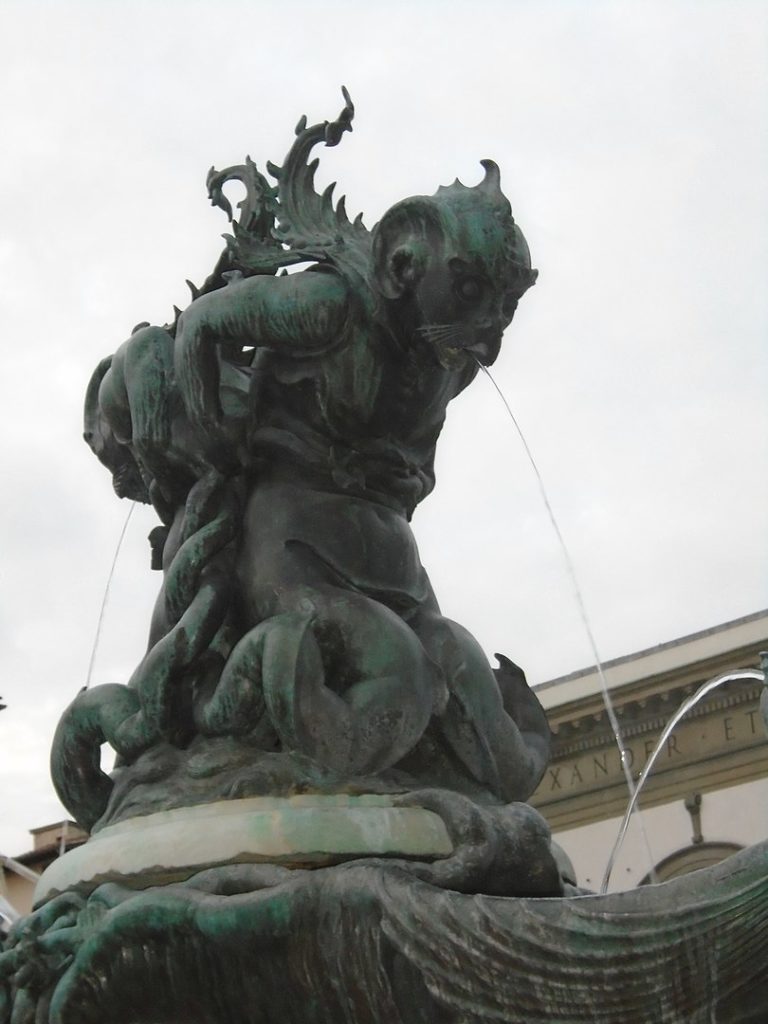
Image by Eugenio Hansen, OFS – Own work, CC BY-SA 4.0, https://commons.wikimedia.org/w/index.php?curid=56425754
Sounds like an art movement — Neoclassicism, for example.
But this is no art form. This is a biosphere of portentous possibilities.
Tubular, twisted and prickly papilla
what sculpted you into these neon lesions?
what possessed you to blossom into these bright red lumines?
this free-form pneumobilia? this post-modern, malformed phenomenon?
Alas, this is no still life no portrait, no stippled silhouette
Just a surreal canvas of contiguous protrusions
a fauvist specimen of aboriginal abnormalities.
Poem for Joe
Your death has touched me
in ways I can’t express.
The statement on Facebook
stark and grim:
Joe Campo:
October 9, 1953 – March 31, 2019.
A statement so simple
and yet so complex:
a jumble of abrupt abstractions.
Dear cousin
I haven’t seen you in maybe 50 years
and yet I have journeyed with you
through your personal hell:
the surgeries, the chemo packs
the unrelenting hope.
And, through it all:
the symphonies, the opera,
the hikes through the untouched forest.
So brave. So stoic.
As if life itself
were a muddle of paint
on your very public canvas.
I remember our youth
that time we climbed the tree
at the bungalow in Long Island.
A vague recollection and yet:
the image clear as crystal.
Death is selfish.
It robs us of all but a twinkle of memory.
And yet your memory scintillates
throughout our lives
despite death’s most greedy grip.
Mike Maggio has published fiction, poetry, travel and reviews in many local, national and international publications including Potomac Review, The L.A. Weekly,The Washington CityPaper, and The Washington Independent Review of Books. His novel, The Wizard and the White House, was released in 2014 and his novella, The Appointment, was released in May 2017. His newest collection of short stories Letters from Inside, will be released in October. He is a graduate of George Mason University’s MFA program and the Northern Regional Vice-President of the Poetry Society of Virginia. His web site is www.mikemaggio.net.
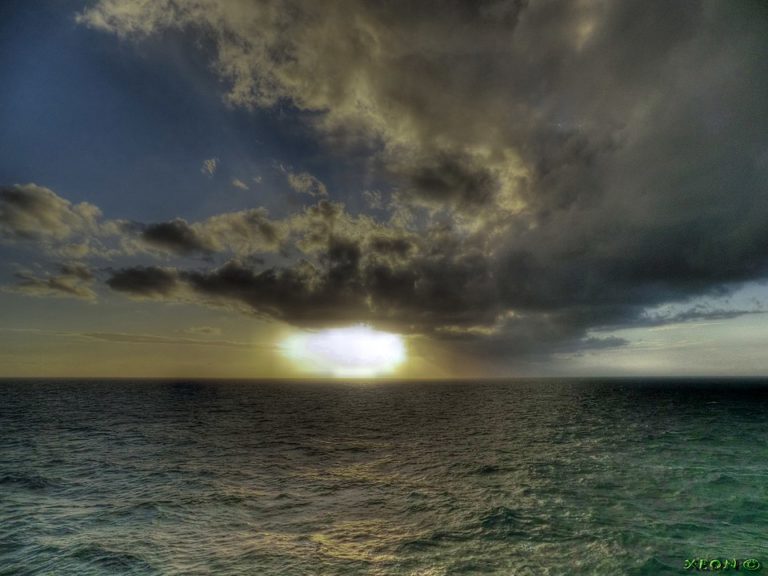
Image by —=XEON=— – https://www.panoramio.com/photo/72122161, CC BY 3.0, https://commons.wikimedia.org/w/index.php?curid=54688550. Author photo by Yasmine Maggio
We conclude our celebration of Women in Translation Month this week. Katherine E. Young, Poet Laureate Emerita of Arlington, Virginia writes:
August is Women in Translation Month, an international event held every August since 2014. Why? Here in the U.S., fewer than 800 books in translation (that number covers all literary genres!) are published in any given year. Of those 800 books, fewer than one third are works written by women. Clearly, we are not hearing enough women’s voices from around the world – not even from those languages where their work is originally published as frequently as the work of men.
Women in Translation Month is the brainchild of Meytal Radzinski, an Israeli scientist and book lover who noticed how few women she was reading in translation. Radzinski had two goals in mind when she founded the event: to increase dialogue and discussion about women writers in translation, and to encourage people to read more books by women in translation. Her advocacy has been eagerly seconded by booksellers, literary programmers (including the Café Muse reading series here in the DC area), and online supporters. If you enjoy these poems, I urge you to support women authors, their translators, their publishers, and the booksellers who carry their work: go buy a book (or two!) by a woman in translation!
The bird, or about flying. The first seizure
1. Introduction Birds are made of innocent but half-witted men who showed interest in heavenly matters, but who believed, in their simple-mindedness, that the surest evidence regarding those matters can be obtained with their own eyes. Those men grow feathers instead of hair.
2. Etymologies They are called birds because they don’t follow established paths, but move in indeterminate directions. They are winged because they aim to the heights with their wings and rise, rowing with them.
3. The Albatross According to Heidegger: The questions arise from the dispute with the things. And the things exist only where there are eyes to see them. That said, he started to slowly grow bald until, without being indifferent to what was happening, he found that there was
nothing
left on his head. And, because Nothing wanted to remain, the Dasein grew there, out of nowhere, a few feathers, a sight for sore eyes.
Finally, he thought he could fly. But when he opened his wings, two giant eyes, petrified with amazement, rolled on the asphalt. And no one dared to look at them. He became an albatross.
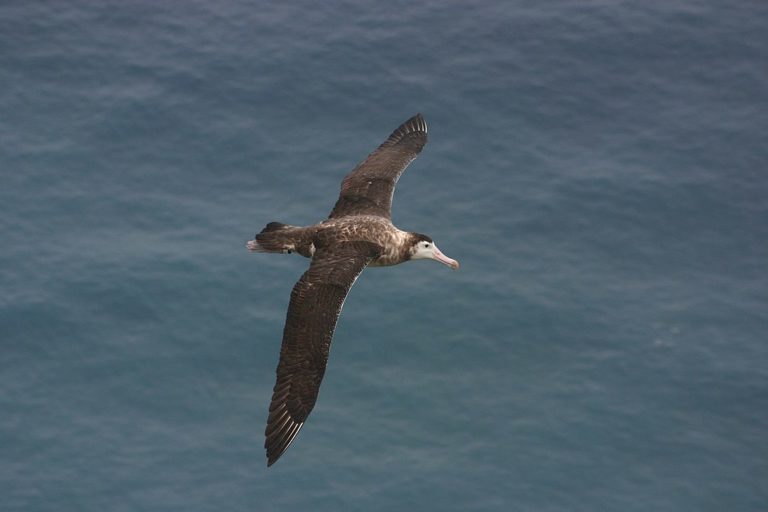
1st Strophe: They say albatross is the common name of over 23 species of birds from the Diomedeidae family. They vary in size from that of a goose to a swan.
(it’s a well-known fact that Heidegger reached the largest dimensions of this species)
Albatrosses are widespread, from the Arctic to the tropics.
(and he liked extreme cold)
Sometimes, these birds spend months at sea, as they can sleep on the waves.
(The Dasein spent a lot of time there)
Plus, they are excellent predators
(of an uncommon voracity). They feed either on the young of other animals, or on marine birds.
1st Antistrophe: And in his simple-mindedness, Heidegger thought himself a Nazi. And in our simple-mindedness, we took him at his word.
2nd Strophe: Because the logos as “speech” brings into sight (a sonorous expression through which something is brought into the field of vision each time)
but there are also basis, reason, judgment, concept, definition, relation
Finally, what was seen was only Death, a concept perfectly defined by reason beyond judgment on the basis of the relationship between humans and beasts (different species divided into flocks, each one with its own leader who guarded them with the purpose of devouring them; let’s not forget, România has a tradition of grazing). Now, there is only logos. We can see that clearly
with our own eyes, because we were given the eyes to obtain evidence in logical speech.
Death. Monarch. Beast. Famine. The need to eat out of the other (even when we’re not hungry). Pleasure.
2nd Antistrophe: Stalin understood this the best, only he didn’t concern himself with philosophy and heavenly matters. Unfortunately!
3rd Strophe: Speech is all we have left while we wait for our wings to grow. This way, we’ll return to being birds!
3rd Antistrophe: But language lacks precisely this text. Unfortunately!
Epode: Flight is not a condition of innocence, maybe/only the feathers (but numerous exceptions still exist).
First published in Entropy
Pasărea sau despre zbor. Prima confiscare
1. Introducere
Păsările sunt născute din bărbați inocenți, dar cam săraci cu duhul, care s-au
arătat interesați de cele cerești, dar care au crezut, în simplitatea lor, că
dovada cea mai sigură cu privire la ele se obține cu ajutorul ochilor. Lor, în
loc de păr, le cresc pene.
2. Etimologii
Sunt numite păsări fiindcă nu urmează căi certe, ci se deplasează în direcții nedeterminate. Înaripate, fiindcă țintesc cu aripile lor spre înălțimi și se ridică vâslind cu ele.
3. Albatrosul
Conform lui Heidegger: Întrebările se
ivesc din disputa cu lucrurile. Iar lucrurile sunt doar acolo unde există ochi
să le vadă. Și acestea fiind zise, a început să chelească treptat, până ce,
fără să rămână nepăsător la ceea ce i se întâmplă, pe capul său nu
A mai rămas
Nimic. Și cum Nimic n-a vrut să rămână, Dasein-ul
a făcut să răsară acolo, de nicăieri, câteva pene, de mai mare dragul îți era
să le privești.
În cele din urmă, s-a gândit că poate să zboare. Dar,
când și-a desfăcut aripile, s-au rostogolit pe-asfalt
doi ochi uriași împietriți de uimire. Și nimeni
nu îndrăznea să-i privească. Devenise albatros.
Strofa 1: Se spune că albatros ar fi denumirea comună a peste 23 de specii de păsări din familia Diomedeidae. Ele variază de la mărimea unei gâște, până la mărimea unei lebede.
(e bine cunoscut faptul că Heidegger atinsese cele mai mari dimensiuni posibile ale acestei specii)
Albatroșii sunt foarte răspândiți, atât în regiunile arctice, cât și la tropice.
(și îi plăcea frigul extrem)
Uneori, aceste păsări stau luni de zile în largul oceanelor, putând dormi pe valuri.
(pe-acolo și-a petrecut o mare parte a Dasein-ului)
În plus, sunt răpitoare excelente
(de o voracitate ieșită din comun). Se hrănesc fie cu puii altor animale, fie cu păsări marine.
Antistrofa 1: Și-n simplitatea lui, Heidegger s-a închipuit nazist. Și-n simplitatea noastră, noi l-am crezut pe cuvânt.
Strofa 2: Pentru că logosul ca „discurs” face să se vadă. (exprimare sonoră prin care, de fiecare dată, ceva este adus în câmpul privirii)
dar este și temei, rațiune, judecată, concept, definiție, raport
Ceea ce s-a văzut în cele din urmă a fost doar Moartea. Un concept definit perfect de o rațiune dincolo de judecată, al cărui temei fusese raportul dintre oameni și fiare (diferite specii împărțite în turme, fiecare cu șeful său, care le păzea în scopul de a le devora; România are o tradiție în păstorit; să nu uităm). Acum, e numai logos. Și vedem asta foarte bine
cu ochii, pentru că ochii ne-au fost dați să obținem dovezi, prin discursuri logice.
Moarte. Suveran. Fiară. Foame. Nevoia de-a mânca din celălalt (chiar și atunci când nu suntem flămânzi). Plăcere.
Antistrofa 2: Stalin a înțeles cel mai bine acest lucru, dar el nu s-a ocupat cu filozofia și cu cele cerești. Din păcate!
Strofa 3: Discursul este tot ceea ce ne-a mai rămas. Și așteptăm să ne crească aripile. Astfel, ne vom întoarcem la păsări!
Antistrofa 3: Dar limbajului îi lipsește tocmai acest text. Din păcate!
Epodă: Zborul nu e o condiție a inocenței, poate/doar penele (dar și aici există numeroase excepții).
Impression from Olympus
Heavy sky. Weighing. On us,
oppressive. Wave
of time steps out from us, onto us.
Blue. Blue. Blue
gull that splinters. Cry
blue blue white
star. White moon seen through daylight.
First published in Entropy
Impresie din Olimp
Cer încărcat. Ne. apasă
Greu. Sec
unda timpilor calcă din noi în noi.
Albastru. Albastru. Albastru
Pescăruș ce despică. Strigăt
albastru albastru alb
astru. albă Lună întrezărită în plină zi.
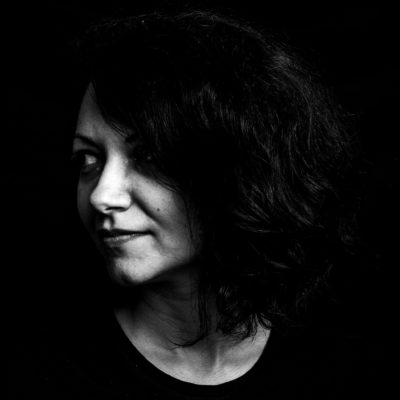
Iulia Militaru is the editor-in-chief of frACTalia Press and the InterRe:ACT magazine. After a few children’s books and her study Metaphoric, Metonimic: A Typology of Poetry, her first poetry collection Marea Pipeadă (The Great Pipe Epic) was published in 2010, receving two major awards in Romania. Dramadoll, co-authored with Anca Bucur and Cristina Florentina Budar, is part of a larger poetry/graphic art/video/sound project; a part of this video project (Images of the day number 8, directed by Cristina Florentina Budar) was selected for Gesamt 2012(DISASTER 501: What happened to man?), a project coordinated by Lars von Trier and directed by Jenle Hallund. Her collection of experimental poetry Confiscarea bestiei (o postcercetare) (The Seizure of the Beast. A Post-research) was published by frACTalia Press in 2016. She has published poems and digital collages in MAINTENANT, A Journal of Contemporary Dada Writing and Art #9, #10, and #11. Her art exhibit “The Path. Filling-in Abstract Forms: Overwriting Barnett Newman” opened in 2016 in Iowa City at Public Space One. In 2016, she was also featured at The Third Annual Brussels Poetry Fest.
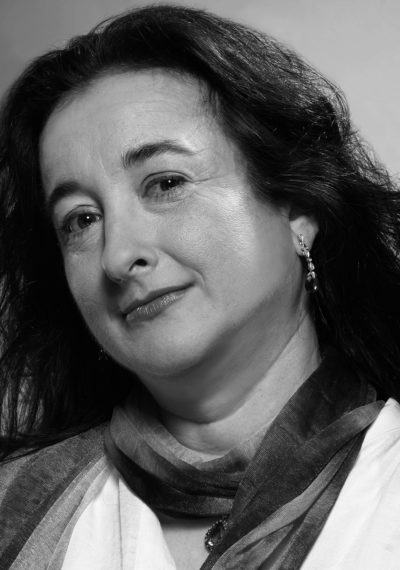
Claudia Serea’s poems and translations have appeared in Field, New Letters, Prairie Schooner, Gravel, The Malahat Review, carte blanche, Oxford Poetry, Asymptote, RHINO, and elsewhere. She is the author of five poetry collections and four chapbooks, most recently Twoxism, a poetry-photography collaboration with visual artist Maria Haro (8th House Publishing, Canada, 2019) and Nothing Important Happened Today (Broadstone Books, 2016). Serea co-edited and co-translated The Vanishing Point That Whistles, an Anthology of Contemporary Romanian Poetry (Talisman House Publishing, 2011) for which she received a grant from the Romanian Cultural Institute. She also translated from the Romanian Adina Dabija’s award-winning Beautybeast(Northshore Press, Alaska, 2012). Serea is the co-founder and editor of National Translation Month, and she co-hosts The Williams Poetry Readings in Rutherford, NJ.
Image by By Vincent Legendre – Own work, CC BY-SA 3.0, https://commons.wikimedia.org/w/index.php?curid=1413838
We continue our celebration of Women in Translation Month this week. Katherine E. Young, Poet Laureate Emerita of Arlington, Virginia writes:
August is Women in Translation Month, an international event held every August since 2014. Why? Here in the U.S., fewer than 800 books in translation (that number covers all literary genres!) are published in any given year. Of those 800 books, fewer than one third are works written by women. Clearly, we are not hearing enough women’s voices from around the world – not even from those languages where their work is originally published as frequently as the work of men.
Women in Translation Month is the brainchild of Meytal Radzinski, an Israeli scientist and book lover who noticed how few women she was reading in translation. Radzinski had two goals in mind when she founded the event: to increase dialogue and discussion about women writers in translation, and to encourage people to read more books by women in translation. Her advocacy has been eagerly seconded by booksellers, literary programmers (including the Café Muse reading series here in the DC area), and online supporters. If you enjoy these poems, I urge you to support women authors, their translators, their publishers, and the booksellers who carry their work: go buy a book (or two!) by a woman in translation!
Lice Season
It’s the season when lice race up the oak bark at dizzying speeds all the way to the top where birds worship the skies. It’s the season where everywhere their presence stuns. The ambition to be first, no, to be the best. It’s the season that doesn’t resemble the promised season of change but a whole different one, of deception. When freedom is trampled on. Like an iron curtain an impossibility hangs, the impossibility to wipe out nits before they hatch. A river in Canada recently turned green. Not a result of the reflection of the trees but of transformation. Lice, too, are transforming, self-proclaiming that they resemble birds, seeking wings, threatening to cover the sun. What a season! And now they’ve heard of a St. Valentine roaming the world who keeps love stable. Lice want to serenade a love song as they run over undying freedom.
First published in Taos Journal of International Poetry and Art, Issue 9, 2017
Stinë Morrash
Eshtë stina, kur morrat u ngjiten pemëve Me shpejtësi maramendëse, deri në majë, atje ku zogjtë i luten qiellit. Eshtë stina, ku të cudit prania e tyre kudo. Ambicia për të qënë të pare, Jo, më të mirë. Eshtë stina, që nuk i ngjan stinës për ndryshim, Por një stine të re për mashtrim. Ku liria meret nëpër këmbë. Si perde hekuri varet një pamundësi, Pamundësi për t’i zhdukur parazitët nga rrënjët. Ujrat e një lumi në Kanada, U kthyen në ngjyrë jeshile Këtë nuk e ndryshuan reflekset e pyjeve Por tjetërsimi. Morrat po tjetërsohen gjithashtu, po vetshpallen se u ngjajnë zogjve, Po kërkojnë krahë, dritën të zënë rezikojnë. Oh c’fare stine! Ku liria meret nëpër këmbë morrash. Kanë dëgjuar morrat se nëpër botë endet një Shën Valentin Që dashurinë e mban të patjetërsuar Morrat duan të këndojnë serenatën e dashurisë Duke marë nëpër këmbë të shkelur lirinë e amëshuar.
What Cannot Change
I try to write but erase more and further ache. We lost one another. Relatives became strangers, with strangers we’ve come so close. I search for someone whose face might resemble my mother’s. Sometimes I find the color of her hair but not how she’d comb it. A young woman on the street tall and slender like my sister without my sister’s voice. An elderly man pensive like my father but his footsteps make no sound. I search for what’s mine. It remains out of reach. That’s why I write even though I erase even though I ache.
Cfarë Nuk Mund Të Jetë Ndryshe
Përpiqem të shkruaj e më shumë shuaj e më shumë vuaj. Era që fryu na ndau. Tanët u bënë të huaj, me të huajt rrimë kaq pranë. Kërkoj dicka të ngjashme me fytyrën e nënës sime nganjëherë gjej ngjyrën e flokëve por jo krehjen e saj. Një vajzë në rrugë, është elegante si motra ime por nuk ka zërin e saj. Një burrë i moshuar i menduar si babai im por nuk ka zhurmën e hapit të tij. Kërkoj timen. Ka mbetur larg. Ndaj shkruaj dhe pse shuaj dhe pse vuaj.
Julia Gjika is an Albanian poet and essayist living and writing in the United States since 1996. She belongs to the first generation of Albanian women poets, having published her first book Ditëlindje (Birthday) in 1971, followed by Ku Gjej Poezinë (Where I Find Poetry) in 1978. Gjika is the author of three other collections of poetry characterized by intensely moving and deft writing about the immigrant experience. Her work is widely published in Albanian magazines, has been translated into Polish, and has appeared in English in Two Lines Online, Gobshite Quarterly, 236 Magazine, Taos Journal of International Poetry and Art and elsewhere.
Ani Gjika is an Albanian-born poet, literary translator, and author of Bread on Running Waters (2013). She is the recipient of a Robert Pinsky Global fellowship, English PEN Award, and an NEA translation grant. Her translation of Albanian poet Luljeta Lleshanaku’s Negative Space (New Directions, 2018) was shortlisted for the 2019 International Griffin Poetry Prize.
Image: CC BY-SA 3.0, https://commons.wikimedia.org/w/index.php?curid=170481