Home Blog Page 21

Two Poems by Tessa Augustyniak

These poems are published as part of the Amplifying Disabled Voices special section, selected by editors Christopher Heuer, Marlena Chertock, and Gregory Luce.

What Do You Offer?

An unseen force lingers at the horizon,
holding its silence like a blood oath,
written into the hollows of our hearts,
older than their questions, older than them.

They ask me what I do,
as if my worth is something to be weighed,
pressed between their fingers like a coin,
held to the light to see if I am real.

Their smiles stiffen at my answer,
a withering bouquet laid on the grave of their interest.

They do not say it,
but the words bloom in their silences,
black mold behind the wallpaper,
a sickness in the walls.

Lazy.
Burden.
Waste of air.

The state casts its shadow,
offering me a door that only locks from the outside.
A dignified death, a merciful vanishing.
The papers call it kindness.
The doctors call it relief.
As if breath is borrowed,
and those who cannot labour must pay it back in full.

A flicker on a screen.
A whisper in a clinic.
They have always been good at sorting.

Skin color.
Chromosomes.
The shape of a skull.
The slowness of a step.

The blade has never changed.
Only the names on the list.

They speak in soft voices,
say it is best, it is kind,
but I hear what they do not say—
Some weeds should never be watered.

They do not know—
or perhaps they do, but look away—
that their body, too, is a waning thing.
Their hands will one day quiver.
Their voices will falter,
spines will curl,
the machine will spit them out,
brittle-boned,
useless to the empire they built.

One day, the world will turn to them and ask—
What do you do?
What do you offer?

And the silence will taste like rust.

And above them, steady as the turning earth,
He stirs.
Watching.
Waiting.
He does not forget.

Long before they built their altars to power and profit,
before they learned to hate what they could not use,
His hands shaped the helpless from the dust
and called them good.

They will be ash.
He will remain.

And so will His love—for both me and you.

In Sickness and in Health

I cannot be the kind of wife
they whisper about in grocery aisles—
aproned and effortless, kneading dough with delicate hands.
Never soft-lipped, never silk-wrapped,
never the kind to make life easy.
I move like a storm you never tried to outrun,
break like the tide and pull you under,
and still, you never ask me to be less.

And still—
when my bones ache like wind-beaten branches,
when pain presses into me like a second skin,
you gather me up, weightless in your arms,
carry me through the hush of evening,
like something fragile, lovely—
a petal you refuse to let fall.

When my mind circles the same thought until it frays,
when my body betrays me in ways I cannot name,
when weariness burrows in like an unshakable chill,
you listen—you lean in,
as if every syllable is a secret,
as if I am the most fascinating story ever told.

When exhaustion wrings me dry,
leaves me trembling,
you press your lips to my forehead,
whisper my name,
stay beside me in the dark
until the worst has passed.

And when I am sharp,
when the ache of existing turns me cold,
when I am distant—lost in the fog my body makes—
you are patient, steady.
You know I will come back,
and you wait for me like you always do.

I wish I could be more for you,
the kind of wife who rises early,
who cooks, who cleans,
who makes life feel easy.
But in the quiet, when I curl into you,
when my fingers trace little hearts into your skin,
repeating the shape like a ritual,
a rhythm I can hold onto,
when I give you all that I am—
you remind me:

You, my love, were never looking for easy.
You were looking for me.

Tessa Augustyniak is a Canadian poet whose work blends raw lyricism with haunting imagery to explore faith, survival, and the quiet resilience of the unseen. Her work unapologetically rebukes ableist narratives, giving voice to those the world too often dismisses. Through poetry and unshakeable faith, she transforms struggle into something fierce: an assertion that even in suffering, there is meaning, beauty, and resilience. Her words are both a revolt and a revelation, a voice crying out against the lie that only the strong deserve to survive.

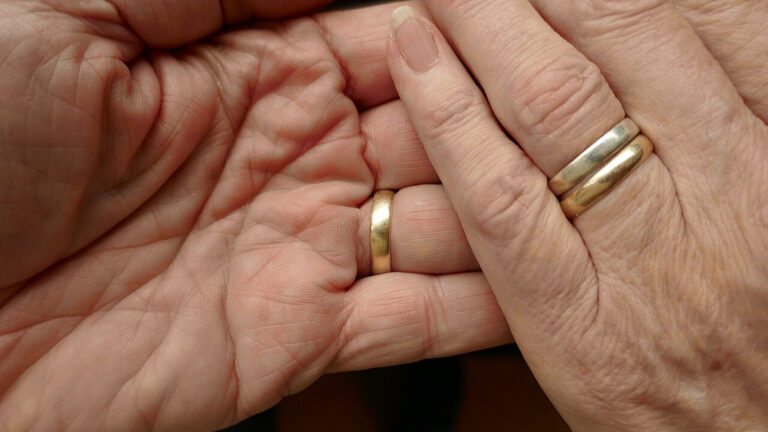
Featured image in this post is, “Wedding vow P1070616” By RF Vila – licensed creative commons via Wikimedia Commons.
Two poems by Addy Lugo

0

Addy Lugo is a finalist in the 2025 DC Poet Project, an annual open-to-all poetry competition created by Day Eight to support and surface exceptional poets.


The Smithsonian archive has pictures of Matthew Shepard’s teeth

I wish that Matthew Shepard was a HR Manager living in San Diego.
I wish he woke up with a hangover from too much white wine.
I wish he cut himself shaving.
I wish he kissed his partner goodbye, noticing their coffee breath.
I wish that a bird shit on his windshield.
I wish that he got to his office late enough to get side eye from his boss.
I wish that he would find spinach stuck in his teeth—embarrassed that no one told him.
I wish that someone would steal his soda from the fridge.
I wish that someone could back into his car by accident and leave a note that just says “sorry.”
I wish that he could sigh when he answers a call from his mother and father—
That he could tell them white lies about his weekend—
Yes, he was taking care of his yard and yes, he was going to visit soon.
I wish that he’d get to happy hour six minutes late—
That he’d pay full price for two gin and tonics.
I wish his partner would ask “what do you want to do about dinner?”
And the weight of the day would hit him like a train—
He had almost forgotten he was hungry.
I wish that he would tip the delivery man even though he forgot their side of fries.
I wish his cheeseburger was cold and had pickles when he asked for “no pickles.”
I wish he’d feel guilty for forgetting to call his best friend this week,
That he’d crumple up a grocery list from last week, and use the next page of his notebook
To write himself a reminder: “Get Michele a birthday gift.”
I wish that he could bring his hand up to his jaw in pain and dread going to the dentist.
I wish that his favorite picture of the Duomo fell off his bedside table and cracked—
That he could tell his partner that he’d buy a new frame tomorrow.
I wish he could dream about showing up to work without pants.
I wish that he could wake up to the same pain in his jaw at 3am—
Trudge to the bathroom and pop a couple of Tylenol.
I wish he would squint at the bathroom light and bare his teeth in the mirror, studying them,
Notice that they’re not as straight as they used to be—and not as white,
But he’s been keeping up with flossing and his gums don’t bleed anymore.
I wish he’d struggle to fall back asleep, mentally making a list
Of all the things he’d forgotten to do yesterday that could wait until tomorrow.
I wish he could think about tomorrow and cringe.
I wish he could think about tomorrow and dread his morning alarm.
I wish he could wake up sweating, remembering that tomorrow is his anniversary.
I wish he could scroll on his phone for overpriced flower arrangements—
That his partner would get up for their spin class
And catch him looking up how early their favorite bakery delivers.
I wish his partner would chuckle, and kiss Matthew on the forehead,
That he’d say something passive aggressive and sweet like “you’ll get ‘em next year.”
I wish that in the morning light, that Matthew could fiddle with his ring and wonder
How he got so lucky—how he deserves someone, anyone, in this life,
When he can’t seem to get anything right.
I wish a shooting pain in his jaw could bring him back to the present,
That he can’t forget to call the dentist today.

Sin Eater

Have you ever heard of the Sin Eater?
A human hungry enough to eat the bread
off a dead man’s chest,
cleansing the dead of their sins, absolving them, allowing them
into the kingdom of heaven
with one simple act–

maybe someone else would call it mercy.
Most of the time it was an obligation–
to chew the bread, drink the draft, and collect a sixpence,

a penance maybe.
They believed that when you die, sins could sop up,
collect at the pool of your sternum–

that a person could sit on your coffin and eat a supper
of atonement and self-emulation
not to call themselves a saint,

but to save you from yourself.
Instead of being rewarded for their selflessness,
they were seen as outcasts–someone to be feared.

Can you imagine the sacrifice?


The day that he dies,
I will not be surprised to find
the bread on his chest–

stale, charred, and crusted,
Resting on his ribcage, waiting for someone
to release him of his sins–

It will not be he who places the meal
on his own body
but his children–

Those who cannot stand to think that
someone they love could suffer for eternity.
Their eulogy will be mostly an apology.

And I cannot live with myself
thinking about the blackened crumbs sticking
between his own daughter’s teeth.

It isn’t penance, selflessness, or obligation
but maybe mercy– because the sins of a father
should not outweigh the livelihood of his kin.

So I will sit on the coffin,
let the flour flake off in the palm of my hand,
guard the casket with gnashing teeth

and cruel tongue–protecting his daughter’s
from a legacy that will outlive them.
I will try to let my mouth water and hum,

willing myself to take the first bite.

Addy Lugo is a mestiza poet from Charlotte, North Carolina. A graduate of Guilford College, AmeriCorps, and FEMA Corps, she was Austin Poetry Slam’s Women’s Individual Champion in 2018 a member of Austin Poetry Slam’s first all femme, all queer-identifying slam team, the Freshfemme Class. She lives in Washington, D.C. and works for the Smithsonian Science Education Center as an Inclusion Program Specialist. A believer in service, she hopes she can represent her community with her actions, accountability and, most of all, her words. She has been published in the Greenleaf Review and additional magazines.

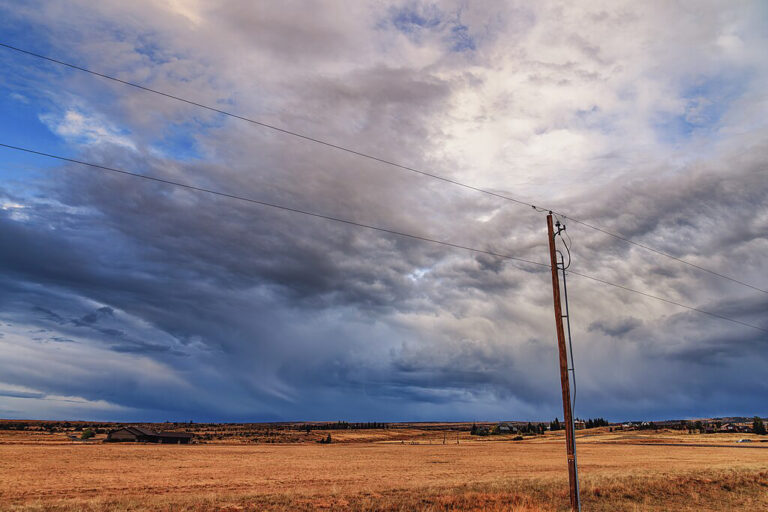
Featured image in this post is, “Land near where Matthew Shepard was left to die in Laramie, Wyoming, as photographed on October 2, 2023” By Tony Webster – licensed creative commons via Wikimedia Commons.
Two Poems by Micki Topham

0

Micki Topham is a finalist in the 2025 DC Poet Project, an annual open-to-all poetry competition created by Day Eight to support and surface exceptional poets.


Trans Joy 🙂

Each morning I get up
powder my face.
I no longer have to draw in a smile
instead, I fill in my smile
with a pop of red.
It grows as I watch
Hangers scrape metal,
a rolodex of clothing
I never thought I could wear
never dreamed of wearing in public
I pull it over my head
it stops at the knees.
My spin inflates it.
I do a second,
because it’s fun.
And I feel so pretty
A vortex of air forming
around freshly shaven legs
Mmmmmm
I skip to the mirror
Spritz of perfume
I smell so0000 good.
I admire my hair
Two years of hard-earned length
I curl it with an iron,
then twirl it around my finger
like a wedding ring.
My pointer finger popping red
around bouncing locks.
Everything is funner to hold
when your nails are painted.
My feet slip into shoes
That telegraph to the world
My trans joy
In clicks
In clacks


An Ode to the Alarm Clock

I want to be the ambitious person I am at 2 AM.
The person that sets an alarm clock,
expecting my future self to wake up in four and a half hours.
More often than not,
I find myself as the future person
who is violently woken up by an alarm clock
after only four hours of sleep
and laughably resets the clock for another two hours.

I want to be the optimistic person I am on laundry day
the person that keeps that one crusty old sock,
holding out hope, washing cycle after washing cycle,
that maybe this time the prodigal sock will return.
Sometimes I find myself as the person that callously tosses the orphan foot sleeve,
only to find its counterpart shoved under the bed a few weeks later
cursing myself.

But maybe I am both the dreamer and the sleeper,
the keeper and the one who lets go.
Maybe change isn’t waking up at 6 AM
or holding on to everything lost
maybe it’s knowing when to try again
and when to forgive myself.
 

Micki Topham is a poet and spoken word artist originally from a rural, one-stoplight town in Utah. Micki uses her creativity to explore themes of identity, faith, family, and mental health. She won the 2022 S’more Poetry Slam and the 2023 Smooth Grooves and Spoken Word Poetry Slam. In 2024, she found the courage to come out as a trans woman and that same year she and her 3-year-old border collie braved the 2,400 mile drive to Washington D.C. where she is living her dream life as a big city girl.

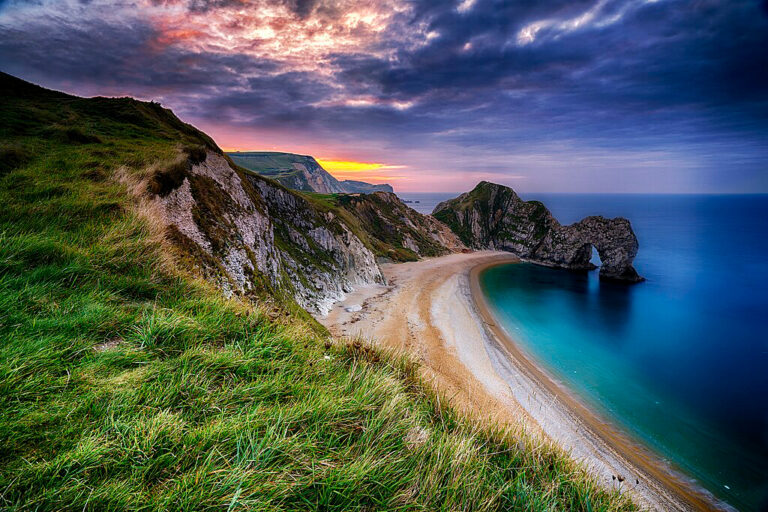
Featured image in this post is, “Durdle Door at Sunrise” by Lies Thru a Lens, licensed via creative commons 2.0 via Wikimedia Commons.

Three poems by Tony Medina

0

These poems are published connected to the partnership between the Mid-Atlantic Review and Howard University and a recent event for the Howard community.
 

Broke Tin Pan Alley

Hitchcock made it
So that you couldn’t
Take a shower
Without the curtain
Drawn

Then you couldn’t
Go out for fear
Pigeons would
Pluck your eyes
Out like Oedipus

But I don’t want
To fuss
Nor show disgust
On my sourpuss
Because I have

No shower
Or the proper
Place
To put it in
I’d sooner

Be found
In this here bin
My dull shadow
Making hand
Puppets on the wall
 

Haiku for Sonia

My house has lions
Sonia words roar from each shelf
Spine tingling poems

Your blue words bloom bold
Laugh in the drum of your tongue
African violet

Pristine poems sing
Castanets clap and clatter
Love strummed from your tongue

Poems are prayers
Bread broken for everyone
Multiplying peace

Your poems are psalms
Balm in our Gilead
We wear them as salve

This homegirl has hand
Grenades beneath her sharp tongue
Her lips a bouquet

Poems Orishas
Yemaya Obatala
Africa calling

Her breath is married to
An ocean of words
The page brought her here
 

Border Crossing

The blood of Jesus
Dangles from a crown of thorns
Razor-wired hope

Bobbles in water
Body of Jesús denied
A river’s safe grace
Torn flesh blood Rio runs—O
How Christians love their neighbors
 

Tony Medina, Associate Chair and Director of Creative Writing in the Department of Literature & Writing at Howard University, is a multi-genre author and editor of 24 books for adults and young people. His most recent poetry collection, Because the Sky (Sable Books, 2024), is an homage to the Palestinian people. His work appears in over one 160 publications. Among his honors, he is the recipient of the first African Voices Literary Award (2013) and the 2025 National Black Writers Nikki Giovanni Award for Middle Grade and Young Adult Literature.

Featured image in this post is, “Alfred Hitchcock promo still for The Birds (1963).” Photographer: Bob Willoughby. Public domain via Wikimedia Commons.

Two Poems By Alana McDonald

These poems are published connected to the partnership between the Mid-Atlantic Review and Howard University and a recent event for the Howard community.

The Guide (the flowers)

First, you’ll need to be sightless
Completely
Blind to all that they tell you there is to see
Home to countless combative
Weary Black souls
Pitiful withered plants
They lose the plumpness of their petals
In the light
And can only grow in the dark
All that you are
An infirm flower planted only to wilt
Inevitably
Don’t subscribe to their vision
See all that’s full and alive
In the place you were made to blossom

Then, you’ll need a safe space
To flourish of course
The dense backgrounds that have kept their shape through
the changing years
It holds a spacious garage
that the stray cats and dogs
drag their starving bodies at night
to force their beings to accept
a new form of home
That feeds them
The fences that surround it
make faces behind
the many Cadillacs, trucks, and Chevys
that have backed into them
It holds them in place
A bedroom
that seems to recognize you
more than you
It contains a singular closet
that you used to hide from the sun
to keep the monsters from creeping in
The fabricated ones from fairytale storybooks
And the real ones from family photos

Your base
The neighborhoods
Within the city
The City
The soil
Aged trees that carry the strength of a herd of bulls
It towers over your stalk
Made you strong
The digestible downtown
They built around you
Made it look like you were never made to fit in it
Yet you push through the concrete
The crystal water lakes that they pollute
Still love to soak in the pores
of your black stem
This is where we raise our kin
Grow our field
Your safe haven
Your city
Our city
No matter how hard they try it’ll always be
Our city
They’ll never stop trying
To change it for them
Stealing the soil
Digging you out of your home
That feeds you
Covers you
And keeps you in place

Because of that
Finally, you’ll have to love it
Take your broken sepals and pick your petals off the ground to see
What you’re grown to see
Look around at the rough wind that keeps the air in your lungs
It’ll never hurt you
It’ll always give you
The nutrients you need
So love it
And keep loving
And keep loving
And keep loving
And keep loving
Adore it all
And all you are
That’s the only way to preserve
The only way to keep what’s yours
To kiss every flaw of the rigid concretes
We arose from
Reassure the staggered buildings
That stand with self-pity
And abandonment
We shall light and fill
Hug every seed that can’t sprout in public institutes
Water the flowers that be
Love them first and most
See only this
To keep the magic from them
To make it better for us

Canopy Birds: Self Portrait

I repeatedly fidgeted behind her desk
As she asked me the million-dollar question
The one any therapist would ask in an intro meeting
Her request was for me to describe who I am
Who I believed myself to be

As someone who’s been a patient all their life
I saw it coming
Yet I was still terribly unprepared to answer
The problem was every time I thought I had an accurate answer to this question
Others’ perception of me redirected my self-image
Towards another direction
I believed I was a mature and stable individual
TI thought with my head instead of my heart
Till one day in the kitchen along with many other vulnerable conversations
My brother told me my heavy heart was filled with
Too much love

So much love that it caused an imbalance in my brain
Which leads to my impulsivity
My foolish tolerance
My hopeless romantic fantasies
My overthinking and anxiety
These are the same flaws my mother often criticizes
So I’m not the brave, secure person I thought I was either
Even my dreams show me something different
Who I really am
A bird of the wildest canopy
That’s the picture that my thoughts paint
With great discernment
No matter how much praise I receive
About the uniqueness of my underwings
Or the sight of my charming crown
I don’t see the beauty
I don’t feel that I’m worthy enough
To soar alongside the conquering, clear clouds
Made to witness me and who I wish to be
All I know how to do is to gawk at the world below
Never truly living in it

I wasn’t there for you when your grandfather died
I watched from afar as you let your wounds bleed out
Through your open, soggy eyes
I guess I couldn’t bring myself to fly far enough to you
Ironically, sometimes I fly too far to the other side
Like when I speak the lie “I love you” to many
Knowing my body is never ready
To push those words out into the forefront for them to hear

I’m sorry I pushed you too
To no longer wanting to be close to me
I guess they were right about who I am
I guess I’ll always be someone in over their head
Making decisions too big compared to my actual capabilities
Relying on fat to fuel my unsteady, extensive flights
Led by my anchor of a heart
Making waste of my hollow bones
To be able to glide

Only to crash into what I thought was the perfect destination
I am not who I thought I was
Who I always begin to think I am
So for now
I’ll remain on top of the tallest tree
Hiding in my safe habitat of comfortability
Never making it down to the surface
With the rest of the world

Alana McDonald is a freshman at Howard University from Detroit, Michigan. Always a writer in various forms, her first heartbreak inspired her first poem. She has since emerged herself in poetry through performance poetry, and hosting and attending poetry workshops.

Featured image in this post is: Pattanaik, Indian Bulbul at the top of a canopy. MET DP-401-001 license via creative commons, via Wikimedia Commons