Home Blog Page 25

Remembrance by Mariam Ahmed

Remembrance

The sun sleeps
In the dirt, here.
I am less smoke, more steam,
The refreshing kind of bitter.

In the dirt, here,
We’ll plant our feet and leave.
The refreshing kind of bitter
Lives in my coffee now.

A tiny, smiling Death,
The sun sleeps.
I am still here, still now;
I am less smoke, more steam.

We’ll plant our feet and leave.
A tiny, smiling Death
Lives in my coffee now,
I am still here, still now.

Mariam Ahmed is a Californian poet. She has her Bachelor’s degree in English with a minor in Sociology from UC Davis and a Master of Fine Arts degree in Creative Writing with an emphasis in Poetry from San Diego State University. As a Pakistani-born American raised in the Bay Area and Folsom, CA, Mariam is a first generation scholar and the first woman in her family to attend college. She is a certified Poet-Teacher with California Poets in the Schools, and her work has been published by many literary journals and presses, including “Poetry International,” “The Los Angeles Review,” “The Elevation Review,” “Flint Hills Review,” “Progenitor Art and Literary Journal,” “Maintenant: A Journal of Contemporary Dada Art & Poetry,” and elsewhere. In addition to writing and teaching, Mariam enjoys meditating and exploring beaches.

Image: К.Артём.1, CC BY-SA 4.0 https://creativecommons.org/licenses/by-sa/4.0, via Wikimedia Commons

Two Poems by Ince Lachey

observant gravity

a sort of protest
is underway performed
in excellent style by
the superfluity of those who have ever been
beloved by you
who beat with a hoop-stick against the North
Pole hoping
to reduce it materially to
a limp white cravat yet

succeeding only in dislodging
a speck of rust
you
deemed with the elevation of one
eyebrow
not rustworthy

radical nature

he wasn’t himself very often even now when he was
walking shoeless with paper
feet through wet grass
but at the same time sitting in
the shade provided by a cloud of many
insects he wants
to lay hold of to
smear along the walls where
other things of that kind were also
smeared leaning back
in his chair in
which is another man saying all
the while “leave me be”

Ince Lachey is a young astronomer fascinated by distant galaxies and black holes. Working at a renowned observatory in Maryland, he studies the mysteries of the cosmos.

Image: Los Perros pueden Cocinar, CC BY-SA 4.0 https://creativecommons.org/licenses/by-sa/4.0, via Wikimedia Commons

Two Poems by Charleigh Triaga

Phone Call: Grams, On Her Ex-Fiancé

He’d show to work an hour late. Never have any money to go out and go anywhere. I always had to pay. I was workin’ at Bennet’s, I think I started in September and Bill started in November and there was an old carpenter there, and he— I guess Bill, must’ve had his eye on me, and the old carpenter was encouraging him, and Bill said, no, she’s engaged. I don’t want to break up an engagement. One night, I’d given my boyfriend the ring back. I went to work the next morning and the old carpenter seen me without a ring and he run and told Bill, and Bill come over that night, just to see me. Well as it was, I was takin’ my Station Wagon to the garage, and on the corner of Genessee and South Newstead, he was comin’ up to see me and I was goin’ the other way with the wagon. So he followed me over and picked me up, ‘cause I left the car there. And we were just ridin’ around the first night. But then, I think the second night, he asked me if I would move to West Virginia, and I told him yes— but I had no intentions of movin’ to West Virginia. So that was November, we got engaged for New Year’s, and in June, we got married. Yeah, we’ve had a good life. We’ve had our battles. But we all do. A lot of em’ were over the kids. You know, Darla was a little shit. And he was hard on Ronnie. They say you’re always hardest on the first one. I mean for instance, if they were out, snowmobiling, and Ronnie was s’posed to be home by twelve and wasn’t, Papa was up. Then I’d have to get up and intervene. And Jackie was always the favorite, I don’t know why. But she’s still his favorite, and he’s her favorite. So. It’ll be sixty-eight years? Or sixty-nine? We were married in ‘55… this year will be sixty-nine. If we live that long. You never know.

The Biscuit Method

Some separate whites from yolks using the shell it falls from
I use my fingers, spread open and curled so yolk slips by

Eyes dry-tired like someone sieved tears from whites
It’s morning, hours before coffee. Tears welling like ice melting

I cut chunks of butter into flour, coating each frozen cube
Folding flour into fat forms flake, “the biscuit method” in baking

A mother knows her daughter by face
Red streaks give me away when she asks, were you crying?

Pinching crust thumb-to-forefinger against a bent knuckle,
I think, maybe it’s the medicine

The pie crust collapses
I didn’t let it rest, didn’t give it time, wasted mine

Walking past, Mom squeezes my shoulder, a reminder
She is here. But her smile too is a smudge, hardening in concrete

I could buy pie weights. Add stability
I am not sturdy, but still a foundation

It’s just a pie, start over. Get the flour back out
From the cupboard, the oven’s still preheated

Maybe it’s the dosage

When the crusts cool, I lift each disc from plate
Squeezing one in each hand ‘till they crumble

I could use them to top a berry parfait
One doctor tears a script, phones in a new med

I eat the crust pieces with a bowl of peaches
Like pie, deconstructed


From Buffalo, NY, Charleigh Triaga is now based in NY, NY. She writes “homestyle poetry” about domesticity and her multigenerational family. Her work explores the human body and pain processes. She received her MFA from Queens College in May 2024.

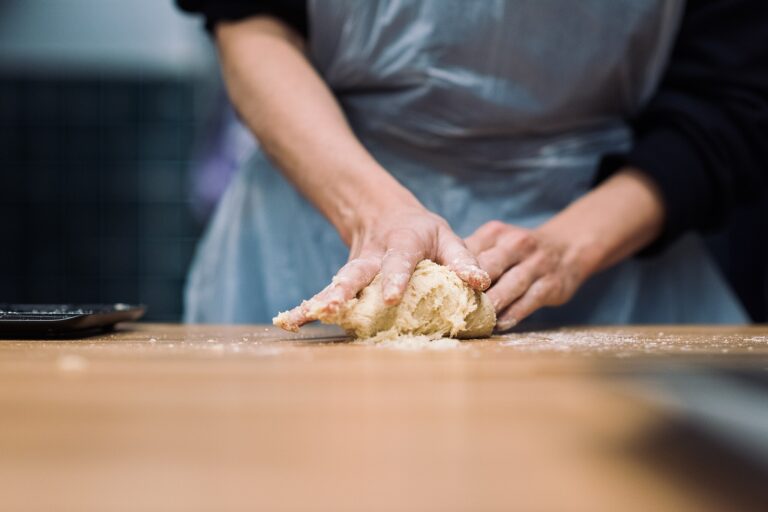
Image: Bread Ahead, CC BY-SA 4.0 https://creativecommons.org/licenses/by-sa/4.0, via Wikimedia Commons

Three Poppy Poems by Ori Z Soltes

0

The following poems are from Ori Z Soltes’ new collection of poems, My Life as a Dog: Poppy Poems. The author will be reading from the collection Thursday, January 16, 2025 at the Writer’s Center – more information and rsvp here.  

Three: Dusk

When Poppy strolls through the neighborhood,
he sniffs to makes sure the air is good.
In the fall he smells the burning wood.
In the spring the earth is his nostril-food.
He tastes the grass in a summer mood,
and licks the snow—that is, he could
in the wintertime—although these days the weather’s rude
and doesn’t snow, although it should.
But his patrol as the apex dude,
at dawn and dusk on lawn and street—
through sun and hail and rain and sleet—
assures that nature doesn’t make us brood.  

Seven: Poppy’s Sensibilities

Poppy stopped to sniff the air
to see if there was anything there.

He listened as the wind went by
to check above, along the sky.

He used his quite discerning taste
to gulp the mist without due haste

and felt to make sure all was good:
no tigers or bears coming out of the wood!

He didn’t bother to look, you see—
his eyes ain’t what they used to be,

but assured himself with his other senses
that offered him their joint consensus

that all is fine and comme il faut,
so that it was really safe to go,

and shnorted as only Poppy can:
we called him “shneezl” as he calmly ran

down the street and back to home.
As always he will simply come

back to where the morning started,
before returning so fully-hearted

from an adventure out there in the world
with its three-block radius through which he twirled

and did his senses all unfurl—
more careful than a two-legged boy or girl. 

Seventeen: Poppy the Existentialist Canine

Poppy ploppy puddin’ n’ pie
pooped on the lawn and looked at the sky
and suddenly wondered just how high
the clouds were there above him.

He thought that the only way to know
would be first, to bark, to show
the people to whom he would need to go
for answers—they who love him—

that his query was very serious,
that he wasn’t merely curious
nor some puppy who acts imperious,
but thinks about white-flecked blueness.

He paused to reflect, stared at the woods
beyond where the lawn and the garden stood,
filled with smells that he knew were good,
from sweet September’s trueness.

Then he went inside the house,
his footfalls quiet as a mouse,
deciding that he must rouse
his dad from his fuzzy sleeping

to discuss this important matter
his Poppy thoughts not scattered
but focused in a perfect pattern
of Cartesian, Newtonian thinking,

and waited for his dad to be fully awake
to grab some juice with which to slake
his morning thirst before he raked
the leaves that had been falling

where Poppy’s cogitation, on the lawn,
had begun just then, before the dawn,
as he watched a deer and her baby fawn
cavorting in the forest.

His dad used his muscles to rake those leaves,
their nascent colors helped him not grieve
for summer’s end. And when he believed
it was time to take a minute’s rest

Poppy barked to ask the new day’s question
lightly, so as not to be a pest on
this scintillating sunny morn:
how high really is that sky?

His dad paused for reflection
and stroked his chin with circumspection
choosing careful words from the selection
of possibilities, as he looked in Poppy’s eyes

and answered with calm and passion
to his dog’s extraordinary ration
of intelligence (far beyond the fashion
of ordinary canine query)

about the heavens way up there
that seemed to frame the very air
with those puffy things from who knows where
—a question that is truly very

intellective in its form
that Poppy raised on this Sunday morn
that somehow in his mind was born
as he did the day’s first business.

His dad at last responded
in a manner that corresponded
to God from in the whirlwind
to Job who had not sinned

when he wondered about innocent humans
who while the world around is bloomin’
might suffer so unfairly:
in the universe might there not be

an answer? And Poppy’s dad looked down
into Poppy’s eyes so brown
and with neither smile nor frown—  
as if he and his dog had a pact

to wrestle with the universe
when things were better and things were worse
and to understand from the very first
that the sky and suffering are the sorts of things
that even if every dog could sing
and men were sprouting outstretched wings
we cannot know, and that’s a fact.
 

Dr. Ori Z Soltes teaches theology, art history, philosophy, and political history at Georgetown University. He has also taught across diverse disciplines for many years at The Johns Hopkins University, Cleveland State University, Case Western Reserve University, Siegel College in Cleveland, and other colleges and universities. Soltes has lectured at dozens of museums across the country, including the Metropolitan Museum of Art, the National Gallery of Art, the Smithsonian Institution, the Art Institute of Chicago, and the Los Angeles County Museum of Art. He has been interviewed for a score of programs on archaeological, religious, art, literary, and historical topics on CNN, the History Channel, and Discovery Channel, and he hosted a popular series on Ancient Civilizations for middle school students. For seven years, Dr. Soltes was Director and Chief Curator of the B’nai B’rith Klutznick National Jewish Museum, where he created over 80 exhibitions focusing on aspects of history, ethnography, and contemporary art. He has also curated diverse contemporary and historical art exhibits at other sites, nationally and internationally. As Director of the National Jewish Museum, he co-founded the Holocaust Art Restitution Project and has spent more than 20 years researching and consulting on the issue of Nazi-plundered art. Ori has authored or edited scores of books, articles, exhibit catalogues, and essays on diverse topics. He leads annual study tours to museums and art and archaeological sites throughout Europe, the Middle East and parts of Africa. When not wandering around the world, he resides in the Washington, DC area with his wife, the film-maker Leslie Shampaine.

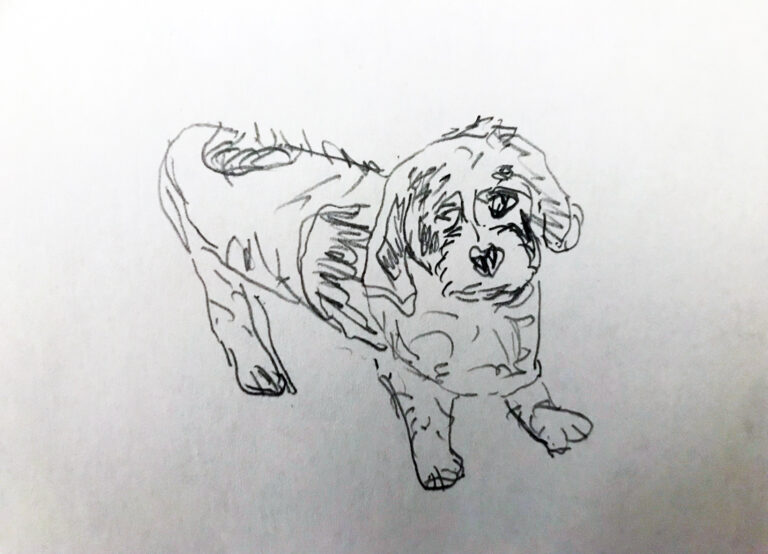
The featured image in this post is “Poppy 4”, pencil on paper, 2023, by Ori Z. Soltes, re-printed by permission.
Four Poems by Olga Livshin

0

A Big Mug of Awesome Tea

Lemon balm from the Carpathian Mountains.
She steeped it on her Odesa balcony, letting the tea
breathe its small fragrance on her chin.

Then the air raid siren tore through the air. She said, Shoo!
and carried the tea into the back of her apartment.
There, she would edit her syllabi. The spring semester

began on Monday, rain or shine. That night, it was both.
Metal ricocheting and maniacal lightning.
An antediluvian insect digging from above.

Later, she knew, she would put her tea rescue
on display, in pixels her friends could sip at home.
Later yet, she would regret her posturing.

War was a quiz humanity had to take
over and over. She was either learning or not.
She rinsed out her cup, put in earplugs, and went to bed.

Lunardo’s Roses

A pearlescent petal crush called, in Arabic,
“Fish lips.” My friend told me about his Lattakia,
on Syria’s Mediterranean coast. Roses on every street.

By the footbridge, overlooking the university,
Lunardo stood with his boyfriend, flirting.
You could still speak a common language with the world.

When war began, roses dissipated. His boyfriend, now,
an officer in Bashar’s army. Lunardo fled. ISIS murdered
both of his brothers. He escaped, again. Northeast Philadelphia’s

scarred brick was no refuge for tender gay men.
Ten miles east, at the Morris Arboretum, we strolled
when a plant trilled pinkly: Me! Lunardo translated:

Lips of fish. Mahogany Damascus roses
pleaded pleasure in the afternoon light. Are you
here, too? woofed the flower-shaped puppies

we knew nothing about. White ramblers dictated
anise to the air. Orange whiskers undulated
on roselings called Dancing in the Wind.

Lunardo stood kingly, smiled at the prodigals,
as though each flower were a small loudspeaker
as though his new country was ready to listen—

Tango With Agnes

I dance before our lord, the sink,
sponge off to fast smoothness, Earth to Agnes,
my grandmother-in-love from Texas.
When my husband and I moved in together,
she gave us her Corelle. Its indestructible mirrors
shocked my immigrant heart.

Agnes, your plates – these virtual reality goggles –
showed the Gulf of Mexico, where I’d never
been. Fast-forward to fast water, your husband
surfing with the small black terrier, smiling
on the board, black-and-white. Life, running.
When I walked up to you, you could not see, but

I said my name; you slowly smiled: Honey.
I thought this America shareable, stored
in your female hips, and mine, but I could not
even share how happy I was with my parents,
darkened as they were by history.
Lightened as they were by Soviet humor.

But you know I Corelled them towards me.
O Agnes, my apron of bubbles.
How I love your grandkid, our home. I was
and remain your faithful frisbee, a plate
launched by the Texan god
into a wonderfully rounded life.

And everything was forever, until you and I
sat at the old folks’ home, your birdlike hand
warmed by mine under your white Afghan.
I said I was expecting a baby.
You said Honey… and the golden plate in the sky
began to set on your rising smile.

Mayapple

Some words plant wildness in the mind.
Beardtongue lolls, huge-jawed,
beckoning. Its pal, Mayapple, flirts.
But in my immigrant mouth
any miracle turns to ragwort.

I am late to your naming party, Mayapple.
In May, my great-greats planted beets.
The syllables are donated, like the wool
sweater, my fourteenth spring,
stained with a strange, perfumed sweat –

I am in a relationship
with somebody else’s dead.
O, to know ladybird beyond the nickname
of President Johnson’s wife!
My Colorado-raised love

wants to know, too. He plugs our care
into the search engine. Together, we glide
after the word’s Scottish, Southern roots.
It bobs, glowing, in our mouths like toothpaste.
Ladybugs protect crops, get fat on pests. Farmers

pray to Virgin Mary–that Lady in the sky–
to defend their life’s work.
Ladybirds arrive in the shared room
of our heads, weighty as any avian life,
orbiting my darling’s tall warmth.

O, to love you, Ladybird, to pass
as anyone who only wanted to pet
leaves and fur with phonemes
bequeathed by strangers blowing raspberries –
May-ap-p-le! – three hundred years ago.

Olga Livshin’s work is recently published in POETRY magazine, the New York Times, Ploughshares, The Rumpus, and other journals. She is the author of the poetry collection A Life Replaced: Poems with Translations from Anna Akhmatova and Vladimir Gandelsman (2019). Livshin co-translated Today is a Different War by the Ukrainian poet Lyudmyla Khersonska (Arrowsmith Press, 2023) and A Man Only Needs a Room by Vladimir Gandelsman (New Meridian Arts, 2022). As a consulting poetry editor for Mukoli: A Journal for Peace, she reviews poetry from conflict-affected communities across the world, with a focus on Eastern Europe.

Image: Matt Lavin, CC BY-SA 2.0 https://creativecommons.org/licenses/by-sa/2.0, via Wikimedia Commons