Home Blog Page 31

Two Poems by Daniel Morris

0

A Rainy Day Song For Sly Stone

You know today was rained out

So inside all day just me and my

Clicker my box my many

Channels my 12- inch tube perched

On gray filing cabinet in corner

Of this lonely room I pay

For cable and I click and I click

My remote short for remote control

I guess sounds very futuristic but

Is already futile what kid today

Screens TV no they favor other devices

Other vices but I remain addicted

I need the rays the warmth the hearth

Sound on sound off

You Tube tune accompaniment

“I can feel it when you shine

On me,” I hear Sly now

In a wheelchair can’t snap

His fingers or comb grandchild

Or express gratitude except with long fingers

Signaling Sly’s still ok but for once just once

I want to be clicking the remote guide

To finally find a show worth my time

Something unlike Harry Potter Meet the Fockers

Some real reel something starring a young

Peter Falk a younger Elliott Gould

Alan Arkin Zero Mostel

Something more Cassavetes

Meets Harry Smith Meets

Stan Brakhage and so I press

Play but of course this channel requires

Special subscription so no to the one flick

I could stomach for once that not

Happening is all I am asking for

On the Day Mike Tells Alice He Will Be Switching Serials

Oh, Hello Alice! I didn’t expect to find you upstairs,

Away from your kitchen. Howdy, Mr. Brady…just putting away

Some freshly laundered towels for Jan.  She is starting

To bleed. Do you like my new miniskirt?  Twister

Polka dots become you, Mr. Brady.  How about my wig?  Too

Blond? Too Carol? Too 1969?  No, Mr. Brady.  Suits you just fine.

What about the platforms, Alice?  Careful not to twist

Your ankle at the presentation today, Mr. Brady.  Remember,

Your firm is competing with Mr. Pei’s for the Snow White

Super Slide Project.  Would you say the same to Mrs. Brady?

To Marcia? Sorry, Mr. Brady, they aren’t architects.  No Alice.

About my platforms!  About needing to be careful not to fall

In my new platforms. Sorry, Mr. Brady.  I guess I microaggressed.

Don’t do it again, or I must demand your two-week notice,

Even though you have been mine since my first wife’s suicide.

What was her name anyway?  Understood, Mr. Brady.

Oh, and Alice, thank your boyfriend, Hal, the butcher. 

Tell him I found the rack of lamb simply divine. 

His name is Herb, Mr. Brady, but I will let him know.

Yes, Mort.  And, Alice. Yes, Mr. Brady. Straighten

That rather loud tie of yours.  Yes, Mr. Brady.  The stars

And stripes on my tie honor our upcoming Bicentennial.

Amazing how far we’ve come.  Indeed.  You know, Alice,

After this season’s shooting ends, I will guest star

In a special two-part episode of Medical Center.

Oh, I thought you were an architect, Mr. Brady,

Not a physician.  That is true as far as it goes, Alice,

But this episode of Medical Center will be very revealing. 

It is about life, not art.  Robert not Mike.  In the episode,

“The Fourth Sex,”  I will undergo a sex change operation. 

No more masks, Alice.  Yes, Mr. Brady.  I’ll go tell Bobby.

He was going to make a mask of his hero, Joe Namath, to wear

To school tomorrow.  A mask?  Yes, Mr. Brady, your youngest son lied.

Bobby lied?  Yes sir, he told friends he knew Broadway Joe.

To save his face, I agreed to sign the mask on behalf of Mr. Namath,

But now with your new rule about no masks, Bobby must tell

The kids the truth. Yes indeed, Alice.  Yes indeed.

Daniel Morris is author of eight books on twentieth- and twenty-first century poetry and visual culture, editor or coeditor of five essay collections, and author of four books of poetry. Recent titles include Not Born Digital (Bloomsbury), Blue Poles (Marsh Hawk Press), a paperback reissue of his study of Nobel Laureate Louise Glück (University of Missouri Press), Essays and Interviews on Contemporary American Poets, Poetry, and Pedagogy: A Thirty-Year Creative Reading Workshop, and, as editor, The Cambridge Companion to American Poetry and Politics since 1900.  He is a professor of English at Purdue University, where he has taught since 1994.

Image: Syced, CC0, via Wikimedia Commons
Two Poems by Judith Taylor

0
The Hope 

She was born when I was three, old enough
to celebrate but not to understand
the grainy black and white photos
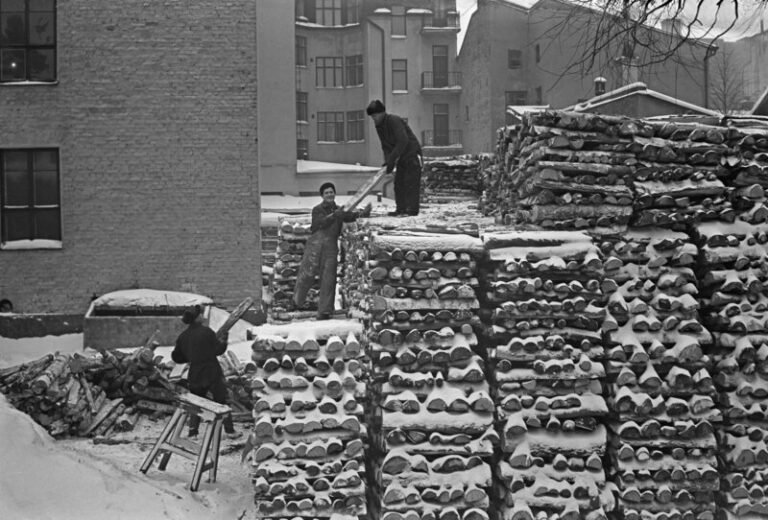
of bodies stacked like firewood.

Oceans apart we grew up together. While her tanned hands planted
saplings, dragged plows through dust, hoses to desert troughs
and with our cousin pioneers smiled robust smiles and danced on the sand
here in New York City in January in Sunday School I sang sunlit anthems

and was treated to almonds, dates, figs and splintery nuggets
of St. John's bread. By the door a tin blue pushke
with a slot for dimes and every year a gilded certificate
etched with the image of a tree planted in my honor.

Now where orange groves once scented the air
the bitter stink of smoke fills the sky
and concrete bunkers squat near missiles
aimed at something no longer there.


Is this poem

an apology
a plea
for pardon
for seeing
and being
unable
to be
silent?

Or do these words
seek mercy
for not speaking?

Susan Sontag said, Imagination is a moral faculty.  As a writer, teacher and visual artist, Judith Taylor depends on her creativity, curiosity and experience to try to identify questions worth asking, and to discover what she has to contribute to the conversations and causes that address contemporary social and global issues.

Image: Firewood 1941 by Hugo Sundström under Creative Commons Attribution 4.0 International license.

Infinity by Faith Cotter

Infinity

She drags
herself out
from within

quick shallow
breaths
and stands

tilts her head opens
her mouth hears the earth
an echoing tomb

and how does she know
what a tomb is

this woman without
a beginning who looked
at the first husband
himself a speck in god’s eye
with a curse in her own—
longing
for a mother instead?

Forget about Eve. Forget
about her compliant fruitfulness!
I want to know
what a woman without
a mother without
a daughter is—

I know who she is—
audacity, agony, grief
tenacious enough—
or fool enough—
to keep walking;

I want to know what she is
this woman a thread
plucked cut severed
from the fabric of heaven

to stand here
alone

I did not say—
on her own

I said—
alone.

what is a woman without
a mother without
a daughter—

are we to remain in exile of ourselves?
Forget about Eve.

I want to talk
about Lilith

the first bud
on the first branch of the first tree—
a bent thing,
weeping.

was she scared,
when she left it to wither
once she stepped into the unfathomable
ocean to see
what she could make of the world?

Faith Cotter is originally from Pittsburgh, PA but now travels the world as a U.S. Foreign Service spouse. She is the recipient of a 2010 Society of Professional Journalists National Mark of Excellence Award, among other regional and local awards for journalism. Her poems have appeared in the Pittsburgh Poetry Journal, Time and Singing magazine, ZO Magazine, and the Madwomen in the Attic’s Voices from the Attic anthology. She has an MA in Professional Writing from Chatham University, and has lived in London, DC, and now Amman, Jordan.

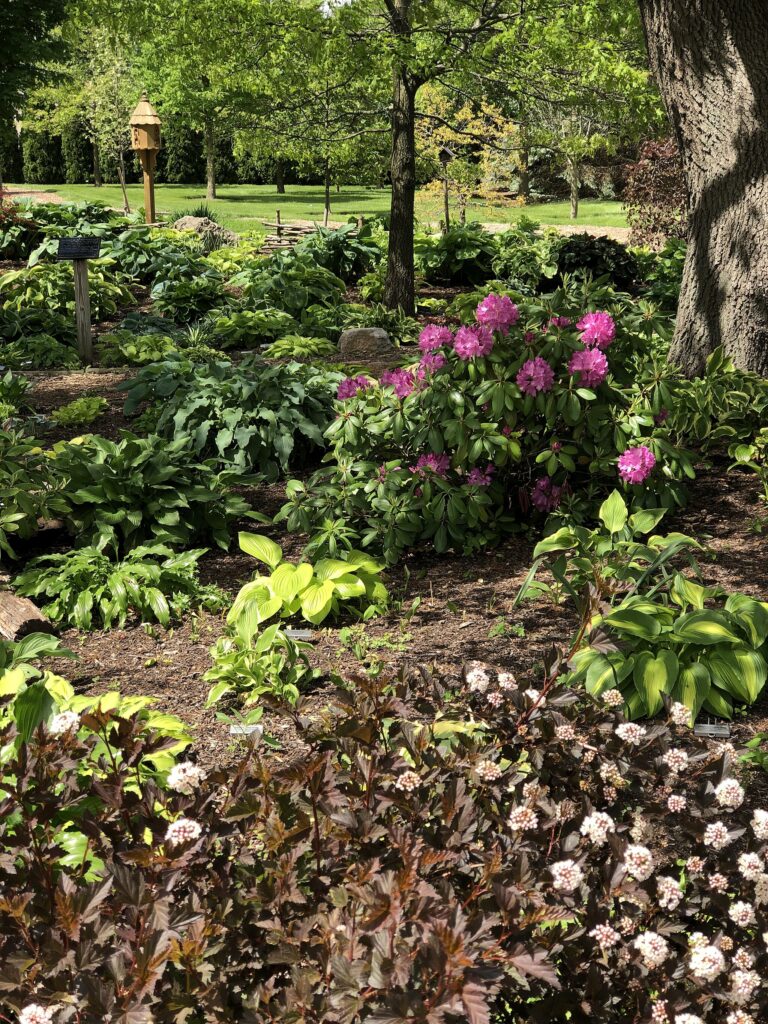
Image: Mbrickn, CC BY 4.0 https://creativecommons.org/licenses/by/4.0, via Wikimedia Commons

Beach by John Huey

Beach

I used to walk, back in my long walking days, down a wonderful
promenade, just across from my usual hotel on the beach, all the
way down to Jaffa sometimes, always bathed in the very fine
Mediterranean air, blowing gently in and breathing along with
me from the sea.

Nearby, I would pass a small bar that had been blown up not that long
before, this taking me through all sorts of memories like of a night, walking
by the Dolphinarium disco by the shore, and, while navigating through
the large crowd there waiting to get in, thinking, sort of offhand, about what
a target it could be for the terrorists.

Just a few months later, happy at home, working hard and taking my safe
and healthy kids around to their various events, I was gasping a bit when
I saw, on CNN, that very same spot on that far away beach, blown completely
to hell with 21 dead, 16 of them teenagers, and thinking of what a way that
was to live, day to day, with that sort of possibility.

My mind’s eye wandered back to my drives around that town in the 90’s,
talking about bus bombings one day and being told, by my driver, that
his daughter’s best friend had been killed on the corner just ahead of us
the previous year for the crime of being a kid on a Tel Aviv street, waiting for a bus.

Always, thinking back on my years traveling in and out of there, that history
is in the grip of the momentum of an inescapable line of facts, always back
and then forward from the year of my birth, 1948, when the Egyptians,
Jordanians, Syrians and Iraqis had come in to kill, if they could,
every Zionist they could find.

The mind again reeling, to a night out in the desert seeing the lights of an
early rave there in the early 2000’s or so and much later, as the non-Jew that
I am, asking my Jewish daughters if they would have been at another rave,
in the fall of 2023, way down by the Gaza, if they had happened to be in the
country then, and being told, “Yes, yes of course we would have been there”,
that being just their sort of thing.

But still, this old friend of this State is confused by many things over on the
West Bank and why they stir the pot there, and by how they can justify using
a 2000-pound bomb in a jammed-packed Gaza. And, seeing these things, I
can’t escape any of the tears and the paradoxical nature of this enterprise
sometimes, because unable to justify some of this, even
considering how well I know and love the place; it still causes me this pain.

Forever by the waterfront here, across the breakwaters and cities and
out in the desert and up in the hills we find, 75 years on, the same old
tropes and forces, from the year of my birth as in ages before, pushing,
always pushing, to sweep this land “from the river to the sea.”

The old-time socialists of the Haganah had the idea, first seeing this back
in the 20’s, to arm themselves to defend home and children, not a religious
person in their midst and, despite the excesses of the Irgun like the bombing
of the King David, kept their heads and stuck to fact.

Today, that founding vision, obscured by the fanatics on the West Bank of
today, out on the roads and in the fields (many of them Americans) terrorizing
people in their own way, putting the whole idea of a nation of refuge and
peace in peril with their hate and their indiscriminate shooting and allowing
the real bigots and Nazis around the world to deal in false equivalence.

It’s all dark there on the West Bank and the sky is like ink, Likud fully complicit.
Confusing, primitive in their mad religion, their zealotry, they disturb old sacred
grounds that rise there along with the thousands of years of armies, disruptions, murder.
They are not of the modern world.

Climb back to the top with me, up the Mount of Olives, and look across at the
ancient Crusader walls and the Temple Mount and the Dome of the Rock
and the vast parade of parables, history, fantasy, and the old blood in the wind
and the undeniable fact of the brilliance of the light as it strikes that dome that
stands on the bones of David and is down to today the most visible of wounds
and the clear sight and the obvious rights of the sons and daughters of the most
ancient tribes to come to their home there.

Ruben, Simeon, Levi, Judah, Dan, Naphtali, Gad, Asher, Issachar, Zebulin,
Joseph, Benjamin, all those desert tribes spread the length and breadth of the
earth, migrating off the wasteland to that home and
this place by the hand of Moses.Not to be resolved by anyone alive in this time.

John Huey is the author of ‘The Moscow Poetry File’, published in 2017 by Finishing Line Press in 2017. His poems have appeared in numerous anthologies, including ‘The Great World of Days’, published by Day Eight in 2021. He has also been widely published in many on-line and print journals since he resumed writing poetry in 2011 after a long hiatus. He lives with his wife in Bethesda, MD. www.john-huey.com

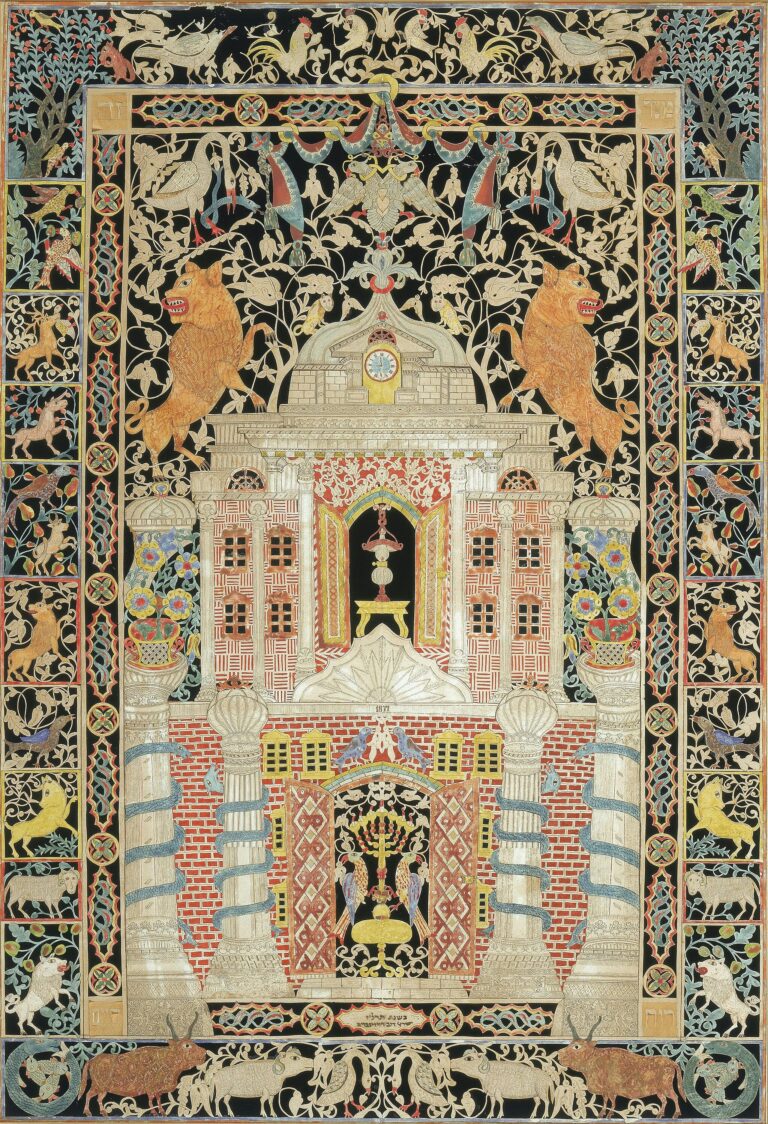
Image: Jewish Museum, Public domain, via Wikimedia Commons

Two Poems by Paul Schaeffer

THOUGHTS ON THIS FRIDAY NIGHT

 I went to the Chabad House

For Shabbat services and dinner

They sing with passion

The men locked arms

I still can’t help but think

About when I walked into

An unnamed co-worker’s office

Who was with three others

Talking about Christmas presents

And told me get out cause I had Hanukkah

Ralphie one of the guys present

Said you can’t be Jewish

Cause he didn’t know

I wish I could wash it off

They make it feel 

Like an illness

THE RELIGION OF NO NAME

In front of the altar 

I have my secret mantra

In Sanskrit

And reciting it

Lowers my blood pressure

The Rabbi told me I was crazy

Come to get an aliyah

On Shabbat

I’m trying that out too

And liked the rush of being onstage

When I climbed the steps of the church

On Park Place

The Irish priest welcomed me

I would be forgiven for all this

He told me

They say the early Christians drank

A potion from a chalice

Once a year

Something like Carlos Castanada

And peyote

I think I’ll try that too

What the heck

You only live once

Paul Schaeffer is a native New Yorker, born in Brooklyn. He has an MFA from Sarah Lawrence College and an MPA from New York University. Paul is a certified yoga instructor and daily meditation practitioner.  He works as the Director of Administration at the New York City Department of Health and Mental Hygiene Public Health Laboratory; the laboratory conducts critical clinical and environmental testing to keep the City safe. Paul is married to Lorena from Buenos Aires and has two children, Lucas and Hannah. Paul has published one book of poetry, The Cruelties of Brooklyn (Box Turtle Press, 2023).

Image: Uoaei1, CC BY-SA 4.0 https://creativecommons.org/licenses/by-sa/4.0, via Wikimedia Commons