Home Blog Page 32

Four Poems by Michael Young

Fragments

From where we sit, the waves seem
to insist on shoving everything aside
and always right at our feet, building
a beach out of its bottomless discards:
out of sand, bits of shell and sea glass.

What a beautiful world it constructs
from fragments. What a calm its rumbling
perpetually settles on the jetty stone,
where gulls congregate, their debate ended,
the rake and strafe of dietary budgets.

Farther off, sandpipers advance and retreat
with the ocean’s give and take, a kind of dance.
It makes a music that hums these questions:
when the wind is called home, what name
does it answer to? Does it remove its shoes
when it gets there? And will I ever be invited?

Etched in Bone

There are caverns and gorges beneath the skin,
channels running deep and winding through us.
We become the habits carved into our bones,
whether hammered there by break or blessing—
of watching sunsets or dreading a certain look.
Walking the paths of its valley streams, we speak
what the water speaks, polishing the stones.
We take those words as a kind of scripture, pure
but passing, always passing like the current,
which cuts deeper into the bed, and ensures
our walk will be farther away from the next person
to call out to us, those sounding the geography of us
who follow signs of the heart they can hear
rising in the wind and beating the trees into a panic.

The Shape of Parachutes

Like the dome of certain dahlias
their spacious tent globes the air,
shaping a home for a held breath,
a tipped cup cupping us in hesitant
descent down to earth and the deep
valleys of our beds, the gardens there,
the gentle pillowing of our heads,
with flowers for our sleep, and the trust
we have in dreams, that the fall pardons.

How to Get Home

Sit on a favorite hilltop.
Remain still, long enough
to cast a shadow
where a squirrel stops
to find relief from the heat.
Then continue waiting.
Let your breath follow
where wind goes, escaping
every reason you cling to.
Let your eyes remember
what your heart forgot.
When those memories
return, even the swallows
will find in you a home.

Michael T. Young’s third full-length collection, The Infinite Doctrine of Water, was longlisted for the Julie Suk Award. His previous collections are The Beautiful Moment of Being Lost and Transcriptions of Daylight. He received a Fellowship from the New Jersey State Council on the Arts. His chapbook, Living in the Counterpoint, received the Jean Pedrick Chapbook Award. His poetry has been featured on Verse Daily and The Writer’s Almanac. It has also appeared in numerous journals including Pinyon, Talking River Review, Valparaiso Poetry Review and Vox Populi.  

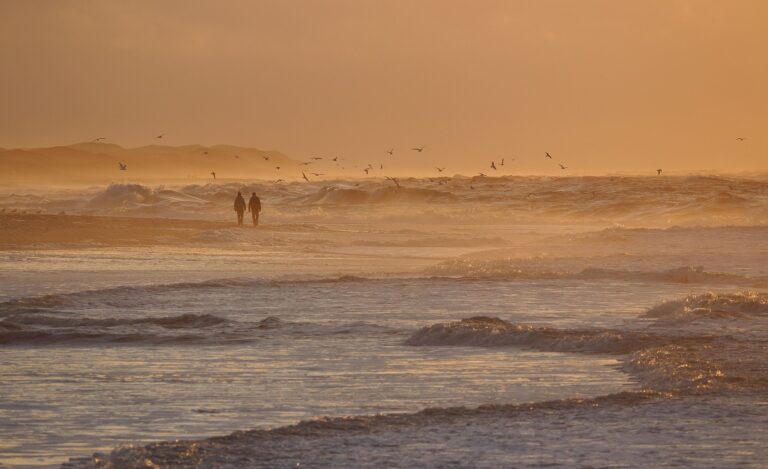
Image:

Slaunger, CC BY-SA 3.0 https://creativecommons.org/licenses/by-sa/3.0, via Wikimedia Commons
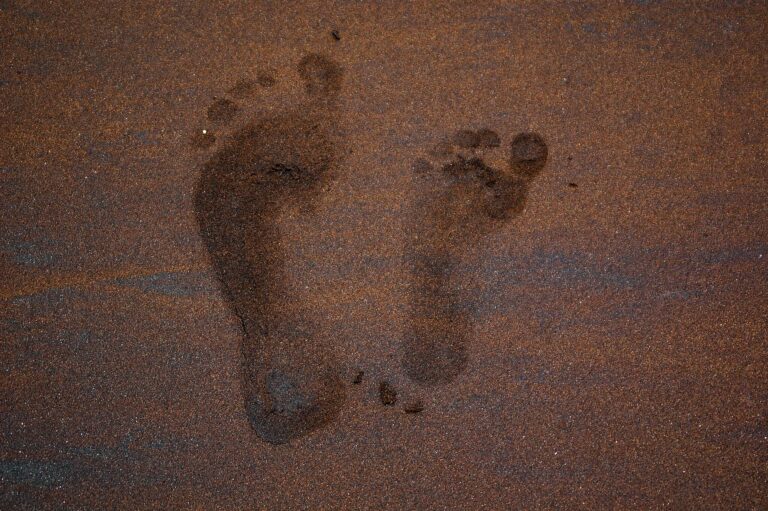
Shoe in the Woods by Josh Young

0

Shoe in the Woods

walking by the woods one day
trash scattered like seashells on a beach
beer cans mostly featuring some condoms
washed up from teenagers partying
i saw something that made my heart

skip a beat, if only for a second
an old sneaker playing peekaboo in a pile of leaves
faded green in color with a worn heel
top of it was covered in leaves and vines

what was attached I wonder in the woods
could I decipher the cause of death
either from foul play or natural causes?
covered by the leaves except for one shoe?
I leaned closer for the shoe to tell me its secrets

like you would lean close to a friend,
telling you who they have a crush on
speculation running in my mind as I cupped my ear
but the shoe said nothing

Josh Young is a poet and writer from Richmond VA. He is fairly new to writing and has only had a few poems published in small magazines. Many of his poems focus on social justice, city living, and are sometimes just humorous. In addition to writing poetry, Josh Young also does open mics and slam poetry.

Image: Ralf Steinberger from Northern Italy and Berlin, CC BY 2.0 https://creativecommons.org/licenses/by/2.0, via Wikimedia Commons

Two Poems by CLS Sandoval

0

I Was Silent
TW: Sexual Assault

At least three Long Islands
I thought I could hang
He was such a gentleman
Walking me home
Memories are only in fragments

The officer asked me if I said no
I know I wanted to say no
I think my lips didn’t move
I think my body cooperated with him
Locked in syndrome from the alcohol
Did he put something in it?

The officer says I wasn’t that drunk
But it’s been nearly 20 hours
I hadn’t met the boy before
A friend of a friend
In town for a fun weekend
He has a bright future ahead
I shouldn’t ruin it

The lie detector test shows deception
I’m not lying
I want to scream like I wanted to scream no
My mouth is glued shut
My vocal chords frozen

As if I was never a singer
As if I was never a debater
As if I didn’t know how to use my voice
As if my silence was consent

Mirror, Mirror Lies to Me

Mirror, mirror on that wall used to show me something beautiful
Size double zero
Thigh gap
Michelle Obama arms
A Kerri Strug tush
No discernible waistline, but an almost concave, flat stomach

Mirror, mirror on that wall used to show me
Porcelain complexion like Kiera Knightly
A sharp jawline
Bright, awake eyes
A full hairline
And no crows’ feet

Mirror, mirror now lies to me
She shows me a rounded stomach
Though I haven’t given birth
Arms thicker with fat than muscle
Thighs that stick together unless purposefully parted
A softening, doubling chin
A thinning hairline
Lines around eyes and mouth

Mirror, mirror I had so many plans for that girl
That beautiful, fit, young girl
I never thought of what to do with this thicker, older version

CLS Sandoval, PhD (she/her) is a pushcart nominated writer and communication professor with accolades in film, academia, and creative writing who speaks, signs, acts, publishes, sings, performs, writes, paints, teaches, and rarely relaxes. She’s presented at communication conferences, served as a poetry and flash editor, published 15 academic articles, two academic books, three full-length literary collections, three chapbooks, and both flash and poetry pieces in literary journals, recently including Opiate Magazine, The Journal of Radical Wonder, and A Moon of One’s Own. She is raising her daughter, son, and dog with her husband in Walnut, CA.

Image: FLAVIA BRILLI, CC BY-SA 4.0 https://creativecommons.org/licenses/by-sa/4.0, via Wikimedia Commons

Three poems by Eric Fischman

The poems in this post are part of a special section, curated by Ori Z Soltes and Robert Bettmann, The Jewish Experience.

You All Wanted to Do It, But I Did It

I killed baby Hitler. I squeezed 73 million lives
out of his little lung. Every breath he didn’t take
fed legions of Roma and Jews. Das Institut
für Sexualwissenschaft was never ransacked,
its research never burned. Instead of the Night
of Glass, we had the Decade of Flowers.

Berlin became the first LGBTQ-friendly city.
Auschwitz became a parking lot. Schindler
wrote a grocery list, Eli Wiesel wrote love poems,
and Eva Braun sought gentler company.
The Olympics thrived, but the art world was
never the same. My Babi and her sisters went
to Warsaw on vacation, and they all walked out.

The name Adolf retained its original meaning:
“Noble Wolf.” When we split the atom, we found
our hearts inside. No one had to fear the shower head,
or the train. My father was born in bed, instead of
in a field. Why would we ever leave? In my pocket,
6 million plane tickets for cousins I’ve yet to meet.


Shidduch

Tonight at the Jewish singles mixer on the rooftop lounge the moon was an orange ghost masked in cotton. The speaker was an Orthodox matchmaker who believed in two things: go deeper, and listen-reflect-connect. There were 6 guys and 1 girl. Meanwhile the thimble moon rose higher. We talked about our top ten qualities in a mate and whether or not looks mattered. The moon looked like a heavy eye opening. We split into practice pairs and the girl said her priorities were religiousness and having-it-together, neither of which qualified me. The clouds fled the moon who painted a white lane across the black water. The boys were clever, the kinds of Jews who wear gold chains with the top button unbuttoned. Persian, Syrian, Israeli. They were not looking for wives. The moon’s cheeks flushed pale as winter. There was a real Trump vibe and the matchmaker said if you ever want to talk to your kids you absolutely must keep shabbos. The girl was cute, divorced mother of 3. We got along despite the disconnects. She took me on a tour of the Hilton next door and the moon followed. The pillars and fountains were like Istanbul, or Marrakesh. We made each other laugh. Had good eye contact. I think we must have been flirting. But the moon hung in the empty sky like a mollusk. It spat pearls at the wild Pacific. It swallowed me in its silver. I just could not stop looking at the moon.


Don’t Bomb the Children

for 14 million or more players

Setup:

Each player holds the others’ lives in their hands. Some players hold many. Others hold a few. None hold zero. Player lives are distributed according to wealth, social standing, and charisma. Player deaths are similarly distributed.

How to play:

Don’t bomb the children. Don’t massacre a rave. Don’t turn soldiers into cops. Don’t blanket the sky in rockets. Don’t level the hospital district. Don’t take civilian hostages. Don’t bring Uzis to a rock fight. Don’t parade the naked dead. Don’t cage humans in a combat zone. Don’t build tunnels in place of bomb shelters. Don’t form coalitions with convicted racists. Don’t use corpses as bargaining chips. Don’t block water, electricity, and food supplies. Don’t kill a grandmother and post the pictures onto her Facebook using her own phone. Don’t tell 1 million people they have 24 hours to evacuate. Don’t rape the women and the men. Don’t target journalists. Don’t hunt the innocent door to door. Don’t evict entire cities. Don’t burn families inside their homes. Don’t blame them for what you do. Don’t blame them for what you do. Don’t justify murder. Don’t celebrate catastrophe. Don’t call it politics. Don’t call it necessary. Don’t call it national defense. Don’t call it decolonization. Don’t call it a rescue mission. Don’t call it freedom-fighting. Don’t call it holy. Don’t call it God.

The first player to die of old age makes everyone the winner.

Eric Raanan Fischman’s first book, “Mordy Gets Enlightened,” was published through The Little Door in 2017 and reissued by Turnsol Editions in 2021. His work has appeared in Bombay Gin, Denver Quarterly, Twenty Bellows, Tiny Spoon, Voicemail Poetry, New Feathers Anthology, South Broadway Ghost Society, and more. He was one of two winners of Denver Quarterly’s 2023 Poetry Broadside Competition, with 60 copies letterpressed. He has taught workshops for a variety of Colorado-based organizations, including Crestone Poemfest, Beyond Academia Free Skool, and the Firehouse Arts Center, and he currently curates the Boulder/Denver metro area poetry calendar at boulderpoetryscene.com.

Featured image in this post: Full Moon Over the Sea, zeevveez, Alfredo J G A Borba, creative commons via wikimedia commons.

Lot’s Wife by Jessica de Koninck

The poems in this post are part of a special section, curated by Ori Z Soltes and Robert Bettmann, The Jewish Experience.

Lot’s Wife

He never planned to take me with him,
never planned for me to follow. All that
talk of morals, values, only words to feed
his ego. How easily he pimped our daughters,
left the others to be murdered when he
knew what would be coming. Everyone
could see the smoke, hear the fires racing
towards us. He didn’t take the time to pack.
Grabbed our daughters for his pleasure,
then called out weakly–Time to follow.
Don’t look back. But I ran. I ran then stopped,
embarrassed by his cowardice, I turned. I saw.

I wept, wept until my body became salt.
Afterwards, he never spoke my name.

From Montclair, New Jersey, and a winner of the 2023 Stephen A. DiBiase Poetry Contest, Jessica de Koninck is the author of Cutting Room (Terrapin Books), and the chapbook Repairs (Finishing Line Press). Her poems have been featured on the Writer’s Almanac and Verse Daily and appear in Mom Egg Review, the Valparaiso Poetry Review, The Paterson Literary Review, Ritualwell, and in many other journals and sites. She holds an M.F.A. from Stonecoast, the University of Southern Maine, a B.A. from Brandeis University and J.D. from Boston University. Jessica co-edits ALTE, a multi-platform publication. For more go to: www.jessicadekoninck.com.

Featured image in this post: Jordan 2021 P299 Lots wife, Fallaner, creative commons via wikimedia commons.