Home Blog Page 4

Two Poems by Lisa Couturier

0

I Cannot Be Your Quiet

All my years of blustery men and me
wishing they’d stop whistling, cutting me off,
tightening the tessitura of my voice.
I never was a goddamn instrument.
I never was the night of my own streets.
Once, I was pretty. Stood like a groupie
for a boy while he played with his rock band.
Should’ve gone home, made my own bad music.
Hoped the boys would call late from their hot thrones,
as if I ever was some bright princess.
Should’ve called girls. Shouldn’t have waited for
the old shrink to get dressed and see me out.
I watch men spin the world on windlessness,
trapped, now, in twisters of my own silence.

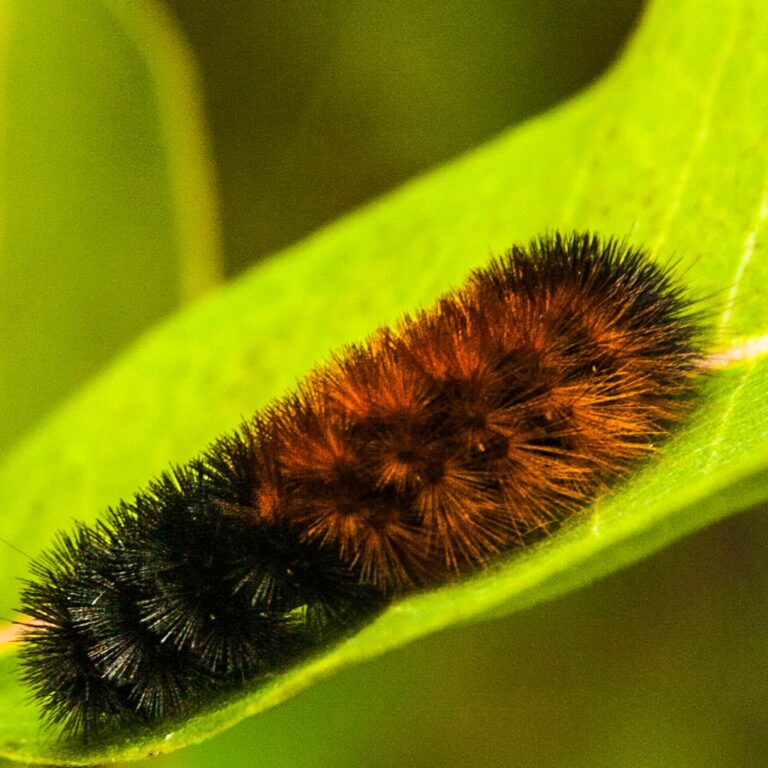
If You Had the Lepidopterous Life of the Woolly Bear Caterpillar, Pyrrharctia Isabella

The mythic life of the woolly bear means
she’s a weaver of weather, a silent
body of storm wandering in her stripes
of black and orange, which is to say she’s
starlessness and rust, ink against amber.
When her orange bands grow so very wide—
her apricot, her copper, her curry—
she’ll predict mild winters of persimmon
sunsets that might make you smile with who you
could become, the coral light a salve for
your somber body shadowed with your past
that lingers as you cross the roads of your
life like woolly bear, who never knew she’d
grow wings, be Isabella, of the flame.
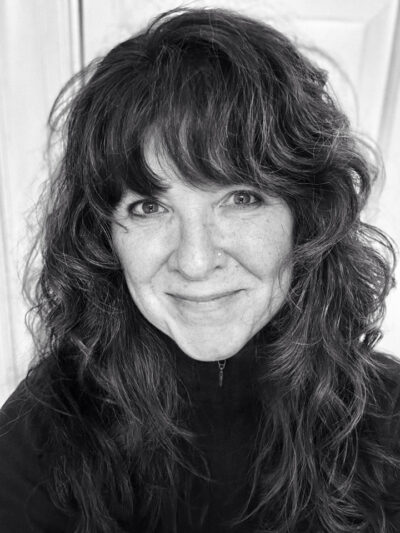
A 2022 finalist for the Annie Dillard Award in Creative Nonfiction and a Pushcart Prize winner for her essay “Dark Horse,” Lisa Couturier is author of the collection of essays, The Hopes of Snakes (Beacon), and the chapbook Animals / Bodies (Finishing Line), winner of a Jean Pedrick Chapbook Prize from the New England Poetry Club. She is a notable essayist in Best American Essays, 2004, 2006, 2011. A writer with the Sowell Family Collection in Literature, Community and the Natural World, Couturier is currently at work on a manuscript about Parkinson’s disease. She lives in Maryland, on Montgomery County’s acclaimed Agricultural Reserve, where she keeps her five horses, where a family of crows occasionally brings her gifts, and where a pair of black vultures visit her each summer.

Image: Paul VanDerWerf from Brunswick, Maine, USA, CC BY 2.0 https://creativecommons.org/licenses/by/2.0, via Wikimedia Commons
Folklore by Martheaus Perkins

0

Folklore

Y’all heard the one where the Africans flew
off the plantation?

Ever bed-and-breakfast at Chesapeake Bay, ghost
walk Greenbriar Swamp to hear tale of “Big Liz,”
the “heavyset” woman whose neck ate a sword
after her slaver made her stir inside his jewelry chest?

Did Gran warn you about letting Boo Hags ride?
They’ll deglove your skin unless you paint
your doorframe haint blue, wear your husk
on a D.C. “Boos and Booze” pub crawl.

Any toothaches signed by the Candyman?
Y’all must know the Candyman. Fooled
with a blonde, then a lynch mob sawed his arm off.
Dunked his stump in honeycomb.

Have you and your sisters kept the roots
High John the Conqueror left?

Did you hide the trick bag Anansi gave us
beneath the beds of your tongues?

Martheaus Perkins is a first-generation college graduate and the son of a single Black mother. He is the author of The Grace of Black Mothers, a debut poetry collection through Trio House Press. He lives and teaches in Fairfax, VA. His name is a collection of each woman who helped raise him: “Mar-” was his grandmother, “-Thea-” is his mother’s name, and “-us” represents his two aunties who created the name.

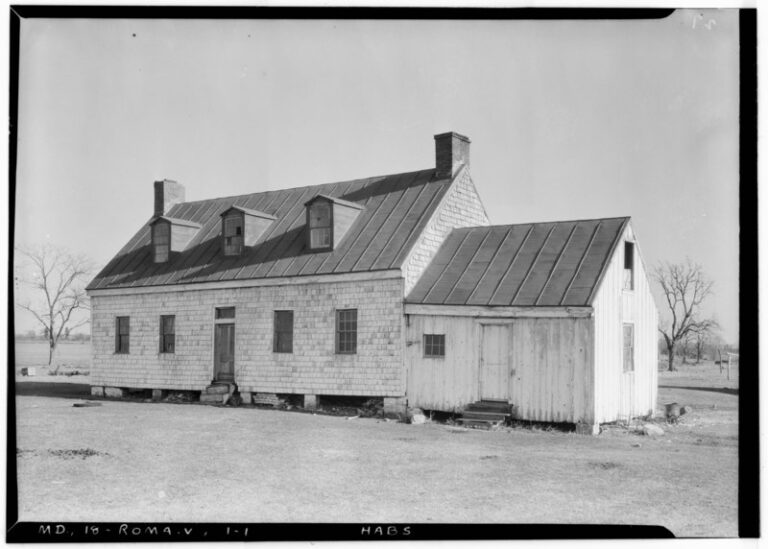
Image: Pickering, E. H., creator, Public domain, via Wikimedia Commons

Two Poems by Selen Frantz

0

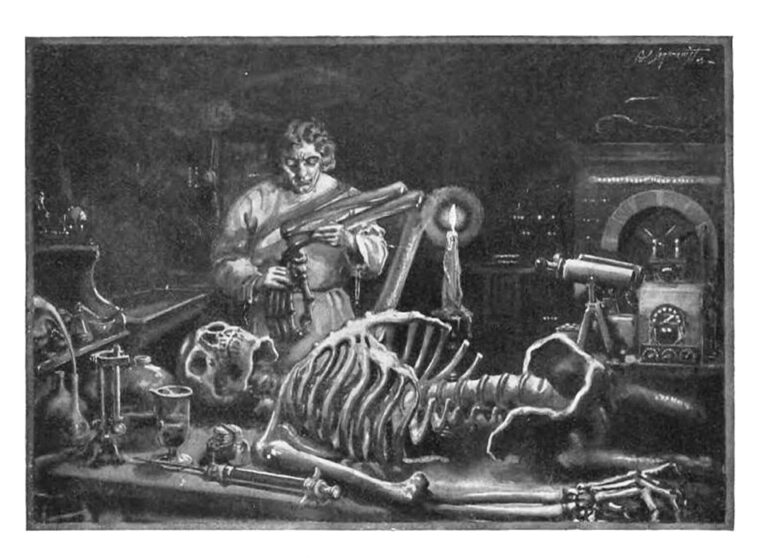
Modern Prometheus 

“I doubted at first whether I should attempt the creation of a being like myself, or one of simpler organization; but my imagination was too much exalted by my first success to permit me to doubt of my ability to give life to an animal as complex and wonderful as man.”  – Mary Wollstonecraft Shelley, Frankenstein 


Upon confrontation, my father 
told me that I had been an 
interesting experiment– 

as if he were creator Himself, 
as if 

he had personally moved the vials, the petri dishes, 
ushering a haploid waltz while draped in white. 

Great creation, what innovation; 
I fear the sterile beam 
of laboratory light 
was my first definition 
of warmth. 

When I first sprouted from the Earth, 
did I yearn for other arms to catch me? 
Did I cry, filling that great, gray room? 

Holding me, naming me, feeling the heartbeat he had formed, 
how could a father not see how I would one day 
run blindfolded through woods, hungering for embrace? 

How could flesh and bone, brought to rhythm by lucid electricity, 
be anything but a miracle?


Volar 

To be young and in love is to balance 
certainty and uncertainty 
between your fingers on a windy day. 

Watching their bodies shudder, 
it is to watch the future 
splayed out before you like an open palm– 

for your eyes to follow only one weathered, epithelial valley
while glossing over each diverging path.


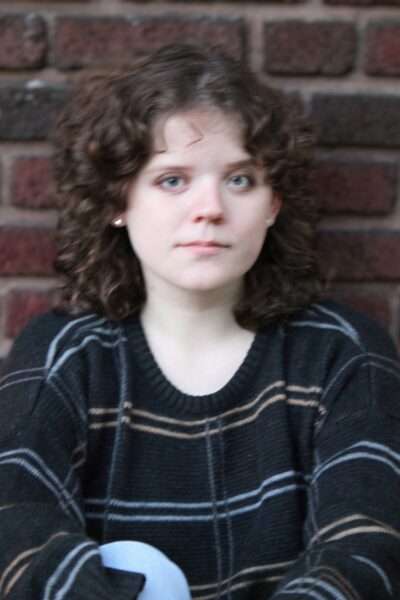
Selen Frantz is an urban planner from Detroit and is currently the William T. Battrick Poetry Fellow at Oberlin College. Her work has appeared in Lucky Jefferson, BarBar, Meniscus, Prime Number Magazine, ellipsis, and elsewhere.

Featured image: Mary Shelley, Public domain, via Wikimedia Commons.

Two Poems by Ihor Pidhainy

0

Plyzhnik’s Farewell

When a kiss is more than goodbye
to coffee and the office morning
the tender parting of husband and wife,
when the cell that awaits you
calls goodbye in the moment’s farewell
and the island which resents
your civilian discomfort,
your brotherless disdain, then
you stop for a moment
and with young uniformed permission
sit in silence where you wrote
and thought through the thickness
of animated brute voices which
cluck chuckle or choke wordless
as you rise fastened in thought
and kiss your wife more than
goodbye.

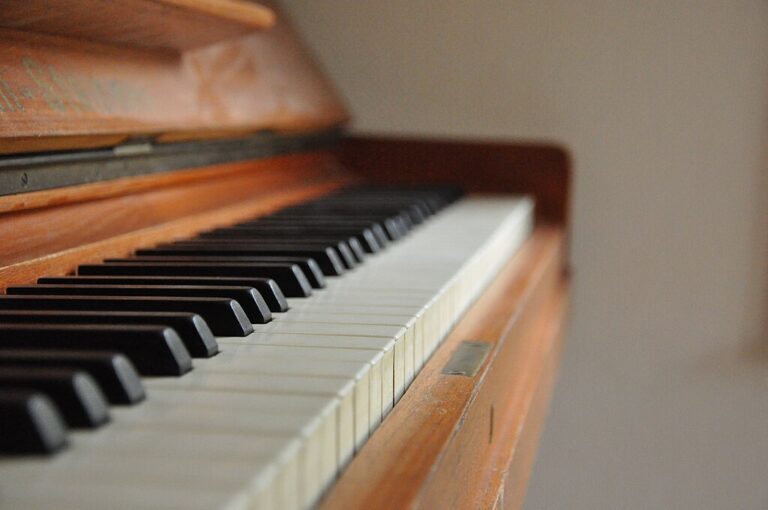
Piano Music

like a slight chill
that touches warmth;
my mind’s eye
on your smooth mouth.

like a small breath
that shapes the absurd
flicker of candle light;
dreams of an evening’s youth.

like a little girl
with soft feet; fingers
dancing on steep, black keys.

Born in Canada of Ukrainian descent, Ihor Pidhainy lives and works in the American South, where he teaches. His poetry has appeared in over two dozen journals including Washington Square Review, In Parentheses, The Louisville Review & Fleur-de-Lis Press, and Merion West Poetry. Follow him at pidhainyihor (Instagram) and ihor Pidhainy’s writings (Facebook).


Featured image in this post is “Piano Keys Close Up,” by Puikstekend, CC BY-SA 4.0 <https://creativecommons.org/licenses/by-sa/4.0>, via Wikimedia Commons

Three Poems by Isabel Roby

0

Tyrant-Poem

I
We will shake our bodies like animals abandoned in the forest,
and the moon will sing lullabies for the
dead;
the dead who were mine and did not know how to die peaceful deaths;
and the hour will come,
and it will carry away in colorful shrouds
the faces of the barbarians;
we will stand tall
but at what cost?
at what cost
will we survive their cruelty?
If the poem with which I drive my hand into this land
does not serve to withstand their assaults
then it is not a poem.
If the poem with which you drive your hand into this land
does not withstand, rewrite it.

If the poem is there
between its jaws, the earth will rise again;
between its jaws, executioners and traitors will die.

II
We must seek the country that lies
between the ledges, even if what we find is not the same.

We are already in the final lines
and we have not even honored the poem
that roars behind the mountains.
Listen to me well:
Beware of the poem that emerges
from its hidden zone,
it will come like tyrants fall:
without warning
and eager
to kill.

The Beasts

I believe our differences
relate to our
temperament.

There are certain registers that you don’t understand.

Between your windows
I see the object
but not my eyes
working together
calibrating the angles.

I release my words
and I know what I say
but not
what you receive,

and your silence
always
with marks of candles
on the floor,
where we crafted
the rites
thinking
—with fear of saying it
out loud—
that the gods
had been generous
with us.

And among so many spaces
we remain absolved
of myths
and cruelties.

What have I done with you
except discuss the girl I was?

And there were days of immense
awakenings
where,
amid misfortunes
I shaped the poem,
that alchemy
that survives
the rain,
the steps,
the revolutions.

I have built others
but none exercises
the silence
like you do,
none holds
in their wombs
the beasts
that saw me grow.

Not us

To Jeanette Vizguerra

If we cannot make poetry a cry
let us clench our fists
and search beneath the earth
for the mirror that shows us
the most fleeting truth;
we are all the same,
connected by tiny threads
that never break.

Politics is also
to amplify language
against the despot.
Language,
which does not speak for itself
but designates others.

Let us name
things as they are
so that the executioners
do not render us mute.

They expected us to bow down
before the oppressor,
but we poets
raised our hands
and gathered the daughters of others
in our arms.

We come with sharpened tongues,
carrying the truth and the word
in our pockets.

What do they carry
in their mouths of salt?

Others will tremble,
not us.
Others will fall,
not us:

We
who exist,
demand our own
possibility
to seek justice
not only for the dignity of life,
but also for its tears.

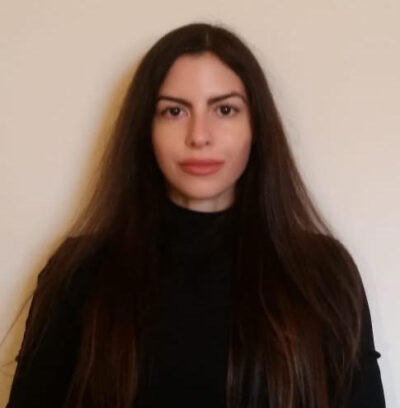
Latina woman with long brown hair, dark eyes, and black long-sleeve shirt

Carlota Roby is a human rights attorney graduated from Harvard Law School and co-founder of the Vocales Verticales project. She is also a poet and a cat lover. Originally from Venezuela, she resides in Washington D.C. She has published the poetry collections Las Manos de los Muertos (2013); Suburban Tales (2019); and Lilith (2024). Her poems also appear in the anthology Acaso esta atrocidad es el centro de todo (2015) and in the magazines DAFY, Ámsterdam Sur, and 2025 Latino Book Review. Lilith is now available, published by the Chilean publishing house Editorial Tintapujo, in both English and Spanish.

Featured Image: Waterfall, Vintgar Gorge. Slovenia by Luke Price under Creative Commons Attribution 2.0 Generic license.