Home Blog Page 47

Three Poems by Revonne Johnson

When the Hat Went Up
Remembering the Montgomery, Alabama, Riverfront brawl.

When the hat went up on the dock in Alabama
ancestors of slaves fought back.
When the hat went up, we fought years of disrespect, disenfranchisement,
and demonization.
When the hat went up, we backed up, and stood up with our heads up cause
we were fed up
When the hat when up, we defended a brother doing what was expected—
his job.
When the hat went up, oppressors watched their greatest fear—retaliation
and condemnation.
When the hat went up, our ancestors cheered our courage and our choice.
When the hat went up, our communities celebrated unity with an unspoken
understanding.
When the hat went up, there was pride and vindication—for just a brief
moment.
When the hat went up, we were simply asking for what we were due, for what
we have always wanted . . .
freedom & respect
life without physical & psychological chains
and an even playing field.
When the hat went up, we did not sit still and endure their wrath. We fought.
We swam. We swung.
When the hat went up . . .
We had hope.


We Grow Tired

Dear Lady Justice,
We grow tired.
We say
We grow tired of waiting.
We grow tired of the acquittals and the dismissals
by a judicial that is obviously prejudicial towards
those who are poor, innocent, and black.

Too many jurors, judges,
prosecutors, and prisons
have gotten the verdict wrong.
Too many times you have
altered your scales
to damn the innocent irreversibly,
just so that the Haves can retain
what they do not often deserve;
just so that the Haves can protect
those who often are not worthy.

We grow tired.
We say . . .
We grow tired of waiting.
We grow tired of the acquittals and the dismissals
by a judicial that is obviously prejudicial towards
those who are poor, innocent, and black.

We know that you were built to contain
the helpless, the powerless,
the blackish, and the brownish.
For your actions are not broken.
They are purposeful, intentional, and detrimental
to the innocent
whose cries for freedom are excruciating.
For you contentiously free white birds
while concurrently caging black birds
with no guilt.

We want justice
We say . . .
We want justice
for those unfairly slain
by strangers wielding weapons
without just cause;
by strangers wielding weapons
just because.

We grow tired.
We say . . .
We grow tired of waiting.

The Black Community
Our Reason
Golden Shovel poetic form using the first verse
from Audre Lorde’s poem, "Echoes."

Why can’t there
be a celebration that is
just for me? I want a
woman’s voice with the timbre
of Whitney to be proof
that my voice
is worthy and that
truth comes
often from
those not
included because being
dismissed and not heard
is hurtful and
not knowing

that you
definitely are
more than you are not
that just being
recognized and heard

is being noticed
by not only
your baby
but others

who are not
as open to being heard
from someone like me. My voice is for
all Black women because all the
women like me want the same
thing—respect. So we ask for this reason.

Revonne Johnson is a wife, mother, tech professional, and poet. Her most recent works focus on Black women, including a book of poems about the unique struggles of Black women and the politics of the day. This collection is dedicated to her mother who passed away in 2018. The poetry series title is “Dear Black Woman,” and there are currently five separate poetry books in this series. For more information visit www.revonnejohnsonbooks.com.

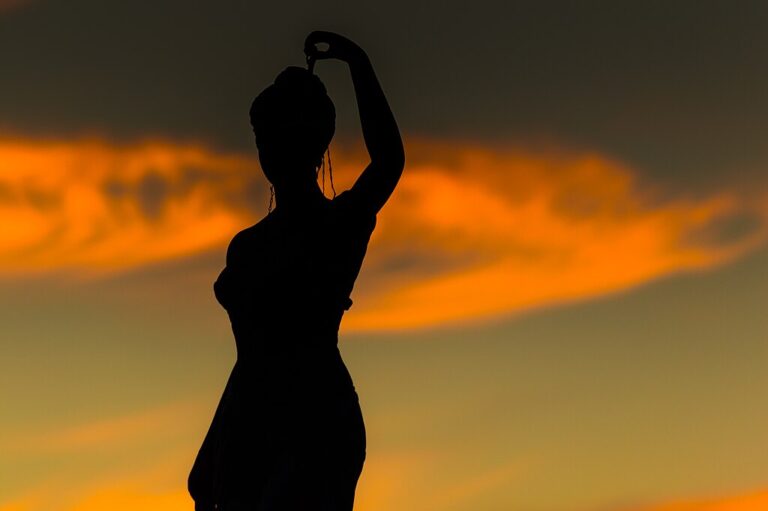
Feature Image: “Lady Justice” by Jason Jacobs from Hawaii under the Creative Commons Attribution 2.0 Generic license from Wiki Commons.
Two Poems by Regina YC Garcia

Afro Carolina Black: There is More Than One Way

In case you haven’t noticed…

I am Black
Carolina Black
Afro Carolina Black
Afro North Kakalak Black
Eastern Afro Carolina Black
Born of the colonized
The enslaved
The freed
and every possibility between Black

Born down through generations Black
I am Collard Green, Black
Collard Green and Cornbread Black
Henpecked Salad and Dumplings Black
Fat Back, Salted Streak o’ Fat Black
Streak o’ lean Black
Not quite like those before me
Nor some after who were/who are
Chitterlings, Black (that ain’t me)
See, there is more than one way to be Black

I am watch the Monitors at Sunday in the Park Black
I am Vinegar-Based Barbeque Black
I am 70’s and 80’s bussed across town Black
I am go to college Black
I am know my history Black
I am know your history Black
I am Black enough to know
That while I’m not all Black
That I am enough Black
to still be treated Black
Whatever that means, Black
Afro Carolina Black

I am tobacco warehouse school field trip
Black
I am Vacation Bible School, Butter Cookies,
Hotdogs on Friday Black
I am Easter Recitation Black
I am teach your Black children how
to perform that Easter Recitation Black
I am teach your children how to sing Black
Like my mama, my auntie, my grandma Black
I taught my children to sing Black
Sing Black
Sing Black
Three whole note sing Black
I am “that song will save you” Black
I am moved by Church Mother, Joanna Tyson, Black
Reciting Dunbar from her wheelchair Black
Caressing my Black soul Black
I am the witness Black
of life, death, and beyond Black

I am a Petey Pablo Groove Black
Swinging shirts like Helicopters Black
I am march down 5th street in the Eppes High Reunion Parade Black
with our Maestro Johnny Wooten leading the way, Black

I am “my mama told me stories” Black
I am “my mama gave me hope” Black
I am “my mama taught me not to give a doggone” Black
I am “my mama soothed my soul” Black
I am see my aunties, uncles, cousins all come back from the North, Black
Load up their cars with meal, sausage, and vegetables Black
I am “my mama taught me how to care about it all” Black
I am “my mama taught me when to make that choice” Black
I am from a mama who had a mama that shared the stories, too
But also left enough for me to find, Black

I am “I know who my cousins are” Black
I am “I know who your cousins” are Black
I am a go to the Pow Wow Black
I am “they took our land,” Black
The land they did not want to begin with, Black
Now they value our land more than our souls and skins, Black
Want to stomp over the graves my people are buried in, Black
I am waiting for justice to whirl in, Black

I am Afro Carolina Creole Black
Afro Euro Indigenous Black
Black enough to be Black
Black enough to know why
I’m not all Black
Black enough to count it all in my making
of what I love, of what I see, of all my pain
of all my joy…
I am more Black

I am “I hear the drums” Black
The ones that call me back Black
I am “I hear the music” Black
Maceo Parker, Billy Taylor, Nina Simone, Roberta Flack
and more and more
Black

I am a daughter of the water, a daughter of the fields, a daughter of the voices
that have taught me to dream beyond Black
I am beyond Black

I am Afro Carolina
in all the ways that matter the most

“Neo-HooDoo believes that every man is an artist and every artist a priest.”
― Ishmael Reed, Mumbo Jumbo

New Hoodoo

This “New” Hoodoo looms in the days that hang ahead
Days beyond this “Sooner Coming’ of warped and tragic
magic and exclusion

Hoodoo gonna trickle down like new wine
Running through synapse and bone
and will create its home in those restless and
stripped, make them the “formerly forgotten”
and offer them a way to rise from the
sludge of second-handedness

Hoo gonna clothe them in priestly robes
in a freshly woven, unbroken paradise

Hoo gonna lift the oldest voices
those whose masked suffering
goes the deepest, pining for their kin again
Gonna entreat and invite spirits to
shake the trees of our ancestors
Gonna hang the new black velveted framed
pictures of The Deity–the one who created us all–not
just those idol-toting scoundrels,
mouths running with blasphemous alibis

Who do you see mining for golden truth
in a darkness that struggles for the light?

Hoodoo invites forward our God
which is fully opened up

Hoodoo is onyx, cacao, dark well libations
spice and incantation

Hoodoo creates the space for the living, the dead
the unfinished…to find rest in this land….
….in lands to come

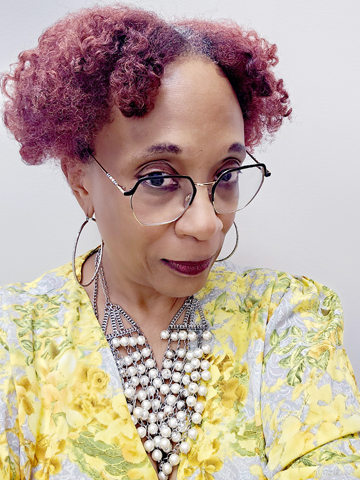
Regina YC Garcia, a Language Artist and English Professor from Greenville, NC, is a DAR American Heritage Poetry Award winner, a two- time James Applewhite Semifinalist, a finalist in Charlotte Lit’s Lit/South Award, and a Pushcart Nominee. She has been published in Up the Staircase Quarterly, South Florida Poetry Journal, Amistad, The Elevation Review, Black Joy Unbond, and numerous other reviews and anthologies . Additionally, she has contributed poetic and vocal content to the Sacred 9 Project (Tulane University) as well as an Emmy-Award winning episode of the PBS art show Muse featuring “The Black Light Project.” Her debut chapbook, The Firetalker’s Daughter, was released in March 2023 by Finishing Line Press.

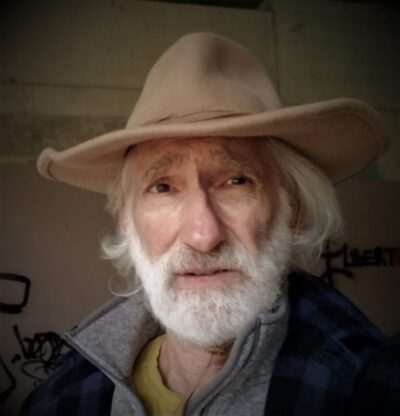
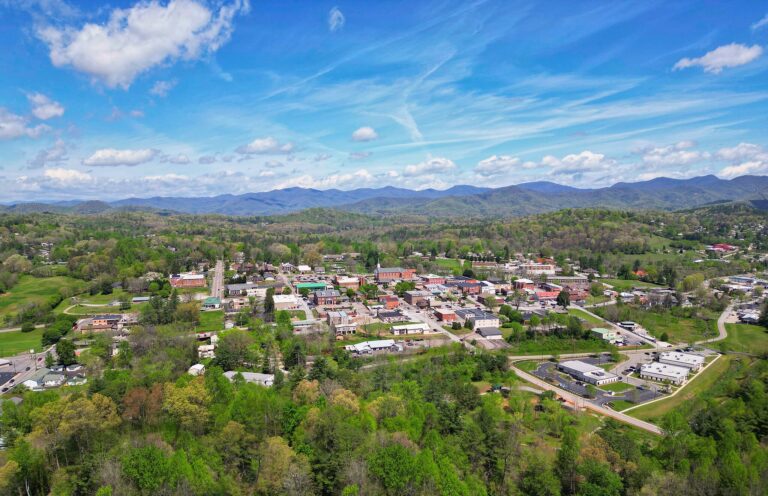
Image: Harrison Keely, CC BY 4.0 https://creativecommons.org/licenses/by/4.0, via Wikimedia Commons

Two Poems by Alan Abrams

MY SPANISH IS NO GOOD

The shifting breezes barely stirred the sodden flags;
the tide turned, to inch back toward the sea,
spilling yonder poplars upside down.
Redwing blackbirds scritching;
a distant dopplered airhorn sounding a crossing—
and from my spokes, a whisper.

Above all this floated something sonorous—
syllables, from a man, seated on the bank—
swarthy, stubbled,
hatted, hoodied,
hands flailing, grasping air,
like the gulls beyond his reach.

My Spanish is not good,
but did I catch some words?
Madre de Dios—or perhaps else…

Who else was there, to prove my ears were wrong?
Who else, besides the black robed cormorant?
Who else, besides the sharp toed osprey?
Who else, besides the silent river?

BASHŌ WALKS: A HAIBUN
“I might as well be going to the ends of the earth!” —Matsuo Bashō

Proudly the land wears its poverty. Once self-sufficient farms,subdivided among sons, resubdivided among grandsons: plots grown narrower, shallower, great grandson’s well down the slope from grandson’s septic field. Pickup trucks with rifle racks, a little white cross festooned with plastic flowers at every sharp bend in the road. Summer, clouds of mosquitos; winter, haze of piñon smoke. In the few remaining orchards, peach and apple blossoms grace spring’s arrival.

All this bounded by mountains: to west, the Jemez; Sandia to the south. Along the easterly horizon range the mighty Sangre de Cristos, where vestiges of snow linger through Leo.

I sojourned here, in the valley of the Rio Grande, working with my hands, living in a rented trailer house barely 8 feet wide. Halos of frost on the bedroom wall where our heads had lain. Kicking my frigid bike to life at five degrees above, then riding 40 miles to work. And somewhere, way out there beyond Redondo Peak, the hippy haven hot spring. Fifty years later I sought it out.

this two lane highway
mountains tell it where to bend
where to rise and fall

I crept along the road to San Ysidro, searching for the unpaved turnoff. I remembered it was somewhere past the Jemez Pueblo, in a steep bouldered canyon. Along the way,

I pause among pines
overwhelmed by their silence
then the wind rises

I did not find what I was looking for, thus continued on my journey. The next day, approaching Denver,

the landscape dissolves
tall signs—gas—food—sad to be
back in the city

A journey cluttered with memories—perhaps more real than the moment itself. I mourned my foolish choices, blown opportunities, my abandoned lover. My consolation is my pen, however humble the words that flow
from it.

Bashō walks, I drive
no wonder my poor words pale
before the Master

Alan Abrams is: Art school dropout, ace motorcycle mechanic, middling carpenter. Builder and bootleg architect. A scribbler of stories and poems, many of which have been published by journals and anthologies, including Bourgeon/Mid Atlantic Review, Decolonial Passage, The Innisfree Poetry Journal, The Rat’s Ass Review, Disturb the Universe, The Galway Review, The Raven’s Perch, and many others. An excerpt from his novel, The Journeys of Jack Isaksen, has been published by the Embark Literary Journal. A sequel is under way.

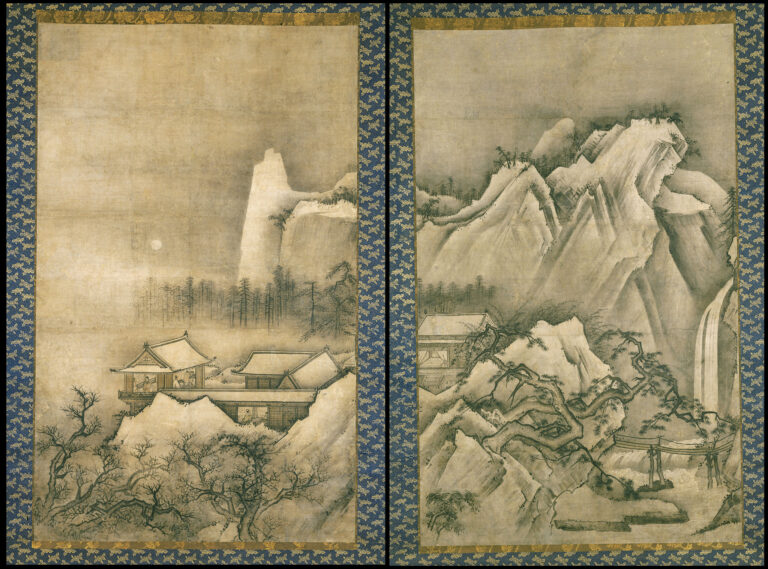
Image: Philadelphia Museum of Art, Public domain, via Wikimedia Commons

One Poem by Brenton Booth

Stolen Landscapes

It is Vincent van Gogh's 168th birthday. His yellow "Sunflower"
painting is part of a collection we saw today at the National Gallery.
Hanging in the final room. I went there first. She started with
Titian, Botticelli, and Velazquez in the first room.
Over two years together. I told her last week I had had enough.

There is no one at the van Gogh when I get there. I think
of his story. The broke artist, longing for acceptance, love. Cutting
off his left ear to convince Paul Gauguin to stay with him in
Arles. Giving it to his favourite prostitute after he
rejected it. Spending time in a mental home. Eventually
killing himself the same day he finished his two final works.

She taps me on the shoulder with tears running down her face.
"I'm sorry," I say, following a lengthy pause. Contemplating Gauguin's still
life hanging beside Vincent's. Hoping things turn out differently this time.

Brenton Booth lives in Sydney, Australia. Poetry of his has appeared in Gargoyle, New York Quarterly, North Dakota Quarterly, Chiron Review, Main Street Rag, Naugatuck River Review, Heavy Feather Review and Nerve Cowboy. He has two full length collections available from Epic Rites Press.

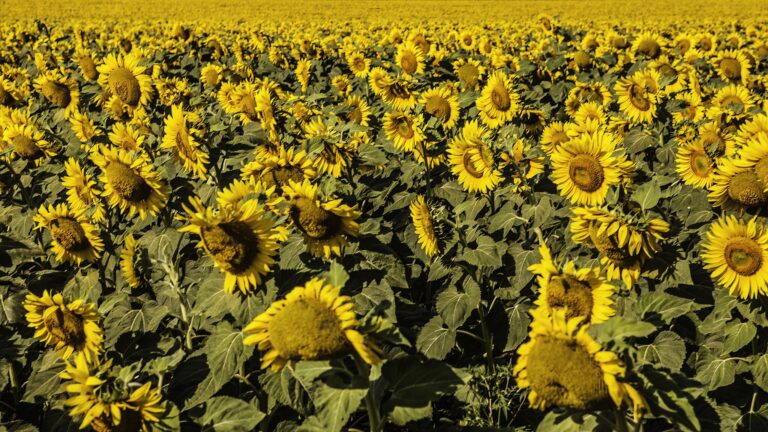
Feature Image: “Sunflower Landscape” by Valerli Tkachenko under the Creative Commons Attribution 2.0 Generic license via Wiki Commons.

Three Poems by Caleb Wein

Witness Tree

Does it hurt standing there
unable to do anything but watch?
How long does it take
for soil to stop tasting
like blood?
A decade?
A century?
We all hold scars.
Some are hidden
beneath layers of toughened skin.
I never knew if roots grew faster than branches.
What wins in the battle between staying and leaving
when we can never forget?

Swimmer

I pivot this fountain pen around my fingers,
feeling its weight.
Years ago, you gave it to me
with three words,
For your studies.

These days I fill it with a deep blue ink
that flows onto paper like waves on the beach.
You loved the ocean, swimming through swells
as they pushed your body,
letting you know they were alive too.

Now that you’re not,
is your body truly motionless,
or is it swimming away?
Bones backstroking through clay and soil
as you stare up at the roots of the world.

DC al Coda
For Reuben Jackson

The last time I saw you, you were passing
on the other side of the street.
The clouds were heavy and I was sitting on a bench
in a sweater not warm enough for the time of year.
You didn’t see me.

Memory is a dangerous place to get lost,
like a bed’s warmth as the cold morning air
makes its voice known.
In memories, nothing has to change.
In memories, I still hear every inflection of your voice.
In memories, a stroke means nothing more
than a clock’s movement.

There’s a cliché movie scene where a character
finds themselves back in time
with another chance to say goodbye.
They hug their loved one as a tear begins to fall.
Their loved one, confused by the sudden outburst of affection,
embraces it. Asks something along the lines of,
“Hey, what’s gotten into you? Is everything okay?”

I’m sitting on a bench under a cold gray sky.
The hands on every clock are frozen.
I watch you pass
again,
again,
and again.

Caleb Wein is a Maryland and Washington, D.C. based poet and is currently a student at the University of Maryland College Park. He has been a featured poet at the American Poetry Museum in Washington, D.C., as well as having published poetry in his university’s literary journal, Stylus.

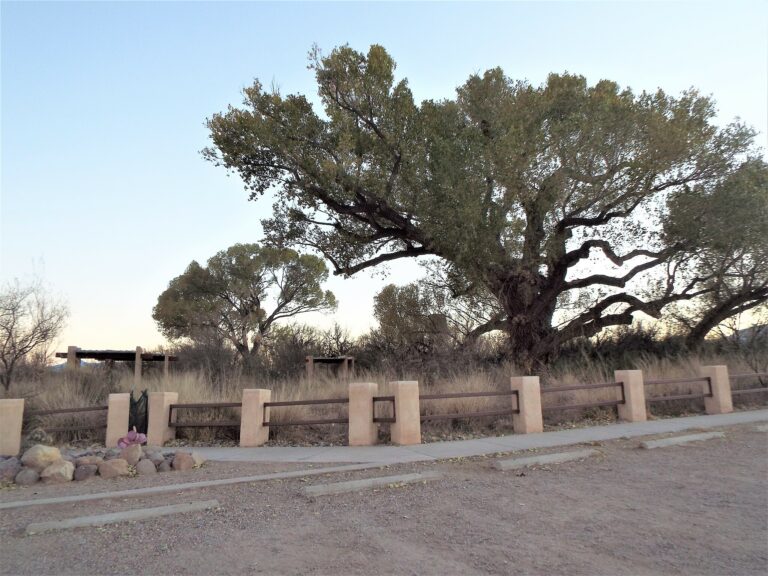
Image: Marine 69-71, CC BY-SA 4.0 https://creativecommons.org/licenses/by-sa/4.0, via Wikimedia Commons