dawn breaks over dust— jets thunder into Iran Israel’s warning
missiles cross at dusk— sirens bloom in Beersheba Tel Aviv trembles
bunker busters boom— America joins the fray call it degraded
waves of rockets hit— Al Udeid hears the thunder Qatar holds its breath
fragile agreement hours as thin as paper— sirens, then silence
The New 3 Rs
In elementary school, my children learned the three Rs: renew, reuse, recycle.
In today’s federal service, we’ve learned three new Rs: resign, retire, reassign.
Professionals used to fill the halls— 190 names on our org chart, writers, editors, public affairs specialists, plans etched into calendars, ideas passed like notes in class.
Just 23 remain, learning new scripts, left without leaders to map the road ahead.
I propose the next three Rs: reverse, recall, restore.
How To Kill in 12 Easy Steps
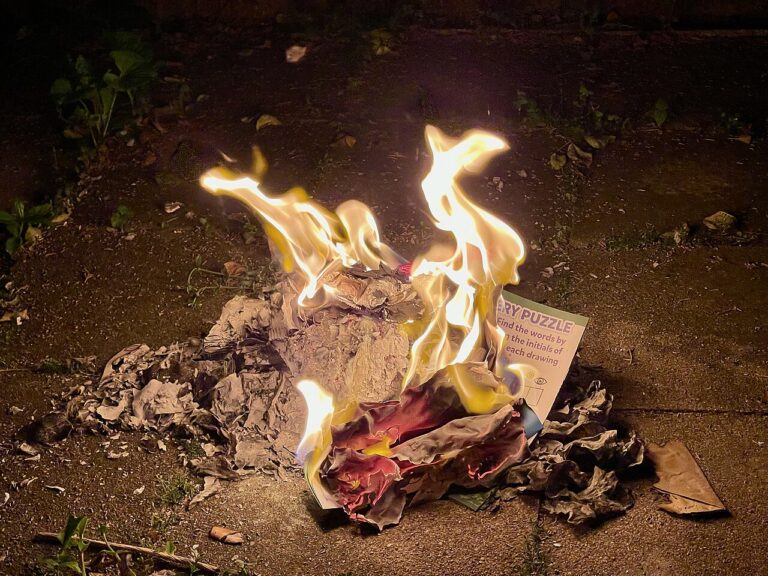
Fitting, we agree, two months into our training, nine more months to go, that the first busy work they give us to ensure we are “productive” is to kill off records.
Thousands of death reports from funeral directors scanned in for us to input.
An easy, 12-page guide on how to kill.
First, they make us load bullets for OPM once a week.
Now, they want us to pull the trigger.
Author Owen Givens is a federal worker who has been a civil servant for more than 30 years.
We hide behind glass— thin, trembling breath, shattered silence, each crack a raw wound, a secret bleeding light. Truth fractures us— yet in jagged breaks, strength flickers, trembling, not a mask, but a mirror. To break is to be seen; to be seen is to live— not despite the cracks— because the cracks are us.
Neon Revival
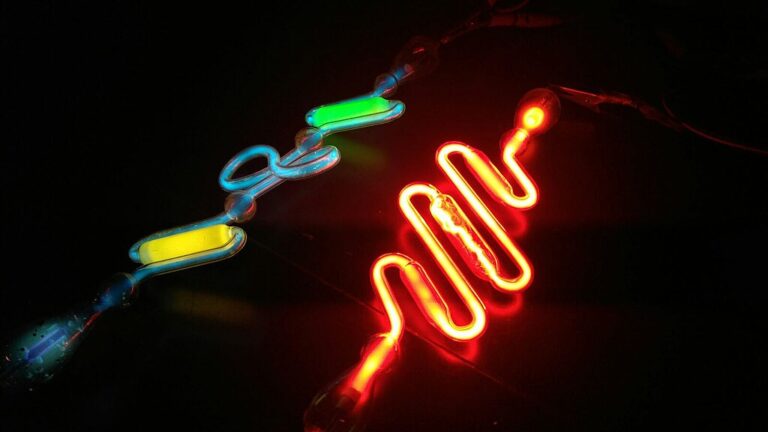
The city hums— fractured prayers pulse neon, veins of cold electric light. Static swallows sound, but beneath noise— a flare relentless, alive. Hope blazes fierce, a wildfire waiting, igniting dark streets, guiding lost souls home on waves of flickering fire.
Joshua Walker, known as The Last Bard, is a freelance poet and writer based in Oklahoma City. His work blends mythology, mental health, and modern isolation, and has appeared in Potomac Review, Southern Florida Poetry Journal, Solarpunk Magazine, Libre, Kelp Review, and others. In 2025, he was nominated for both a Pushcart Prize and a Best Microfiction prize. Walker’s poetry bridges ancient tradition and contemporary struggle, confronting beauty and despair with equal ferocity.
Featured Image: Tubos geisler by Ana sol lara under Creative Commons Attribution 4.0 International license.
I hang my jacket in the hallway her apartment is old made from shoestring potatoes it smells like a jelly factory.
Against the wall a man’s face eyes folded laces around his neck. That’s your Uncle, dear.
He barred her from doing much of anything when he was around then he died.
She asked the doctors to keep his eyes and brain alive and put them in a fish tank.
That night when she got home she put on a mambo record, poured herself a vodka, lit a cigarette, and blew smoke in his eyes.
The tank is down the hall full of algae and bubbles. She has it hidden behind a curtain.
On the wall are photos of President Gerald Ford, our family on vacation, and antique pictures of naked ladies.
How many naked ladies do have to look at before I get something to eat? I ask.
I’ll think about it, she says. Behind the curtain skirts are hung up, sponges tied together, a bag of teeth.
My Auntie takes a photo of me so my parents will see the child they raised, buzz-cut, roadworthy.
My Auntie tells me stories about my family, takes me shopping, for sweaters and sneakers.
When she gets excited she makes the sound of a happy seagull and spins like a mooring buoy.
The Memory Machine
I’m thinking of making a down-payment. In the photo it’s like a big negative-ion generator. You hook it up like an E.E.G. machine with the stick-em sensors on your temples and a helmet like a hair dryer. It comes with a little printer and defaults to a setting they call Medium Memories—no dead dog or cousin Nancy’s died, more like the time you shot a paperclip at a cheerleader in the middle of a handspring and he buckled like origami. Or the time you tried to get Jimmy Locke’s sister Susie to join the Naked Club and she didn’t show up for the meeting. You see them on a screen like an old Mac Plus. A bearded mendicant will sit down with you to help you interpret, help you find proof you were right after all. You weren’t bad or immoral. Any hint you were at fault is deleted right there on the screen. Like that Albert Brooks movie with Rip Torn as his defense attorney where they show him video of his parents screaming at each other, he’s three, gripping the bars of his crib, crying. Or those times you felt everyone was an insensitive dork, everyone on the planet. You stand in a bus wondering why no one is looking at you, no one is smiling, you wonder why you are so pissed off, or more like you just notice it. Supposedly you can buy add-on music to enhance the viewing experience. You can pick swelling strings, or banging metal, or someone who sounds like Nina Simone who can match your mood and make you feel better.
Bill Ratner is a voice actor and author of poetry collections Lamenting While Doing Laps in the Lake (Slow Lightning Lit,) Fear of Fish (Alien Buddha Press,) To Decorate a Casket (Finishing Line Press,) Best of the Net Poetry Nominee 2023 (Lascaux Review,) and 9-time winner of the Moth StorySLAM. His writing appears in Best Small Fictions 2021 (Sonder Press,) Missouri Review (audio,) and other journals. He teaches Voiceovers for SAG-AFTRA Foundation and Media Awareness for Los Angeles Unified School District • billratner.com/author • @billratner
What’s next for us, if freedom dies– For those of us, they smear as woken— must we wear their yoke of lies?
They seal their ears, ignore our cries, devour hateful words he’s spoken— what’s next for us if freedom dies?
While his slavish media amplifies divisive words, and racism unspoken— we must not be bound by a web of lies.
Meanwhile, we wait and agonize on what comes next—is it foretoken that the hammer falls, and freedom dies?
It’s clear to anyone with open eyes where we’re headed, a hell betoken for those who speak against the lies—
Resist we must, in words free-spoken, lest our beating hearts be broken. Keep speaking out against the lies, so precious freedom never dies.
Alan Abrams was an art school dropout, a middling carpenter, and ace motorcycle mechanic. After more or less straightening out his shit, he had a long career in building and architecture. Striving yet again for reinvention, he took up writing. Several dozen of his poems and stories have been published in literary journals in the US, UK, and Ireland, but as yet no one will touch his novel. Nevertheless, Bottlecap Press just published his chapbook, “Some Places Have No Name.” Abrams is also the founder of Sligo Creek Publishing.
water to rub rock smooth water to rust scissors shut water to dissolve paper into nothingness then return it to the cannibal trees
waterwaterwaterwaterwaterwaterwater
water to rise and sweep under then away water to drown and drag down deep into depths less studied than space
water we drill to quench our thirst water we carry sloshing on our heads tongues out to catch escaped drops
water trapped in pipes carried through streets water bursting through concrete now a waterfall on Sligo finding freedom in the sewer
water frozen in glaciers melting in sheets water made of millennia old molecules crashing into the waiting waves
water filling the mountain lake and the river and the pond water home to the fish frog crab whale sonic songs carried by currents tens of thousands of miles
water called by the moon rushing the shore water laughinglaughinglaughing as it rejoins the sea rises into the air comes back again as rain
Glenstone I (Satellite) After Simone Leigh, 2022
I have come to you truly devoted as though white smoke and incense blew around the round bowl of your head. It is Mother’s Day and my own mother is far away, but not, praise be, yet dead. Still I practice finding other mothers like you, iron stemmed and heavy breasted, an invitation to suckle on your rusting steel teat and crack my teeth. You could shelter me. I could hide between the hollow of your legs, return to some damp tunnel deep inside you. The world is becoming too much these days. The bodies of the mothers are piling up. The orphans now form a chorus. I came here to find out if you hear them. And do you know how to make them stop?
Glenstone II (Sentinel) After Simone Leigh, 2021
While we were hunkered down and bunkered, masked and fully flasked, Simone was making a masterpiece. I sit at the feet of the Sentinel, at first a watersnake skinned Eve, then Mami Wata, snake charmer. She is erect and imposing, thighs, buttocks, nipples bronze and firm, not just a ten but ten feet tall. Who has captured who in a chokehold? She appears to have cast her lot with the devil. He has always liked to dance and does so on beat. Take a bite, the fresh flesh sliding down your throat. There is nothing to repent given our innocent origins, no hell could hold us. She swallows our sin and spits out soul, promising survival in exchange for devotion. We’ve been made offers of worse, so even after balancing ballast in the hull even after sloshing across the ceaseless sea, salt burning into our wounds, even after slipping onto foreign shores, sand soaked with blood, pus, and shit we are faithful children descending from the ship to claim all we are due, dutiful descendants rising, a menacing mass of mulattos defying definition. We choose scales over chains and weigh the cost of our victory in bones. Mami Wata instructs us to shed skin. We coil and curl ourselves free, lunging into the night air like galaxies unleashed, the universe all to ourselves.
Lesley Younge is an educator and writer from Silver Spring, Maryland. Her work has appeared in Poetry, West Trade Review, MQR Mixtape, and others. She debuted as an author in 2023 with two books for young people. Nearer My Freedom (co-authored with her mentor Monica Edinger) is an award winning YA verse novel remix of British abolitionist Olaudah Equiano’s autobiography. A-Train Allen, her first picture book, was an inaugural Own Voices, Own Stories Grand Prize Winner awarded by Sleeping Bear Press. Originally from Los Angeles California, Lesley attended New York University and Bank Street College of Education, where she discovered a passion for supporting young people’s learning. She currently teaches middle school English in Washington D.C. This is her 20th year in the classroom. Lesley is a fellow of Virginia Center for the Creative Arts, Hurston/Wright Foundation and Anaphora Literary Arts. She blogs and shares resources at teacherlesley.com
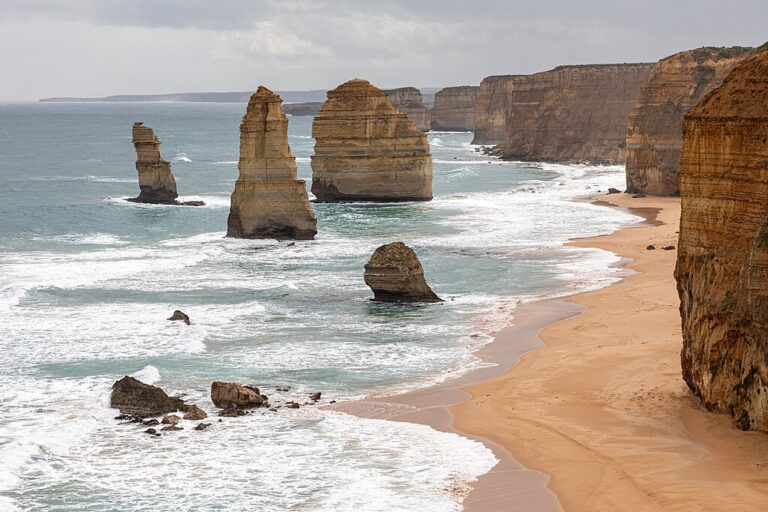

,_Port_Campbell_National_Park,_Twelve_Apostles_--_2019_--_0930.jpg)