Home Blog Page 4

Two Poems by Lenora Hay

These poems are part of the special section, New Poems of U.S. History, reflecting on the 250th anniversary of the Declaration of Independence selected by editors Carolivia Herron, Summer Tate, and Robert Bettmann. You can read more about the section on the Day Eight website here.

Wong Kim Ark 1895

Wong Kim Ark, though born in the US, was refused re-entry after an 1895 trip to China. His birthright citizenship questioned, he was detained with no charges. The lawsuit was settled in 1898.

I float lonely in San Francisco Bay, this giant bowl
sloshing with passing steamships and fishing boats,
almost in view of Sacramento Street, my birthplace.

I’m jammed in steerage, forced to sway and bump night and day
with the restless waves. Without a life preserver,
I’ll drown if I jump overboard.

Customs officers collude with sea captains,
move me from ship to ship
like a bundle of silk or spices misplaced in transit.

detained with no charges

Three witnesses swear to my certificate of travel
and return, as required, with my photograph
stamped and dated.

In daydreams I escape and fly with the power of wind and waves
to China, my new wife. Bow to my parents who returned
after many years to our village in China.

detained with no charges

Officials leave me dangling
between countries.
They see a queue
hanging down my back,
the magua I wear,
my alien face.

detained with no charges

19th Century Chinese Immigrants Speak

We drive spikes in railroad ties across the West,
you hammer us with low wages.

We scale the Sierra Nevada Mountains
carve fifteen tunnels for your railroad
but you make us buy our own food and supplies.

Excluded at the Promontory Point celebration
our faces are cut out of photos. We, the Silent Spikes,
make no speeches.

We feed your workers throughout the West—
new flavors for miners jealous of our efforts.

In steaming laundries we soak, bleach, scrub,
wring out and press your clothing.

From small stores we sell spices, teas, cloth—
the porcelain you desire—

but it is not enough to live in your neighborhoods,
learn in your schools. It is not enough

to keep vicious cartoons off the pages of local papers:
yellow terror,
coolies,
ching chong,
chink.

Nothing is enough to permit our mothers,
daughters, wives to join us in the promised land,

rebuild our families. You believe they carry disease and immorality,
will stain America. So we live lonely.

Nothing is enough for you to offer
us an America that is home.
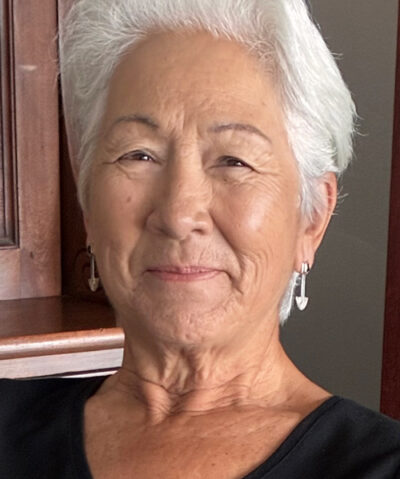
Lennie Hay is a 2019 MFA graduate of Spalding University, Louisville, KY.
She earned her undergraduate degree at the University of Minnesota, and
masters and doctorate degrees from the University of Louisville. She grew
up in the Midwest between two cultures—Chinese immigrants and German
Ukrainian farmers. A former educator, she’s lived in the Louisville area for
over 50 years and now lives near the water in Southern Indiana and in
Florida. She draws energy for her poetry from her family’s history, the
natural world, visual art, food, and music. Lennie has been published in
journals such as the Louisville Review, Literary Accents, Heartland
Review, the Shanghai Literary Review and others, as well as in three
anthologies. Her book Lost in America was published in 2024 by
Broadstone Books. She has a new book, Feeding the Dead, forthcoming in
June 2026.

Featured image Almonroth, CC BY-SA 3.0, via Wikimedia Commons
Three Poems by Jennifer Helgeson

These poems are part of the special section, New Poems of U.S. History, reflecting on the 250th anniversary of the Declaration of Independence selected by editors Carolivia Herron, Summer Tate, and Robert Bettmann. You can read more about the section on the Day Eight website here.

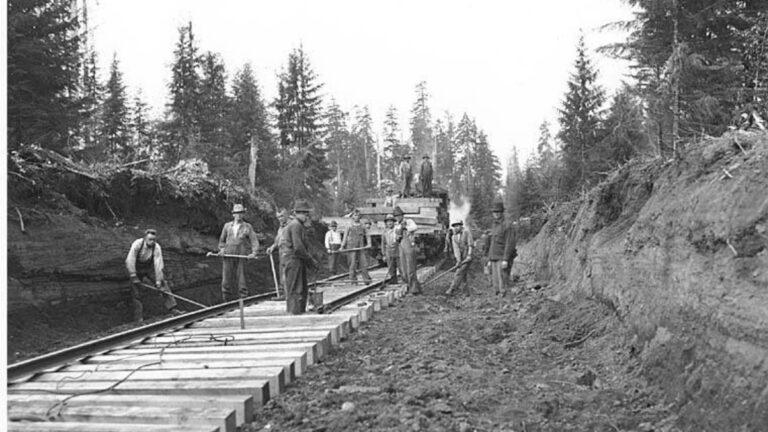
Chinese Railroad Worker, Sierra Nevada, 1867

We were called hands.
As if we were not also
backs, lungs, names carried across oceans.
The mountain did not welcome us.
It held its snow like a warning,
its granite like refusal.
We carved through it anyway—
powder, fuse, breath held
between heartbeat and explosion.
They say the railroad binds the country.
They do not say
how many bones were laid beneath the ties,
how silence travels faster than trains.
We struck once—
did you know that?—
laid down our tools,
our hunger louder than dynamite.
For a moment,
the line stopped.
For a moment,
we were more than labor.
Then the work resumed,
as history prefers.
Still—
when the train passes,
listen:
in the rhythm,
there is a second pulse.

Zitkála-Šá, Boarding School, 1890s

They cut my hair.
It fell
like a language I could not retrieve.
The scissors spoke
a doctrine of order,
of sameness dressed as salvation.
I learned their hymns,
their letters,
the way silence is rewarded.
But inside,
my mother’s voice remained—
a low drum,
refusing translation.
They called it education.
I called it forgetting under supervision.
Still,
I gathered what I could:
stories hidden in margins,
songs folded into breath.
I wrote
so the words would not vanish,
so the child they renamed
would answer to herself.
America is a schoolroom
that does not always know
what it erases.
But listen—
the names return.
They always return.

Selma to Montgomery, March 1965 — Bridge

The bridge remembers weight.
Not just footsteps,
but the decision to continue
after the first blow.
We walked knowing
the road was already written against us,
its asphalt a thin argument.
Tear gas blooms like a false spring.
Horses, batons, the grammar of force—
and still,
we moved forward,
each step a refusal
to remain a footnote.
You can measure distance in miles,
but not in courage.
You can count the marchers,
but not the generations
gathered in their stride.
On the far side,
nothing was finished.
Freedom is not a crossing,
but a practice.
Still—
that day,
the nation narrowed
to a span of steel and will,
and we became
the line
history could not step around.

Jennifer Freya Helgeson’s writing explores themes of memory, loss, nature, and human resilience. She holds a PhD in Environmental and Developmental Economics and has authored several peer-reviewed publications, co-edited textbooks, and published in several media outlets. Her poetry has recently appeared in “Tension Literary,” “Pacific Review,” “The Woodside Review,” “Plants and Poetry Journal,” “Two Thirds North,” and other anthologies. She enjoys gardening, dancing, experimenting in the kitchen, and spending meaningful time with her dog, close friends, and family.

Featured image Clark Kinsey, Public domain, via Wikimedia Commons

Dangerous Moonlight by Edward Baranosky

This poem is part of the special section, New Poems of U.S. History, reflecting on the 250th anniversary of the Declaration of Independence selected by editors Carolivia Herron, Summer Tate, and Robert Bettmann. You can read more about the section on the Day Eight website here.

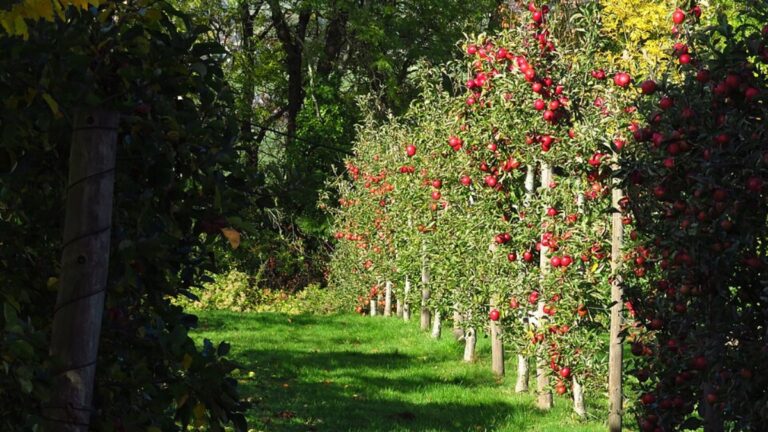
And swayed the russet moon
Hanging between the rim of the hill
And the twinkling boughs of the apple orchard,
You walked the shore in thought.

– Edgar Lee Masters

Bandits at three o’clock!
Explosive charges released
Thump into the gravity well
The target perimeter lit by arc lamps
Punctuated by signal flares and tracers
Brighter than a flood-tide noon.
Mayday…Mayday…Mayday…
Bail…Bail…Bail…

With machine gun fire out of tune
And swaying the russet moon,

Plummeting through the low clouds
Formed with spiraling flak
Toward bodies of steel, too soon
To wheel into the ground,
The only sound the insistent
Call of an owl, still
Testing its occult voice
Within the clamor of the ravens
Concealed in the old mill
Hanging between the rim of the hill

The skimming bombers scream
Above the quiet tides.
No runway…Clearing approach…
Mayday, Do you read? Mayday…
Last Position? Ditching…
Bearing hard to starboard.
Do you read? Mayday, Do you read?

Brushing the treetops, the engines
Silently running, stalled toward
The twinkling boughs of the apple orchard.

Only the hiss of escaping pressure
And the small fires
Crackle with the pull
Of nightingales
Taunting the dawn,
Laughing among shards of hot
Metal. You are still unaware
Of the dangerous moonlight
Exposing your shadowed spot,
Yet you walk the shore in thought.

Edward Baranosky’s work emphasizes the ever-changing moments of the sea. As a poet-artist he crosses the channels and pathways between the visual and the textual. Published in Eastern Structures, Haiku Avenue, Lynx Journal, Northern New England Review, the Mid-Atlantic Review, Crossing Lines, Comstock Review among others. At 79, he is still emerging. He currently lives in Toronto and his website is: https://painterpoet.weebly.com.

Featured image Apple orchard off Kymin Rd, Monmouth by Colin Park, CC BY-SA 2.0, via Wikimedia Commons

American Blues by Abbie Mulvihill

This poem is part of the special section, New Poems of U.S. History, reflecting on the 250th anniversary of the Declaration of Independence selected by editors Carolivia Herron, Summer Tate, and Robert Bettmann. You can read more about the section on the Day Eight website here.

There were always two true Blues—
both, first cousins to our Grami.

Both, enlisted in World War II,
but only one returned.

Captain Blueford Daniel survived
The Bataan Death March—

the torture, illness, starvation.
Watching beheadings. He survived

two and a half years, transferring
between POW camps. He survived

Cabanatuan. If he’d been left,
he could have been liberated

three months after being moved
from Davao to the Arisan Maru.

On October 11, 1944, over 1780 troops
boarded the hell ship. Blue survived

in a hold that reached a sweltering 120º
without water, standing room only, and

overflowing oil cans of dysentery waste.
He survived as thirteen days passed. Then,

the USS Shark sub torpedoed the Arisan Maru
with Blue and sunk them. Some men,

maybe Blue, escaped the hold and swam
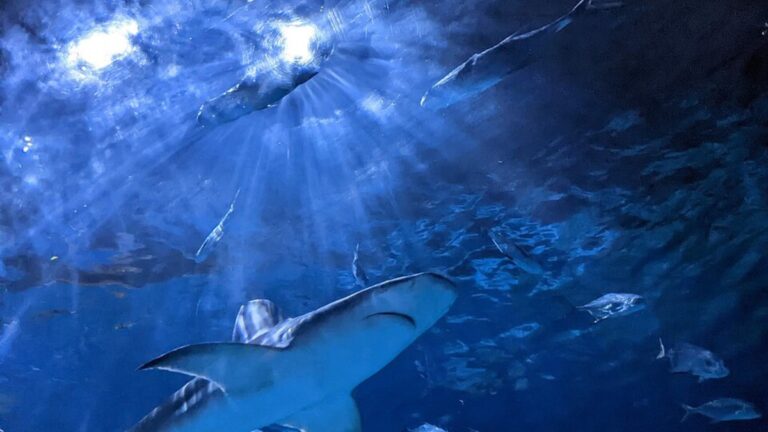
with sharks to reach the Japanese destroyers.

True to their name, they pulled away
leaving sick men to struggle to survive.

More than 1770 POWs died. Blue, like
them, and everyone on the Shark submarine,

sunk, drowned, and disappeared
from America, for America, forever.

Abbie Mulvihill is a recently retired government information professional living in the Washington, DC area. Her poems have appeared in Hamilton Stone Review, The Best American Poetry blog’s “Pick of the Week,” Beltway Poetry Quarterly, Anacapa Review, Innisfree Poetry Journal, the Capital Love (WWPH, 2026) and North Coast Voices 2025 (MSRPC, 2026) anthologies, and other publications. Additionally, a poem of Abbie’s will appear in the forthcoming Women Writers Anthology (1455 Books, 2026).

Featured image Royian, CC BY-SA 4.0, via Wikimedia Commons

The Midwest of the Mind by Lynn Gilbert

These poems are part of the special section, New Poems of U.S. History, reflecting on the 250th anniversary of the Declaration of Independence selected by editors Carolivia Herron, Summer Tate, and Robert Bettmann. You can read more about the section on the Day Eight website here.

I read that in Ohio, my native state, only 73%
think they live in the Midwest. Where
on earth do the rest think they are? It must be
that the Northeast longs for New England,

with its white, steepled churches
and calm town greens; it welcomed
settlers from Connecticut to the new Territory
that became the original, the authentic

Midwest: Ohio, Indiana, Michigan,
Illinois, Wisconsin, and a chunk
of Minnesota, east of the Great River.
Southeastern Ohio feels Appalachian

and, unlike in James Wright’s poem,
is trying to escape across the bridge
at Wheeling into West Virginia.
Northwest Ohio, fertile Black Swamp home

of Fallen Timbers that Mad Anthony Wayne
slogged through, remembers its near-war
with Michigan over the border. While
Ohio, the elder, got the boundary it wanted,

its Northwest is sick and tired of
having to run tiled trenches through its fields
to get them drained enough to plant.
In the Southwest, that wants to pack all world’s pork

and boil the rendered lard into soap,
Cincinnati demands its inclined trams back; in a huff,
it’s tempted to take off from its Rome-like Seven Hills
downriver with Huck and Jim, and never return.

If Ohioans can’t show themselves more loyal
than this, I’m going to send them all
to live on the Great Plains until the cold wind
out of Canada blows some sense into them

and they admit that they’re Midwesterners.

Lynn D. Gilbert’s poems, twice nominated for Pushcart Prizes, have appeared in such journals as After Happy Hour Review, Blue Unicorn, carte blanche, The MacGuffin, Ponder Review, Sheepshead Review and Southwestern American Literature. Her poetry volume has been a finalist in the Gerald Cable and Off the Grid Press book contests. A founding editor of Borderlands: Texas Poetry Review, she lives in an Austin suburb and reviews poetry submissions for Third Wednesday journal.

Featured image Dougtone, CC BY-SA 2.0, via Wikimedia Commons