
Home Blog Page 6

Two Poems by Jenna Cipolloni

Quarry

The sun looks higher here by the quarry

Daylight savings a forgotten grumble
for the sleep-deprived days of yestermonth.

The time is truly 6:49, but soon the
biddies and the babies will start winding down in their copy-paste townhouses

architecturally distinct from the rowhomes of the city to which they rarely venture
short of a here-and-there First Friday
and maybe an O’s game.

I’ll be awake for a while now,
investing these savings so I have
more to spare come November.

The Redwoods of New York City

There are many sights to see on this lovely planet.
There are many Jeeps to take on this safari.

In this terrain, where chromosomes are spelled with twigs
and plumbing systems blossom the grandest of edifices

a steel beam erects from cement
its daunting burnished bole dappling the concrete below
for the benefit and enjoyment of the people.
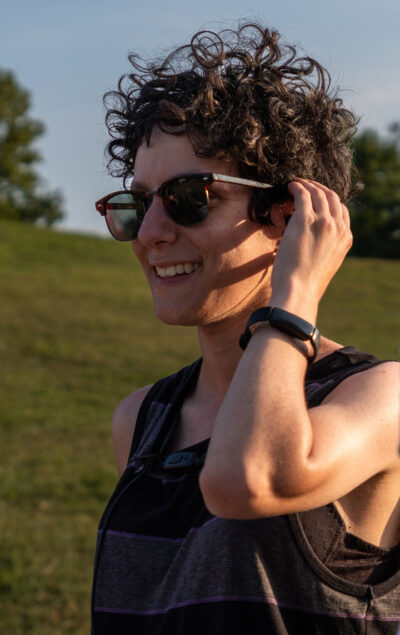
Jenna Cipolloni is a poet and filmmaker who works in Washington, DC and Arlington, VA. Their words have appeared in Gargoyle Magazine, Steel Jackdaw, the 2025 Georgetown University Writing Climate Symposium, and their self-published zine “School Nights,” whose poetry was featured in Gallery 220’s “Whispers of Longing” exhibition in Havre de Grace, MD. In 2024 Jenna was a prelim judge at the Womxn of the World Poetry Slam and served on the committee to select Maryland’s poet laureate. They can be found at open mics across the Mid-Atlantic.

Image: Hollowayvideo, CC0, via Wikimedia Commons

Two Poems by Faith Cotter

0

Beat

An amniotic lake within me
and you, floating

then the deafening silence,
static nothingness where I

expected sound.

For a week I am a shipwreck
not split open on rocky shores
but a vessel sunk
with all its people inside.

Grief is a veil that rustles with the breeze.
My body does not know how to register
death, to let go of decay.

And yet
I cannot think
of you as decay
only as the origin of all things,
cell upon cell built from the sea
or the stars,
depending on who you ask.

And you. I name
for a constellation
so that when I look up I
can find you inked into the sky.

the bone daughter, Resurrected

In a court of greenery
she breathes again
a cape of flowers swaying in time
to her regal step–

whole in her own way,

she is silent now
as she walks through the hillsides
for she is filled with the essence
of living beings:

fluttering wings and baby’s breath,
monarch butterflies that linger
upon the smooth white of her skull.

look now upon this Flower Queen–
chin high, radiant
free
the dust of jangling bones
reborn.

Faith Cotter is originally from Pittsburgh, PA, but now travels the world as a U.S. Foreign Service spouse. She is the recipient of a 2010 Society of Professional Journalists National Mark of Excellence Award, among other regional and local awards for journalism. Her poems have appeared in the Pittsburgh Poetry Journal, Time of Singing magazine, ZO Magazine, the Madwomen in the Attic’s Voices from the Attic anthology, the Mid-Atlantic Review, and the 2025 London Writers’ Salon Writing In Community anthology. She has an MA in Professional Writing from Chatham University, and has lived in London, DC, and now Amman, Jordan.

Image: Taxiarchos228, FAL, via Wikimedia Commons. Author photo by Luz Velasquez

Two Poems by Ori Soltes

0

Late in the Game

We sleep peacefully,
side-by-side,
except, by chance,
when she or I turn outward, to the edge
of our plush and well-shaped bed.

Never inward, it would seem,
and no fuss:
no reaching for each other
—like four-limbed
cephalopods swallowing
the mattress seafloor
that lies between us—

but more like two relaxed
and pale and silent corpses
in the same soft coffin,
completely still, yet breathing,
in steady, rattling rhythms.

Touch has fled:
as in a passioned race
with my emptied imagination
to leave behind our bed,
bereft of all except
my ceiling-staring rumination:

When did our bed become
a pyre without fire,
its heat become the ice
of separate space
with neither spice
nor panting sounds
of mutual desire?

Is this really something new?
Could it be some rough-skinned
interior complexion
redirecting outside from within,
that’s redefined the very nature
of our mutual expectation?


One Day’s Questions

I am too schooled
in all that we have suffered
across the centuries.
My tribal memories
are all too clear:

the horror of this slaughter
and that rape,
the ongoing expulsions
with no escape,
the rarely living without fear.

October 7 was another day
of cruelty too well known.
It seems, since 1945
such ragged, sharply honed
deep slicing of the hive
through flesh and ligament to bone

seemed far away—
until it burst into proximity,
with ugly silent familiarity,
and still—and yet—this time begets
a different afterlife

and quite a new array
of questions, not for them,
and not for God—for us:
the leaders who made such a fuss
of their unmatchable ability

to protect us, all but failed
to stop that wind-swept sailing
ship of murder and of doom:
the leadership that flailed
against responsibility

and chose, instead,
to multiply the dead—
both ours and theirs,
to slay their myriads
into dark infinity:

to slaughter them as if
to bring our murdered siblings back,
and more: to blind us to the sleep
of their intelligence when
once again the sweep

of history across the southern plain
of a state too marked by too much pain
had churned up with it once again
the memories all too surfaced
from within the deep

of our experience of genocides
endured at others’ hands,
as if within the slaughtering of the very land
and its inhabitants by thousands
that vicious sowing might just reap

a memory-laden purpose,
that in the act of slaying
and with it, our own forgetting,
redemption might, somehow, reside.

Ori Z Soltes teaches at Georgetown University across a range of disciplines, from art history and theology to philosophy and political history. His poetry has appeared in a handful of journals, and in several colections. His most recent book of poems are Then and Now: Love Lost and Sometimes Found (Canal Street Books) and The Poppy Poems: My Life As a Dog.

Image: Diego Delso, CC BY-SA 4.0 https://creativecommons.org/licenses/by-sa/4.0, via Wikimedia Commons

Two Poems by Lisa Couturier

0

I Cannot Be Your Quiet

All my years of blustery men and me
wishing they’d stop whistling, cutting me off,
tightening the tessitura of my voice.
I never was a goddamn instrument.
I never was the night of my own streets.
Once, I was pretty. Stood like a groupie
for a boy while he played with his rock band.
Should’ve gone home, made my own bad music.
Hoped the boys would call late from their hot thrones,
as if I ever was some bright princess.
Should’ve called girls. Shouldn’t have waited for
the old shrink to get dressed and see me out.
I watch men spin the world on windlessness,
trapped, now, in twisters of my own silence.

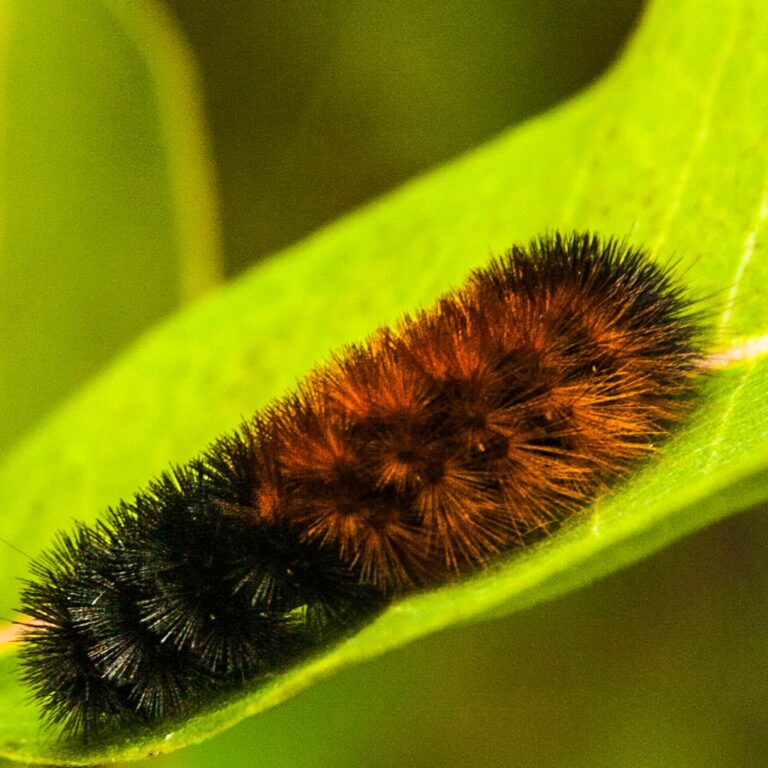
If You Had the Lepidopterous Life of the Woolly Bear Caterpillar, Pyrrharctia Isabella

The mythic life of the woolly bear means
she’s a weaver of weather, a silent
body of storm wandering in her stripes
of black and orange, which is to say she’s
starlessness and rust, ink against amber.
When her orange bands grow so very wide—
her apricot, her copper, her curry—
she’ll predict mild winters of persimmon
sunsets that might make you smile with who you
could become, the coral light a salve for
your somber body shadowed with your past
that lingers as you cross the roads of your
life like woolly bear, who never knew she’d
grow wings, be Isabella, of the flame.

A 2022 finalist for the Annie Dillard Award in Creative Nonfiction and a Pushcart Prize winner for her essay “Dark Horse,” Lisa Couturier is author of the collection of essays, The Hopes of Snakes (Beacon), and the chapbook Animals / Bodies (Finishing Line), winner of a Jean Pedrick Chapbook Prize from the New England Poetry Club. She is a notable essayist in Best American Essays, 2004, 2006, 2011. A writer with the Sowell Family Collection in Literature, Community and the Natural World, Couturier is currently at work on a manuscript about Parkinson’s disease. She lives in Maryland, on Montgomery County’s acclaimed Agricultural Reserve, where she keeps her five horses, where a family of crows occasionally brings her gifts, and where a pair of black vultures visit her each summer.

Image: Paul VanDerWerf from Brunswick, Maine, USA, CC BY 2.0 https://creativecommons.org/licenses/by/2.0, via Wikimedia Commons

Folklore by Martheaus Perkins

0

Folklore

Y’all heard the one where the Africans flew
off the plantation?

Ever bed-and-breakfast at Chesapeake Bay, ghost
walk Greenbriar Swamp to hear tale of “Big Liz,”
the “heavyset” woman whose neck ate a sword
after her slaver made her stir inside his jewelry chest?

Did Gran warn you about letting Boo Hags ride?
They’ll deglove your skin unless you paint
your doorframe haint blue, wear your husk
on a D.C. “Boos and Booze” pub crawl.

Any toothaches signed by the Candyman?
Y’all must know the Candyman. Fooled
with a blonde, then a lynch mob sawed his arm off.
Dunked his stump in honeycomb.

Have you and your sisters kept the roots
High John the Conqueror left?

Did you hide the trick bag Anansi gave us
beneath the beds of your tongues?

Martheaus Perkins is a first-generation college graduate and the son of a single Black mother. He is the author of The Grace of Black Mothers, a debut poetry collection through Trio House Press. He lives and teaches in Fairfax, VA. His name is a collection of each woman who helped raise him: “Mar-” was his grandmother, “-Thea-” is his mother’s name, and “-us” represents his two aunties who created the name.

Image: Pickering, E. H., creator, Public domain, via Wikimedia Commons