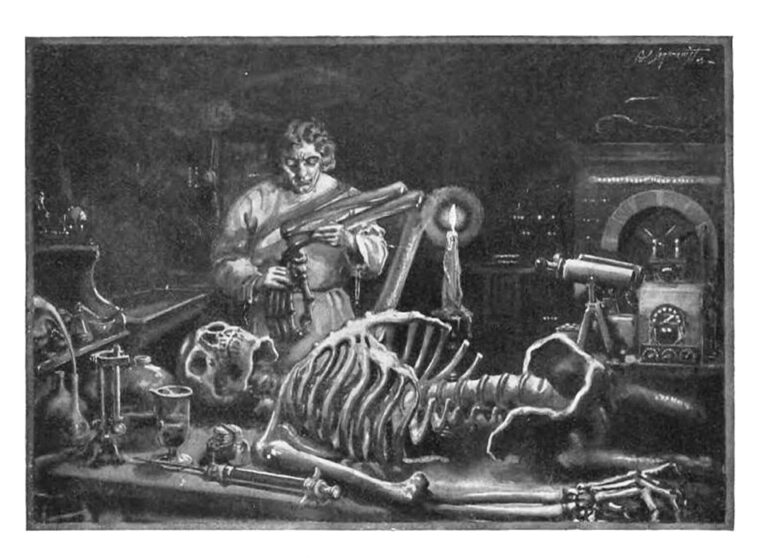
“I doubted at first whether I should attempt the creation of a being like myself, or one of simpler organization; but my imagination was too much exalted by my first success to permit me to doubt of my ability to give life to an animal as complex and wonderful as man.” – Mary Wollstonecraft Shelley, Frankenstein
Upon confrontation, my father told me that I had been an interesting experiment–
as if he were creator Himself, as if
he had personally moved the vials, the petri dishes, ushering a haploid waltz while draped in white.
Great creation, what innovation; I fear the sterile beam of laboratory light was my first definition of warmth.
When I first sprouted from the Earth, did I yearn for other arms to catch me? Did I cry, filling that great, gray room?
Holding me, naming me, feeling the heartbeat he had formed, how could a father not see how I would one day run blindfolded through woods, hungering for embrace?
How could flesh and bone, brought to rhythm by lucid electricity, be anything but a miracle?
Volar
To be young and in love is to balance certainty and uncertainty between your fingers on a windy day.
Watching their bodies shudder, it is to watch the future splayed out before you like an open palm–
for your eyes to follow only one weathered, epithelial valley while glossing over each diverging path.
Selen Frantz is an urban planner from Detroit and is currently the William T. Battrick Poetry Fellow at Oberlin College. Her work has appeared in Lucky Jefferson, BarBar,Meniscus, Prime Number Magazine, ellipsis, and elsewhere.
Featured image: Mary Shelley, Public domain, via Wikimedia Commons.
When a kiss is more than goodbye to coffee and the office morning the tender parting of husband and wife, when the cell that awaits you calls goodbye in the moment’s farewell and the island which resents your civilian discomfort, your brotherless disdain, then you stop for a moment and with young uniformed permission sit in silence where you wrote and thought through the thickness of animated brute voices which cluck chuckle or choke wordless as you rise fastened in thought and kiss your wife more than goodbye.
Piano Music
like a slight chill that touches warmth; my mind’s eye on your smooth mouth.
like a small breath that shapes the absurd flicker of candle light; dreams of an evening’s youth.
like a little girl with soft feet; fingers dancing on steep, black keys.
Born in Canada of Ukrainian descent, Ihor Pidhainy lives and works in the American South, where he teaches. His poetry has appeared in over two dozen journals including Washington Square Review, In Parentheses, The Louisville Review & Fleur-de-Lis Press, and Merion West Poetry. Follow him at pidhainyihor (Instagram) and ihor Pidhainy’s writings (Facebook).
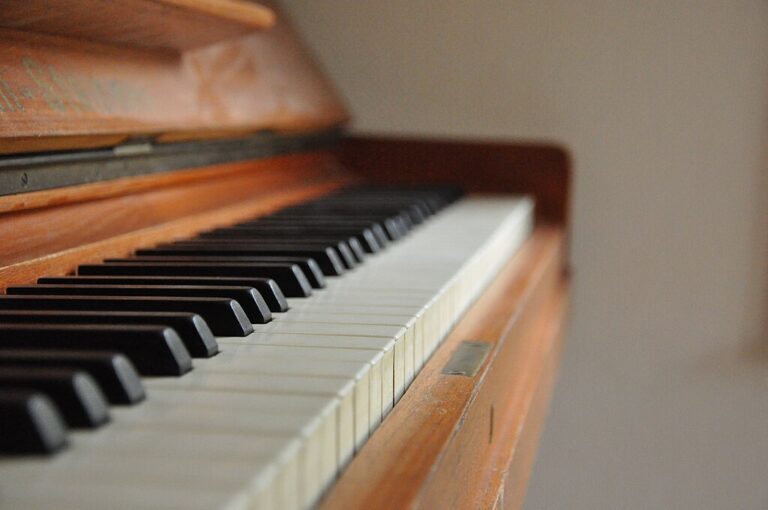
Featured image in this post is “Piano Keys Close Up,” by Puikstekend, CC BY-SA 4.0 <https://creativecommons.org/licenses/by-sa/4.0>, via Wikimedia Commons
I We will shake our bodies like animals abandoned in the forest, and the moon will sing lullabies for the dead; the dead who were mine and did not know how to die peaceful deaths; and the hour will come, and it will carry away in colorful shrouds the faces of the barbarians; we will stand tall but at what cost? at what cost will we survive their cruelty? If the poem with which I drive my hand into this land does not serve to withstand their assaults then it is not a poem. If the poem with which you drive your hand into this land does not withstand, rewrite it. If the poem is there between its jaws, the earth will rise again; between its jaws, executioners and traitors will die.
II We must seek the country that lies between the ledges, even if what we find is not the same.
We are already in the final lines and we have not even honored the poem that roars behind the mountains. Listen to me well: Beware of the poem that emerges from its hidden zone, it will come like tyrants fall: without warning and eager to kill.
The Beasts
I believe our differences relate to our temperament.
There are certain registers that you don’t understand.
Between your windows I see the object but not my eyes working together calibrating the angles.
I release my words and I know what I say but not what you receive,
and your silence always with marks of candles on the floor, where we crafted the rites thinking —with fear of saying it out loud— that the gods had been generous with us.
And among so many spaces we remain absolved of myths and cruelties.
What have I done with you except discuss the girl I was?
And there were days of immense awakenings where, amid misfortunes I shaped the poem, that alchemy that survives the rain, the steps, the revolutions.
I have built others but none exercises the silence like you do, none holds in their wombs the beasts that saw me grow.
Not us
To Jeanette Vizguerra
If we cannot make poetry a cry let us clench our fists and search beneath the earth for the mirror that shows us the most fleeting truth; we are all the same, connected by tiny threads that never break.
Politics is also to amplify language against the despot. Language, which does not speak for itself but designates others.
Let us name things as they are so that the executioners do not render us mute.
They expected us to bow down before the oppressor, but we poets raised our hands and gathered the daughters of others in our arms.
We come with sharpened tongues, carrying the truth and the word in our pockets.
What do they carry in their mouths of salt?
Others will tremble, not us. Others will fall, not us:
We who exist, demand our own possibility to seek justice not only for the dignity of life, but also for its tears.
Carlota Roby is a human rights attorney graduated from Harvard Law School and co-founder of the Vocales Verticales project. She is also a poet and a cat lover. Originally from Venezuela, she resides in Washington D.C. She has published the poetry collections Las Manos de los Muertos (2013); Suburban Tales (2019); and Lilith (2024). Her poems also appear in the anthology Acaso esta atrocidad es el centro de todo (2015) and in the magazines DAFY, Ámsterdam Sur, and 2025 Latino Book Review. Lilith is now available, published by the Chilean publishing house Editorial Tintapujo, in both English and Spanish.
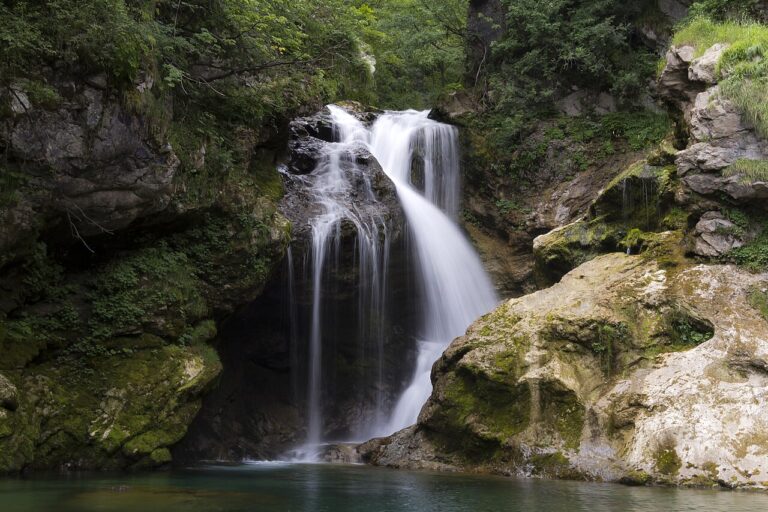
Featured Image: Waterfall, Vintgar Gorge. Slovenia by Luke Price under Creative Commons Attribution 2.0 Generic license.
dawn breaks over dust— jets thunder into Iran Israel’s warning
missiles cross at dusk— sirens bloom in Beersheba Tel Aviv trembles
bunker busters boom— America joins the fray call it degraded
waves of rockets hit— Al Udeid hears the thunder Qatar holds its breath
fragile agreement hours as thin as paper— sirens, then silence
The New 3 Rs
In elementary school, my children learned the three Rs: renew, reuse, recycle.
In today’s federal service, we’ve learned three new Rs: resign, retire, reassign.
Professionals used to fill the halls— 190 names on our org chart, writers, editors, public affairs specialists, plans etched into calendars, ideas passed like notes in class.
Just 23 remain, learning new scripts, left without leaders to map the road ahead.
I propose the next three Rs: reverse, recall, restore.
How To Kill in 12 Easy Steps
Fitting, we agree, two months into our training, nine more months to go, that the first busy work they give us to ensure we are “productive” is to kill off records.
Thousands of death reports from funeral directors scanned in for us to input.
An easy, 12-page guide on how to kill.
First, they make us load bullets for OPM once a week.
Now, they want us to pull the trigger.
Author Owen Givens is a federal worker who has been a civil servant for more than 30 years.
We hide behind glass— thin, trembling breath, shattered silence, each crack a raw wound, a secret bleeding light. Truth fractures us— yet in jagged breaks, strength flickers, trembling, not a mask, but a mirror. To break is to be seen; to be seen is to live— not despite the cracks— because the cracks are us.
Neon Revival
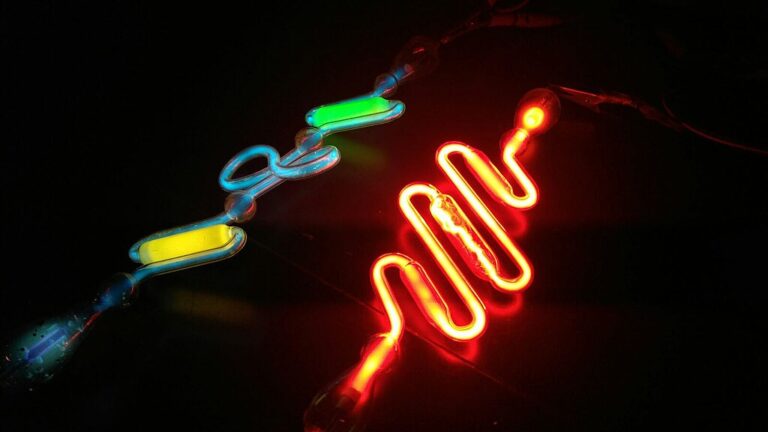
The city hums— fractured prayers pulse neon, veins of cold electric light. Static swallows sound, but beneath noise— a flare relentless, alive. Hope blazes fierce, a wildfire waiting, igniting dark streets, guiding lost souls home on waves of flickering fire.
Joshua Walker, known as The Last Bard, is a freelance poet and writer based in Oklahoma City. His work blends mythology, mental health, and modern isolation, and has appeared in Potomac Review, Southern Florida Poetry Journal, Solarpunk Magazine, Libre, Kelp Review, and others. In 2025, he was nominated for both a Pushcart Prize and a Best Microfiction prize. Walker’s poetry bridges ancient tradition and contemporary struggle, confronting beauty and despair with equal ferocity.
Featured Image: Tubos geisler by Ana sol lara under Creative Commons Attribution 4.0 International license.