Time stops in a room where flowers bloom on walls and a cardinal sits on a branch with leaves reddening but never fall. I wonder about silver trees through the window until I grow silver myself. The one comfort: any chaff hiding in my body like a trapped animal will soon be set free.
Hours stack up. It’s like a security line rushing to a stand-still. Nurses say Soon though I know it’s a sweet white lie. Before the peach fuzz of dawn rises, I want to fall into a bed like a feather falls from a pillow.
Hope Wears a Cowboy Hat
My son’s face is all axes and knives because he finds out he has cancer, not from the doctor, but by the tech who asks if he wants to be part of a chemo study. I feel like a bullet is aimed at his heart that only hope can stop.
Hope is hard to hang onto. It’s like trying to remember last night’s dream. To get my arms around it, I’ll have to give it time to grow muscle, but waiting is tough on the body. Stomach acid has no shut-off valve, skin wets itself and dreams stick a finger in your eye.
Before the moon finds reasons to lose its shine, I make peace in my tug-of-war with hope. It’s time for Eric to put on his second-hand, stringy cowboy hat and play some cool jazz.
Popsicle Dream
…but behind all your stories is always your mother’s story, because hers is where yours begins.—Mitch Albom
Novenas to Our Mother of Perpetual Help work to stare down the shadow that follows her as she carries mop and bucket up and down stairs, into the kitchen where bushes of peaches, plums, pears wait to be canned for children whose stomachs are filled with hunger. In this world, love keeps itself in the dark, though the trace of a caress on the shoulder stirs the air if highballs don’t rough it up.
Does she ever have a popsicle dream where maid turns into princess? With parted lips and half-shut eyes, she dances under the moon until the sky torches itself. Gaudy. Red, like the skirt she swirls.
Mary Sesso is a retired nurse who’s a member of the Writer’s Center in Bethesda, Md and active in 3 writing groups. She volunteers at the National Children’s Center where she sits on the Human Rights Committee. Her latest work has appeared in Emerge Literary Journal, Cardinal Sins, Loch Raven’s Review and One Art. Her second chapbook, “Her Mother’s Hair Plays With Fire,” was published in 2022.
The two-member Council of Double Breasted Cormorants roosting on either end of the cross bar of a defunct clothesline in the middle of a lake will ascertain your 1) eligibility and 2) ability to temporarily perch between them, determined by their sole and utmost discretion regarding degrees of spatial regulations but also in conjunction with solar and atmospheric variants beyond their control as well.
Their decision is imminent, forthcoming, coming soon and irrevocably viable. Once having landed on above mentioned crossbar (see above) you shall be received at once and in a restrained, however celebratory fashion, swaddled in a blanket of black wings. Once dried and shortly thereafter, you will be expeditiously dispatched to circle once again.
Why My Husband Turns Off The Ignition
I run in for birdseed past the Goldfish past the Gatorade past the elbow macaroni and am stilled, instead, by
a disheveled man, standing by a wall of flowers, shuckling on the bent backs of broken shoes, holding a bear claw in a clam shell under large, glittered letters declaring Poetry In Bloom.
He shuckles, I idle.
I idle and wonder what longing renders us immobile?
Note: “Shuckling “is from the Yiddish word meaning “to shake” referring to the ritual swaying of worshippers during Jewish prayer.
Bardo
Violets dreamed under thirsty boughs, goldfinches dipped between thistles and beak-deep in the anus of a dead raccoon a vulture had dinner. A cricket longed for a lover.
Then a truck came round, struck the bird and smeared it like jam on burnt toast to the other side, leaving the ring-tailed carcass untroubled on the right, and one splayed wing, erect, on the left.
In its wake, between the vulture’s last hiss and the miracle of maggot breath born from coon carrion, a man in a car and a bug on a bone sit idling.
Once a vulture’s last supper, once road-kill, once a raccoon crossing the street, now this.
The bug blinks. The car re-aligns, straddles the fly-blown meat; moves on. In the rear-view mirror the business of gravid flies reconvene; carry on. Violets awaken, finches fill up and a cricket lights a cigarette.
Liza Boyce Linder is a poet living in College Park, MD.
In dream, my father witnessed the ceremonial conclusion of my apprentice scholar period— when my name was summoned into awakening— accepts my absence from the quorum of gents, recognizes my alternative Sabbath days, beams with pride at my harvest, recites selections from the lyrics, even the bawdy ones, encourages me to go a courting, to welcome Prince Charming— with his as yet undefined salt-and-pepper-beard, now astride a recalcitrant mule, now walking along a desolate country road, now bent over a baroque farce winking in fuchsia omniscience— delights in my flavors, the ways of me, my rare bird perched against an aghast sunset on the fire escape ledge.
In dream, my mother survived the surge of sugar, the waves of discord crashing both upstairs and down, the scarcity of bloom and caress, the long-night interlude rigid in the bed of turbulence, aghast against the adamant prohibitions, the flight from Sabbath feast somehow conjured onto wan cloth, the anguish over the nearly born, the invasion of tumor, the varicose veins, all the lost years, the heart not shuttered, but worn down.
In dream, we are a family on rain-soaked terra firma. Zevulun wants to know how I resolved a thorny translation matter. I inquire after his mastery of the sacred slang blended in the kosher dairy fast-foodery. Rinah beckons me, not for a candlelit Sabbath, but for leftover potato kugel and chocolate peanut butter squares and almond milk, better that we may banter without partition, without veil, without ritual, reunite for intermezzo, however occasional, put down our walking sticks to gather bluebells and buttercups and black-eyes Susan’s, to reminisce with fondness on (imagined) Augusts by the lake of long ago.
Upon awakening, I handle the items on this impossible (dirty) laundry list— these dreams— with tenderness, however wary; with regard, however prickly. I place them gingerly in the curio cabinet behind the kitchen table. There, they sparkle in the fury of the obscure sun of noonday, gleam in the glow of moon and stars and comets. And yes, in the blue of constellations, too. From time to time, in their relentless ingenuity, in their vinegar resolve, they escape the locked doors— all the futile precautions— and pirouette and skip about my garret quarters. Somehow, I manage to capture them, though they have darted from my grip, and return them to their place of Sabbath unrest.
Siesta’s Sustenance
There’s no narrative arc here. Instead, a framed vertical oval. All that they taught us in literature class and
which I wrote down in my diligent if ungainly penmanship in narrow-lined blue books had been imbibed
not in vain, but for another day. Another hour. Other rooms.
Not the parlor, when tea is served on flower-bordered porcelain to catch the latest gossip, and when newspapers crinkle in leisure.
Especially the book review section, often featuring Papa’s judicious, occasionally enthusiastic, offerings.
Although, to locate the arc, we really wouldn’t have to look far. We could always discuss the marriages, births, marriages, deaths…
stockpiled in Papa’s lair all the way at the end of the hall, mull the handwriting spidery over the pages somehow salvaged in exile.
We could consider the various certificates, charts, trees, and tomes that led our family to this place of possibility at this moment in time.
But here, in these “front” rooms, the denouement is missing; the clash, the conflict, the climax, call it what you will,
if it exists, is utterly invisible. Happens outside the frame, off the canvas.
No shouts here. No broken plates. Or broken glass.
All I see are days delicate to discover. The intricacy of clues that might be understood years later as ebbs and flows.
Mama passes on her culinary “secrets” to the neighborhood girls whose mothers never mention her wish that I too had been born one.
Mama never teaches me these recipes, despite that wish, although I eavesdropped from the gossamer of her closet.
And my nose remembers. Tagine. Paella. Shakshouka. Goulash. The mélange that was Mama’s “Mangia!”
They say the path to a man’s heart is through his stomach. Only Papa barely registers Mama’s culinary alchemy;
so focused is he on her voice, on the smoke and sway and swing of her.
The mezuzah wishes he would kiss it with such hunger. Is Mama cooking for the neighborhood girls?
The breeze ruffles the lace curtains, vertical lines interrupted by an idea of daisies that failed to interrupt the sun,
as Mama and Papa revel in their so-called “siesta.”
Omar calls to me. Without his ever speaking,
without a pebble clinking on my bedroom window, I know when he is waiting.
The pigeons make sure to deliver the unwritten message. I descend to snuggle with Omar, to his body elongated,
his nipples breathtaking in the shadows, in the cacophony of secrecy, to join him in a so-called “siesta” of our own.
Mirage
And I am over the moon with this new sun that peers warily then evenly in response to September rain
into which the gods had led me following words exchanged and which emblazoned the meadows with a violet hitherto unseen
I did not expect this light did not seek it in fact fled from it
craving the forgiveness of shadow and stone wall
across which moss spread and ivy clung threatening to choke
only here now is this frolic across hearth
an embrace of harvest amassed from the inferno of Hades’ dominion
an agility of beam meandering and knitting
so that once gray and brown is now fleetingly sparkle
in this scrounged room this interval pilfered
for lo seven years I must not tarry in the damp and chill
and here by this platform startlingly bejeweled
wrought of centuries’ patience and sudden sweat and thwack
with its roses daubed by Gran’s then-steady hand
and exhortations to humility overhead and columns supple alongside
all that I had asked for which I presumed to be miniscule
is brought forth from mineral is conferred
and those words exchanged though not retracted nor redeemed
are backgrounded
and there is your touch upon the stoop that is my shoulder
not leading me but being with me in this room transformed into chamber
and there can now be no question of the chamber’s aftermath
of diplomacy that may stumble beyond this hearth dance
and I am over the moon with this old sun
And I am suffused in smolder in the foresight of that September rain
Yermiyahu Ahron Taub is a poet, writer, and translator of Yiddish literature. He is the author of two books of fiction and six volumes of poetry, including A Mouse Among Tottering Skyscrapers: Selected Yiddish Poems (2017). His recent translations from the Yiddish include Dineh: An Autobiographical Novel (2022) by Ida Maze and Blessed Hands: Stories (2023) by Frume Halpern. Please visit his website. Taub lives in Washington, D.C.
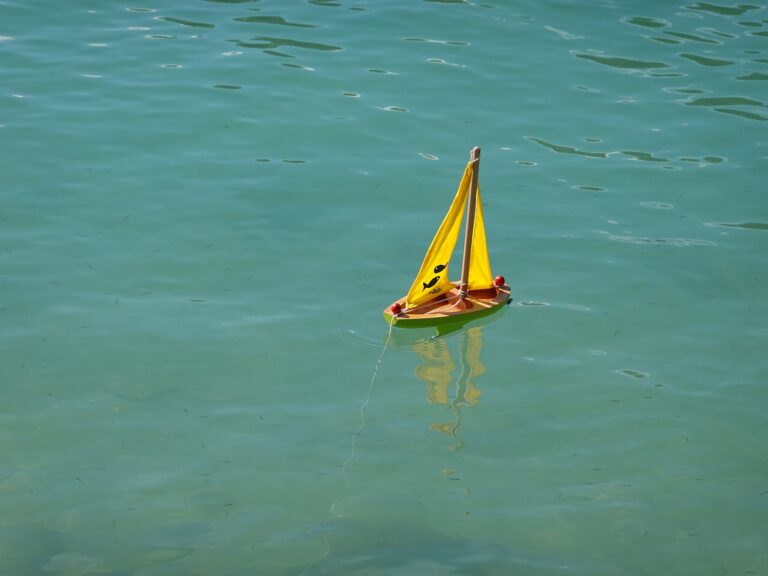
We wanted perfect knowledge. We went to the trouble of making a perfectly shrunken ship, but the water. We can’t make it smaller. Difficult molecule, bigger when hotter but bigger when cold, most tightly configured at about four degrees and like anything, consisting near entirely of nothing.
Jacquelyn Bengfort was born in North Dakota and holds an MFA from the Iowa Writers’ Workshop, an MPhil from the University of Oxford, where she was a Rhodes Scholar, and a B.S. from the U.S. Naval Academy. Her creative work has been supported by a Rona Jaffe Graduate Fellowship, three individual artist grants from the DC Commission on the Arts and Humanities, and a scholarship from the Martha’s Vineyard Institute of Creative Writing. Jacquelyn is the author of the Ghost City Press micro-chapbooks Navy News Service and Suitable for All Methods of Communication. After fourteen (non-consecutive) years in DC, Maryland, and Virginia, she set off for Iowa City, her current residence.
The Gothic Revival1
sky cycled light, dark
a bright tide of watercolor filled and
emptied itself
across the horizon black ink spilled and
dilute amber and gold
winters dried and heaved the air
potent silence expanded forever
____________________________________________________________________________
2
the sunken green roof of childhood preserved half its luster
I exited the car and shut the door, my eyes studying its texture
my son kicked a rock on the curb, the way he looked up at me
reminded me of my younger brother, the same tilted wince
"You lived here?" he asked aghast, but knowing the answer
I breathed slowly and stared into the sullied windows
searching for any spare sign my life has not run out
_____________________________________________________________________________
3
the truth
is far worse
than anything
we could imagine
the sublime
is a heartless
cold death
appearances are reality
_____________________________________________________________________________
4
unseen seeds lay dormant waiting to meld with the earth
a gravid world of activity swollen with blind desire
sedges, rushes, wildflowers shake serenely, or hold still
rays cut the leaves and branches, moss spreads beneath
roots reach deep, coiling, vining, twisting, interlacing below
water in sap out
and the sky spread scattered sunlight since the beginning of time
while I
am trapped
in this body
Bill Kurz is a local writer living in Maryland. He writes at the crucible of North American and South American fiction. You can find more of his work in Sound and Fury, Remington Review, and PLOS One.
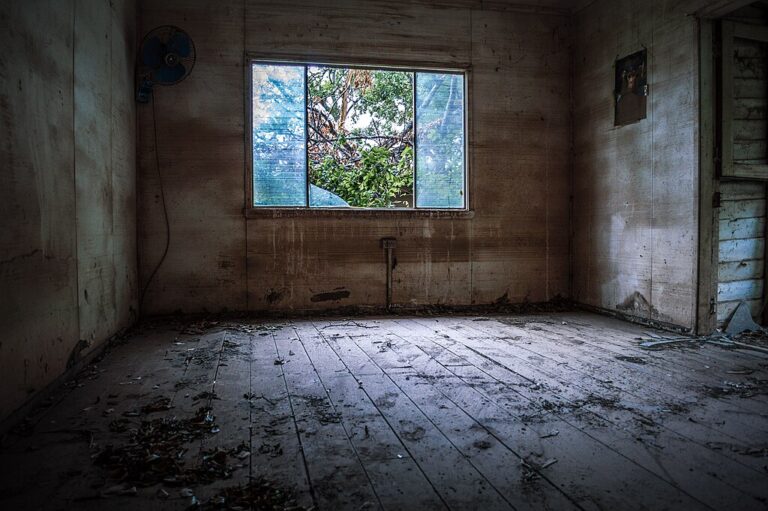
Image: Mudna House – abandoned house in Brisbane by darkday under the Creative Commons Attribution 2.0 Generic license via Wikimedia Commons.