Home Blog Page 59

Prince Harry’s Spare re-rehashes the past by Maanasi Chintamani

0

This article was a finalist in the 2023 DC College Student Arts Journalism Competition. It was originally published in the Georgetown Voice.

Oprah. 60 Minutes. The Late Show. A six-part docuseries. In numerous recent public appearances, Prince Harry and Meghan, the Duchess of Sussex, have defended their controversial exit from the British royal family and detailed the racist vitriol and scrutiny perpetrated by the press. Lately, this endless media campaign has inched into overexposure—repetitive at best and cash-grabby at worst, even for the Sussexes’ staunchest supporters.

Of course, it’s important to expose the racism Meghan has experienced, particularly from the media. From online bigotry to name-calling in the tabloids and even credible threats to their personal security, the couple has certainly been through the wringer since they started dating in 2016. It’s also understandable that they’d wish to correct misconstrued narratives and debunk the blatantly false stories that are published daily, often with the approval of the royal family. And yet, one has to wonder, how many times can Harry and Meghan possibly re explain the same events while avoiding a broader conversation about racism and the monarchy?

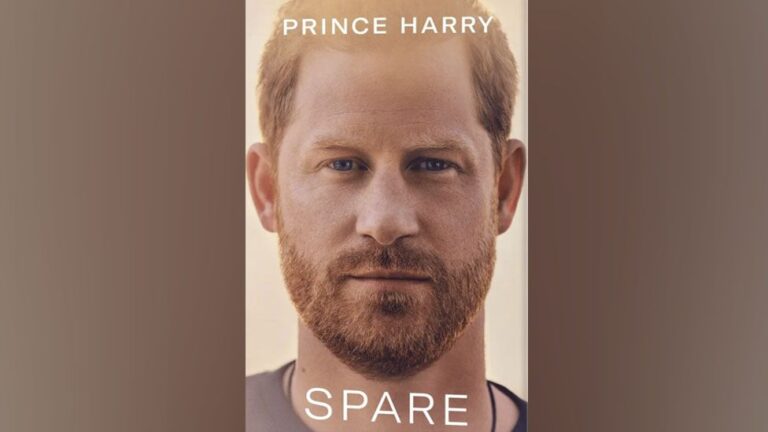
With his new memoir Spare, Harry takes another sure-to-be-lucrative step into the spotlight. The book examines his childhood and early adulthood, including his time in the military. Harry poignantly reflects on his tumultuous lifelong journey with grief, family, and duty. But Spare concludes with another rehashing of the Sussexes’ departure from the royal family while offering little new insight or perspective. Despite its strengths, Spare suffers from one fundamental shortcoming: Harry fails to provide a compelling reason for the book’s very existence. Divided into three sections, Spare opens with the death of Harry’s mother, Princess Diana, and introduces a deeply traumatized, emotionally repressed preteen prince. During a post-high school gap year split between a ranch in the Australian Outback and southern African communities devastated by AIDS, Harry finally finds much-needed structure, guidance, and mentorship.

In the book’s second chapter, Harry encounters those same attributes in the military, rising through the ranks during two tours in Afghanistan. Harry’s depictions of war are candid, matter-of-fact, and almost too thorough, from his barebones accommodations in Taliban-occupied regions to a tally of deaths for which he was responsible. His accounts of the gap year and decade in the army demonstrate that, unlike his family, he has experienced the world outside the royal bubble, giving him a distinctive—but still rudimentary—awareness of his privilege.

In addition to this sense of perspective, Harry presents a nuanced look at his personal relationships, unlike the sometimes one-dimensional characterizations in the Sussexes’ prior interviews. Harry is strikingly empathetic toward his father and brother in the early chapters, despite their frequent spats. When discussing his strained, overly competitive relationship with Prince William, Harry recognizes the unique pressures his brother has faced as heir to the throne.

Similarly, while it’s widely known that King Charles was a far-from-perfect father, Harry acknowledges the challenges of unexpected single parenthood. He highlights the subtle but meaningful ways Charles tried to overcome his naturally unnurturing disposition and forge a relationship with his sons, like tucking school-age Harry into bed each night to ease his fear of the dark.

Harry makes a convincing case that the press played an outsized role in his life from a young age. Early on, the media branded Harry as the “naughty” brother and tirelessly promoted this characterization, publishing exaggerated—and sometimes outright fabricated—stories about supposed drug use, dates with allegedly questionable women, and cheating at school. This invasive reporting contributed to several breakups and the abrupt end to his first stint in Afghanistan. His play-by-play recollections of efforts to evade paparazzi and stay ahead of the tabloids contextualize the all-consuming paranoia (what Harry’s therapist later describes as an “addiction to the press”) that damaged his relationship with the media long before Meghan entered the equation.

Spare’s final chapter recounts the recent years of Harry’s life and his relationship with Meghan. Harry guides readers through the media’s well-documented descent into sensationalism, slander, and racism, alongside the royal family’s refusal to meaningfully support the couple. Disappointingly, this section lacks the elevated, introspective tone of the rest of the book, perhaps due to the recency and rawness of the subject matter, thus failing to add new details or nuance to the existing narrative.

By the end of the memoir, Harry has yet to offer a conceivable argument for its purpose. In the prologue, he suggests that it’s an effort to explain to the world why he left the royal family, which would be a noble aim if that hadn’t also been the purpose of all of the Sussexes’ recent media appearances. At a hefty 407 pages, Spare is unlikely to be read in full by the couple’s most ardent detractors—those relying on tabloid headlines—or anyone not already invested in the couple’s story. Pardon the cynicism, but with no clear raison d’être, it’s difficult to see Spare as anything but a ploy to stay relevant and make money.

But it didn’t have to be this way. Even without a rousing call to dismantle the monarchy, the book could have at least encouraged readers to examine the institution more carefully.

Throughout Spare, Harry portrays both the media and the monarchy as proxies for the British public and emphasizes the interdependence of the two institutions. Based on this logic, it’s virtually impossible to be critical of the media to the extent the Sussexes want audiences to be while still supporting the monarchy’s existence at all. If the media is racist and in need of an overhaul, then the monarchy must be as well.

Harry inches toward criticizing the monarchy, but frustratingly stops short of explicitly doing so. In a recent interview on the British channel ITV, Harry said he wouldn’t characterize the royal family as racist but instead plagued by “unconscious bias,” his favorite buzzword. But it’s actually difficult to imagine a bias more conscious than that of the British monarchy, an institution predicated on centuries of colonial subjugation and racism. And yet, in Spare, Harry goes so far as to actively counter anti-monarchy arguments, even defending controversial issues like the burden on taxpayers. The message is clear: If an infamously racist institution hadn’t been racist to his wife, he would’ve remained complicit in its sins.

It’s disappointing to see Harry and Meghan constantly retell their story so insularly without expanding beyond their own hardship to critique the structure that created it. After reading Spare, it’s evident that Harry is still doing his part, albeit from the beaches of Santa Barbara, to ensure that the sun never sets on the British Empire.

Maanasi Chintamani is a senior at Georgetown University studying history and biology. She writes about arts and culture for The Georgetown Voice, and previously served as the magazine’s copy chief. Maanasi also interned at The Ringer, where she contributed to the copy desk and special projects. In her free time, she loves running, playing the guitar, and rooting for Boston sports teams.
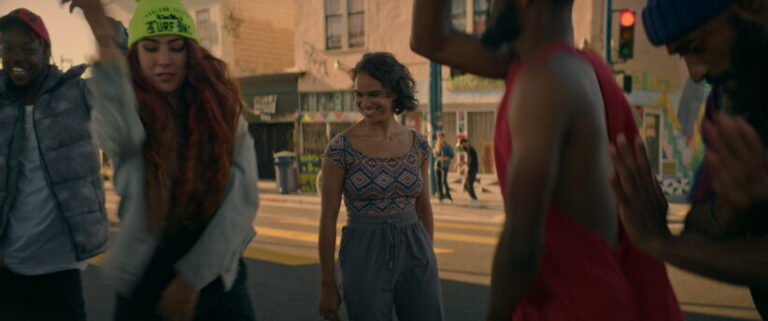
Ballerina Misty Copeland Focuses Lens on Social Issues in ‘Flower’ by Ebenezer Nkunda

0

This article was a finalist in the 2023 DC College Student Arts Journalism Competition. It was originally published in the Howard University News Service.

Misty Copeland makes her highly anticipated return to the stage in the independently produced short film titled “Flower,” which she discussed recently after a screening in the Ira Aldridge Theatre at Howard University. 

Hosted by Phylicia Rashad, dean of the Chadwick A. Boseman College of Fine Arts, the discussion also featured Copeland’s producing partner, Leyla Fayyaz, and other Howard deans, who explored issues highlighted in the film. 

Premiered at the Tribeca Film Festival, the film brings attention to the issues of intergenerational equity in American communities, while captivating the audience with immersive dance performances. “Flower” features groundbreaking choreography by Alonzo King and Rich+Tone. It also includes a musical score composed by Grammy Award-winning artist Raphael Saadiq. Lauren Finerman is the director, and Ryan Carmody is the cinematographer. Nelson George, who conceived the idea with Copeland, is the  executive producer.

A wordless narrative, “Flower” features Copeland in her acting debut portraying Rose, a young woman who has put her dreams on hold to care for her mother as she grapples with dementia. Rose also deals with the challenges of preserving her childhood home while witnessing gentrification wipe out her neighborhood. The film features self-taught professional dancer Babatunji Johnson and former principal ballerina Christina Johnson.

“Flower” is the first project from Life in Motion Productions, which was founded by Copeland and Fayyaz, an Emmy Award-winning dancer-turned-producer and writer. The lifelong friends, who met while teenagers at the American Ballet Theatre, started the production company to engage audiences and bring attention to significant social issues. Through movement and dance, the 28-minute film serves as a tribute to community and raises awareness about the housing crisis affecting many areas.

Best known for her groundbreaking achievement in 2015 as the first Black principal dancer in the American Ballet, Copeland faced housing instability during her formative years. 

“People see me dancing on stage at opera houses without realizing the situation I come from,” Copeland said. During the screening, she shared that she spent much of her youth relying on the kindness of friends, family and neighbors, as she moved through various temporary living situations. 

Fayazz adds that it’s vital to “remember the base you were given and let it set means for inspiration.” As a first-generation American with parents who had to start from scratch upon moving to the United States, she emphasized that strong roots can fuel creativity. 

Despite the challenges of starting production during the COVID-19 pandemic, the film provided employment opportunities for those who were out of work. Filmed in Oakland, California, the cast and crew were predominantly composed of people of color, Fayyaz said. 

Showcasing dancers of color sends a message that individuals from varying racial and ethnic backgrounds are not only valued but also embraced as contributors of the artistic community, the producers said. 

“Flower” draws influence from Black silent films of the 1920s. While almost entirely silent, the project empowers those without a voice. Those who are often overlooked hold immense significance, Copeland emphasizes. 

In a brief portion of the film, residents of  encampments share their personal stories. This segment is shot in documentary style and stands out from the rest of the film. The producing duo saw this decision as a powerful way to convey the unique perspectives and challenges of individuals who are unhoused. 

As the rising cost of rent has made housing unaffordable for people of all ages, the fear of becoming suddenly unhoused has become increasingly common. 

“It’s important to show the face of these issues,” Copeland says. 

Ebenezer Nkunda is a senior at Howard University, where she is pursuing a degree in Journalism with a minor in French. While studying at Howard, she has contributed to the Howard University News Service, specializing in arts and entertainment coverage that has reached national audiences. You can explore more of Ebenezers work on her website and stay updated by subscribing to her newsletter.

Laufey’s spell-binding Bewitched is akin to a storybook fairytale by Sagun Shrestha

0

This article was a finalist in Day Eight’s 2023 DC College Student Arts Journalism Challenge. It was first published in the Georgetown Voice.

The charts might suggest that jazz is a relic of a bygone era, reaching its peak with legends like Ella Fitzgerald and Chet Baker, before fading into obscurity (or irrelevance). But 24-year-old artist Laufey is determined to change that.

Soft, smooth, and silky—Bewitched (2023), the singer-songwriter’s sophomore studio album, now boasts the record for biggest jazz debut on Spotify. Blending bedroom pop and her classical music training, Laufey has ignited a passion for jazz in a new generation. By captivating an otherwise untapped market at the intersection of old and new musical styles, she’s carving out her own niche, enchanting all those willing to listen. On Bewitched, Laufey invites you to float up into her fantasy world, reminding us of the transportive magic of jazz. Not only is the album sonically lush, it follows a perfect fairytale arc, with Laufey making the long journey from cynical witch to lovesick princess.

Bewitched cycles through romanticism and heartbreak, key tenets of Laufey’s discography thus far. Upon an initial listen, it seems that there’s no true method to her madness; she’s being, appropriately, haunted by a past love in “Haunted,” and then, immediately after, recounting all the romanticized moments in her life in “Must Be Love.” However, when looking at the album as a whole, the pieces begin falling into place; it is quite literally a fairytale. It’s whimsical and magical and fantastical—the way all other of these mythical tales are supposed to be—but Laufey hits all the major narrative points, from cast-out cynic to starry-eyed love, making her a master storyteller. Uniquely, it isn’t just explicit lyricism that outlines this tale; instead, Laufey uses the order of the album and the production of her songs as a whole to create an entire narrative structure.

Bewitched has exposition, rising action, climax, falling action, and resolution; all of which develop the story. “Dreamer” is an introduction to our heroine and her background, transporting the audience straight to her “own little cloud / Up by the Milky Way,” where she claims to stay “forever and a day.” Immediately, the imagery evokes a storybook theme while simultaneously establishing Laufey as both the protagonist and the author of her own tale. As she declares that no “boy’s going to kill the dreamer in me,” her romantic frustration is on full display. The song paints the tale of a jaded individual—Laufey calls herself a “witch”—who is supposedly completely turned off by love, while secretly yearning for it. The repeated use of “boy(s)” as opposed to “men” is particularly telling of her partners’ childishness. She uses the same language later in “Promise,” recalling a boy who looked just like her past love. In characterizing her old flames this way, Laufey discredits their maturity, allowing her to detach from any need for their affection. With her resolute tone of voice, coupled with a jaunty, jazzy tune, Laufey proves to be liberated and leagues ahead of these lovers.

“Second Best” and “Haunted” provide more context on Laufey’s newfound romantic cynicism before she falls back to pursuing romance in the songs that follow. The transition from “Must Be Love” to “While You Were Sleeping” to “Lovesick” chronicles the growing intensity of Laufey’s feelings as she goes from realizing she’s falling in love, to tentatively accepting this understanding, to quite literally being lovesick. It’s an overwhelming revelation for her, and she sounds almost shocked as she asks “What have you done to me?”

Despite this seemingly positive turn, the climax quickly arrives with a dark twist as Laufey’s lover leaves her for an old flame in “California and Me.” No fairytale is without a major turning point, so of course her seemingly perfect happiness must be torn away. Her worst fears about new affairs are confirmed: “Should’ve figured that you’d go back to New York.” It’s a classic fairytale betrayal, emblematic of a predestined conflict. This ballad was performed with the renowned Philharmonia Orchestra, making the sadness embedded in the song all the more sweeping; over expansive strings and mournful woodwinds, punctuated by heady flutes, Laufey regrets that she “couldn’t make [her lover] stay.”

“Promise” continues where “California and Me” left off, as Laufey rationalizes her significant other’s departure, claiming it wasn’t supposed to be a forever goodbye but a “see you very soon.” By making the worst seem less extreme, Laufey attempts to save herself from heartbreak. To put “From The Start” right after, however, is somewhat baffling, breaking the cinematic immersion fostered thus far. It’s bouncy, flouncy, and fun, with bossa nova guitars and intricate piano fills, and it seems out of place between “Promise,” with its abundant melancholia, and “Misty,” a demure cover of Erroll Garner’s 1954 hit. There’s no smooth transition to bring us back to the falling action in that initial story structure, but Laufey’s forgiveness is implied. It could have been more effective to further develop the emotional pain Laufey is so good at expressing (Bewitched’s release is just in time for Sad Girl Autumn), but a one-off, upbeat song doesn’t completely take away from the overall storyline, even if it doesn’t fit as perfectly in this body of work.

Laufey creeps towards the conclusion of her tale in a muted tone—quietly, she swears she is finally at peace in “Serendipity.” In “Letter To My 13 Year Old Self” she reassures her younger self she will not only grow up to do great things, but she is also deserving of love, despite being ostracized. Her true ending, however, comes in “Bewitched,” which closes out her fantastical, almost cliché princess arc. An opening instrumental sequence reminiscent of a Disney movie—complete with winding piano chords signaling a magical transformation—leads to Laufey’s discovery, despite her previous denial, that she is in love. She is effectively spell-bound by her partner, bewitched really, having fallen under every single charm in the book. It’s a switch in the roles she set out so much earlier on in her story, considering she’s not the one casting spells anymore. All of a sudden, Laufey is no longer the isolated, weary witch she thought herself to be at the very beginning. However, she’s not shocked the way she was in “Lovesick,” only mildly bewildered that she is allowing herself to feel this way. Laufey resigns herself to the feeling, but it’s difficult to be upset that this is how she decides to settle down. She sings softer and in a tone that sounds almost like awe, so perhaps this is truly the peace she promises herself in previous songs.

Laufey has lived and learned, so who can blame her for wanting to love too? After building up this entire storybook narrative against an enchanting jazz background, the love she ends up with in Bewitched is the happy ending she deserves.

Sagun Shrestha is a junior at Georgetown University studying Government and Psychology and minoring in Journalism. She is currently an assistant editor for the Halftime Leisure section of The Georgetown Voice, a student-run newsmagazine. When she isn’t writing about music, she’s probably figuring out what new piece of entertainment to critique or new hobby to start.

Two Poems by Amy Ouzoonian

Anahata Heart Chakra for a New Year
You can never lose what you give away freely.—Patanjali

Listen to your heart
Its color is clover
Bedding for lovers waking
To the hum of a television
Rocky Mountain Central Standard Time.
The news lady on the tube wants us
To remember our loved ones
Locked in cardboard caskets
Gangrene Hope Chests
Sealed with kiss-me-goodnight lips.
Words like love, forever, and trust
Might be Sunday morning dishrags
Thrown around without
Regards for meaning
Or concern of future plans.
Nature works without thought
Burrowing and perching
Shuddering and speaking
Inspiring our big brains to
Invent words and cultures and whole
Environments of meaning.
The heart’s color is green,
Not a decaying vault of finance,
But the husky limbs of a pine stitching it’s needles
Into the sun.
Open you arms wide
Like a drunk welcoming God’s great walloping punch
Shine yourself outward
Touch your hand to a shoulder on your left.
Touch your hand to a should on your right.
These are your exiled
These are your protectors.
Here is where
Your heart
Has always been.

Victoria

September rain fell on
Victoria Sam’s tiredofitall
She had her fill
of pleasing everyone
Just to stay in the game.

Vicky Sam went to sleep
Every night to the mantra
Never spoken aloud
That last single mom shudder
Before sleep.

Day came she packed up her
Kid and a loaf of bread and
Everyone piled into the blue
Toyota to feed some ducks
At Merrytown Lake.

She gave the bag of bread
To her child, safety-
Pinned a note to the inside
Of the child’s sleeve
“To whomever finds me.”
Traced her finger on the smile
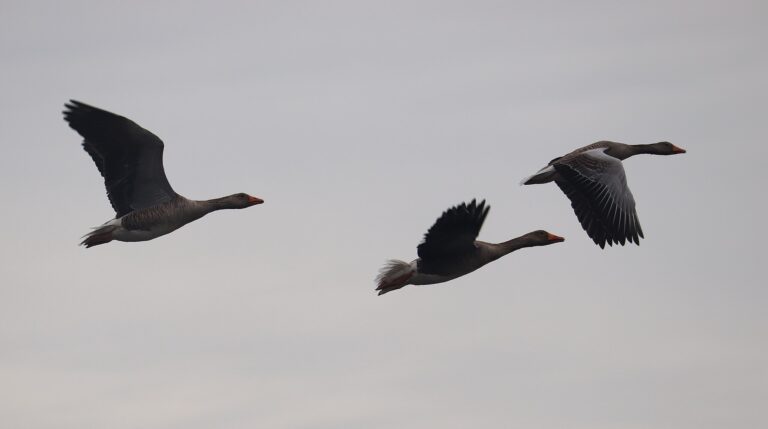
That quickly disappeared to feed geese
And honked at the feathers flying
by.

Away from it all
Vicky snapped up a pill
That she knew would do
The job fast.
Popped it in
Like a mint
And watched clouds cover
The rage of bad decisions
with a softness.

Floating to wet grass, Vicky’s hands
felt flowers like sand feels glass.
Dandelions and their poofy
Wishes tangled in her hair.
Geese got to her gingham sweater
After the bread was gone

The child returned
To what was left
Overs wings and laughter
Feathers and blood splatter.
Geese prodding a woman
Who left the world
Long ago.

Amy Ouzoonian is a bi-coastal writer, software developer and CEO of MoodConnect. She lives in Phoenix and Washington D.C. She is the author of two collections of poetry: Your Pill, Foothills Publishing 2004, Found In Phoenix, Fly By Night Press 2015 and is the editor for six anthologies of poetry, Word, Fly By Night Press 2017, In the Arms of Words: Poems for Tsunami Relief, Foothills Press, In the Arms Of Words: Poems for Disaster Relief (Sherman Asher Press).

Image: Rudolphous, CC BY-SA 4.0 https://creativecommons.org/licenses/by-sa/4.0, via Wikimedia Commons

Two Poems by Amanda Shaw

Residuum

“Detritus? I’ve never heard that word,”
my new neighbor says, as I’m apologizing for what
I mistakenly rinsed off of my deck onto his below,
the stems and leaves and plastic labels they stick in the dirt
at a plant nursery, the ones that tell you whether you possess
the suitable conditions for keeping the poor root-
bound flowers alive wherever you’re taking them, which in
my case I do, enough light and space for roots to spread and choice
of deck or windowsill or yard depending on weather or time of year
and I answer “You know, ‘DEH-

bris,’” the way the English guy in a thousand-part documentary
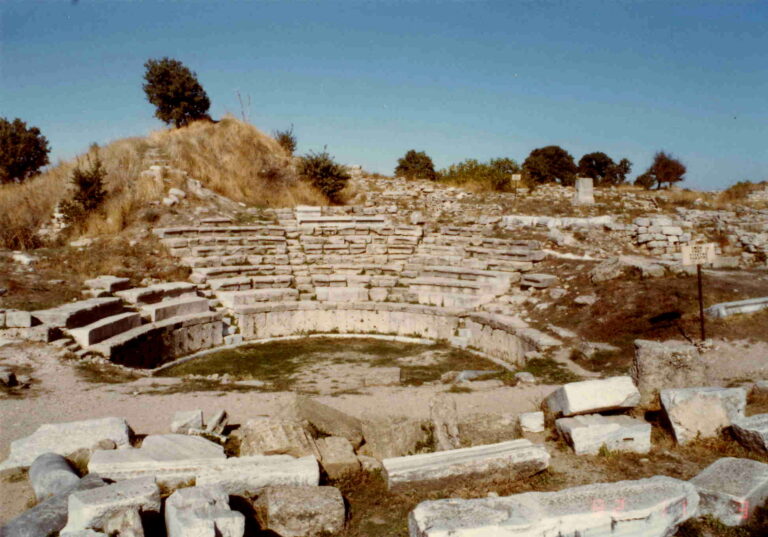
about excavations at Troy (that whole Today I have gazed upon the face
of Agamemnon) says
“de-bREE,” as though my neighbor, Steve,
who doesn’t know me or the word detritus—and he’s a lawyer—
would know why that foppery is funny, that I’d never
say the word that way myself except as a joke (the kind I tell
that never land), although when I was ten I’d say “malice of
forethought” or “beating a dead horse” and my friends were like

What the fuck Amanda, but see now I’m forty-five and live next to lawyers and have the space and light to grow flowers in nourishing but messy soil, that
detritus that washes down onto
his deck in spite of my care; no, he’s got to know I’m not that
weird, moreover I’ve heard it said I’m a “cute nerd,” that’s how far
I’ve come, but Steven’s gay anyway and surely my level of cute-despite-
awkward-ness isn’t in play, I’m just saying I’m not that person, I’d never
deliberately fling soil—lets face it, dirt, it’s trash, it’s

detritus, it’s just the right word
for the situation—onto his property, incidentally that mofo Schliemann
was not only wrong about Agamemnon, he dug all that dirt up without
forethought, destroyed the layers of time above the find he bragged
about with such grandiosity, but I know enough now not to share this further
evidence of nerdity so I am furiously digging into my mind like I always do for

words, more words
to supplement the more words that didn’t work the first time
but then Steven says “I like it. I’ll have to use it”
and I kneel down to pet his little dog Stacy who is truly adorable even
when she barks at me from the debris I’ve washed onto his deck below,
I mean who can blame her?

The Skiff and the Reef

The television is tuned to a show
about Britons fishing in a kind of skiff

made of interwoven willow-rods
and I’m not really listening until I hear

it’s called a coracle, a pretty word
that after I turn the TV off

plays on in my head, sea-changed
to Coral kill, the flap in my mind

that opens to this odd sentence l
ike the flap in the pop-up book

I gave Ruthie who lives by the sea,
a flap which you can lift to see

the pink stinging branches snaking up—
Watch out, poor fish!

At first I wondered what I’d done
but Ruthie told me not to worry,

Daniel Tiger told her Grown-Ups
Come Back, Him mommadadda save him,

it’s ok. First time I watched Daniel Tiger
the chirpy four notes of his chirpy song

stuck in my head for the rest of the day
and I was almost angry at the lie. See,

Ruthie doesn’t know about this yet
but kids in her mother’s first grade class

are going home to find it dark,
Mommadadda disappeared to Mexico

and never coming back.
I’ve no reason to doubt

Poor Fish’s parents taught him well,
made sure he washed his sticky gills

then tucked him into weeds each night,
might swim up in the nick of time

to save him from the poisoned reef—
but Ruthie, that flap could open

to anything, right to the bottom
of the rising sea. What about

the Britons? what about the shark.

Amanda Shaw is a poet, editor, and teacher who currently serves as book review editor at Lily Poetry Review. Her debut collection, It Will Have Been So Beautiful, will be released in March 2024 by Lily. She has taught language and literature for over 25 years, including at the World Bank and other DC-area institutions. Although she’s lived in many different cities, states, and countries, DC has been her home for 12 years and she is excited to become more involved in its vibrant writing community.

Image: Brian Harrington Spier, CC BY-SA 2.0 https://creativecommons.org/licenses/by-sa/2.0, via Wikimedia Commons