don’t taste, except what you remember you tasted of
the first frontier sip of Frappuccino.
don’t savor, slurp then suppress a belch of thanksgiving
Whitmanian prayer.
ignore the hum of the street outside
as you careen towards
momentary doldrum
ordinary routine.
it’s a workday, the morning line is long
and this is a call to order
for the disorderly god of the insulin dump.
harried stock exchanges and ass-kiss promises
can rarely be held off this sweetly.
Lindt at 3am
just one candy square is enough
to happily disrupt a paralyzed mind
the bitterness of an empty bed
is rendered moot and flaccid
the threats posed by midnight purgatories
are henceforth neutralized
Blackberries
they shine pewter
shyly
colors hidden beneath the black gleam
of tiny spheres in the dark soft light
too sacred to eat, fated to rot
unsaved
without someone to declare their beauty
Juliana “Jules” Schifferes is a poet from the Washington, DC area. She was the winner of the inaugural Luce Prize, awarded by Day Eight to an early-career poet of promise. She has published in The Mid-Atlantic Review (formerly Bourgeon) and Washington Writers’ Publishing House. Her themes vary, but she prefers the “object poem” genre and Zen “inflections” in her writing. Her influences shift over time, but right now she’s dwelling on Vladimir Mayakovsky and Rilke. She works at a civil society organization, fighting the good fight, when she’s not writing. In her free time, you’ll find her curled up with poetry and a cat.
Sorting Through Mail at a Senior Home

I make small piles on my desk
To separate the residents
Who have passed and those still waiting
For letters that they’ll throw away.

Envelopes sticky in my hands,
The weight of the dead has brushed my shoulders.

Of those that have recipients,
I line them neatly between my fingers,
As magazines and flyers try
To carve my webbings papercuts,

But the sandy edges have been dulled
By the neglect that comes with age.

And order matters, too. The ones
Who can hear my knocking are first, and I leave
The man who reminds me of my grandpa
For last, my conscience too afraid

Their ghosts will look the same to me,
That this poem, too, will end prematurely.


Interview

It doesn’t matter
           If my background fits the mold
                     When my dad works here.

These are words I wish
           I could say with confidence,
                     And truth, as a bold

Intro and outro
           To the perfect interview.
		      To those on the fence

Before our meeting,
          Just relax. I look forward
		    To working with you.

Use me as you please,
          But beware, you’ll get more use
		 Out of a cheese board.

When I click on Zoom,
          I try to fix my floral
                    Tie. Its noose is loose.

If my dad really
          Worked here, I could throw away
                     This tie called morals.
Dylan Tran is a Pushcart-nominated Chinese American poet based in Washington, DC. He strives to uplift the Asian American voice in literature, while walking the fine line between culture and otherness. Outside of writing, Dylan can be found working a diverse handful of jobs, from activities programming at a senior home, to curatorial work at the National Museum of American History, and more. His poems appear or are forthcoming in Volume,El Portal, Dipity Literary Magazine, and elsewhere.
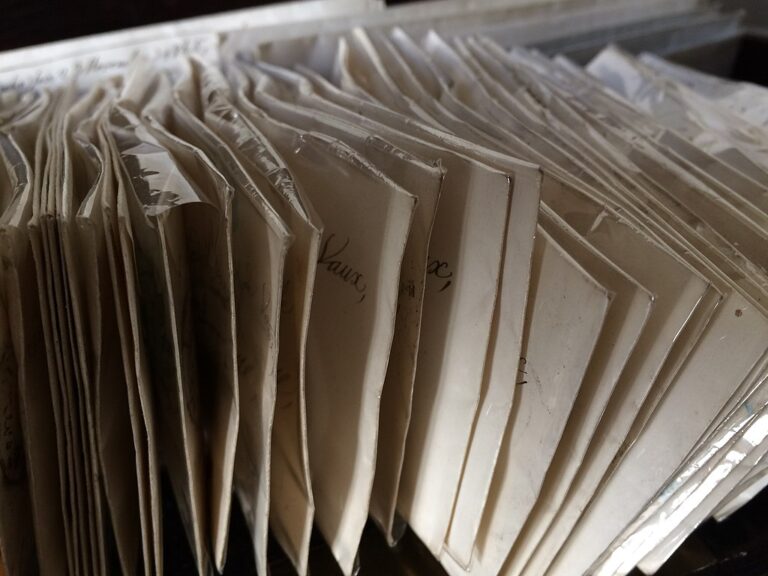
Image: “Enveloppes des lettres de Clotilde de Vaux à Comte” by Kurebayashi under Creative Commons Attribution-Share Alike 4.0 International License.
Two men stood up and begged for the lives of their wives.
Back home, their bills stick in the mailbox, a half gallon of milk curdles, and the last pair of dirty socks— thrown into the basket— mold in crumples.
I do not know the men or their wives, Yet we are intimately acquainted.
We met over a cooled coffee cup with an everlasting lipstick imprint, or a drive home where the grass was too brilliantly green.
We remember that strand of a hair across a forehead, the size of gravel underfoot, the other side of a breath, where we became too closely acquainted, where there was no way to go back again.
Lying in the ambulance, I was reconciled; it could all go on. But now, I am back again, and the wait is relentless.
My child coughs and I fear: what if it is not allergies. The car in front of me swerves and I crash over and over. A cross at the road edge reads names again and again. An erased voicemail seems too risky, so, my messages fill up.
Judy Garland sings in the background, “Until then, we’ll have to muddle through, somehow…” This time, you fall before me, pallid and motionless on the floor. I can’t bear the emptiness.
This whole life feels like one glorious lie. I keep wondering when the suspense will subside, when I will return to the dream, but I have awakened to grief and it will never leave me.
I could be the man in Paris begging for mercy. I will be the child reaching for arms that won’t wrap her up again. I will be the mother with still arms. I am all the loss and the lost: all that is unforgotten.
Written after the Paris terrorist attacks 11/13/2015.
Phantom Belly
A mother has one after her children are born. What is left extends so far, it seems bigger than what can hold or be held: growing, stretching, sagging pouches of vacancy, abandonment. Such a fertile place for barrenness to breed.
I tuck mine in. No one can see the stretch marks, the intimate folding, the way I carried so much for an infinite space and time. Now, my phantom belly creaks: a ghost town of overgrown, crumbling walls and rubble where small creatures once darted out.
Pamela Mathison-Levitt is a disabled writer and homeschooling mother living in Maryland. Her work is featured or forthcoming in The Anthology of Appalachian Writers: Volumes III and V, Fluent Magazine, Emerald Coast Review Volumes XXI and XXII, Literary Mama blog, and the Ehlers Danlos Society e-magazine, Loose Connections. Her essays about chronic illness can be found on The Mighty. You can read more of her work on her Instagram page, Lines and Branches, https://www.instagram.com/pmmlevitt/.
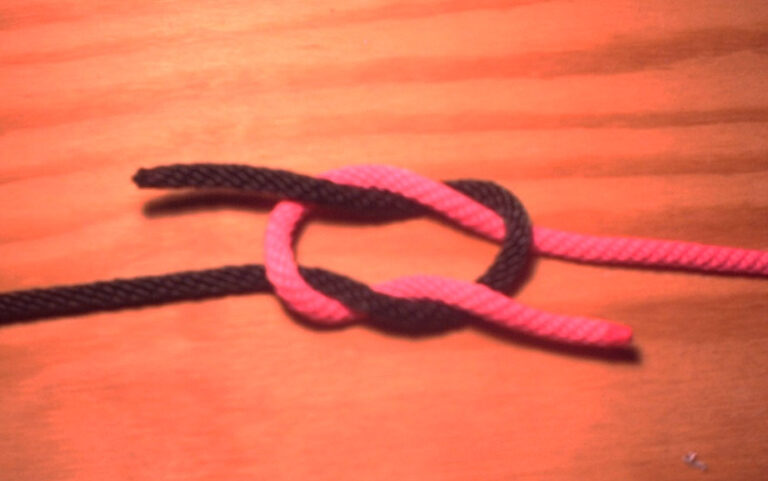
Image: TheHungryTiger at English Wikipedia, Public domain, via Wikimedia Commons
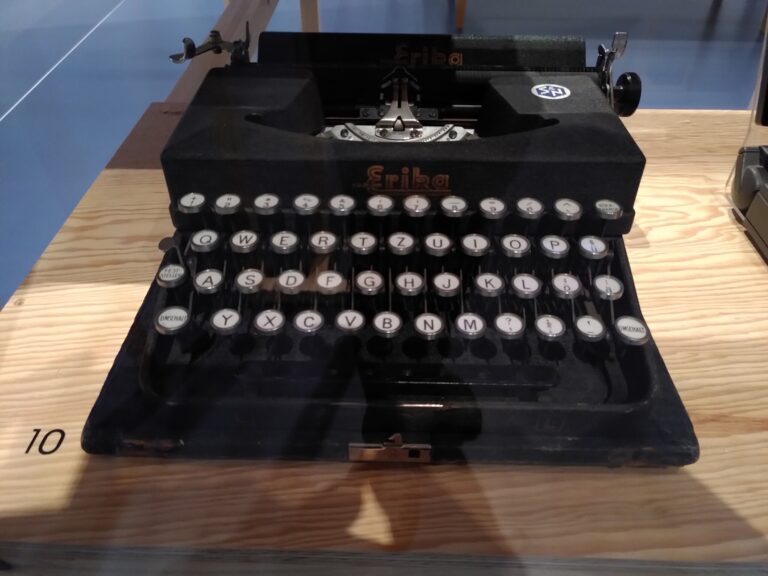
is a mistake my computer is attached to like loving the wrong person or eating after 8
it can’t resist giving me a string of them each time – rrrrrrr — like a cat
that loves to be petted but can only stand it for so long before it bites
i tell myself people can only stand it for so long and so it’s really my own fault
how many cultures have a saying for don’t do this dumb thing twice
“once burned twice shy” “there is no education in the second kick
of a mule” and of course “fool me once” and yet my hand my hand even
through the broken glass of this window that has shut between us
how it reaches
Doritt Carroll is a native of Washington, DC. She received her undergraduate and law degrees from Georgetown University. Doritt is the winner of the 2023 Stephen Meats Poetry Prize. She is also the winner of Harbor Review’s 2020 Laura Lee Washburn chapbook prize for her chapbook A Meditation on Purgatory. Her poems have appeared in Main Street Rag, RHINO, and SWWIM, among others. Her collection GLTTL STP was published by Brickhouse Books in 2013. Her chapbook Sorry You Are Not An Instant Winner was published in 2017 by Kattywompus. She has been nominated for a Pushcart Prize and Best of the Net.
A flower blooming is the unfolding of all it could have ever been, its insides bellow outward; its potential is birthed under the gaze of the sun, cresting like a newborn. There, suspended between two peaks by a strand of iridescent spider’s web, he dances. Balancing on one foot, he steadies himself like a tight-rope walker. His arms, bent at outrageous angles, sway as he adjusts his gait. Nature labors in symmetry fulfilling a cosmic calculus. All things arrange themselves by fives.
The thread—for it shouldn’t be called a rope—a fine, glistening sinew, not designed for holding the weight of anything, certainly not a robust man of his stature, stretches across a shadowy chasm. In defiance of the laws of physics, he perches like a crane on this thread, suspended above this hole, between the spires of ice. Turning inside-out, wearing his guts outside his skin; being the most vulnerable he’s ever been. All things cycle to equilibrium.
Now he poses like a ballerina, free foot flexed, arms stretched to opposing right angles, his fingers knotted into extreme contortions, all to strike the perfect balance. He is engulfed in a velvet blackness, undulating like ink. The peaks between which he percolates rise from the depths like spires stabbing skyward. A kaleidoscope of jewels bedazzles, casting glistening sparkles to the edges of the world.
Why does he perch thus above this abyss? Elongating the toe box of his shoe to the finest point, he is the epitome of balance. He does not prolong his pose for some uncertain period or for an infinite future; his impulse is forward, and his limbs and digits shift to maintain his architectural poise while also heaving outward. At this moment, he is awash in calmness and peace. The inky blackness embraces him. He fears not the enigma beneath him. Peace effervesces like a mandala, radiating and undulating to find its internal gravity across five dimensions.
None know for how long he must traverse this wire, but he is simultaneously indefatigable and zen. “I can stay here as long as I’d like,” he thinks to himself, “enmeshed in this cloud of velvet, posed like a raptor and fearing nothing.” Knowing full well that despite his pause— this perfectly contorted pose—his momentum is tipping forward. Does the past predict the future, or are the infinite alternate pathways spiraling outwards like streamers and confetti, impossible to prophecy?
Standing still is driving ahead. With a thought, he could spin forward, tumblesaulting from finger to toe along this tightrope. This he knows to the depth of his soul. Sparks of electricity burst between spherical nodes along a conduit, zapping and fizzing like seltzer. Are all things energy? Must we move at all? The blackness encases him, sloshing and foaming about the contours of his body.
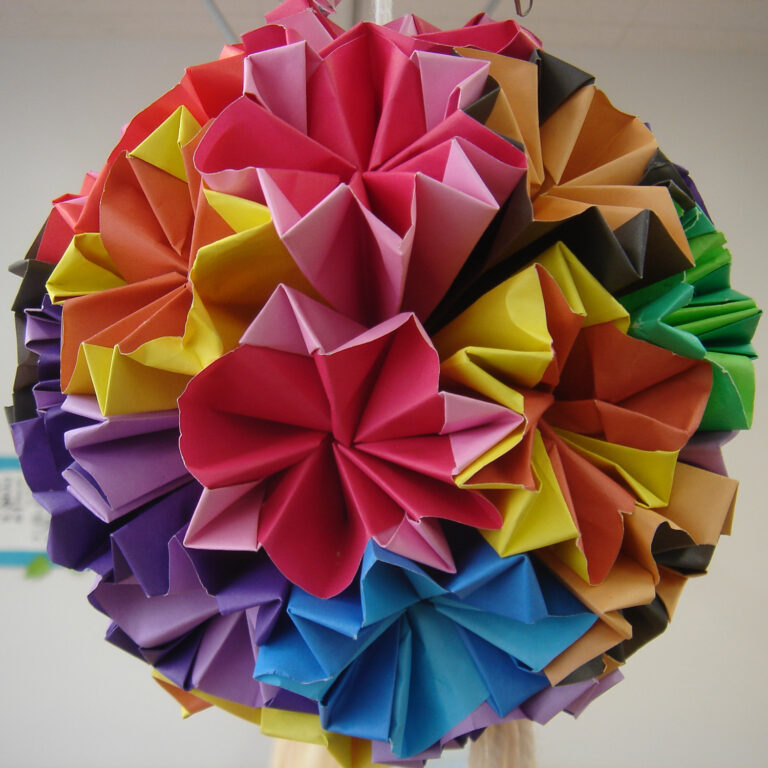
All is projection of his mind. For the peaks and webs he has imagined around him are illusions, and he stands upon solid ground, not agonizingly twisted upon a hovering wire. Obstacles peel away upon review, and his eyes open onto a dazzling daytime display. Verdant bushes and vibrating trees protrude against a watercolor sky. Wisps of clouds chase the horizon. Origami fortune tellers flap and unfold, scrolls of untold futures coil like dragons into the unknown.
Behind his eyelids he has lived a million lives. To pause is to breathe, present in the knowledge that all things move with purpose. Stillness is a form of movement. In chaos, he allows the momentum of the nonsense to propel him to his ultimate sanctuary. He cannot fall, for he has already arrived. Emanations of the original survive in each new generation, and thus we thrust ourselves out from within, ever unfolding into all we are meant to be.
With a diverse background spanning Higher Education, nonprofit management, peer support, and advocacy, Matthew Ratz currently holds the position of Executive Director at Passion for Learning, Inc. This nonprofit organization is dedicated to bridging opportunity gaps for low-income students in STEM and College readiness. He is also an adjunct professor of English at Montgomery College, Germantown. Beyond his leadership in education and nonprofit management, Matthew is a prolific author with several nonfiction and children’s books to his name. His poetry has been featured in various anthologies, and he has delivered a TEDx talk available for viewing on YouTube and TED.com. As a highly sought-after writer, speaker, and performer, Matthew channels his extensive experience and unwavering commitment to inclusivity and equity to make a positive impact on the world.