Home Blog Page 65

Three Poems by Miguel Avero, translated by Jona Colson

Insomne

Azules sueños cruzan la habitación a oscuras
formando el rostro de las noches
en un cielo de humedad.

Alimenta el viento
la voz del aguacero,
surca mis oídos y enardece
la tenacidad de mis ideas.

Pretendo buscar
un cegador momento
o punto ciego
en que no acosen más estas paredes,
en que no apunten más estas ventanas,

como si fuera posible
guarecerse de esa sombra

y nunca te enteraras
cuánto me acompañas.


Insomniac

Blue dreams cross the room in the dark
forming the face of the nights 
in a humid sky. 

The wind feeds
the voice of the rain, 
it surges through my ears and inflames 
the tenacity of my ideas. 

I intend to search for
a blinding moment 
or a blind spot 
where these walls no longer harass
where these windows no longer point

as if it were possible 
to shelter from that shadow 

and you never will find out 
how much you accompany me.


La Puerta
     “Los de dentro non les querien tornar palabra,” Cantar del Cid

Despego mis persianas 
desde el colchón
de antiguas fornicaciones,

el pestillo manoseado 
por las manos idas.

No hay noche anterior.

Eco de mi voz llamando,
eco del silencio respondiendo, 
pero ninguna niña
se acercará con instrucciones.

Observar acurrucado... 
(toda sonrisa es un umbral) 
desterrándome a mí mismo.

Atrás,
muy atrás quedan 
miedos y demonios

y mis peores fotografías 
en el placar.


The Door
   "Those inside do not want to make a word," Cantar del Cid

I take off my blinds
from the mattress
of ancient fornications,

the groped latch
by the vanished hands.

There is no previous night.

Echo of my voice calling,
echo of silence responding,
but no girl
will approach with instructions.

Observe curled up ...
(every smile is a threshold)
banishing myself.

Behind,
far behind
fears and demons

and my worst pictures
in the closet.


Terminal

Al oeste de las escaleras, donde yace la tumba marítima 
o un libro que no se termina de albergar nunca, 
veremos la alfombra pisada por el lautarino,
por el raptor de una chica que debió́ llamarse Dolores; 
españoles de una España, ahora, carabelas blancas, que 
coparon la mansión deshabitada entrando por la noche 
a través de las ventanas mal cerradas,
manchadas heridas escarbadas, vidrios que sudan sangrantes, 
paredes peladas por dentro, por fuera arropadas
como el cuerpo tiritante de un sonámbulo, de un loco que resiste 
por los temblores de la casa, latido incesante de las lámparas 
corazón erguido y hervido como un sexo,
mampara de sol infatigable tras las cortinas,
rojas cortinas de fuego inconmensurable, terco, creador y frío fuego, 
fuego para apagar el agua, agua para prender el fuego,
iluminación instantánea de un paraíso, de un rojo prado
sin locus amoenus, sin infierno prometido, ni del héroe los mitemas,
con tuberías donde circula la sangre enrojeciendo los sitios por donde pasa, 
dejando cada pieza en cuarentena y empantanando
el virus en las escalinatas
como un azote de infierno a invierno
como una azotea imposible por la noche coronada.


Terminal

West of the stairs, where the maritime tomb lies
or a book that is never finished,
we will see the carpet stepped on by the lautarino,
by the kidnapper of a girl who must have been named Dolores;
Spaniards of a Spain, now, white caravels, that
took over the uninhabited mansion at night
through the poorly closed windows,
stained scraped wounds, bleeding glass,
walls peeled inside, covered outside
like the shivering body of a sleepwalker, of a madman who resists
the tremors of the house, the incessant beat of the lamps
heart erect and boiled like sex,
sunscreen behind the curtains,
red curtains of immeasurable fire, stubborn, creative and cold fire,
fire to put out the water, water to light the fire,
instantaneous illumination of a paradise, of a red meadow
without locus, without the promised hell, nor the hero's myths,
with pipes where blood circulates reddening the places where it passes,
leaving each piece in quarantine and bogging down
the virus on the steps
like a scourge from hell to winter
like an impossible rooftop at night crowned.
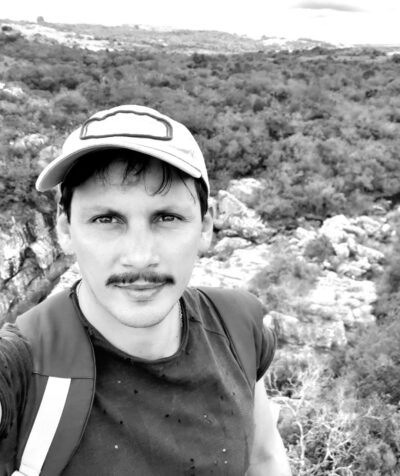
Miguel Avero is a narrator, essayist, teacher and researcher. He directs the “Puerta Chimera” writing workshop, and his work is included in various national and international anthologies, specifically, América Invertida: An Anthology of Emerging Uruguayan Poets (University of New Mexico Press). His recent books include Arca de Aserrín (Ediciones en Blanco), La Pieza (Walkie Talkie Editions), and Haiku Mate (Demiurge Editions). Avero lives in Montevideo, Uruguay.
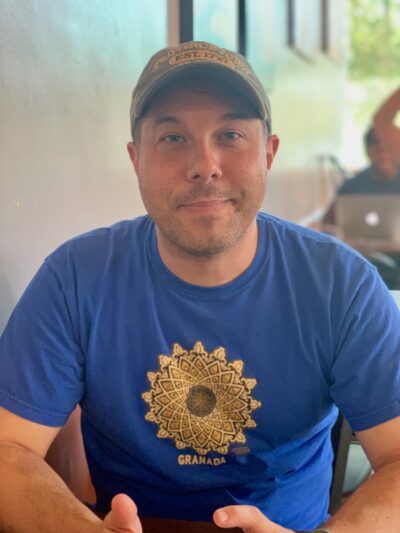
Jona Colson’s poetry collection, Said Through Glass, won the 2018 Jean Feldman Poetry Prize from the Washington Writers’ Publishing House. He is also the co-editor of This Is What America Looks Like: Poetry and Fiction from D.C., Maryland, and Virginia (2021). He is co-president with Caroline Bock of the Washington Writers’ Publishing House and edits the bi-weekly journal, WWPH Writes. A full-length collection of Miguel Avero’s poems, Aguas/Waters, is forthcoming by WWPH.

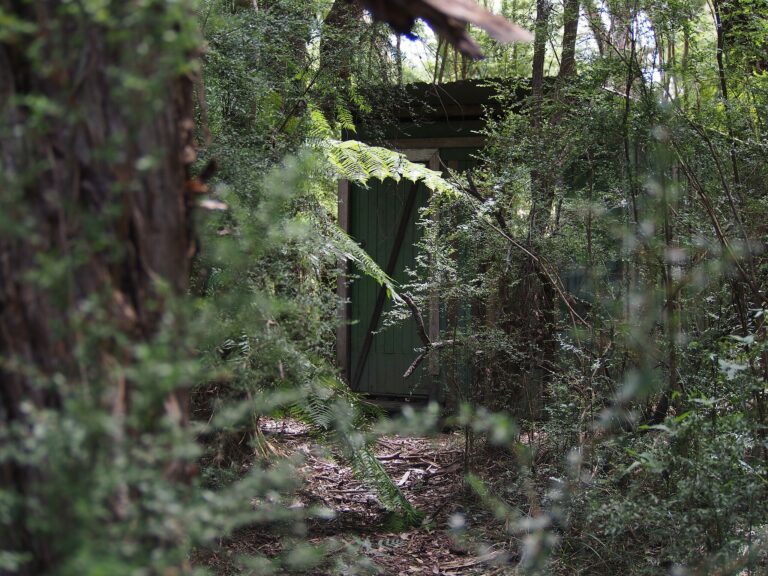
Image: “Door in Nature” by V3NOM V1V14N under the Creative Commons Attribution-Share Alike 4.0 International license.
Two Poems by Andi Myles

0

Fully Known

Other universes seep through the cracks

in my walls and for a moment

my favorite color is no longer blue

but the orange of my kitchen walls,

they shiver, suddenly too beautiful

so I do not stay there. When I am

rinsing a chicken for dinner

I feel the skin slide over the newborn

bones I chose not to bear, hear it cawing

in my hands.

I am trying to find a universe

next to my own where the only difference is

an extra book on the shelf or

maybe some soup in the fridge.

Tiptoe down the halls

at night the moaning floors let in

too many possibilities

sliding my fingertips down her breasts, newspaper clippings

of success of tragedy of nothing notable, a bruised face,

small fingers touching my nose, a yapping dog, his lips

against mine begging, brushing long hair before a mirror—

darkly.

I am looking

for a slightly stronger version of

this stranger

I inhabit—it cannot be trusted, it has lived

so many lives.

The day I discovered I was not a hero 

“No, you don’t understand, I didn’t—”


Because I am wearing a mask,

and because it makes me feel like a superhero, sort of,


“I’m telling you—”


Because he leans into the passenger side—one leg lifted, one hand rigid,

and because there is no one else in the parking lot,


“Look at me. Look at me!”

Because he slams his hand down on the roof of the car,

and because my wrist resonates with his tone,


“All I want is—”


Because he is speaking Turkish and because

my 23-year-old stepdaughter is in the car, and because

I once watched a woman get slapped on the street in Istanbul

and because when I suggested we call the police,

my ex asked, “Why?”


I got out of the car.

But


“Fuck it! This is all fucking—”


Because it is easy to buy guns in Virginia,

and because you never can tell with men,


“You don’t understand—”


Because my one-year-old is in the car,

and because I know anger is ever only delayed,

I do not say to him, “Coward.”

I do not ask her, “Safe?”

Instead, I stand behind my car door

until his friendly, charming smile turns snarl

when my mask does not smile back.


“Do we have a problem?”

Andi Myles is a Washington DC area science writer by day, poet in the in between times. Her favorite space is the fine line between essay and poetry. Her work has appeared in Longleaf Review, Tahoma Literary Review, and Brink Literary Journal, among others. You can find her at http://www.andimyles.com.

Image: © Vyacheslav Argenberg / http://www.vascoplanet.com/, CC BY 4.0 https://creativecommons.org/licenses/by/4.0, via Wikimedia Commons

Two Poems by Timothy Hudenburg

0

promise & debris

remember friend
we are fallen
though nature has kept her word

you set your sails
freedom you believed
was the ability to move, maneuver

what the word meant
set apart from this world
center mass towards a setting sun

fear though on the surface
a wish for excess and emptiness
pile of slipping sand in your dainty hand

meanwhile you tan in a flimsy floral bikini
provocative in posture
neither love nor loved

and wear a tiara down to dinner
–whether cast with diamond or thorn
was anyone’s guess

time to time

old to new
new to old
and you–

You are you.
We need you.
You need you.

remember–
exactly
who desired you most

T. M. Hudenburg is a writer who has grown up and is still growing with the great DelMarVa region. This piece is a bit of a talisman in our age of anxiety. Everyone is valuable, especially you. Lest we forget it or heaven forbid you.

Image: Villy Fink Isaksen, CC BY-SA 4.0 https://creativecommons.org/licenses/by-sa/4.0, via Wikimedia Commons

Two Poems by Eric Goodman

We No Longer Kill Our Visitors

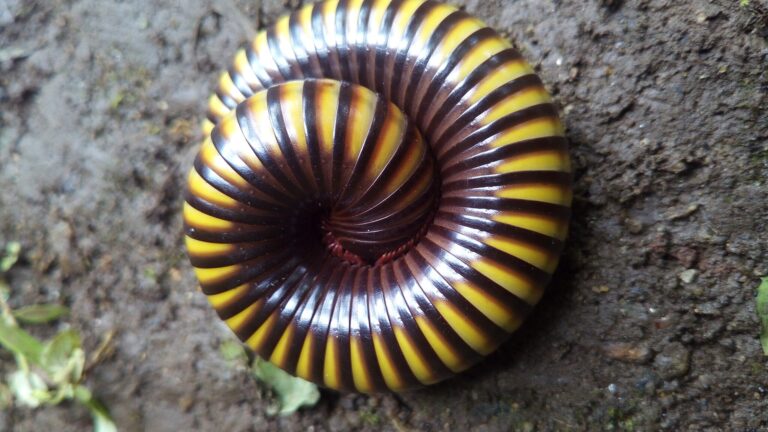
The millipede scurrying across the basement floor
searching for a dark corner in which to rest.

The spider dangling from the bottom of the bathroom windowsill,
working less enthusiastically as hot steam fills the room.

The stink bug rummaging through an orchid in the bay window,
not putting off any particular smell.

The mouse who found a bit of coffee cake on the kitchen floor,
darting back beneath the oven.

The bird who came in through the sliding door,
flying from room to room before finding exit
through an open window.

The fruit bat spinning rings around each bedroom
before escaping through the attic vent.

These are our COVID guests,
our pandemic partners.

We no longer retreat to the hardware store
in search of ways to trap or kill them.

We invite them in for a visit, a bit of dialogue—
wink of eye, twitch of nose—
and ask them not to be strangers
as they hide from us in the shadows
of our shared home.

Sacrifice for Sleep

“If I could only sleep till 9,”
she moans as she sits up
and falls back into bed,
bent over him like a hibiscus grown too tall.

“Saturday,” he assures.
“You can sleep in on Saturday.”

Saturday is five miles away,
each one filled with a workday,

and when the weekend arrives
the work does not end.

The baby cries,
family stomach growls,
playroom is cluttered,
kitchen’s a mess,
friends call for counseling,
her man longs for her touch.

Once again,
she substitutes sacrifice
for sleep.

Eric D. Goodman lives and writes in Maryland, where he’s remained sheltered in place during the pandemic and beyond, spending a portion of his hermithood writing poetry. His first book of poetry, Faraway Tables, is coming in spring 2024 from Yorkshire Press. He’s author of Wrecks and Ruins (Loyola University’s Apprentice House Press, 2022) The Color of Jadeite (Apprentice House, 2020), Setting the Family Free (Apprentice House, 2019), Womb: a novel in utero (Merge Publishing, 2017) Tracks: A Novel in Stories (Atticus Books, 2011), and Flightless Goose, (Writers Lair Books, 2008). More than a hundred short stories, articles, travel stories, and poems have been published in literary journals, magazines, and periodicals. Learn more about Eric and his writing at www.EricDGoodman.com.

Featured Image: Axel N-Masango, CC BY-SA 4.0 https://creativecommons.org/licenses/by-sa/4.0, via Wikimedia Commons

Happy Thoughts Vol 1: How to Get Rich While Being Your Best Self by Bill Kurz

Happy Thoughts Vol 1:
How to Get Rich While Being Your Best Self

1
there is no poetry in America
      only work
war
        death
and the guys who got Capone

2
we mourn our lives unlived
    our look in the mirror in the wake of age
we mourn ourselves as we see others succeed
    each day, each greeting, each departure,
and most of all we mourn our dreams
    fragile and unwrapped

3
get a grip

        on what this is

know yourself

        a sacrificial flame

on the altar of art

        rising burning reaching

give everything

        or get the fuck out

4
life is                    not good
we must              confront it
and impart          our knowledge
                              to others             
with love
to protect            our soul

Bill Kurz is a local writer living in Maryland. He writes at the crucible of North American and South American fiction. You can find more of his writing in Sound and Fury, Remington Review, and PLOS One.

Featured image: Shan Sheehan, CC BY 2.0 https://creativecommons.org/licenses/by/2.0, via Wikimedia Commons