
Home Blog Page 66

Two Poems by Lora Berg

0

Bakekujira

All we could see of Bakekujira was the skeleton
he floated in, when that ghost whale breached

the brine. Cosmic blue eels writhed inside him;
royal crested terns soared through his bones.

We sharpened our harpoons, but he had no flesh
to pierce. Monster! we cried, as if to blame him

for our cruelties. Whose phantom could he be?
We cowered under tarps in our fishing boats

and prayed. And when at last he yawed away,
we scuttled back to our cozy port, to wait.

As a rib moon arose; he floated in, and beached.
No meat, so we filled ourselves with marrow.

We used to say back then: after feasting
on the divine, we must preserve its remains.

We buried him in a shrine hewn of cypress
stained vermillion. Some nights, sweating,

we still dream a ghost whale swims inside us,
and we become the bones he floats within.

Bakekujira is the name of a ghost whale in Japanese tales

Forget the war for a minute —

and look at me: an ancient wheel.
Let your mind float to

Ezekiel Galaxies UFOs

or down to the gears
in grandpa’s pocket watch,
iris and pupil, a child
spinning on her toes.

I’ve lived all this before.
Kwek-wlos, I was called
in Indo-European, longest
ago, chiseled out of wood,

a seeder of cognates over

eras tribes globes

all part of me as I roll.

Millennia of hordes have
marauded these steppes;
I carried their carts,
so I know. Each time

I think a hiatus might last—

armies spring from dust

as they do now. Still

for a moment, we can
let ourselves caress
derivations, smoothed rims,
spokes of ash and oak.

Author of The Mermaid Wakes (Macmillan Caribbean) with Grenadian visual artist Canute Caliste, Lora Berg writes with a light touch from her home in Maryland. Her poems have appeared in Shenandoah, Colorado Review, and other journals. She served abroad for many years at U.S. Embassies as cultural attaché. With an MFA from Johns Hopkins, she worked as poet-in-residence at Saint Albans School. Lora participated in the 2022-23 Poetry Collective at Lighthouse Writers Workshop. She is a proud grandma in a vibrant multicultural family.  

Image: Rickard Törnblad, CC BY-SA 4.0 https://creativecommons.org/licenses/by-sa/4.0, via Wikimedia Commons

Four Poems by Raymond Luczak

SURGERY: 1977

Flickering between memory and nightmare,
I was gurneyed from my hospital room,
my body weighed down with a heavy blanket
since it was still winter in Marquette,
and whooshed before a pair of doors swinging open
only to find myself staring up at a tableau
of masked men wearing pale blue uniforms
of the operating room soon clustering
around me. Their eyes gazed unblinkingly
at me. What were they expecting?
A slight chill settled around my throat.
Someone in the room would surely reach out
with their gloved rubberhands to choke me.
I was so fetal, so glassboned, an easy kill.
The surgeon bent down and gesticulated.
He was about to perform on my right ear.
I dreamed of my gurney taking off like that flying bed
in Bedknobs and Broomsticks where I would fight
an army of surgeons wielding their exacting tools.

HIPPOPOTOMONSTROSESQUIPPEDALIOPHOBIA

Even an errant page of dense medical terms
can make me shriek
from the unfathomable terror of breaking down

tiny shrapnels of word quilted as if Bedlam had
itself became a ghost,
dictating and codifying multiples

of multiply embroidered syllables thin-layered
as in Miss Havisham’s cake
decorated with latticed entrails turned inside out.

Titin is the abbreviated title of a horror movie
I can never watch.
The director’s cut has 189,819 letters in it.

The long version of the word “titin” takes three point
five hours to pronounce.
I fear I’ll be deliriously dead before then.

OXYTOCIN

The night is cranium.
We hoard peptides
for the day when
we can breathe easy
no longer six feet
apart in loneliness.

The rooms we spend
in masking our lives
mourn like loons
among empty sofas.
Worse yet are those beds
neon-blinking VACANCY.

Our beds have craters
bombed out by meteor
showers of pearl-ache
pelting the middle
long enough to create
a six-feet-under hole.

The streets tremolo
under our antsy feet
when we feel the roots
sucking our loneliness
from old trees so hard
that it hurts to glance.

THE LIGHTBRINGER

The forest feels like a hand ready to clam up into a fist.
When night comes, I am caged.
Even the moon cannot illuminate my circular path.
Then a flutter of wing is gone before I can pinpoint it.
A pungency—a litany of mushrooms?—from deep in the armpits of earth rises.
I trip over one twig after another.
I lick my fingers to wipe my bloody scratches clean.
Larval noises scritch-scritch.
My stomach feels on the edge of collapsing into itself.
Am I pregnant with a monster?
Toxic mushrooms tempt my hunger pulsing in my veins.
I curse myself again for being so foolish, for impulsively escaping the world I’ve always hated.
I feel the aftermath of slime scrawled by slugs climbing my bare legs.
I suffocate my own screams as I try to wipe it all off with a leaf.
I wonder if I should pray, but I’m no longer a child.
I know way too much about how this world operates.
A steady hum from deep inside the woods tweaks its pitch.
I cannot geolocate its source.
The night has tightened its curtains, and it is impossible to see anything clearly.
The vibrations reach my feet, and I nearly keel over when I jump.
Then another sound of flutter.
I try to stand still and meditate.
It has been years since I’ve done yoga.
I wasn’t very good at it.
Too many things had kept crowding my mindspace.
I close my eyes and mouth half-formed words of prayer.
Maybe the owls will hear the fear lurking inside my brains.
I realize that perhaps I should snatch any mushroom I can find and stuff it into my mouth.
If I must die of toxins, so be it.
Too much uncertainty, too much fear in this forest can kill anyone.
I’m not strong enough.
I’m a loser, a failure.
After all, that’s why I’d left the world outside.
I had wanted a little tenderness, but even that seemed impossible.
Then a snap of twig.
A lantern swings in and out between trees in the distance.
How sweet and magical those jump-cuts of light look!
I want to call out who’s there but I withhold my breath.
Maybe it is the Devil with an impossible bargain.
I’m too vulnerable to negotiate, but I want to feel like a human being again.
The swinging of lantern stops in front of me.
I gaze up at you, a tall man with a beard of bark and eyes of pine.
I am surprised by your presence, and yet am not.
The forest is a mystery that resists scientific dissection.
I see your face, overwritten with legends.
My face must be awash with questions.
You hold the lantern alight.
As you revolve slowly, a radiant panorama unfolds.
The world around us is no longer shadow.
The trees have parted its drapes to meadows crowned with poppies.
Sparrows thread through the air.
A swing set that used to be in my backyard sits next to a sandbox.
My mother—much younger—is playing pat-a-cake with a girl who looks familiar.
My mother—much different—is wearing a white dress with ruffles around the collar.
My mother—much slimmer—looks like a painting of joy.
The child, also in a white dress but with a blue bow on her hair, is featureless with daubs.
Have we traveled back to a time that has never existed?
But oh so much color, so much hope!
The scenery fades when you set down the lantern by your feet and sit down on a fallen trunk.
A deeper silence descends like fog as I sit.
Constellations glitter in the mirror of your eyes.
Your stories will light my way back home.

Raymond Luczak is the author and editor of over 30 titles, including 12 full-length poetry collections such as Far from Atlantis (Gallaudet University Press, forthcoming November 2024) and Animals Out-There W-i-l-d: A Bestiary in English and ASL Gloss (Unbound Edition Press, forthcoming September 2024). His work has appeared in Poetry, Prairie Schooner, and elsewhere. An inaugural Zoeglossia Poetry Fellow, he lives in Minneapolis, Minnesota. [raymondluczak.com]

Image: W.carter, CC0, via Wikimedia Commons

Merely a Woman, Yet a Force to Be Reckoned With by Berita Nibigira

0

Our communities and societies often see merely a woman in you. But what they do not see is that we are a force to be reckoned with! A force so powerful yet soft in nature.

For that, we must embrace our womanhood with all its glorious and horrid manifestations. Because being merely a woman is a thing of pride! A powerful one, in fact!

Pride not contingent on the male gaze.

Pride not pegged to the number of children we bear or don’t bear.

Pride not measured by our cooking and tidiness skills.

Pride that does not boil down to between-the-sheets performance!

Pride so powerful that though created out of a rib, it doesn’t require the rib cage owner to slam and dunk.

Out of a rib, yet we carry power for the continuation of humankind.

Merely a woman, yet Mary didn’t need the original rib cage to deliver the gift that saved humanity for millennium.

Merely a woman, yet Rosa Parks needed nobody’s permission to sit!

Merely a woman, yet Harriet Tubman conducted trains that never derailed and caused chemical spills.

Merely a woman, yet Mother Teressa didn’t need an MRS degree to work on ending poverty.

Merely a woman, yet Zenzile Mama Africa, campaigned against apartheid with a style like nobody’s business.

Merely a woman, yet Ellen Johnson Sirleaf, blazed a trail

to become president of Liberia and promoted peace and development across the continent.

Merely a woman, yet Francine Niyonsaba, became a sports icon and inspiration to

Burundian women!

Wa mama na wa binti oyeee?

Daughters and mothers, hooray!!

A victory indeed this time! A woman because Omniscience knew the world could not exist without her power and magical being! So he said, let there be a woman! Let there be power to soften seas, mountains, valleys, lands, and above all, men! Power to bring chaos into order! A Power that heals a sore eye. A Power so soft yet strong beyond measure.

Not only does she hold the horizontal power of equalizing, trailblazing, and balancing the world. She also bore the source that reconciled and reconnected humanity to a historically greater vertical power!


Wa mama na wa binti oyeee?

So yes, Because being merely a woman is a thing of pride! Our power and capabilities are beyond measure. And history can prove we have persevered and fought the long good fight! Look at the strides we have made and the mountains we have climbed! Look at yourself! You’re a force to be reckoned with.

So you can release your inhibitions and take charge of the power vested in you. You don’t have to prove it to any man. Your mere existence is enough for the angels to clap and applaud! Because you are God’s trophy creation.

Wa mama na wa binti oyeee?

Daughters and mothers, hooray!!Turashoboye Kandi turi ibihangange

I am Bertha or Berita Nibigira, and my brand is Being a Third Culture Kid. I am originally from Burundi, but was born in the Democratic Republic of Congo, and spent ten years of my childhood and pre-teen years in Tanzania before my family relocated to the U.S. Now that I am past my identity crisis stage, I find true joy in incorporating every aspect of my identity in my blog ( beingathirdculturekid.com),  poetry ( being_atc on IG/TikTok), and swimming (being_atc on IG/TikTok). 

I love cultures and languages, and inspiring people to live out their best human versions through my work and in personal interactions. 

“Merely a Women, Yet a Force to be Reckoned With” is one of my attempts to unpack my myriad experiences of growing up in a traditional East African household and religious community as a strong-willed girl and later on a woman with deep beliefs. 

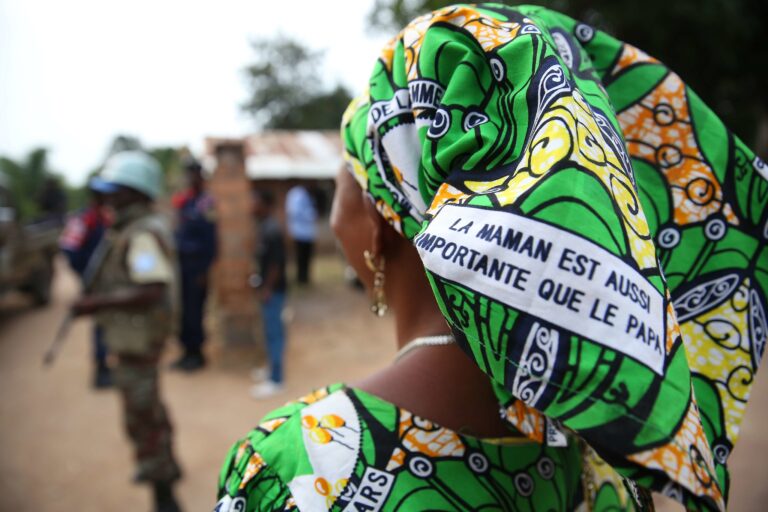
Image: MONUSCO Photos, CC BY-SA 2.0 https://creativecommons.org/licenses/by-sa/2.0, via Wikimedia Commons

Three Poems from Gillian Thomas

loose harvest

In another life, I was edible
flowers. I wore a fitted baby tee
that said tubular. It came to define
me. Fingerling sounds dirty—name of a 
slim potato. Early, I was planting
seeds, craving exotic leaves; slip of sweet
yam or horned melon. Prized for bitterness,
it takes time to develop. Now I have
but looking back, I long for gherkins that
lack acerbic zing. I see me, purple,
not fully ripe. My mouth waters for green
cucumber without the spine. Where do I
grow from here, I ask the dirt. It answers
with a wire cage; 6 feet of used earth.


Soft Eviction

I thought of it as home; that’s why I yelled:
I thought that lovers always yelled at home.
I never softened the blow. From my throat
I always spoke guttural truth. You knew
I loved you. Neighbors felt differently—
I blushed from the knocks at the door. I swore
I would reign it in. Anger moved in, and
You, lighthearted, said we should charge it rent.
Your steps went from Baryshnikov, though, to
Your leg-heavy impression of Bigfoot.
You never said you were stomping on my
Heart, but I know how fury shakes hardwood.
They asked us to leave. We cried and embraced.
We vacated; keys changed. New place. Same things.

Manifest

It shouldn’t surprise us
that he breaks—he was born that way;
thin, wan. Yellow would disappear
after he would incubate, but never really
went away. Defiant when we begged
for slumber; temper short while
awake. Eventually, fists like hammers
and slender feet against beanbag. 
For love of species as wild as himself,
refusal to eat any meat; but pride
in his heart and conscience doesn’t help
or bring any relief. He puts ten dollars
in my hand and insists we share with
elephants and lions. The therapist
wants to place him behind sturdy locked
doors and tells us to pray for
compliance. The sobbing and shrieking
and the “I don’t know why” rise regularly
and haunt us. I reapply makeup as I try
to discern sounds of a cry
from distant sirens.

Gillian Thomas is a graduate of New York City’s Hunter College, with a degree in English and Theater. Thomas’ work has been featured in multiple journals, including Beltway Poetry Quarterly, Gargoyle, Maryland Literary Review, JMWW journal, Gargoyle Online, Ligeia Magazine, Pembroke Magazine, and others. She was recently interviewed in Issue 1 of The Basilisk Tree poetry journal. She lives in Washington, D.C.’s suburbs with her husband, son, and a barking Miniature Schnauzer.

Image: Growth Tree Rings from Vijayanrajapuram under Creative Commons Attribution-Share Alike 4.0 International license.

Two Poems by CL Bledsoe

0

Eulogy
after a song by Tool

If I can’t cry for you, how can I cry
for myself? Someday, they’ll find you,
lightning burned tongue, wings long pawned,
liver eaten by vultures, a ring of ashes around
your head. I haven’t passed more than a few
hours without your name on my lips. So much
is left to say. The cars never stop coming.
The crows argue in my chimney. No one
could hurt me so well if they didn’t love me.
The hours have to be filled somehow.
When I put her to bed, my daughter will say,
I love you. I’ll miss you. Goodnight. Does anyone
miss you? Stumbling into the night. So cruel,
you should wear sunglasses so no one
can see your eyes. Every day and forever.
I love you. I’ll miss you. Goodbye.

You’re Tougher Than a Bump of Raw Medicine
from a line by De La Soul

A ghost whose tie will never lie right.
A ghost with see-through teeth hoping to impress.
I’m trying to master the secret language
that only we speak, the language
of our bodies. You are a beautiful dream
I never want to wake from.

Four hours pass between glances.
Four hours pass and I can’t step away
from your voice. I need it like caffeine
in the morning, like the plans that keep
me hoping: this time. Let me soak in the warmth
from your smile and never know fear again.

Baby, you’re like the sunset after a hard
day, let me hold your face in my hands
until I grow solid. Let’s load up my battered
car, travel the country solving crimes. Let’s
climb the mountain of everything that’s fallen
away to lead us to these days. Let’s be happy,
baby we deserve it. It’s so close, I can see
it in your eyes.

Raised on a rice and catfish farm in eastern Arkansas, CL Bledsoe is the author of more than thirty books, including the poetry collections Riceland, The Bottle Episode, and his newest, Having a Baby to Save a Marriage, as well as his latest novels Goodbye, Mr. Lonely and The Saviors. Bledsoe lives in northern Virginia with his daughter.

Image: Ser Amantio di Nicolao, CC BY-SA 4.0 https://creativecommons.org/licenses/by-sa/4.0, via Wikimedia Commons