Home Blog Page 77

Two Poems by Kimberly Ray

WHERE HAVE ALL THE PEOPLE GONE?

Another December,
Another end of the road
As I look around and wonder,
Where have all the people gone?

Tucked in tighter to their circle
Under the guise of staying healthy,
They bother not to dine out or congregate.
O, where have all the people gone?

In their pj’s working at home
Two years on
but have they been the wiser
Or more isolated than society demanded?

It began with constant check-ins,
Reunions with Zooms,
“How are you getting on?” led to
“How have you been?”
O, where have all the people gone?

A text, a flirt, a wink, a necessity
To remain in contact without contact
Has all gone.
O, where have all the people gone?

A walk, a coffee date, a drink,
Dinner with friends,
Anything to maintain a semblance of normalcy.
O, where have all the people gone?

UNDER THE COVERS

The only place where I feel safe, under the
warmth of covers next to my bare skin. He
reaches out a hand to acknowledge my presence, for me to
acknowledge his. I curl over harder, inching farther away to the edge.
All to show that I am not okay, that I crave my own space.

I struggle over the act versus the lack of explanation that should exist.
My inaction has become my only voice, remaining silent when he prods
to know if I’m okay or need anything.
I need space, more space than this place allows.

“We don’t have to …” I whisper in reply.
“You mean you don’t want to.”
He understands more than I can say.

I need to leave this tension, this room closing in
but these covers, this space, I cling to
as the only tenderness that remains.
He waits for movement as I lay there
clinching, hoping, waiting for it to pass.

He tells me to breathe.
How can I relax when I just want to scream?

Kimberly Ray is the author behind the poetry series Coffee Shop Sessions (2018, 2020, and 2021). Her work has been published in Clay Literary, 3 Moon Magazine, Teen Belle Magazine, The Daily Drunk, the NoVa Bards 2020 Anthology, Confetti: WbtR Anthology 2021, and Poets Anonymous 30th Anniversary Anthology. Kimberly was awarded first place in the Love Poems category of Loudoun County Library Foundation’s 2020 Rhyme On poetry contest for her piece “In My Pocket.” She serves on the board of the writing group Write By The Rails as co-secretary and an active member of Spilled Ink, both based out of Prince William County, Virginia. Her poetry delves into the intricacies of relationships: the complex nature of discovery, attainment, and loss. She lives in Loudoun County, Virginia with her family. To find her latest work please visit: https://coffee-shop-sessions.com

Image by Serge Melki from Indianapolis, USA, CC BY 2.0 https://creativecommons.org/licenses/by/2.0, via Wikimedia Commons

Three Poems by Juliana Schifferes

Close Encounter at a Grocery Store

Grayed Vans, downcast eyes

Bear lumbering after cookies

How have you turned bald?!

Your quiet stare ceased.

How dare you remain yourself!

Return to apples.

Paths break: produce? snacks?

Thicker spine? Luckier stars?

Vans stumble away.

Exercise Cycle

A. (The Treadmill)

The drama is firmly inside me this time.
I have no one else to blame.

I’m out of shape, I gasp for breath. I taste salt
and perhaps a hint of blood: a bitten lip?

I decided to run on the treadmill.
A last grasp (or gasp?) at self-discipline.

B. (The Home Practice)

As I enter the plank position
my body shakes like a top’s last exertions.

Is this aging?
The growing pains that will become middle age?

I remember the forcefulness
with which
I jutted my hips into the air
just six months ago.

I feel the flab of my abs sink towards the floor
and a rotund ass attracts my attention in the mirror
across from me.

Pain and wonder
at the pandemic’s idea of wit.

C. (The Yoga Studio)

My inhale staggers drunkenly during dolphin pose.
If my breath could walk it would clomp like a child with too big boots.
my exhale explodes
an exclamation
an ejaculation
of all the fire burning inside.

Autumn Cycle

1.
Blazing sun illuminates red maple leaves
embroidering the horizon
How could I possibly elaborate upon their reds’ brash eloquence?
Their tiny banners in the wind
An invasion of beauty
Challenging the heavens

2.
Gingko leaves flicker and dance like tiny flames in the wind
What to make of this brief riot of yellow
pushing against time and the season
to infuse our Septembers with captured light

3.
Neon lights and tree branch shadows dance together
and the streetlight splashes the oak with light
finding crevices to squeeze through and expose the sidewalk
like an old daguerreotype,
or a child’s paper snowflake.

Juliana‘s home base is in Washington, DC. Practically writing since birth, she has published twice in Maryland Bards (2020 and 2021), and now twice in Bourgeon. She is a community outreach worker and wordsmith in the nonprofit industry. Inspired by the work of Vallejo, Robert Pinsky, James Merrill and Delmore Schwartz. In her free time, you’ll find her curled up with contemporary poetry and a cat.

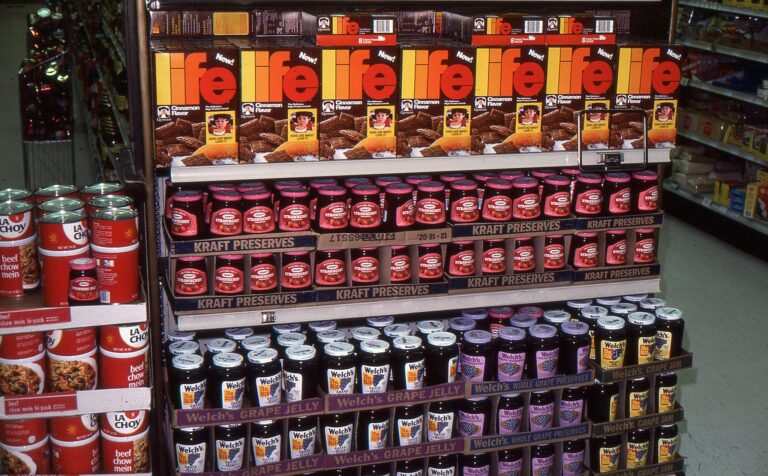
Image by Gary Hoover, CC BY 4.0 https://creativecommons.org/licenses/by/4.0, via Wikimedia Commons

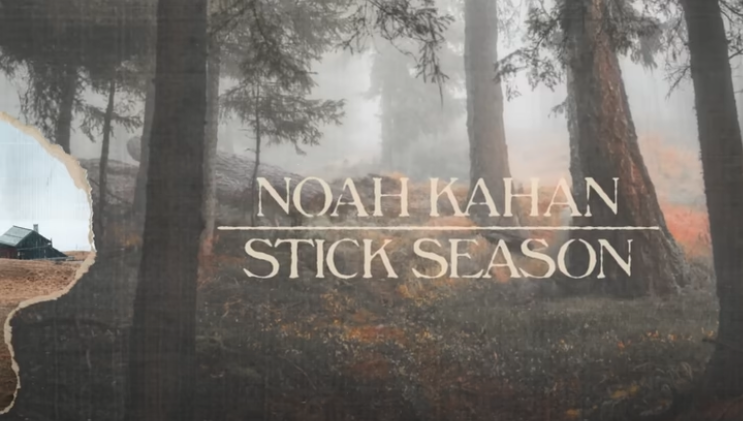
Noah Kahan’s “Stick Season” Dives Headfirst into Who We Are and Where We Come From by Francesca Theofilou

This article is the winner of the 2022 DC Student Arts Journalism Competition. Click here to learn more about the competition.

It is, indeed, the season of the sticks, as well as a very busy fall for Noah Kahan. Following the success of his third full length album’s titular lead single, the Vermont-born singer-songwriter released the highly-anticipated Stick Season (2022) on Oct. 14, two days after setting off on his largest-scale US tour yet. Despite his rising popularity, Kahan’s latest album is undeniably authentic in its depiction of coming of age in small-town New England. Through rich storytelling and accessible themes, Kahan invites everyone, from New England or elsewhere, to immerse themselves in his journey through love, loss, and seasonal depression.

Stick Season follows up Kahan’s 2021 album, I Was/I Am, a pandemic album characterized by its darker themes of isolation and self-reflection, in what feels like a natural progression. Kahan transitions from the exploration of who he is that he embarks on in I Was/I Am, to the examination of how he became the person he is today in Stick Season. While I Was/I Am has a more pop-influenced production style, removing the rasp in Kahan’s voice and relying more on piano-driven melodies, Stick Season seems to return to the guitar-driven, folk-influenced roots of his first album, Busyhead (2019).

Stick Season’s biggest strength is Kahan’s masterful storytelling. Keeping with the tradition of American folk music, each track on the album tells a rich and complete story. Through his lyrical specificity, Kahan is able to trigger a range of emotions in the span of a standard song. “Orange Juice,” the longest song on the album clocking in just short of five minutes, lays out the most compelling of these tales. The song begins with quiet guitar strums as Kahan offers the subject—a loved one who got into a drunk driving accident years ago that was fatal for some passengers—orange juice, promising that “no one will tempt you” because “we know you got sober.” After the first chorus, the tone shifts from a soft request to a screaming plea, with the incorporation of thunderous drums and quick-tempoed banjo. Kahan’s voice breaks as he exclaims that the crash “made you a stranger” and “filled you with anger.” The subject gets a response at the refrain of the song, and points out “that the world has changed” and challenges Kahan: “don’t you find it strange / that you just went ahead and carried on?” After this response, all of the music fades to a single guitar strum once again as Kahan expresses that above all, he wants this person to forgive themselves. Through this song, framed as a conversation, Kahan describes a lifetime in just a few minutes, detailing a story of pain and forgiveness that draws listeners in from the very first verse and has them crying at the end, as if they too have experienced this exact event.

While some of his songs are as heart wrenching as “Orange Juice,” others, like “She Calls Me Back,” are pure fun. The track describes the thoughts running through Kahan’s mind—from “Do

you lie awake restless?” to “I don’t get much sleep most nights” to “Everything’s alright when she calls me back”—as he waits for a girl to return his calls. It’s the perfect song for dancing around in your room, maybe waiting for a message from a special someone.

The genius of Kahan’s songwriting is in the way he utilizes small details to evoke strong emotions. He is never just simply describing something that has happened to him; instead, he pours his inner monologue, his deepest fears, and his rawest emotions into his lyrics. Rather than explaining that someone he loved has died in “Strawberry Wine,” he sings, “We buried your bones in plywood.” The imagery created by the sentiment, bones buried in a plywood box, is so jarring and novel that it evokes a deeper sadness than the phrase ‘died’ could. This tactic works just as well for his more upbeat songs, like “All My Love,” where he introduces a high school relationship by describing, “I leaned in for a kiss thirty feet from where your parents slept.” This evokes such an intense feeling of falling in love as a teen, kissing in your childhood bedroom, growing into new relationships while feeling stuck in old ones. Kahan’s lyrics never explain how listeners should feel or direct them to feel any certain emotion; instead, they simply set a scene that conducts listeners to produce those same feelings themselves, relevant to their own lives. Using the smallest of details to set a vivid scene, he does not merely describe pain or joy or loneliness, he causes it.

Kahan’s brand has always been the fact that he is from New England, but this album centers that upbringing, using comparisons to New England weather to explain his emotions. In the first track, he opens the album by asking for forgiveness for his “Northern Attitude”: his standoffish nature and seasonal depression, the products of being “raised out in the cold.” On “Stick Season,” Kahan describes that he is “terrified of weather” as the colder months bring on his darkest feelings. He compares the loneliness of his own life as he transitions from adolescence to adulthood to Stick Season in New England, after all of the leaves have fallen off the trees, but before the first snowfall. The landscape becomes a monotonous palette of gray skies, bare twigs, and decreasing temperatures. As a New Englander, I could instantly picture the “season of the sticks,” and feel the despair and quiet loneliness that permeate the late fall.

Simultaneously endearing and disparaging references to New England abound, and each one feels like a special shoutout to those bonded through skipping school for parades at least once a year, spending the entire day at the anomaly that is Jordan’s Furniture, and drinking far too much Dunkin’ coffee. One of these callouts comes in “Homesick,” where Kahan describes how sick he is of his tiny hometown with an act of clever wordplay. At the climax of the chorus, Kahan exclaims,“I’m mean because I grew up in New England,” and it’s hard not to scream the line with him. This one line has, of course, become a trend on TikTok, where users describe the different ways they were shaped by the places they grew up in. Kahan himself has reacted to these videos, writing that it is “so cool how this song is allowing people to express the quirks of where they’re from.” At its core, Kahan’s New England weather references aren’t about New

England at all; rather, they’re about the ways in which the place we grew up in shapes the person we become, the people we choose to trust, and the relationships we keep.

On Stick Season, Kahan weaves together powerful vocals and layered instrumentation with a low-tech production style, creating a stunning, cohesive sound throughout. It’s a love letter to the string instrument, and it flaunts the many different ways in which it can be utilized. Kahan’s sweet spot lies between songs you can scream in the car and songs you can strum along to around a campfire. Each track is acoustic through and through without sounding unnecessarily soft or slow, as Kahan knows when and where to use softness to his advantage without making the album feel sleepy. Songs like “The View Between Villages” build to larger-than-life chords that can be simultaneously felt as a swell that surrounds the listener like a warm hug and as their own heartbeat, steadily rising from deep within themselves.

“The View Between Villages” is to Stick Season as “Happier Than Ever” is to Billie Eillish’s Happier Than Ever (2021) or as “I Know the End” is to Phoebe Bridgers’ Punisher (2020)—it’s a story of juxtaposition, where a steadily paced intro gives way to an energetic release at the climax. It starts off measured and methodical, with heavy reverb and a bass drum that acts as the song’s heartbeat, but after the first two verses, the tempo changes completely. Kahan belts his bittersweet inner monologue in the last minute of his drive back home, a cathartic release before returning to the stillness of his childhood home. The genius of the track is that it’s the perfect song to scream as you pull into your driveway, because that is exactly what it is about. Once again, Kahan does what he does best by memorializing the familiar, and he strings the listener along on a journey they’ve experienced so many times but never unpacked.

The entire album is a sensory experience. In “Stick Season,” I can feel the last few leaves crunching under my feet, and the cold wind biting at my cheeks as I walk home in the months just before winter. In “All My Love,” I can see my awkward first kiss in a Chili’s parking lot (unfortunately very true). Stick Season is not background music, it’s an emotional tour-de-force. It is a crackling fireplace and learning to drive and the memories we forgot we held onto deep within our bones.

There is something intangible and unnamed about Kahan’s work that just makes it so compelling. The catchiness of his choruses, the punch of his bridges, the forceful guitar strums, and the echoing harmonies all fit together just right to create this no-skip album. Kahan creates songs that cannot be hummed or softly sung; they must be shouted from rooftops or screamed from a car going 80 on the highway, simply because the lyrics and chords are understood at the core of who we are.

Francesca Theofilou is a junior at Georgetown University studying Nursing. She is the Halftime Leisure Section Editor for The Georgetown Voice, Georgetown’s Premier Newsmagazine. When she is not writing about new music or TV, she enjoys dancing and exploring DC bookstores and coffee shops.

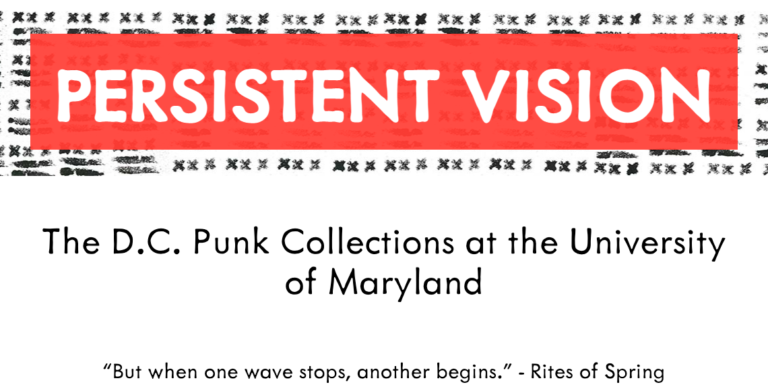
Persistent Vision: How UMD’s Punk Collections came to be by Molly Szymanski

This article was a finalist in the 2022 DC Student Arts Journalism Competition. Click here to learn more about the competition.

John Davis rolled over on the short, flat couch in the live music room at WMUC’s radio station. It was 6 a.m..

He stumbled across the hall, barely awake, to the FM broadcasting studio and began hosting his show. On paper, he was a second-semester freshman at the University of Maryland, but really, he just wanted to make music.

“I was not interested in waking up at eight in the morning, so I didn’t really do that well in school.” Davis said. “But in other ways I did… I got a lot of inspiration and built this foundation that enabled me to go and play music.”

The then-17-year-old wore many hats. Any free time he had was spent completely immersed in the scene.

“I had a record label, I had a zine, I distributed records, all those things. It’s all I wanted to do all the time. I was going to shows four or five nights a week. I just completely lived in it,” he said.

In its heyday in the late ‘80s, College Park was home to multiple DIY venues and restaurants like the Varsity Grille on Route 1 and King Kong Restaurant off Adelphi that hosted punk staple bands like The Replacements, Bad Brains, and Slickee Boys.

The existence of shows like this in College Park was ever-fleeting, though. In 1979, the city attempted to ban punk bands from playing in its limits, citing the young fans with foul mouths as its reasoning. While the motion wasn’t passed, noise complaints were dealt with militantly, so by the time Davis got to UMD in the mid-’90s, these smaller shows were hard to come by.

While Stamp’s Union Grand Ballroom and Ritchie Coliseum brought powerhouse acts like the Violent Femmes, Ramones, and Fugazi, the energy of on-campus shows was more sterile, Davis said. So, many of the shows that he attended were in D.C.

“I was going to Black Cat, 9:30 Club all the time. St. Steven’s, Wilson Center, there were lots of different venues that would come and go,” he said. “That was my whole world.”

Upon graduating, all Davis wanted to do was tour with his band, and he did.

Q and Not U, his post-punk group, amassed a decent amount of success. Even today, the band maintains nearly 15,000 monthly listeners on Spotify.

After putting out three studio albums, touring the world, and losing a bassist along the way, the band realized it was time to part ways. Davis wanted to find a path that encompassed his love for D.C. music in the same way he was able to both as a student and in his band. He found himself right back where he started, at the University of Maryland, but this time as a librarian and curator for the Special Collections in Performing Arts.

John Davis now sits in a button-up and khaki slacks in his office at the Clarice. He doesn’t walk around with a crusty leather jacket or black painted nails, he looks like just a regular librarian, a scholar. The unsuspecting passerby would never guess that his research was in punk history, something traditionally not associated with academia.

Davis noticed that institutions like New York University, Duke University, and the University of Iowa were emerging with new research on early fanzines and punk and rock music cultures. In 2015, he pitched a similar concept— one that showcased the history of the punk and alternative music scene in D.C.. With a green light from the department, he got to work on a project that would eventually become a multi-part digital exhibit: Persistent Vision— The D.C. Punk Collections at UMD.

Where does one even start when documenting over 40 years of rich subculture? For Davis, it began by dusting off his old fanzines.

“I donated my own stuff first,” he said. “Then, I just started asking around— ‘any chance you have any extra fanzines? Other materials you would like to donate?’”

After tireless efforts through mutual connections and social media followers, Davis realized that there were more materials willing to be given to him outside of fanzines, fliers, photos, recordings, all allowing him to better encapsulate what it was like during the rise of DMV punk.

“What people have been able to do within their limitations is so fascinating to see,” Davis said.

The collection is divided into five sections— Punk at UMD, DMV punk history from 1976-79, 1980-89, 1990-92, and 1993-present, which is still a work in progress.

Alongside the emergence of go-go, a genre with roots in funk and hip-hop, according to the collection, in the late ‘70s, punk rock was born in D.C.. Local act Slickee Boys is seen as a staple to this era, playing multiple shows with other emerging punk bands at a venue just blocks from the National Mall, d.c. space, which has since been turned into a Starbucks.

The ‘80s were a time of transformation for the scene, producing a more hard and fast strain of music from bands like Government Issue, State of Alert, and Minor threat who, according to the collection, “completely [reshaped] the D.C. and national punk scenes.”

“I think D.C. will define the ‘90s [punk era],” Ian Svenonius, singer in the band Nation of Ulysses, said in a 1990 interview with Sassy Magazine.

And it would. Intertwining with the emergence of the indie scene, punks became more creative and connected, making networks of artists that allowed the scene to blow up on a national scale. Even still, they were rooted in their local community.

Punks use their music as agents of change against social problems, and D.C. was no different.

Amidst increasing drug-related violence and decreasing social services, D.C. punks became more upset by the climate they were experiencing in their city. That anger was channeled into raising money and awareness for not only these issues, but issues nationwide, like U.S. military intervention in El Salvador and the AIDS crisis. Through their zines, music, and organizing, real change was happening at the hands of the punk community. The empowerment streaming out of this subculture is part of the reason why Davis found himself so enamored by it in the first place. It’s resonant in the collection’s name itself, “Persistent Vision,” which is drawn from a lyric of local punk rock band Rites of Spring.

“The title speaks to how consistently throughout the history of this community, there has been a forward-looking vision and people who wanted to do new things, try things differently, and push against all of the boundaries in music and culture, and everything, really,” he said.

There’s still more to be added to the collection, too. Once the D.C. scene rose to grand-scale fame, it only inspired those involved to do more and get even better. The ‘90s and 2010s were very active periods of the community, according to Davis, and as such he and his research team have a lot of material to comb through.

And it doesn’t end there. Even now, the punk community continues to thrive in the DMV.

According to Davis, the barriers of entry are low, meaning anyone can get involved.

“There’s something about punk that speaks to people, that keeps bringing more people in, that keeps it moving forward,” he said. “Whether it’s putting on shows, or making music or making a zine, you just have got to do it with whatever you have available.”

Molly Szymanski is a third-year journalism student at the University of Maryland, College Park, most interested in covering the local music scene and stories from the fringes of the community. When not writing, they can be found wreaking havoc at WMUC, Maryland’s college radio station, or hanging out with their cat, Buckwheat.

A Dream Re-Rendered by Zeniya Cooley

This article was a finalist in the 2022 DC Student Arts Journalism Competition. The article was first published in the magazine Salvation South. Click here to learn more about the competition.

“Gone With the Wind” and its red-earthed Georgia have been on my mind for some time. The backdrop of racial violence in Buffalo, January 6 insurrection hearings, and ongoing attacks on so-called antiracist indoctrination have all informed my new perspective on the 1936 novel.

I once loved “Gone With the Wind,” the tale of a spoiled Southern belle and the incineration of her antebellum utopia. I once caressed its cover depicting a couple dressed in white clutching each other against a burnt orange sky, the shade of battle. But when I opened my copy of the book recently, I paused at a line from Pat Conroy’s preface in the 2008 Pocket Books edition: “No black man or woman can read this book and be sorry that this particular wind has gone.” After reading that, I wondered what it meant to be a Black Southern writer and an heir to scorned earth during these tumultuous times. I know now that the novel’s world of division and delusion could never truly be gone.

By the eighth grade, I decided I wanted to be cultured. That desire led me to watch Golden Age Hollywood films and read what was considered the greatest literature of all time. Of course, the book and film versions of “Gone With the Wind” were a part of my cultivation. I do not remember my initial reaction to the romanticization of oppression in the sprawling novel. Surely, I must have resisted the comical and contemptible depiction of enslaved Black people. I must have winced at the transcription of Black vernacular and how it implied a Negro grin despite the horrors of chattel slavery. So, why do I only recall a kind of passive consumption—my eyes glued on the page, my mind unquestioning?

I could attribute my lack of critical engagement then to the ignominious education I received on enslavement. Most of my lessons on slavery involved my teachers relaying scattered facts about plantation life or screening an animated episode on abolitionist Harriet Tubman from the 1990s children’s television series “Animated Hero Classics.” According to the public schools I attended, slaves led palatable lives, their biographies rendered in cartoon colors.

The same year I read “Gone With the Wind,” my social studies teacher distributed notes for students to fill in and informed us that plantation owners treated enslaved Black people “relatively well.” He emphasized this point by screening a whipping scene from the 1977 miniseries “Roots” and claiming that plantation owners did not subject slaves to such violence. Later, my teacher led a principal-approved Underground Railroad activity in which me and my classmates roamed the halls as runaway slaves and asked other participating teachers if they were “friends or foes.” The goal was to garner three signatures guaranteeing our freedom.

The minimization of enslavement continues in public schools across the country. In June, the Texas Tribune reported that the Texas State Board of Education received a proposal from a group of educators seeking for slavery to be taught as “involuntary relocation” for second-grade social studies. This erasure of America’s racial history has accelerated with the enactment of legislation restricting how educators discuss racism and systemic inequality in classrooms. According to Education Week, 42 states have introduced bills or taken actions that restrict the teaching of critical race theory—an academic framework typically taught in graduate school— and regulate how teachers discuss racism.

When I was 15, in 2015, my father bought me a copy of “Gone With the Wind” for Christmas. Six months had passed since Dylann Roof, a white supremacist, murdered nine Black parishioners of Emanuel African Methodist Episcopal Church in Charleston. Somehow, I did not connect his Lost Cause ideology with that of the book. But like “Gone With the Wind,” which characterized enslaved Black people as grateful to their oppressors, Roof insisted on the benevolence of chattel slavery.

In an archived version of his nearly 2,500-word manifesto, Roof wrote that he read hundreds of slave narratives that were largely positive, with many of them purporting that slaveholders prohibited whippings on their plantations. Before he entered Mother Emanuel, Roof visited a Confederate museum and former plantations in South Carolina —remnants of the Old South so glorified in Margaret Mitchell’s novel.

And yet I still collected the book, missing these horrific parallels between past and present. Upstairs in the bonus room of my parents’ house, I placed the book in an empty display cabinet. It joined Harper Lee’s “To Kill a Mockingbird,” Sharon M. Draper’s “Tears of a Tiger” and other books that I favored. The titles were arranged unconventionally: flat down and placed in threes on top of one another instead of spine up and shelved sideways. I wanted them evenly placed according to weight and dimension. The taller books were on the bottom of each pile while the smaller, stouter books were on the top. In this unusual arrangement, my paperback version ofGone With the Wind” wound up on top.

It was not until last year, after reading and collecting Ann Petry’s “The Narrows,” that I decided to remove “Gone With the Wind” from my book collection. Petry’s 1953 novel is set in Connecticut and focuses on an affair between Link Williams, a Black man hoping to write a history of slavery, and Camilla Treadway Sheffield, a rich white woman. After reading its plot about a Black man’s abduction and murder because of a white woman’s false accusations of assault, how could I place it under “Gone With the Wind,” a tome of racist mythology? How could I when in the latter book, the fable of the white victim and Black brute leads to the Ku Klux Klan avenging Scarlett O’Hara’s attack by a Black man and his white accomplice? This fable has emerged numerous times in real life—from Emmett Till to Christian Cooper.

According to PEN America’s Index of School Book Bans, 1,586 incidents of book bans occurred between July 1, 2021 and March 31, 2022. PEN America also found that books featuring protagonists of color made up 41 percent – 467 books in total – of banned titles. When I retrieved “Gone With the Wind” from its place on the dresser recently, I read Pat Conroy’s preface and thought of these bans. “Democracy works because of the will of the people, but it has the opposite effect when scholars begin to call out those books that make up the canon of our nation’s literature,” he wrote. Conroy added, almost sneeringly, that “Gone With the Wind” “outlived a legion of critics and will bury another whole set of them after this century closes.” Indeed, the same book touting the Old South has gone mostly unscathed while the books imagining a more inclusive world are under fire.

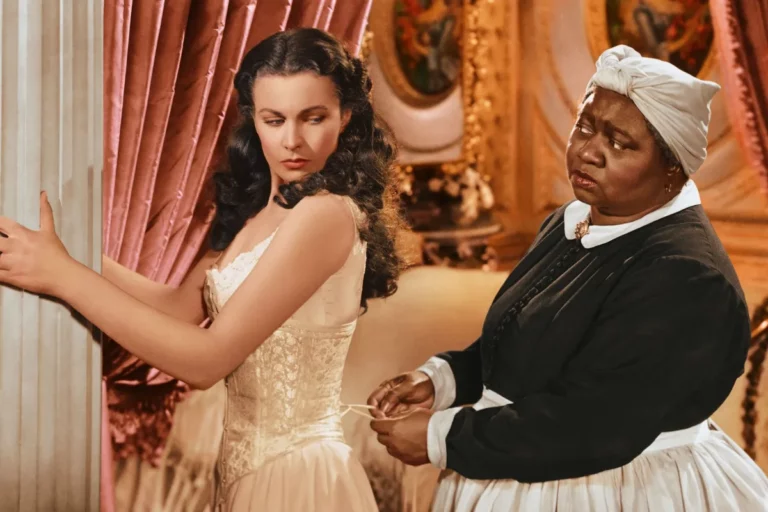
In the 1939 film adaptation of “Gone With the Wind,” Scarlett O’Hara’s father, Gerald, comforts his lovelorn daughter as they walk the grounds of the Tara slave plantation. When Gerald tells Scarlett she will inherit the land when he dies, Scarlett scoffs. But Gerald turns her around to gaze outward from their spot overlooking the estate. We see the orange cumulus clouds and blue patches of sky as Tara’s theme song swells in the background. “It’ll come to you—this love of the land,” insists Gerald as the wind blows his coat and Scarlett’s billowing skirt.

My maternal great-great grandparents once owned 200 acres of country land in South Carolina now known as Cotton Acres. They bought the land from a white man after farming it for years. Later, they were forced to sell half of the land back. The rest became heirs’ property for my family. Several of my relatives have sold their parcels over the years, reducing the land to around 60 acres. Two of those acres now belong to me. I want to keep them and learn about the original 200 acres my family once owned. I want to narrate its history—from the Lumbee tribe that likely once lived on it, according to a search on the Native Land website, to my grandmother who drove a tractor through it as a child. The land of the South deserves another story. Not one focused on white entitlement. But one that considers the pride and pain of the Indigenous dispossessed, the hopes and dreams of the Black inherited.

I am still not sure what to do with my copy of “Gone With the Wind.” As a teenager, its vivid prose took my breath and its story of determined survival shook my core. But it stands on my destruction. It stands on my defeat. The delusions of the novel persist in the rhetoric of stolen elections and the “Great Replacement” theory. Its hostility toward Black people existing outside of submission and violent oppression carries on in the white supremacists who kill grocers. I am to be erased while the stories intent on my slaughter are to be protected and exalted. The Old South of “Cavaliers and Cotton Fields” thus remains in part. It is a dream re-rendered.

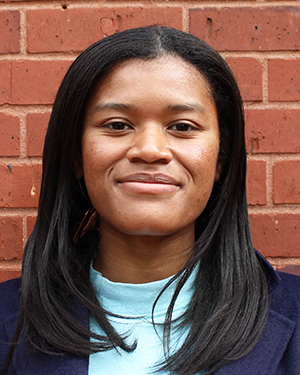
Zeniya Cooley is a writer based in South Carolina. Her ruminations on race and culture come in the form of personal essays, news articles, and narrative poems. As a creative, she is committed to producing stories that sing and art that matters. For further reading, subscribe to her newsletter The Ziaries, where she mixes wordy, nerdy ramblings with brooding Black girl poetry.