Home Blog Page 83

Three Poems by Diana Tokaji

Not a Sonnet

1    Vulnerability is a noose to the rope braid of shame
2    like sun trips a shadow cast by trees in the park
3    ashamed for the striped hint of resonant blame
4    the length of the tree looming twice a shape dark
5    she, my client knows risk, she has held her breath tight
6    she has worshiped her courage and workshopped her words
7    and braved institutions where judges hold might
8    her body male-ravaged withstood all this absurd
9    with faith and with pressing supreme human strength
10  with purpose and danger, no guarantee of the length
11  assaulters would go or their protectors would take
12  to defend them their actions their innocence fake
13  i am she, we are we, each body that’s plagued
14  and survived yet bone-wounded, spirit hardly unscathed.

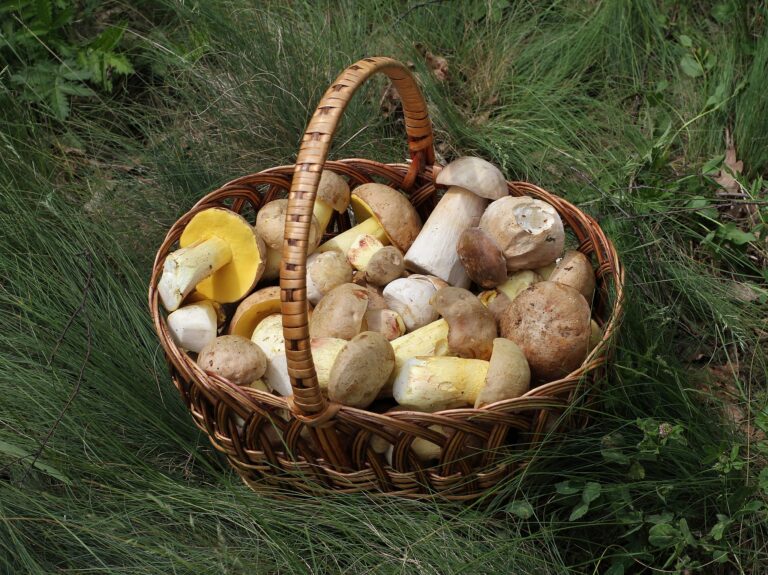
Corn Smut
to DJG

The names may not be flattering: Dog Vomit Slime Mold.
But fascinating. Zygomycota. True Morels.

(Respect the messengers)
Chanterelle. Flammulina. Cordyceps. Corn Smut.

In valleys, wetlands,
forest fallout. But note:

Satan Bolete is toxic.
Hen-of-the-Wood tastes nutty.

(Never underestimate the pauses)
Earth’s processors lay quiet till they burst.

(Never undermine when you speak of your life)
Stinkhorns grow from putrid waste:

Devil’s Stinkhorn the phallus and
Bridal Veil Stinkhorn in white skirt of lace.

Chytrids may be ancient, aquatic, cosmopolitan,
rich in fatty acids that crustaceans love

but toads are dead in Tanzania –
zoospores go either way. Your

White Brain Jelly Fungus,
grows brilliant as snow

on dead or fallen branch, is
translucent, anti-inflammatory,

brain cell protector,
fungal, flower, medicine.

In brackish water, in rotting earth,
in peats, bogs, rivers, ponds…

144,000 kinds:
insistent, ancestral, mycelium—

my son you are
storehouse of what is to come.

OLGA

And don’t forget her father
one of six when they were starving.
How Grandpa led them by moon
through ancient forest—
a broken bunker their new home.

How at night Grandma slipped
past wild pig in jungle thicket.
Picked grain from dead field—
cooked, fed six beaks
waiting in the dark.

So why aren’t your children starving?
the Russians soldiers would later ask.
Why are they still alive?
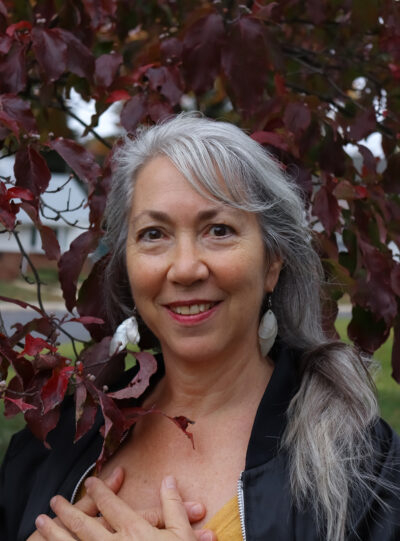
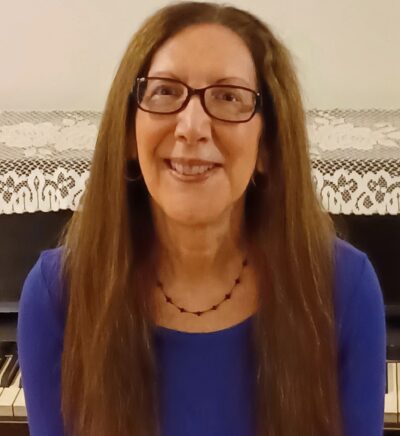
Diana Tokaji’s productions of dance and spoken word have been featured in London, San Francisco, and D.C. where her Capital Fringe Festival shows won Pick of the Fringe. She is the author of Six Women in a Cell, winner of the 2021 Best Indie Book Award for Nonfiction, and Surviving Assault: Words that Rock & Quiet & Tell the Truth, a resource book for survivors of trauma, and finalist in the 2021 Next Generation Indie Book Award. In 2020 she was honored to receive the Sonia Sanchez-Langston Hughes Poetry Award judged by poet Richard Blanco for Split This Rock, and her poetry, essays, and articles have appeared in The Quarry, Bellevue Literary Review, Tiferet, Author, Hole in the Head Review, The New Guard (2019 Knightsbridge finalist), Solstice Literary Magazine (2022 nonfiction finalist). She holds a B.A. in Creative Writing from San Francisco State University, an M.Sc. in Yoga Therapy from Maryland University of Integrative Health, and is a certified yoga therapist. Forthcoming are her collections, Book of Essays Before I Die; and Spoke: Poems of Squid, Cellmates, & Love.

Image by George Chernilevsky, Public domain, via Wikimedia Commons. Author photo by Maddie Brennan.


Two Poems by Eric D. Goodman

Dry Splash

All these years we’ve been worried about
the sea levels rising,
when what we should have paid attention to
was the fresh water levels falling.

Long-forgotten riverbeds and lake bottoms
reveal themselves
as dried mud,
cracked dirt,
rocks and sand.

The decades-long drought bears on,
waters evaporate,
the earth, dry.

I look into your moist eyes
and am reminded of the depths
beneath your surface,
the reserves hidden in those waters—
and I want to dive in and
splash.

Immersion

She dips her toe into the bath,
into the 120-degree water,
holds it there for a matter of seconds.

Instinct overrides determination—
she pulls out,
waiting for the temperature
on the thermometer to subside,
117, 115, 111.

Then, she eases in,
and is reminded of the thermal baths
of Budapest—

those sun-kissed fountains at Szechenyi,
a golden palace of indoor pools
surrounded by a network of exterior baths,

water pouring from decorative spouts
onto her neck and shoulders,
as she watched waist-deep locals play chess
on boards emerging from the surface.

She joined travelers in the whirlpool’s current,
circling like a devout pilgrim around Mecca,
then found paradise in the aromatic baths inside.

Across town, in Buda,
the famous baths in Gillert,
outdone only by the obscure ones
recommended by the café barista
next door to her rented flat
in the ruins of Pest.

The interior baths of various temperatures and themes
tempered frigid ice pools with spicy cauldrons
fiercer than the 110-degree water at home,
these extremes made possible
by the gradual increase and decrease
in temperature from pool to pool.

In those baths, she’d tested tolerance,
emerged resilient,
as a sword grows stronger
when taken from the red-hot forge
and plunged into ice-cold water.

Final whirlpool on the rooftop, overlooking the city,
jet streams relaxing the muscles
she’d pushed to their limits,
a reward for endurance.

Now, as she relaxes in the bath at home,
a Liszt rhapsody ricocheting off the tiled walls
massaging her mind,

she thinks of the frog who voluntarily boils
in an easy broth of consolation
unaware that it will kill.

Eyes closed, listening to the trickling piano
from a bathroom speaker,
falling into a steamy respite,
she imagines increasing the temperature—
bit by bit—in those Hungarian baths,

imagines it wouldn’t be
such a bad way to go.

Eric D. Goodman lives in Maryland, where during the pandemic, spent a portion of his hermithood writing poetry. He’s author of Wrecks and Ruins (Loyola University’s Apprentice House Press, 2022) The Color of Jadeite (Apprentice House, 2020), Setting the Family Free (Apprentice House, 2019), Womb: a novel in utero (Merge Publishing, 2017) Tracks: A Novel in Stories (Atticus Books, 2011), and Flightless Goose, (Writers Lair Books, 2008). Visit his website: www.EricDGoodman.com. (Photo credit: Nataliya A. Goodman)

Image “Water vapor of Sea Hell Hot Spring” from Soramimi under the Creative Commons Attribution-Share Alike 4.0 International license.

Three Poems by Juliana Schifferes

Abandoning Reason

skittering propositions

declare love

a superstition

damned to believing itself

we choose not to control

the burning breakdowns in logic

we’ve opened between us

Love, Past Continuous

there are no forevers

for people like us
cold as barbed wire

silence

will be our guiding star

our constellation

our bitterest translator

Resetting the Target (Cheit)

I climb into light

I blink my eyes

in the searchlight wings of tomorrow.

I face the primordial

pain of cockroaches

exposed to sun.

And after too long a sleep

pain riddles everything sore and unused

within me.

Juliana‘s home base is in Washington, DC. Practically writing since birth, she has published twice in Maryland Bards (2020 and 2021) and now a third time in Bourgeon. She enjoys watching B-movies with friends and taking long walks in Northwestern DC’s “urban forest” when she’s not engaged with poetry.

Image: Pinakpani, CC BY-SA 4.0 <https://creativecommons.org/licenses/by-sa/4.0>, via Wikimedia Commons

Three Prose Poems by Laura Costas

0


The Bending

There are whales in the sky. The last of the day’s sun presses up
brilliant, flat, white bellies; the higher-ups’ downward pressure, a
strongly moral force, rounds down dark, rain-child backs. These
repel at a blurred seam.
My little ship, too dim to panic even at this certain sign that the
world is ending, skims across the chop toward home.

At the Slash

The tender intersections of all the ephemeral lines in the sky, on
the map, of the mind, release. The little crayola squares of blue and
green, playthings of latitude, longitude, colonial, indigenous, stray
off the sphere unsupervised. Human footfalls apprehended by
sensors now belong to the air; compasses searching for iron merely
tremble with haphazard joy.
Today is not yesterday. The boundaries of your nations ease into
irrelevance, as soft to us as they are to the crossings of the balsam-
scented clouds.

Supermoon
We can do it anywhere. You in?
I didn’t think so.
But look, ours is a tender, over-creeping tide searching for distant
kin, waiting for the little under-wobble that tells us that our subtle,
darkened space is full again. Penetration and surrender, let’s face
it, it’s how the world turns, whether it’s a continent or the space
between your pants pockets. Sky wasn’t made to be caged, and black
earth won’t be risen above. We are irresistible, so why fuss?
The big boss left an empty seat. Let’s us kill the cardinals, lesser
clerics of the failure of love, and find our flow. Kill the wound the
world has made of us, tiptoe to the shore, and surge.

Laura Costas is a poet, artist, and DC native. She is the author of three books, Honest Stories; Fabulae, Tales for an Age of Ambivalence; and most recently, Ariadne Awakens, Instructions for the Labyrinth.

Image: Photograph of a painting by Eldred Clark Johnson., Public domain, via Wikimedia Commons

Two Poems by Nancy Naomi Carlson

0

ODE FOR THREE EXES

Ex-husbands, like other catastrophes, come in threes.
One dead, one fled to New York, and one out of touch.
The lost and found blues can be sung in any key.

Sometimes the one who is left is the one who leaves
first, after years holding close the same grudge.
Ex-husbands—leavers or left—come in threes.

If shoe hits glass or glass hits shoe to seal
the chuppah vows, it’s always the glass that gets crushed.
The lost and found blues can be sung. In any key,

“Erev Shel Shoshanim” will not guarantee
eternal evenings of roses and coos of doves.
Ex-husbands, like celebrity deaths, come in threes—

even marriages outside the fold. Years
later, a new wedding band, and with luck
the lost and found blues won’t be sung in my key

and no one will add to the wake of decrees,
voided ketubahs and deeds covered in dust.
The lost and found blues can be sung in a brighter key.
Ex-husbands (Count them!) come in threes.

GOOD SENSE

Like Ethiopian wolves,
I turn nocturnal with need
to translate the dark, silences
filled with loving voice mails
left by the recent dead
who promise to call me back.

Had I the good sense to pattern
my days by the chariot of the sun,
I’d write paeans at dawn, but
I prefer to make my hay by moonlight
while you sleep, sweet dreamer,
the closest I’ve come
to a sound choice in mates.

And like Rachmaninoff’s Vocalise,
sung with its one orphaned vowel,
I’m in a C-sharp minor mood tonight,
restless for barred owl shrieks
through the cracked-open window
of late fall—something to dissipate
fears that gather like flies to a wound,
not the least of which are reports
that my night owl ways
may syncopate my body’s
circadian rhythms, may even
abridge my life.

My internal clock measures two minds:
one steady as a metronome,
rocking in time to my mother’s
calibrated tones; the other
like a mare racing to the warmth
of the barn for the night
beats a path back to bed.

Nancy Naomi Carlson, winner of the 2022 Oxford-Weidenfeld Translation Prize and twice an NEA translation fellow, has published twelve titles. An Infusion of Violets (Seagull Books, 2019) was called “new & noteworthy” by The New York Times, and Piano in the Dark (Seagull Books) is forthcoming next spring. Her poems, translations, and essays have appeared in APR, The Georgia Review, Los Angeles Review, Paris Review, The Academy of American Poets’ Poem-a-Day, and Poetry, and she’s the Translations Editor at On the Seawall.

Image by Piet Mondrian, Public domain, via Wikimedia Commons