Home Blog Page 85

Two Poems by Keith Munroe

Patty

As all eyes close against you
nothing that really matters could yield to the wisdom
with which you suffer like an amorphous shade
reaching over the desperate peaks of ancient mountains
to which neither the skies nor those impassioned deserts of religion
can take away your liberty and say
“You are all alone Patricia”
because as the hours bend into their impish gauze of sad and lecherous appellations
the new year is like an animal
guiding her gentle paws between those careless boughs
where beach trees stand against the cold
and for all these ideas the wind will wait to accept you like a lamb
who builds her harbor in those January nights as she waits for spring.

For so long I’ve said “I’ve seen enough”
and it’s easier to let time stand apart from the path
where experience bears the weight of gravity like a cross
but then we sit at the table,
two despondent idols whispering their prayers into the landscapes of Virginia
and I can last another day,
a day, a day, and then one more day again
speaking like panting hounds about the parables of old men looking in the weeds for inspiration
along the highways of America
where it can all fall apart the day after, the day after, the day after tomorrow,
when we drink coffee
look out the window and see amid the trees labyrinth a place to speak about heaven and earth.

Amid all times amalgamation of coughing Januaries
winter is a woman walking towards the promise of heat
as old men sit beside the fire
and carve seraphim from the pliable timber of some grave and whispering forest
where first they found time alone and waiting to rename the universe
in the metaphor of her innocence
I think you are her,
hollow and beautiful as the cold wind outside this house,
how lost,
how unattainable,
how full of hope,
the poetry of growing old,
or at least a day,
a weak,
a month,
another year to catch your breath
and speak to the sun.

Names Or Anything

How many too many so many sorrows it takes too long to say
I love you
but I can pass the hours talking about philosophy
because you are mine
and whether we live or die we’d still be two lonely stars
who escape the insinuations of reality
to whisper into the ether
all the names that describe to the wilderness
her ideas about heaven and earth.

And when I go home I will see you again or I never will
but wisdom takes up the space like innocence between us
if only to immerge as the suffering
that forever follows those who wander as mortal ash
into the humanity of anger
because I can curse the cancerous Atlantis of your gentle heart
if it only meant that I would be alone because I love you.

And so as if one voice out the of the emptiness
the words of Jehovah are a tongue
that tell to those who weep the story of a thousand seas
drifting over my bones as I brace myself like a tower
to stand in the cold and think of you
to see what yields to us the fortunes of tomorrow
not that it will come to be or pass away into what might have been
but that the ideas that describe it
will with their murmuring expressions
evolve into the suffering of your body,
a cross I may never bear
but admire
for its understanding
of the intemperate poetry of your flesh.
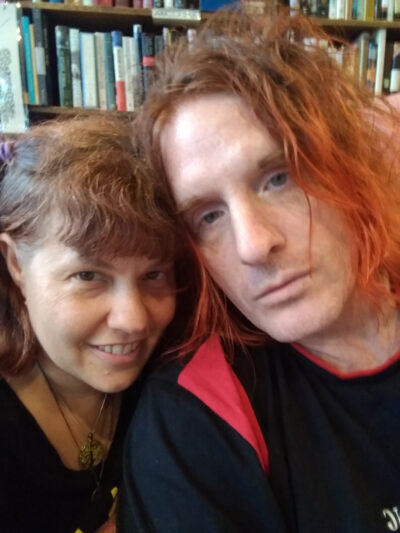
Keith Aaron Munroe was born and raised in Northern Virginia. He has spent most of his life trying to be a writer. In the past he took care of horses for a living. 

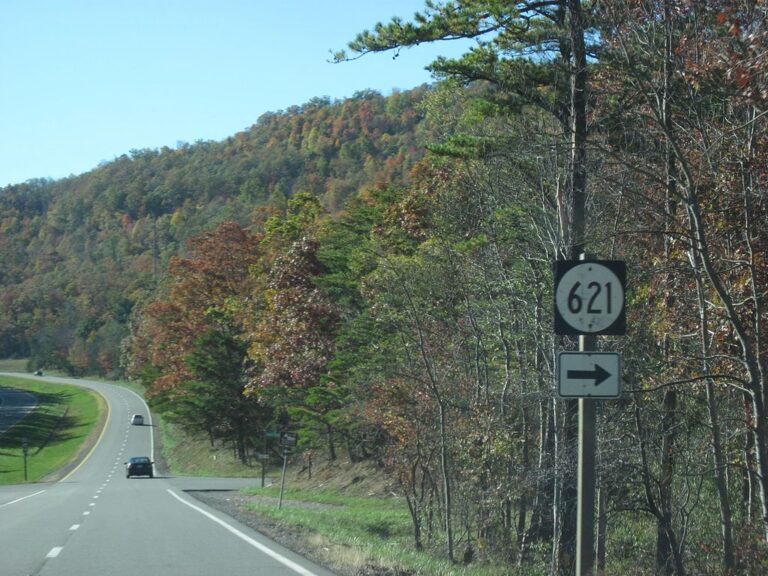
Image: Doug Kerr from Albany, NY, United States, CC BY-SA 2.0 <https://creativecommons.org/licenses/by-sa/2.0>, via Wikimedia Commons
Two Poems by Lynn White

A Question Of Identity

On her 90th birthday she looked in the mirror
and tried to identify the face looking back.
She felt the same as ever
but the face,
that was the mystery
how could she connect the two,
how she felt and how she looked.
Perhaps a mystic would tell her
that the face had been through the fire of life,
but so had everything that made up her identity,
or more accurately, her multiple identities,
different ones for every occupation,
every relationship
and every situation.
The ones foisted on her by parents
were soon rejected and replaced
by the ones she made up for herself,
different identities 
but always the same person,
easily recognised
but not in that mirror
but something to celebrate.


Cracking Open

Concrete and clay
glass ensconced
in metal frames,
paint on board,
gas in pits,

once
it meant something 
once
it had a purpose.

It’s over now
purposeless
cracked
empty
waiting
for a future
hoping 
that soon
something
will make its way
through the cracks
as time passes.

So now 
look 
carefully,
see
already 
something
is emerging

finding its way
making 
a new beginning
after the end.

Lynn White lives in north Wales. Her work is influenced by issues of social justice and events, places and people she has known or imagined. She is especially interested in exploring the boundaries of dream, fantasy and reality. She was shortlisted in the Theatre Cloud ‘War Poetry for Today’ competition and has been nominated for a Pushcart Prize, Best of the Net and a Rhysling Award. Her poetry has appeared in many publications including: Consequence Journal, Firewords, Capsule Stories, Gyroscope Review and So It Goes. Visit her website and Facebook page.

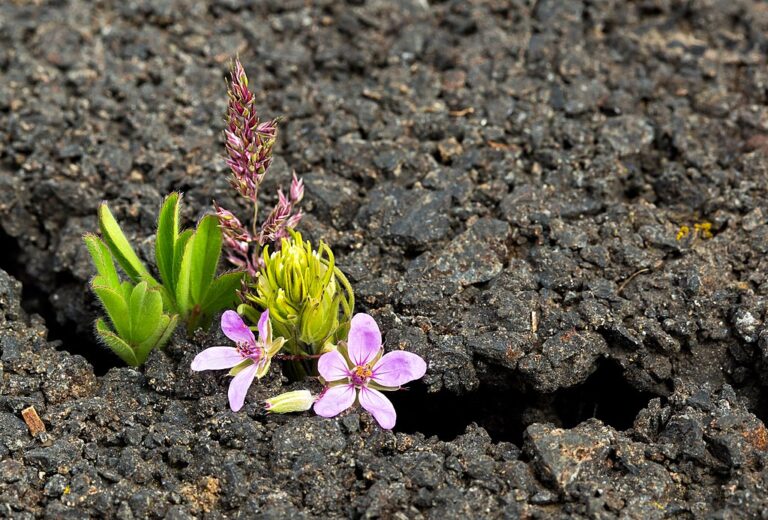
Image: “Crack in the Pavement” from Sheila Sund from Salem, United States, under the Creative Commons Attribution 2.0 Generic license.

Two Poems by j. lewis

new chairs

i didn’t expect white
but i knew black was out
maybe natural wood

anything to replace
the worn out and breaking
cane-bottomed kitchen chairs

chairs that had lasted
far beyond expectation
holding on, like me. holding on

when she found new chairs
online, of course, she said
these are the ones, but

you will have to assemble them
and i thought to myself
i’ve put so many things together

what’s four more chairs
prefab and requiring only a
screwdriver and included wrench

done in no time, and the old chairs,
faithful to the end, were cut apart
to fit the garbage can

no funeral, no eulogy, and almost
no regret, except for a twinge
as i sawed through the last leg

wondering what might become of me
when i am old past usefulness
but not ready to give in

check up

i tell him i had covid almost a year ago
he nods and says yes, it’s in my record

he asks what my concerns are, though that
is in the secure message i sent him days ago

we talk. or at least, i complain, he listens
easy fatigue, no stamina, vertigo, lack of focus

i thought he was listening, but he asks instead
about my depression and if the medication helps

yes, yes, i tell him, it works, but these symptoms
started long before the blues, so no. not that.

and then it starts. ekg, treadmill stress test
pulmonary function test, vials and vials of blood

every test, every sample, every result comes back
i’m in good shape for an old coot, and yet

the symptoms are still there. walk a block
in a mask and stop to huff, puff, and rest

climb one flight of stairs, pant for breath
nothing gets better, nothing gets easier

so what’s an old geezer to do when the check up says
i’m fine, but my body disagrees. what’s next?
what is coming next?

j.lewis is an internationally published poet, musician, nurse practitioner, and Editor of Verse-Virtual, an online poetry journal and community. When he is not otherwise occupied, he is often on a kayak, exploring and photographing the waterways near his home in California. He is the author of four full length collections and several chapbooks. https://www.jlewisweb.com/books.asp

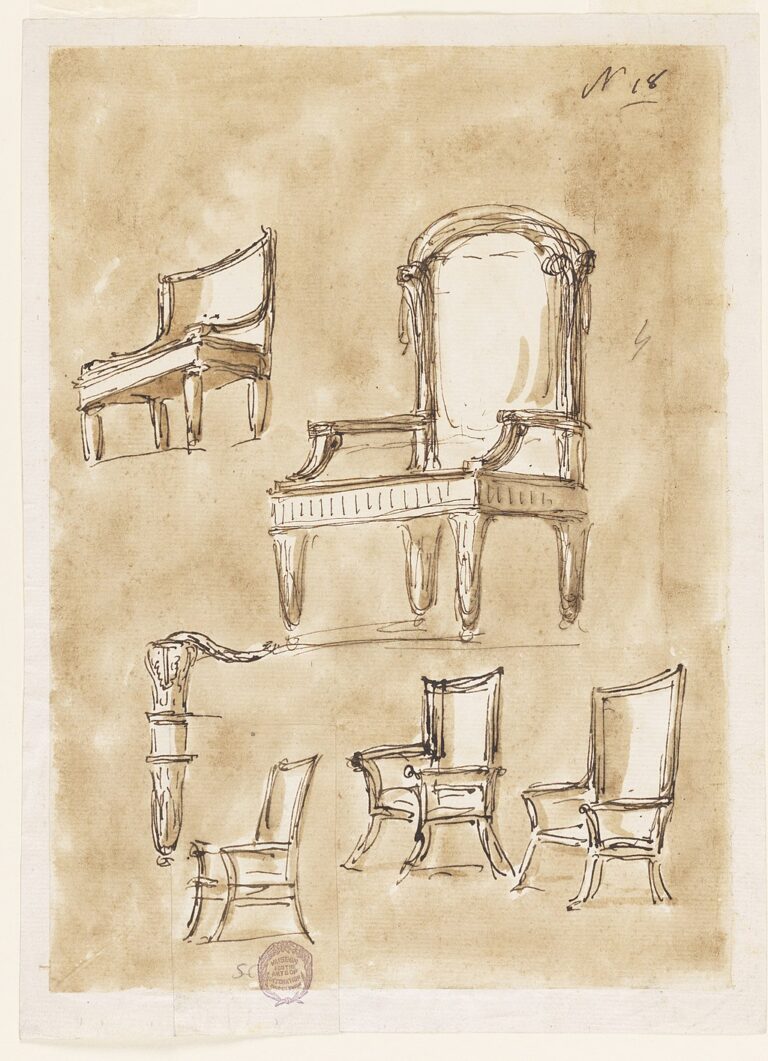
Image: Cooper Hewitt, Smithsonian Design Museum, Public domain, via Wikimedia Commons

Two Poems by Fran Abrams

In Love with Blue

Blue is my favorite color. My car
is blue—bright highlighter blue, 
easy to find in a parking lot.

My front door is blue—a shade
of blue visible from down the block.
And, in my dreams, there’s a sparkling

blue sapphire ring. Maybe I will ask for it
for my next big birthday, or just buy it
for myself one ordinary day.

My eyes are blue too. I didn’t choose 
the color of my eyes but I wonder 
if they inspire my love of blue.

I don’t understand why blue 
is equated with sadness. Singing the blues 
seems an unfair description. 

Some say that blue reminds us 
of rain or tears. Others say 
blue makes us feel cold.

But I persist in thinking of blue skies 
and the wide blue ocean illumined 
by sharp sunshine of July, the color
of jewels and my own blue eyes.


New in September 2022

Merriam-Webber added new words
to its dictionary—a reflection 
of what’s happening 
in our always changing world. 

So, ICYMI, here are some of them,
and, yes, they added ICYMI and FWIW.
(In case you missed it and for what it’s worth
for those who may not be up to date.)

Oat milk and plant-based showed up
for the first time, an indicator of how our diets
are evolving and how healthy
food options influence our language.

Booster dose and false positive (also false 
negative) are now part of our lexicon, 
thanks to the pandemic and the force 
of science to name and control it. 

Video doorbell and supply chain 
are new this year, too. Of course, delays 
in the supply chain probably will prevent 
you from getting your own video doorbell.

Fran Abrams has poems published online and in print in The American Journal of Poetry, The Raven’s Perch, Gargoyle 74, and many others. Her poems appear in more than a dozen anthologies. In December 2021, she won the Washington Writers Publishing House Winter Poetry Prize for her poem titled “Waiting for Snow.” In July 2022, her poem “Arranging Words” was a finalist in the 2022 Prime Number Magazine Award for Poetry. Her autobiographical book of poems, I Rode the Second Wave: A Feminist Memoir, will be released in late 2022 by Atmosphere Press. Her first chapbook, The Poet Who Loves Pythagoras, is forthcoming in 2023 from Finishing Line Press. Please visit franabramspoetry.com.

Image: “Blue Swirl” from Thomas Quine under the Creative Commons Attribution 2.0 Generic license.

Four Poems by Raymond Luczak

0

MOONDUST

after Endymion and Selene

I have watched you swing from light to shadow,
and back again. Your chariot was made of black moonstone.

Your four horses, dappled in the colors of season,
left behind a streak of chalk in their wake.

Had you a human face? I wanted to reach up and stroke
the contours of your elegant face as you stared ahead.

Was it a race? I didn’t see spectators.
Whose road were you following? I didn’t see signposts.

Constellations seemed like maps flung aside with abandon.
They seemed to float like haloes around your head.

Did you ever notice me? I was just a shepherd.
All I saw with my naked eyes was a mysterious woman

with a face that shone the way for ships lost at sea
and lonely men wondering about the stars.

Having nothing better to do, I notated your phases.
You tried to mask your face whenever you could.

Sometimes I felt you were playing hide-and-seek
behind billowing towers of cumulus.

Then one night you stopped your chariot and floated down
to me amidst my sheep sleeping and whispered a lie

so preposterous I wasn’t sure if I’d heard you correctly.
You said I was the most beautiful mortal you’d ever seen

ever since you took the reins to control the vicissitudes
of night. Not possible, I said. The glow from your face

lulled me into a sleep that I didn’t know would last
for centuries to come. You wanted me immortal

in the act of repose so you could gaze upon me
whenever you felt pangs of loneliness.

I would awaken only at dawn, wondering again
what dream I’d just imagined and lost.

Were you in it? Did we make love?
Or had you lied to me all over again?

One day we will writhe in moondust.
Our prayers will be more than stars.

CARYATIDS

We stand together, sisters of the porch,
our bodies remembering the raw scorch
of chisel hammering away
our tender marble to display
how we held the weight
of our hips, the plait
of hair down
to our gowns,
until we
stood free,
embraced by sun.
But they weren’t done.
Men with massive shoulders
of strength to move boulders
sheathed us in cloth and rope
as they dragged up the slope.
Then we were tilted up and forward,
pushed and aligned as ordered.
This took them a few days.
No one held us in praise
of our uniform bevy.
They complained how heavy
we were. If we were their mothers,
they’d have treated us like feathers,
with utmost kindness and respect.
We didn’t know what to expect,
but certainly not this beam
squelching our dreams.
Each night on this damn porch
we await the flicker of torch.

UVULAE

Our mouths are born to sin.
We should know better than to gulp

down 32 ounces of sugared water
but damn, there’s something unredeemable

about those endless highways of
nowhere paved over with bitterness

that drive us to seek solace in places
where no church can save us.

We shouldn’t be stuffing those alms
of perfectly layered potato chips

laced with the sodium of addiction
into our mouths. Asking for help is hard.

We shouldn’t be grateful for such dirty shame,
but our souls are gluttons for redemption.

AURORA BOREALIS

Spray my dream soul across the skies
up north where winters are long.

It is made of wisp, threads, grit.
Maybe there’s a stocking of coal.
But no matter.

All you see is the green of spleen,
with flares of yellow spring.

I have no words left to describe
the outline of dreamery,
many now that are black holes,
gracing the crown of sky.

We will not be long for this earth.

Scientists are sounding warning bells
about our thinning ozone layer.

We have been such fools.
We have squandered so much,
and for what?

Maybe one day dreamers
more strong-willed than I
will arch back with their bows
and shoot stars that can thread
entire lives into a single line
stitching up the holes in our lives.

Raymond Luczak is the author and editor of 29 books, including the poetry collections Chlorophyll (Modern History Press), Lunafly (Gnashing Teeth), and once upon a twin (Gallaudet University Press), which was chosen as a U.P. Notable Book for 2021. His latest title is A Quiet Foghorn: More Notes from a Deaf Gay Life (Gallaudet University Press). His work has appeared in Poetry, Prairie Schooner, and elsewhere. He lives in Minneapolis, Minnesota.

Image by NGC 54, CC BY 4.0 via Wikimedia Commons.