Home Blog Page 128

The Burden of Southern History by W. Perry Epes

0

As if England and Nature were the same,

At Williamsburg we imitate by culling

Tricorn and lace—it’s Restoration Game!

And out we strut, colonialling,

Having to mincestep Revolution (strayed,

Were Fancy free astride on Reason; “fought

For English rights”—we cast this role they played,

Who took Liberty as Gentlemen ought).

Jamestown sets no stage.  Our first permanence

Sinks in radical ivy, that green hoar felling

Brick towers which nature, but for immanence,

Would sheathe.  Then elegant Lee came rebel yelling,

Gouged forts (ah, gaps in Nature), proved

His sword; and we are from England twice removed.

W. Perry Epes is the author of Nothing Happened, a collection of poems published by Word Works in Washington, DC in 2010. He recently retired from many years of teaching and now lives with his wife, Gail, in a restored old stone Quaker farmhouse in Loudoun County, Virginia. He continues to write poetry that tries to cope imaginatively with some of the jarring past ironies and potential future reconciliations of Southern history.

His current contribution to Bourgeon is an older poem written at a time when Confederate imagery seemed an inescapable burden, no matter how widely or far back in time a poet might probe. As an earlier recognition that the Lost Cause was not glorious but indelibly harmful to Southern civilization, the poem may gain some enhanced relevance in our day, when events have provided a clear imperative to remove Confederate monuments from any location even remotely suggesting that they have current governmental legitimacy. Future poems will reflect on the process of removal, on finding where proper contexts could further expose past injustices and point the way toward more inclusive hopes.

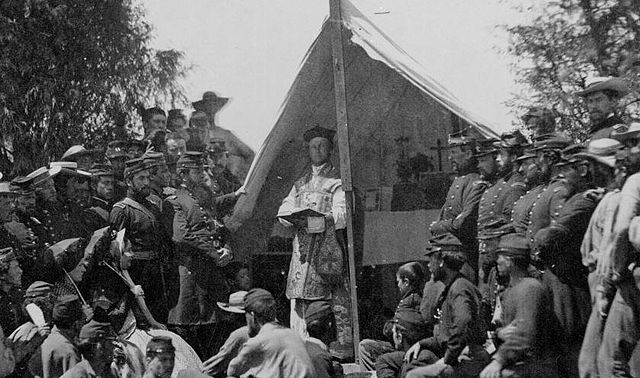
Image: By Library of Congress Prints and Photographs Division – http://www.loc.gov/pictures/item/00652518/


Two Poems by Sally Toner

0

If John Waters Hung Out in Reston

He’d live in our townhouse, with the filthiest bathroom alive—

a rust hole in the sink so big it’ll leak

all over the floor if you fill it, and a

cardboard Elvis cutout who wears his golden

suit on our stairwell.  He’ll scare the crap

out of you if you’re not warned.  Instead of chickens

we have a family of finches nesting above

our deck.  Their bird house has a Tennessee

license plate draped, bent over the top for

a roof.  The daddy warbles from atop

a long dead gas grill.  There’s a hole

in that too, right where we used to connect

the propane tank.  Johnny would love that we

could burn the whole motherfucker down.

All these animals, chirping and screwing, making

animal babies to live in this nest.  The daddy

finch has two calls—one a ventriloquist

act he does with dinner in his beak.

His other is a warning.  “Get the fuck out,”

when we’re sitting out with morning coffee.

I can’t tell if he’s speaking to the babies

or to us.  They start out shitty fliers,

dodging the owls and hawks, or the occasional

fat ass squirrel who hops from our moldy hammock

stealing food from their feeder.  In

the end, their wings grow thicker like our skin.

They leave, maybe to return, maybe not.

No predictable plot.  Johnny would like that too.


Sick

She lies on her back in the lake watching fireworks.

Everything about it’s illegal—the pyrotechnic

colors, the possibility of germs

In this mandredged pond.  “Yeah, it was pretty sick,”

she texts me later.  I can’t bring myself

to scold—to add my own judgment to

the current she swims against daily.  Maybe

“sick” has multiple meanings—pink ribbons,

monster waves, turf burn busting open

in fall after fall, goal after goal.  So,

floating on this night of freedom, makeshift

cannons shooting chemistry high above her,

smoking suburban air, maybe here

she’ll steal a moment of well.


Sally Toner is a High School English teacher who has lived in the Washington, D.C. area for over 20 years.  Her poetry, fiction, and non-fiction have appeared in Gargoyle Magazine, The Delmarva Review, Watershed Review, and other publications.  She lives in Reston, Virginia with her husband and two daughters, where the recent demise of the household’s fire bellied toad has officially raised her status to fourth funniest in the family.


Image: CC BY-SA 2.0, https://commons.wikimedia.org/w/index.php?curid=1535954

At the Bar by Karen Valentine

0

Minute shards of glass

settle upon the bar counter

like finely milled powder

The barkeep smiles at no one in particular

as if born an automaton

No warmth offered as he brushes away your embarrassment

in three small sweeps of his meaty hand

Ivory foam floating on the surface of your next beer

forming into tiny teardrops

Ice clinking in the glasses of others,

whistling an arrhythmic tune

a disharmonic soundtrack for deadened ears

As the evening moon wanes

your open tab fails to track time

words taste sour with each “I’ll have another.”

Nebulous voices fade

into gray walls of the cold bar    recede

into black corners

of your splintered heart

Her last words viral in your mind

You won’t hear again her rebuff

thinly disguised in that dismissive laughter

now drowned by the voices raging in your head

Your assumptions float wildly, liquored up

with her easy disdain

and your simmering self-contempt

No words can fill your space, only drink

you are empty

like your now dry glass  —

the moon has been relieved by a sullen fog.


Karen D. Valentine is a Frederick, Maryland poet and writer. She has been writing poetry since age eleven—mostly in secret—until the early 2000’s. She has published several nonfiction pieces as a freelance reporter for local Maryland newspapers and also for the Frederick Playlist, an online music entertainment site sponsored by the Frederick News Post (http://frederickplaylist.com/uncategorized/led-zepplica-tribute-rocks-the-weinberg/ ).

Karen describes herself as “coming to the party late,” meaning that she couldn’t even admit to herself out loud, let alone publicly, that she was a poet. “I came of age believing I had a nice secret hobby for when I felt the need to vent or celebrate,” she says. “Didn’t dare think of myself as good enough to do anything more.” But she found that entering middle age brought with it profound clarity: she needed to write, especially poetry, whether in secret or public. Now she is working hard to improve her art for public consumption. (Better late than never.) Her first published creative work, a flash fiction story, appeared in the 2008 issue of Tuscarora Review and her short-short story “Miss Penelope,” published in the literary magazine Still Crazy (January 2015) was nominated for a Pushcart Prize. Karen is also nurturing a new passion for digital photography, which she “fell into” five years ago, and has exhibited some of her photos locally. She has worked at the Food and Drug Administration for over 20 years as a technical writer-editor to keep a roof over her head.

Image by Alter Fritz – Own work, CC BY-SA 4.0, https://commons.wikimedia.org/w/index.php?curid=42445721

Train by Emily Goff

0

an angel fell

asleep on my shoulder last evening,

in the train car aswarm with humans who had tumbled in from the city,

some drunken with reddish marbles for eyes,

some wandering with no destination in particular, no home to speak of,

some weary from an enchantingly bright night,

and several weary from the delicate madness of their very existence.


this angel, vulnerable and exquisite,

a butterfly’s wing i would touch ever-so-delicately lest i tarnish or shatter it,

was blessed with creamy eyelids like twin full moons,

forbidden poetry stitched into the dark sides of them,

a ghost of a smile upon his lips,

miles of blue veins aching to burst through soft flesh,

and gangly legs emerging from scuffed sneakers, like the humble stems of wildflowers.


i murmured tales to him, at least in my head, of the surrounding creatures.

the man holding a novel had not turned a page once and was simply dreaming up puns,

lost in the glorious alchemy of wordplay.

the young woman in the diaphanous dress and soaring heels

wobbled precariously but still smiled coyly at her own reflection,

her gaze lingering for some time until the image began to melt.

she then turned away and let out a sigh of buried lament.


i then described the world beyond the glass of the window:

the golden snake of traffic gradually weaving its way through a slumberous land,

the condos in which entwined silhouettes swayed rhythmically against the bluish glow of the tv,

the houses in which perfect darkness filled every crevice like a cloud of threatening smoke, swelling in size and power with each and every moment.


utterly human i felt, nestled within this sliver of humanity,

reminiscent of a prehistoric, flicker-lit cave.

i had the urge to begin doing shadow puppets, leading a prayer, chanting an incantation,

anything, really, that would transform our unspoken sense of interconnectedness

into a tangible feast whose sweetness we could all taste.


in truth, i knew nothing of my fellow humans’ hearts or worlds

and relied on only striking impressions and my lively imagination.

i also knew nothing of the angel or his life —

his name, his age,

whether he looked more like his mother or his father,

which books he had grown up reading until he knew the words by heart,

the traditions he cherished and the traditions he took for granted,

whether he’d ever been in love.

i knew only that he was a vaguely familiar being

whom i must have encountered when i was but mere dust,

swirling about like an unquiet phantom across the noiseless universe.


nevertheless, i rode with him into infinity,

barreled into the ancient, indecipherable realm of stars and silence,

foolishly convinced that it was fate that had pulled,

gently but quite deliberately,

his head to my shoulder,

like a dutiful little magnet.

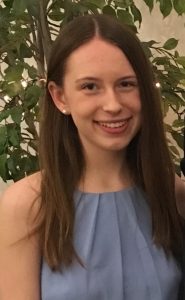
Emily Goff is a freshman at York College of Pennsylvania, studying English and Creative Writing and aspiring to one day write poetry for a living as well as teach poetry to the disabled. Throughout high school, she was heavily involved in her school’s writing center, particularly by tutoring peers and leading creative writing club meetings, and also received four Silver Keys from Scholastic Art and Writing Awards. In addition, she is part of both the Northern Virginia Poetry Group and the City of York’s literary community. When not writing, Emily enjoys going antiquing, playing viola, and volunteering. This appearance in Bourgeon is her first time being published.
Ed. Note: We are delighted and honored to be the first publisher for this very promising young poet.

Image by Chris Sampson – ALESIA-03 070414 CPS, CC BY 2.0, https://commons.wikimedia.org/w/index.php?curid=35889199


Pergola by Serena Agusto-Cox

I never grew out of cookies

and milk

I grew in.

Someone reflective,

not out loud.

Even behind the smoke,

I saw wheels turn and wondered

where had you gone?


Perhaps it was to the oceans of your youth,

a brave island against the rough Atlantic

where the Portuguese language carves out its own beauty,

through a faith and knitted family.

Your arms glide through the pool

like you sliced tomatoes into salad,

how light cut through the grape vine pergola.


That trip we took together to the Azores

opened my eyes to the backbone you were

a set of vertebrae to hold a family strong.

A woman with many joys taken

at all hours after siesta, with coffee

and cake in the midnight talking hours.

Laughter that woke me with a smile.


I knew then what I realize now

like the smoke we fade.

Dissipate into the atmosphere

touching brief lives,

impart advice.

Grace that layers beneath –

a foundation on which I stand

wavering in this mourning.


In loving memory of Arminda Agusto, our Vovó.


Serena M. Agusto-Cox, a Suffolk University graduate, writes more vigorously than she did in her college poetry seminars. Her day job continues to feed the starving artist, and her poems can be read in Beginnings Magazine, LYNX, Muse Apprentice Guild, The Harrow, Poems Niederngasse, Avocet, Pedestal Magazine, and Mothers Always Write, among others.  An essay also appears in H.L. Hix’s Made Priceless and at Modern Creative Life, as does a Q&A on book marketing through blogs in Midge Raymond’s Everyday Book Marketing.  She also runs the book review blog, Savvy Verse & Wit , and is the founder of Poetic Book Tours.

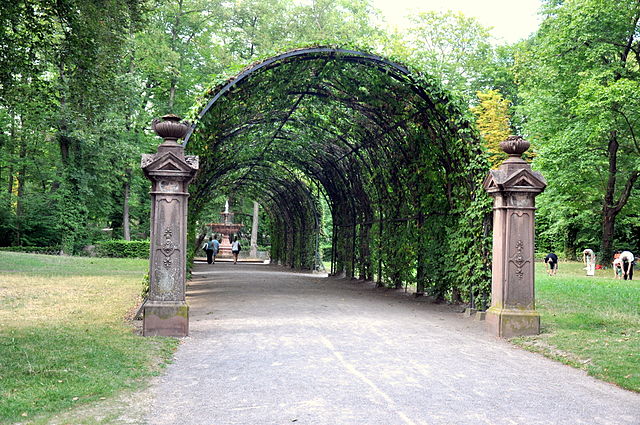
Image by Elaine from Baltimore, MD – Trellis, CC BY 2.0, https://commons.wikimedia.org/w/index.php?curid=21357766