
Climb the stairs. Take the call.
Stand by the old green chair.
Don’t sit down.
Hear your mother say
It’s cancer.
Don’t answer right away.
Clamp down your fear
before you speak.
Grip the green chair’s frame.
You only get one chance:
say the right things right.
Your hands and voice can’t shake.
Take the dress you wore that day.
Throw it out. Tell it
you don’t care
it is the color
of peach blossoms. Throw out the chair
and the photos of your mother, younger, your age,
slender in the blossom-colored dress she wore
before she passed it on to you.
Regret this even as you do it.
Do it. You must
throw out everything,
throw in anything to fill the pit in time
opened by your hesitation. Ask: What did you say
to ease your mother’s fear? What did you say
to ease her grief? What did you say? What
did you say?
The question will not go away because
the pause between her words
and your reply
is all you remember.
 Rose Strode is a recipient of the “Undiscovered Voices” fellowship from The Writer’s Center in Bethesda, Maryland. Her personal essays have appeared in The Gettysburg Review, The Little Patuxent Review, The Delmarva Review, and Viator; her poetry has appeared in Poet Lore. When she is not writing she wanders around in the woods looking for tracks. She enjoys gardening and fixing things that are broken. She is a finalist for the DC Poets Project publication prize.
Image by Ferdinand Hodler – scan from a book, Public Domain, https://commons.wikimedia.org/w/index.php?curid=11484986
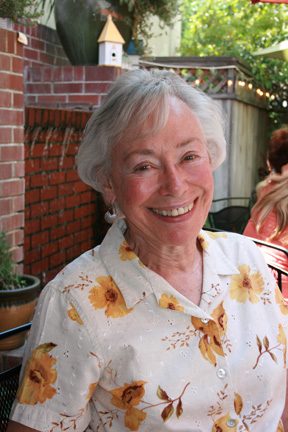 Ann Wrayburn’s poetry collection, The Midnight Gardener Chronicles, was published in 2015 by Mercury Heartlink. Her poem ‘”Deep Hour” was included in Burning Bright, a collection published by Passager Books in 2011. In 2010 she won both First Prize and Honorable Mention in Arlington County’s Moving Words Poetry Contest. Her work has also appeared in Poet Lore, Potomac Review, and The Federal Poet. Now retired, she lives, occasionally writes, and gardens in Falls Church.
 Naomi Thiers’ first book of poetry, Only The Raw Hands Are Heaven, won the Washington Writers Publishing House competition in 1992. Her other books are In Yolo County and She Was a Cathedral (Finishing Line Press). Her poetry, fiction, book reviews, articles, and interviews have been published in many journals, including Virginia Quarterly Review, Poet Lore, Colorado Review, Pacific Review, Potomac Review, Grist, Sojourners. She has been nominated for a Pushcart Prize and featured in anthologies. She works as an editor with Educational Leadership and lives in Arlington, Virginia.
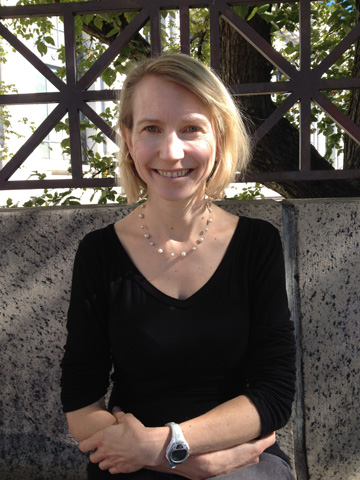 Holly Karapetkova’s poetry, prose, and translations from the Bulgarian have appeared recently in Alaska Quarterly Review, Prairie Schooner, Drunken Boat, and many other places. Her second book, Towline, won the Vern Rutsala Poetry Contest and is available from Cloudbank Books. Find her online at karapetkova.com.
 Lucinda Marshall is a writer, artist, and activist. Her recent poetry publications include