Ed. Note: Another in our series of poems from poets who participated in Arlington Writers Resist on January 15, 2017
—for the parents of the children at Sandy Hook
Notice what you remember this day:
how clean the air smells,
how warm it is for winter,
how you hoped it would be snowing.
Notice how bare the trees are,
black birds perched
in the empty branches,
cracked ice on a puddle.
Notice lips, hair, skin,
fingertips, tongue,
the place in the sky
you saw the first star
last night and closed your eyes,
from habit, wishing, wishing, wishing.
Notice what you won’t remember:
how quiet it was the moment
after the gunshots,
that the screaming
sounded like coyotes in the desert.
Notice blur of smoke,
river of blood,
skin stuck to walls, missing faces.
Notice your question:
why must a coffin
hold a child,
why not rocks, mud,
burnt wind, even water?
Notice there is no waking from this dream,
the sky will always be this dark.
the only living will be living
on the edge of a black hole.
Notice a million stars exploding daily.
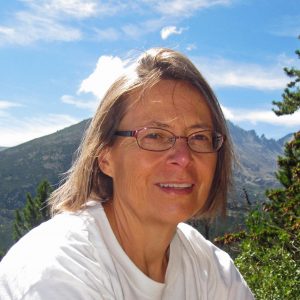
Susan Bucci Mockler has had her poetry published in Poet Lore, The Cortland Review, The Paterson Literary Review, Voices in Italian Americana, and the anthology, My Cruel Invention, among others. Her chapbook, Noisy Souls, was published by Finishing Line Press. She is a poet in the Arlington County school system and teaches writing and literature at a local university. She lives in Arlington, Va.
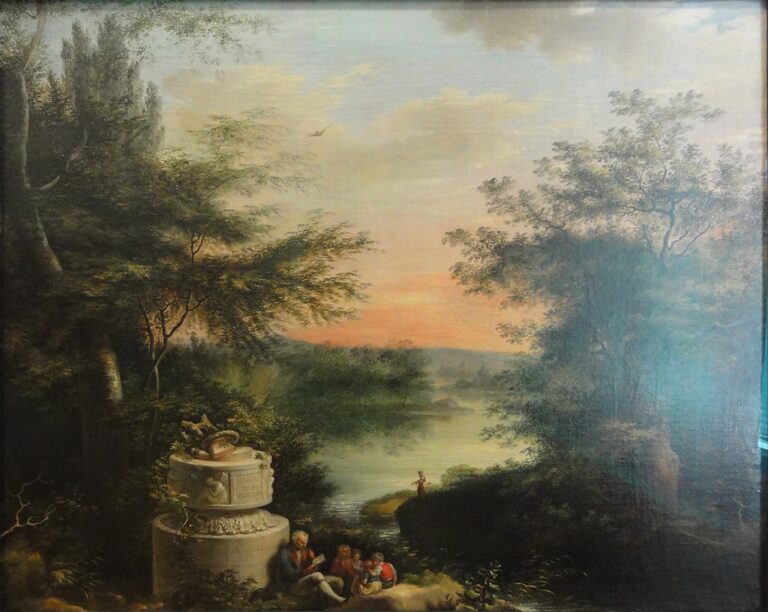
Image: By Johann Heinrich Ramberg – Own work, User:Mattes, 2014-08-24 11:30:52, Public Domain, https://commons.wikimedia.org/w/index.php?curid=34966174
Over the last ten years I’ve made two kinds of art: paintings and site-specific wall drawings. Both use layers of marks and geometric structure inspired by the natural world and the major differences are really in how scale affects use of color, and context, but that’s a story for another time…
After months of planning and meetings with college officials, this week I installed my newest site specific work, Terminal Flux, at the Schlesinger Center at Northern Virginia Community College.
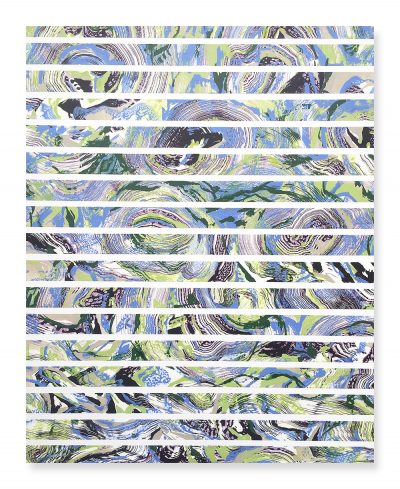
“Now Is the Reason” by John M. Adams, Acrylic, acid-free tape, latex house paint on gatorboard 40 x 32 x .5 inches 2016 My site-specific drawings are created on location, for that specific location, and engage the architectural space they occupy. They exist only for a predetermined amount of time before they’re painted over/destroyed. There’s the creation, existence, and an eventual end to each piece.
I’m interested in the way a wall drawing can interact with a space to encourage the viewer to use that space in new ways. For instance this most recent work draws attention to a bank of windows that allow visitors to see the sky. You might in common experience of the building never even look up to notice that view.
The drawing wraps around architectural details, and never allows the viewer to experience the entire drawing from a single point of view. It requires them to piece the art together as they move through the space. This piece, Terminal Flux, was inspired by being able to work with walls that could be viewed from both the first and second floor, as well as from outside of the building (due to the large windows of the atrium where the drawing is located.) As I worked through proposal and preliminary drawings and studies I was very conscious of the fact that viewers would enter the building by walking under the drawing.
Graphite allows me to create high contrast marks on the wall but the pre-existing white of the wall carries as much, or more, of the visual weight in the drawing as the graphite. My process for applying the powdered graphite is part painting, part drawing. There is physicality to the marks on the wall that contrasts areas of open space with geometric edges – edges in the drawing and the architecture.
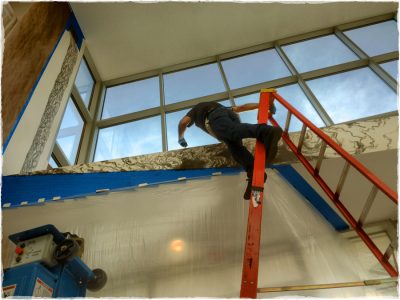
John M. Adams completing install of Terminal Flux, January 2017 at the Schlesinger Concert Hall and Art Center; photo by Catherine Day
I’m an avid outdoorsman and that’s an apt metaphor for my creative experience installing a piece. The first morning of an install is like dropping a canoe into an unfamiliar river for an extended trip. You’re on your way and in it, and it’s a rush. There is no starting over and every second that passes you’re closer to being finished. You deal with every obstacle encountered as you reach them, and you have one chance to react. You’ve prepared as much as possible – perhaps spending months planning, visualizing, and becoming familiar with the river (or the drawing site) with photos, maps, drawings, etc. But all of that takes a back seat to being in the current, picking your route moment by moment until you get to the end. Then it’s done. It’s over until the next time, and hopefully someone took some great photos while you were focused on the task at hand.
The opening reception for Terminal Flux will be held this Saturday, February 11, 2017 from 2-4pm at the Rachel M. Schlesinger Concert Hall and Art Center, located at 4915 E. Campus Drive, Alexandria, VA and Terminal Flux will be on view through spring 2018. For more information visit their website or by contacting Gallery Director Mary Higgins. You can view more of my artwork on my website www.thefullempty.com and thanks for reading about my work.
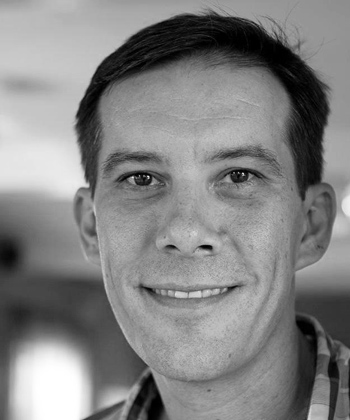
John M. Adams; photo by Jennifer Davis Heffner
John M. Adams was born in Hampton, Virginia and grew up in rural Gloucester, VA, surrounded by the open water and tributaries of the Chesapeake Bay. His work continues to be influenced by his passion for exploring the natural world as much as it is influenced by the structure of the urban setting where his studio is located. Adams lives in Reston, VA, and maintains a studio in Arlington, VA. Carrie Coleman Fine Art in Norfolk, VA, represents his artwork. Adams has participated in numerous solo and group exhibitions on the east coast. Currently his work is included in New Waves 2017 at the Virginia Museum of Contemporary Art in Virginia Beach and will be included East City Art’s Emulsion 2017 exhibition during March 2017 in Washington, DC. His work can be found in private, corporate, and public collections such as the Wilson Building (DC City Hall) and the DC Art Bank Collections. He has received numerous awards including a Graduate Fellowship from the Virginia Museum of Fine Arts and a Strauss Grant from the Fairfax Arts Council.
She bleeds through the landfills, the tiered ridges
of doublewides, the hand-lettered placards
with directions to Jesus: be patient. Go slow.
“Driving to Juniata” was first published in qarrtsiluni.
Editor’s Note: This is the first in a series of poems by poets who read at the Arlington Writers Resist event on January 15, 2017.
Poet and translator Katherine E. Young is the author of Day of the Border Guards, 2014 Miller Williams Arkansas Poetry Prize finalist, and two chapbooks. Her poems have appeared in Prairie Schooner, The Iowa Review, Subtropics, and many others. Young is also the translator of Two Poems by Inna Kabysh; her translations of Russian and Russophone authors have won prizes in international competitions and been published widely in the U.S. and abroad; several have been made into short films. Young is a 2017 National Endowment for the Arts translation fellow and currently serves as the inaugural poet laureate for Arlington, Virginia. http://katherine-young-poet.com/
Image: By Shadowlink1014 – Own work, Public Domain, https://commons.wikimedia.org/w/index.php?curid=2263219 Author photo by Samantha H. Collins
in the front row of the Crossroads Theater in south L.A.,
where Isaac, the black man, stands on stage like a submachine gun,
blasting us with Soul Vision poetry.
He fires warning shots into the air,
words so hot they make his bald scalp shine.
I am close enough to see his throat bulge when he swallows.
He doesn’t need the crutch of a podium in front of him
or papers to remind him what he’s written down.
“I am the first black president of the United States!” he howls.
His words bang against the walls, hit the back of the theater,
pound against the bold letters on the restroom doors: Brothers. Sisters.
His voice is as loud as the riots that ripped these streets apart
when Rodney King was beaten by white policemen.
No one moves. Even the jazz band
stops for Isaac, leaving guitars, drums, saxophones on stage
as they merge with the audience.
My daughter’s arm touches mine, but I can’t turn my head,
can’t take my eyes off Isaac, the poet,
who won’t let me forget, even for a moment,
that he has suffered, his people have suffered.
I can’t breathe, I can’t breathe …
until the band gets up to play again.
There is my daughter on bass guitar:
a white girl with four big black men.
Soul Vision turns into Summertime:
Martin is singing, heads are nodding,
I’m tapping my foot to the swinging beat.
Isaac is tapping his foot, too.
Lori Levy’s poems have appeared in Poet Lore, RATTLE, Nimrod International Journal, and numerous other literary journals and anthologies in the U.S., England, and Israel. In October, 2013, she was featured in the Aurorean as one of their “Showcase Poets,” and her health-related poems have been published in medical and medical humanities journals, including a hybrid (poetry/prose) piece she co-authored with her father, a physician. She lives with her family in Los Angeles, but “home” has also been Vermont and Israel. Besides writing, she thoroughly enjoys being a grandmother to her three little grandchildren.
Image: By Cmcmahon – Own work, CC BY-SA 3.0, https://commons.wikimedia.org/w/index.php?curid=18464079
It could’ve been the death of my father or just the realization that the man staring back at me in the mirror was no longer the embodiment of youth, but whatever the reason: a little over a year ago, I set out to do some serious thinking about my art and how I make it.
For as far back as I can remember, I knew that I’d be an artist. That’s what everyone told me I would be. But what kind of artist: animator, sculptor, or illustrator? I wasn’t sure. All I knew was that I liked to tell stories and I wanted to tell stories; stories with meaning, but most importantly, stories with feeling.
“Sometimes It’s Just You”, by Gregory Ferrand, 2016, acrylic on canvas
When I first settled on painting I really knew very little about it. The most important thing for me, at first, was to create easily readable and emotionally charged pictures. But over time, as I refined the way I presented my narratives, I thought that on a certain level the images felt flat. I felt that how I used the paint was “unconvincing”. For example, black paint was my stand in for all things in shadow and white paint was used the same way for all things in light.
As I began to wrestle with these ideas I realized something about the complexity of color: using color is about much more than the literal translation presented to us on a box of crayons; think of sky blue, brick red, and lemon yellow. Grass may be many combinations of yellows, reds, blues and whites. And for most of us, how we assign color to an object depends on what we think the object “is”, and what color it is supposed to be — grass is green. What I now see, because I stared at it long and hard enough, is that the degree and tone of light on an object changes the color we perceive it to be, and, even more importantly for me as a storyteller, how we feel about it.
At the same time, I realized that what a painting is about, the stories I tell in the traditional sense, isn’t what I most care about. I want my stories to be less tangible. They should be open-ended, and evoke a feeling. Through a smarter use of color I hope to create images that invite the viewer to not just look, but experience the moment depicted on canvas.
So I began to study color theory in earnest, practicing what I learned along the way. And after doing a number of paintings implementing the things I was learning, I recently completed what I consider to be a breakthrough. When I first made sketches of “The Engagement” two years ago, I thought of it as a simple story about family. But armed with new ideas on color, I decided to try a simple color experiment using complimentary colors. I arbitrarily assigned a blue palette for the background of the painting and an orange palette for the foreground. And in doing so, the story became much more compelling. Using only variations of blue, I began painting as I always do: in layers, starting from the background while moving forward as if I was a camera on a dolly, slowly overlapping forms. First the background wall, then the painting in frame, then the books and bookshelf, then the clock and decorations, then the mantle, and then the older couple.
“The Engagement” by Gregory Ferrand, 2016, acrylic on canvas
When I began to paint with the orange palette in the foreground I started to understand that the contrast between the older couple in the background bathed in cool tones, and the young people in the foreground in warm tones, turned this simple story about family into a fuller story with more nuance and possibility. It was, therefore, a more realistic story.
I don’t think that this painting is somehow the definitive moment when I figured out how to tell the perfect story, but I can say that I think it’s an example of how I’ve learned to use color more effectively to create stories that depict and explore the raw, messy, and seemingly unimportant moments in life (that really say so much about us all.)
Currently I’m continuing my exploration of color and narratives as I plan and create a new body of work for a solo show opening in November at the Adah Rose Gallery in Kensington, MD. I hope you’ll come see the work.
Gregory Ferrand received a degree in film from Virginia Commonwealth University in 1997 and promptly headed off to Buenos Aires, Argentina to teach English to business people. While living there he kept an illustrated journal in which he experimented with different media and recorded his observations about the culture and people around him. In doing so, he came to understand two things about himself: 1. that he was a painter and 2. that he was fascinated by the subtext of human interactions. He returned to the States in early 2000 and began painting seriously.
Ferrand pulls on influences as wide ranging as comics, Mexican muralists, and 1950’s fashion to create paintings that reveal the beauty of living. His background in film is evident in the strong use of narrative he employs to tell stories about characters and situations that do, have, and will exist; gently unmasking the psychological or emotional state of the subject, inviting the viewer to share and/or identify.
His works have been shown locally at Emerson Gallery at the McLean Project for the Arts, Hillyer Art Space, and the Adah Rose Gallery among others. Clients include Saatchi and Saatchi, American Airlines, Cava Mezze Restaurants, and the Mosaic Theater Company of Washington, DC.
 Susan Bucci Mockler has had her poetry published in Poet Lore, The Cortland Review, The Paterson Literary Review, Voices in Italian Americana, and the anthology, My Cruel Invention, among others. Her chapbook, Noisy Souls, was published by Finishing Line Press. She is a poet in the Arlington County school system and teaches writing and literature at a local university. She lives in Arlington, Va.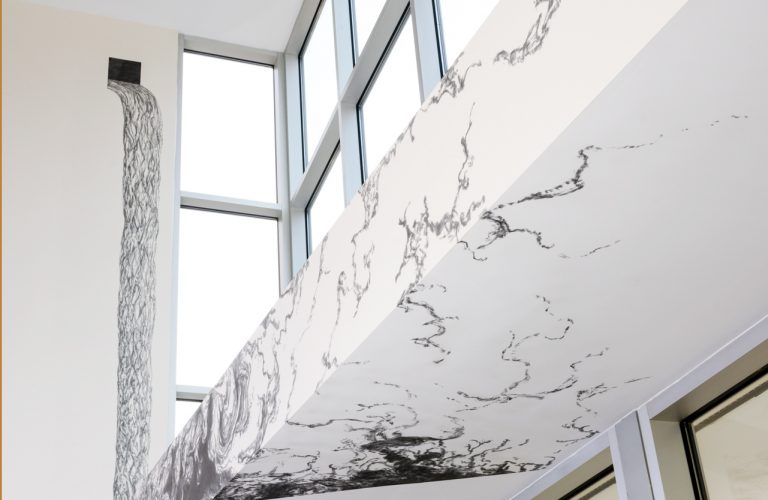

 Poet and translator Katherine E. Young is the author of Day of the Border Guards, 2014 Miller Williams Arkansas Poetry Prize finalist, and two chapbooks. Her poems have appeared in Prairie Schooner, The Iowa Review, Subtropics, and many others. Young is also the translator of Two Poems by Inna Kabysh; her translations of Russian and Russophone authors have won prizes in international competitions and been published widely in the U.S. and abroad; several have been made into short films. Young is a 2017 National Endowment for the Arts translation fellow and currently serves as the inaugural poet laureate for Arlington, Virginia.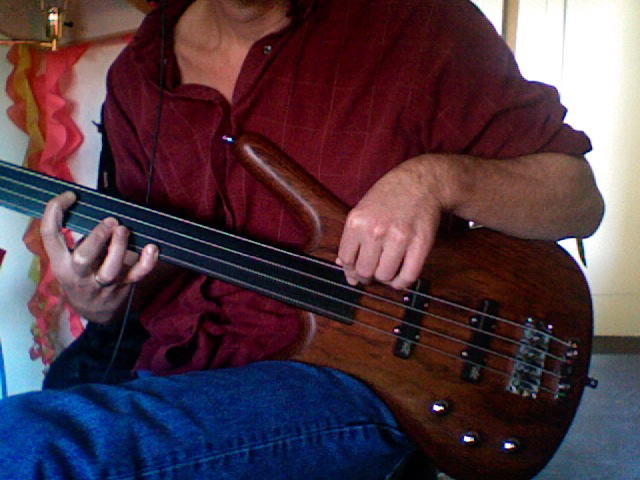
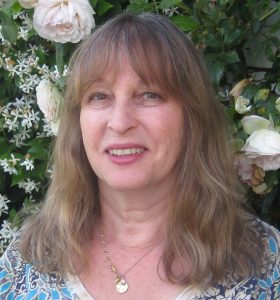 Lori Levy’s poems have appeared in Poet Lore, RATTLE, Nimrod International Journal, and numerous other literary journals and anthologies in the U.S., England, and Israel. In October, 2013, she was featured in the Aurorean as one of their “Showcase Poets,” and her health-related poems have been published in medical and medical humanities journals, including a hybrid (poetry/prose) piece she co-authored with her father, a physician. She lives with her family in Los Angeles, but “home” has also been Vermont and Israel. Besides writing, she thoroughly enjoys being a grandmother to her three little grandchildren.


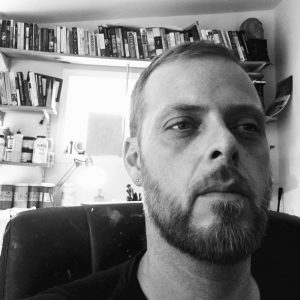 Gregory Ferrand received a degree in film from Virginia Commonwealth University in 1997 and promptly headed off to Buenos Aires, Argentina to teach English to business people. While living there he kept an illustrated journal in which he experimented with different media and recorded his observations about the culture and people around him. In doing so, he came to understand two things about himself: 1. that he was a painter and 2. that he was fascinated by the subtext of human interactions. He returned to the States in early 2000 and began painting seriously.