like the time the Ferris Wheel made the little kids cry
at the Okoboji of slow dancing
There are things you can do with music
or, as in this case, with your voice.
Dense as fudge
it pullulated with margins outside
the half a permitted millimeter
of tissue-wrapped meat.
Tender slits healed as
she cried out for corporate capital,
offed her white negligee and wig,
disinviting them from her gondola,
it and its sleeper cells, daughter cells
for whom she had, unknowingly peeled
carrots and quartered pears in the Denver
of the stockyards.
We all came to hold her hand,
the dancer, the flight attendant, the nurse,
the teacher, the librarian,
all dripping tears
silly with love, the light
shedding like a dog in August,
an old dog.
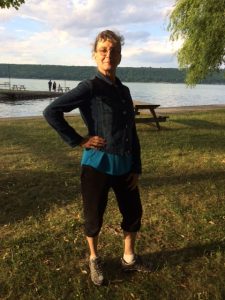
Judy Swann is a poet, essayist, editor, translator, blogger, and bicycle commuter, whose work has been published in many venues both in print and online. Her book of letters, We Are All Well : The Letters of Nora Hall, appeared in 2014.
Image: Ferdinand Hodler, Valentine Godé-Darel one day before her death
Glass is a seemingly untamable medium, continually floating in the lingering discourse between Art and Craft.
For those outside the Art world: if something can be used for a purpose (for instance a bowl) it’s often considered a work of Craft, and if it not, it can be considered a work of Art.
Echoes of Leaves and Shadows, 2016, Michael Janis; photograph by Pete Duvall
Since the start of the Studio Glass Movement, in the 1960’s in the United States, glass artists have worked the medium to communicate their concepts. While some artists continue to reflect the deep history of glass with traditional techniques, I explore contemporary art rather than craft production.
I make my glass powder drawings by sifting finely crushed colored glass onto sheets of flat glass. By scraping and scratching the powder with an X-acto knife or a rubber tipped shaper, I can create incredibly detailed imagery. I have an almost obsessive focus that served me well when I was an architect, and now allows me to sit for hours maneuvering frit powder into intricate forms that populate my narratives. I like engaging others with what I make, and incorporating both abstract and representational forms gives me the ability to tell stories and make the artwork something not just by me, but of me.
Luminescence, 2016, Michael Janis; photograph by Pete Duvall
I try to control and manipulate glass dust into precise patterns, but once the work is loaded into the kiln, the heat and physics of the glass takes over and reshapes whatever I had created. The intense heat causes the glass to flow and move – and this often alters the glass colors and traps air bubbles in unexpected ways. I’ve come to accept this result as a kind of organic quality that is part of the firing process. To cover my bases, I do a mojo dance to appease the kiln gods for a successful firing.
Besides making my own artwork, I am one of three Co-Directors of the Washington Glass School and Washington Glass Studio. For the Studio projects, I am challenged to work in different scales and methodologies. It helps to be flexible in design when working on public art sculpture, as many factors and outside players can have control over the resulting artwork. Many times the original concept has to be heavily modified and a more collaborative approach implemented. For the internally illuminated public art sculpture installed at Prince George’s County’s new Laurel library, the residents of the area were invited to make the inset panels in a series of glass quilting-bee workshops held at the Washington Glass School. In making the artwork in a collaborative way, we wanted to increase the place-sensitivity and create a tribute to the community’s identity. The neighborhood residents were excited to be able to see their glass artworks assembled into a tower and they feel really connected to the artwork.
At the Washington Glass School, the students and artists are encouraged to learn their craft, and then move beyond technique. This spring the Washington Glass School and the Virginia Glass Guild are hosting a joint exhibition, Embracing Narrative, as part of the Glass Art Society conference that will be held Norfolk, Virginia. The juried show, at the Portsmouth Art & Cultural Center from March 3 – June 4, 2017, will examine the art of storytelling, personal experiences, and social commentary through sculptural works in glass.
Michael Janis, portrait by Bob Severi
Michael Janis developed a focus on glass after working for twenty years as an architect in the United States and Australia. Co-Director of the Washington Glass School, Janis has also taught at the UK’s National Glass Centre at the University of Sunderland, Penland School of Crafts, California’s Bay Area Glass Institute, Cleveland Institute of Art, and The Glass Furnace (Istanbul, Turkey). Awarded a Fulbright Scholarship in 2012, he became an Artist-in-Residence at the Institute for International Research in Glass (IIRG) at the University of Sunderland. Janis’ artwork has been shown at major galleries and international art fairs and is included in the permanent collection of the Art Institute of Chicago. In 2011, Janis had a solo exhibition of his artwork at the Fuller Craft Museum (Massachusetts), and was named a “Rising Star” by the Creative Glass Center of America. The James Renwick Alliance named him “Distinguished Artist 2013/2014 and had him present his work at the Smithsonian American Art Museum. Janis was awarded Washington, DC’s prestigious Mayor’s Arts Award for Excellence in the Arts in 2016. His work is represented by Maurine Littleton Gallery in Washington, DC, Habatat Galleries in Royal Oak, MI, and Stewart Fine Art, Boca Raton, FL.
Featured image in this post is the Public Art Glass created for the Laurel, Maryland Public Library by the Washington Glass Studio.
Mel Bikowski wears many faces in this life. Poet. Mom. Wife. Artist. Dancer, Traveler, Hiker. Friend. Lover. She has poems published in Elephant Journal, GERM Magazine, and Quail Bell Magazine. She is currently studying Interdisciplinary Studies at Old Dominion University. Her abstract paintings can be found on her website along with personal realizations, meditations, journal entries, and a frame of her life in Alexandria, VA. Her Website: www.melbikowski.com
Image by Kimberly Vardeman – https://www.flickr.com/photos/kimberlykv/3740704177/, CC BY 2.0, https://commons.wikimedia.org/w/index.php?curid=50824392
When the widow wrote
how her husband
once said she was like
a perfectly ripe avocado,
I wanted to rush right out
and buy one. Examine
its tough exterior,
creamy innards,
solid core.
Learn its secret.
At his bedside, I was
best described as a banana.
A fruit turning brown
and mushy too quickly.
Just like an avocado,
when sliced too late.
Except I had no pit
deep inside, stopping
the knife.
The Longest River
Baby Moses floated
down the Nile,
in a basket caulked
with bitumen and pitch,
carefully constructed
from a mother’s
calculated choice
to set her child adrift
amid crocodiles
rather than see him slain
before her eyes.
I think of Jochebed today
as I set you down among tall reeds
knowing you will float
to a fate beyond my grasp
in a wicker basket,
by no means watertight.
But clamping you against my breast
will not keep soldiers or crocodiles away.
So I stand aside as Miriam,
watching at a distance, hoping for a princess
to scoop you from the water with a kiss.
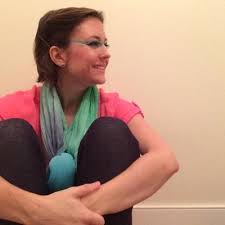
Jacqueline Jules is the author of the poetry chapbooks, Field Trip to the Museum (Finishing Line Press) and Stronger Than Cleopatra (ELJ Publications). Her work has appeared in over 100 publications including Unrequited: An Anthology of Love Poems about Inanimate Objects, Inkwell, Killing the Angel, Soundings Review, Innisfree Poetry Journal, Gargoyle, Potomac Review, Imitation Fruit, Little Patuxent Review, The Broadkill Review, and Minimus. Visit her online at www.jacquelinejules.com where you will see that she is also the author of 35 books for young readers including the Zapato Power series and Feathers for Peacock.
Image by Jayan.thanal – Own work, CC BY-SA 4.0, https://commons.wikimedia.org/w/index.php?curid=53316878
She would cry every time we put her in the carriage. That was all right, and the way I had to lean sideways to make her sleep. Her soft breath on my face. Smelled like waste. My back would heal and she would nurse. My nipples still blue when the sound of the ocean stopped. Sometimes the trees bend toward me and I’ll feel something like it. Or taste it just before. The gold dripping off the leaves, just before it sweetens and betrays.
Kahee and the Dark
In Xi’an I’d wake
in the dark, unable to find my hands.
Remember how we went for oranges?
We held them, sweet and tart, the only bright things
in the sudden fog.
Husks burned
at the edges of the fields.
We walked home without our feet.
Later, the notes of your flute drifted down the hall.
It spoke of a forest.
How you sing when you walk, not to lose yourself.
The song stopped and the dark
erased the room.
Megan Alpert‘s poetry has appeared in Quarterly West, Sixth Finch, Contrary, Harvard Review, and others. Her journalism has been published online by The Atlantic, Smithsonian, The Guardian, and Foreign Policy, where she was a 2015-2016 fellow. She is the recipient of a reporting fellowship from the International Women’s Media Foundation in 2016 and an Orlando Poetry Prize from A Room of Her Own Foundation in 2011.
“Island” originally appeared in Denver Quarterly. “Kahee and the Dark” originally appeared, in slightly different form, in Green Mountains Review.

 Judy Swann is a poet, essayist, editor, translator, blogger, and bicycle commuter, whose work has been published in many venues both in print and online. Her book of letters, We Are All Well : The Letters of Nora Hall, appeared in 2014.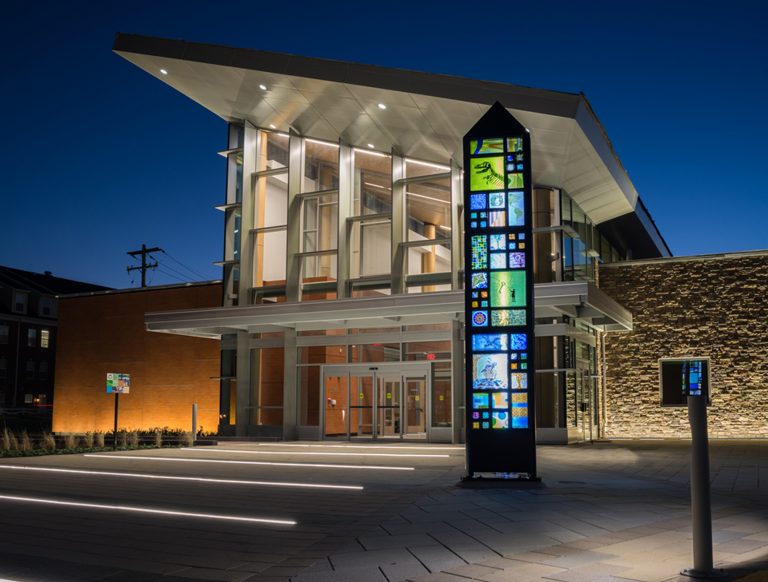



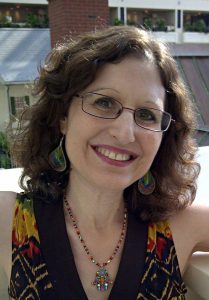 Jacqueline Jules is the author of the poetry chapbooks, Field Trip to the Museum (Finishing Line Press) and Stronger Than Cleopatra (ELJ Publications). Her work has appeared in over 100 publications including Unrequited: An Anthology of Love Poems about Inanimate Objects, Inkwell, Killing the Angel, Soundings Review, Innisfree Poetry Journal, Gargoyle, Potomac Review, Imitation Fruit, Little Patuxent Review, The Broadkill Review, and Minimus. Visit her online at www.jacquelinejules.com where you will see that she is also the author of 35 books for young readers including the Zapato Power series and Feathers for Peacock.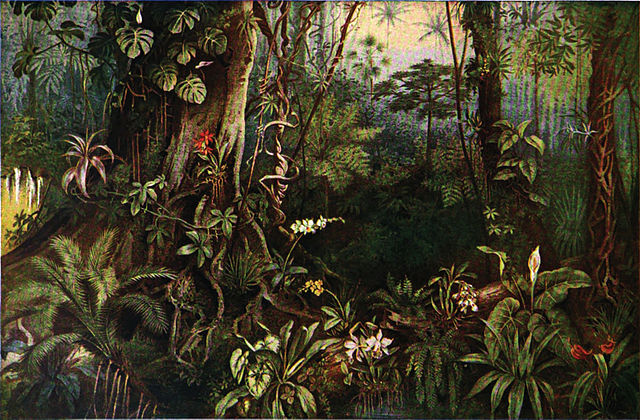
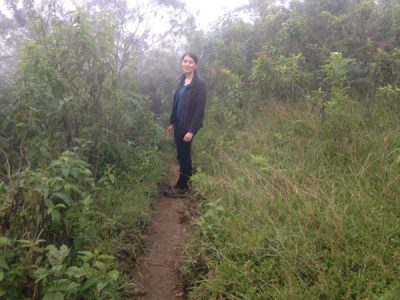 Megan Alpert‘s poetry has appeared in