As a child fascinated by pop culture I stashed my collection of magazines in a large bin under my bed, and practically wallpapered my room with images of musicians and actors I admired. Although I didn’t realize it at the time, my experience paging through images in magazines, cutting and posting them on my walls, was my beginning with the medium of collage.
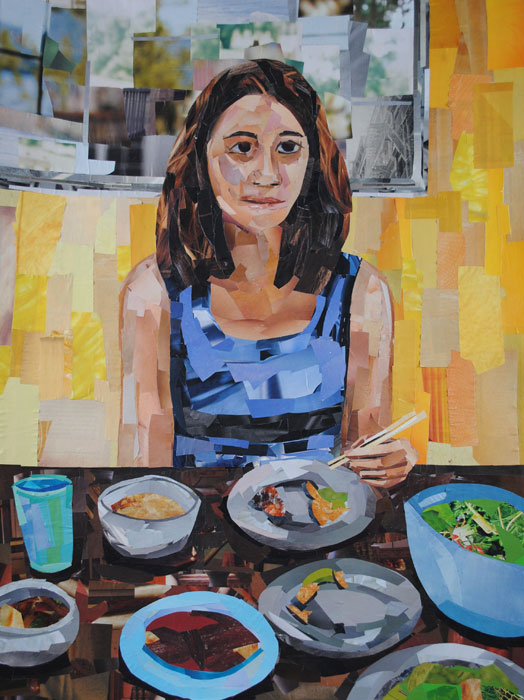
By high school, the portraits of celebrities lining my walls inspired an interest in depicting the human form. I started out sketching, trying to gain a better understanding of the way certain wrinkles and lines could convey different emotions. When I grew tired of drawing, I experimented with other materials like oil pastel, acrylic paint, and oil paint, before finding collage and really taking a liking to it. There is just something appealing about the repetitive motion of cutting and pasting, flipping through paper, scanning page after page of photographs and ads….Before long, the wallpaper of celebrities was torn down, and I began creating my own portraits.
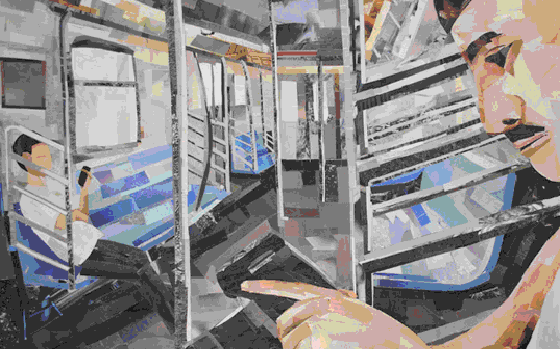
When I page through magazines, I look at how images and color are used. Then I cut the images into pieces based on color and texture before reassembling them to form original works of art. When working on my art, my focus is drawn towards the shapes of color, shadows, and highlights that make up different objects. I like to hone in on the details, piecing together different areas before standing back to see the image in its entirety. Collage makes the artistic process easier to visualize than painting or drawing because I can cut out distinct shapes of color. It also broadens my palette to include texture, pattern, and fragments of photographs.
A lot of the magazine pages I use contain ads selling all kinds of products, with bright colors and interesting photographs. Models in the advertisements provide a palette to construct portraits. My current figurative work features portraits of people that I know – friends and family. Thus I take images of models, people I don’t know, who don’t look like the people I see every day, and construct portraits of people that I recognize. Through the medium of collage, I am able to pull something away from the unknown and transform it into the known.
By using fragments of magazine pages removed from their original context, I think I encourage viewers to question the medium itself. At first glance, many people assume my work is either an acrylic or oil painting. Once I tell them it’s a collage, they’ll get closer to the artwork and notice the pieces of paper that have been intricately layered to achieve this “painterly” surface. I like surprising my viewers – I like it when they don’t realize I am a collage artist and not a painter. Or perhaps I could say I am a painter – I paint with paper.
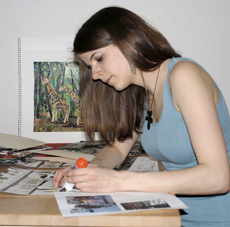 Megan Coyle grew up in Alexandria, Virginia and graduated from Elon University in 2008 with a degree in Painting and Creative Writing. She currently works and lives in the Washington, D.C. area. Megan has several upcoming solo exhibitions in Alexandria, Virginia in 2010: “Piece by Piece: Figurative Collage” at the Fisher Gallery in May, “Painting with Paper: The Figure” at the Art League Gallery in July, and “The Animal Kingdom” at the Goodwin House in August. You can find out more about her work and exhibitions by visiting www.mcoyle.com.