Home Blog Page 158

Campello — The Most Recorded Song in the World

Lenny Campello writes about the history of the song Guantamera. The post includes video of four versions of the song. Excerpt:

“I am told that the most recorded song in the world is the Beatles’ “Yesterday.” But among the top 10 most recorded songs in the world, and also the most recorded Spanish language song in history is the Guantanamera (real title is Guajira Guantanamera or the “Peasant Girl from Guantanamo”).

Even if you don’t know it yet, you’ve heard this song a million times. And yet, there is fierce debate as to who is the author of the Guajira Guantanamera? Who is the author of the musical introduction? and where does its chorus come from?

Most of this because originally in Cuba, the song was, other than the chorus part, an improvisational song, where the words to the song would be improvised by the singer as he/she sang it. There are no words to the Guantanamera!

In the 1960s Peter Seeger added the verses from Cuban poet Jose Marti in a performance at Radio City Music Hall in NYC and thus now the most common version of Guantanamera is the one with the Marti verses.

But this amazing song has no real written words – one just sings it and improvises as one goes.”

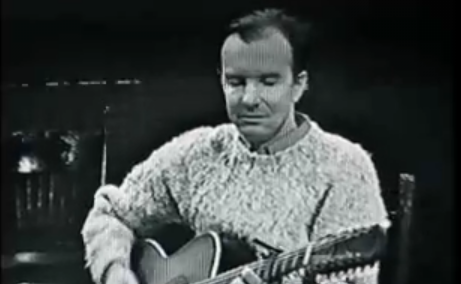
Click here to see the full post, including the four video versions. Here is a version by Pete Seeger from the post:

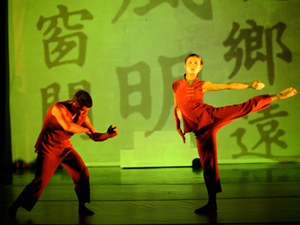
Making Charlie Chan + The Mystery of Love by Dana Tai Soon Burgess

Every time I start a new dance, I look for a completely different entry point. Sometimes its musical, other times it’s story driven, sometimes about historical events, etc. I am a huge dream journal person; I have been a lucid dreamer since childhood and I keep a dream journal by the side of my bed. When it is time to start a new work, I suddenly dream lucidly and see scenes from the new dance. It’s as if my subconscious gets filled up, and then moves all the ideas to the forefront of my conscious mind. The recurring images that I have for this new piece have been relating to how I grew up, and fundamental mid-life questions of love, identity, and home.

As a child I grew up in Santa Fe, NM. I attended bilingual Spanish public school in the day and a martial arts dojo at night that was located in a Project Tibet Center. My upbringing was in some ways in a crossroads of cultures, languages, and landscapes.

The new work is autobiographical, and includes images that run through my mind daily. The new dance is also an abstract story; it explores the transitions I have gone through emotionally and psychologically to find a sense of belonging in modern day, multi-faceted America, in my 40’s. After several weeks of rehearsal I now have my choreographic structure in place, and am filling in with text and music. I’m seeing that the main character plays in a fantasy world to communicate and externalize internal conflicts.

Autobiographically: as a child, I had an imaginary friend. I became friends with “Charlie” when I was 3, and maybe still am! As a youngster, I saw the movie character “Charlie Chan” on TV and I think I based my internal life on that of the movie detective. I know that the APIA (Asian Pacific Islander American) community goes back and forth on whether he is an obsequious caricature, or an early-empowered APIA, actually based on a real life Honolulu detective. But for me, Charlie was a detective who could solve all the problems of life. He would put all the topsy-turvy disparate images of life together, and make sense of them – a Korean American speaking Spanish. My life got so confusing that the overwhelming mysteries called for a detective to decode them all! In the new dance, Charlie Chan is the imaginary friend to the protagonist. Chan has a great outsider perspective that allows the main character to give up romanticized ideals of love, and to problem solve/contemplate his own life. I am calling my new work Charlie Chan and the Mystery of Love because it is a coming of age story where fantasies live and die around the concept of actualizing love.

I am loving the process of the dance, and of working with the designers, and knowing that there is something extremely cathartic about this work. I really appreciate the phrasing, and the dancers’ commitment. I love how they go with the abstract creative process and turn it into a whole new aesthetic. I will keep you posted as the work evolves…. We will premiere the work October 22-24 at the Dance Place; if you’re free please join us April 29th for a fundraiser entitled Shanghai Nights in Dupont Circle. See www.dtsbco.com for details!

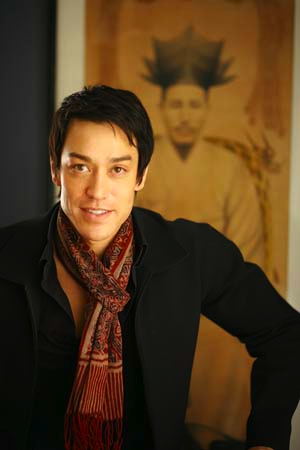
Dana Tai Soon Burgess is the director of Washington DC’s premiere Asian American dance company. He was raised in Santa Fe, New Mexico by parents who are both visual artists. He received his initial dance training from Tim Wengerd and Judith Chazin-Bennahum. Vital to his aesthetic are his training in the Michio Ito technique (the first Asian American choreographer) as well as culturally specific dance forms and martial arts. Burgess has received critical acclaim for his unique synthesis of Eastern and Western aesthetics. The Washington Post says, “Burgess’s work is food for the eye, spare, intimate and perfect as a pearl.”

His choreography has been presented and commissioned by the Smithsonian Institution, Asia Society (NY), the Kennedy Center, Lincoln Center, La MaMa, NY and the United Nations. His work has been performed extensively throughout the United States as well as in, Bulgaria, Canada, Colombia, Ecuador, Egypt, Germany, India, Israel, Korea, Latvia, Mexico, Palestine, Panama, Peru, Russia and Venezuela. He received the District of Columbia Mayor’s Arts Award in 1994 for Emerging Artist and in 2004 he received the Mayor’s Award for Excellence in an Artistic Discipline. In 2001, 2002, 2003, 2006 and 2008 he received the Metro DC Dance Awards for Best Overall Production. For more information on the company visit: Dana Tai Soon Burgess & Co.

Images in this post photo credit: Mary Noble Ours

DC Arts Agency Spending on the Artchive

This post on the blog of the DC Advocates for the Arts reports on the District’s local transparency initiative. An excerpt:

“Thanks to the DC Government’s transparency initiative, all local government spending is now online. Click here to download an excel spreadsheet with the DCCAH’s spending through March 22nd, 2010. In addition to showing grant payments, one organization received a payment of $120,000 dollars, another a payment of $114,000 dollars, and another a payment of $60,000. Do you think you can guess which organizations got what?”

To see the post with active links click here.

Try and Try Again: Lessons from Rehearsal by Heather Desaulniers

“When reviews bother me it’s because the journalists are reviewing a dance that they wished had happened instead of the one that existed.”

Joyce Morgenroth in Speaking of Dance: Twelve Contemporary Choreographers on Their Craft (New York: Routledge, 2004) 178

A few months back, I stumbled upon this quote and its truthful bluntness has haunted me ever since. Today’s dance reviews are heavy-laden with ‘I’ statements: ‘I wanted’; ‘I wished’; ‘I remember when’. Commentary has become less about the piece and more about the writer. We let our opinions cloud our judgment, we revel in our own theoretical acumen and we can hold a grudge like you wouldn’t believe. Having said that, I don’t think that writing’s downward spiral is entirely our fault. Thoughtful critique requires significant access to the work and, in dance, that is rare. Our exposure to each individual piece is incredibly restrictive; we see most performances only once, maybe twice (though unusual). This limited window of observation is contributing to reviews that are less than rigorous. A fleeting glimpse does not facilitate perceptive nor genuine reflection.

Last week, choreographer Tony Powell generously welcomed me to a rehearsal of his new work, In Between Time, which will be part of The Baltimore Ballet’s 10th Anniversary Gala-March 28th at The Lyric Opera House. This invitation gave me both time and opportunity with the dance, and solidified my belief that critics must devote more effort to the ‘work-in-progress’ phase of choreography.

The day I was there, Powell was completing the middle section of the ballet: a pas de quatre for 1 woman and 3 men. The movement centers around the female dancer, Devon Teuscher from American Ballet Theatre, and follows an intricate system of layering as each man, one by one, enters the picture. The partnering and lifts are physically complicated because all three men have an active role in Teuscher’s support. Watching Powell, these four dancers, and the rest of the cast work through the choreography was a unique experience. It was an exercise of true community; a creative environment where the goal was to actualize Powell’s vision. The atmosphere was happy, fun, while still being diligent, and I know from personal experience that rehearsals are seldom like that.

Watching the rehearsal process definitely helped me to understand the mechanics of this particular movement. But, more important, being there allowed me to see the piece multiple times, revealing a deep relationship between the composition of music and of dance. The score for this middle variation is Max Richter’s “On the Nature of Daylight”, a selection that exudes the feeling of traditional counterpoint. Powell’s choreographic response was an equally rich contrapuntal statement. Teuscher was the cantus firmus; her choreography was the base; the necessary ingredient; the stabilizing foundation. As each of the men entered the dance, they embodied first, second, and third species counterpoint. Each of these choreographic lines had to be both independent and interdependent for the polyphonic texture to work. Each individual’s choreography had to be significant enough to stand on its own, yet integrative enough to merge with the other three lines of movement. In Between Time is counterpoint done well, where each part is compelling and the aggregate picture is prismatic.

It’s hard to say whether I would have made these connections if my only chance to see In Between Time had been in performance. I do know that my thoughts were clearer at the end of the rehearsal, after seeing the cast work, mark and dance the section several times. The repetition may not have been the only key to unlock the dance for me, but it certainly helped.

Clearly, my opening quote is a sweeping, simplistic generalization, but there is definitely truth to it. This comment confirmed and re-iterated that the theater is only one of the many places where dance critique should occur. The rehearsal studio needs to become the writer’s research laboratory: a space to gather information, reach a deeper level of understanding, and prepare for reviewing work in its finished form. Critique should reflect conception, generation and production. But, this more holistic approach is only achievable when artists allow increased access to their creative process and critics commit more of their time outside of the theater.

Heather Desaulniers is a critic based in Washington, D.C. and an associate editor of Bourgeon. To see this post on her blog, click here.

Before Fire by Patricia Spears Jones

Lately, I have been misspelling words or reversing vowels — the mind gets sharper in some ways and slouchier in others as we age.

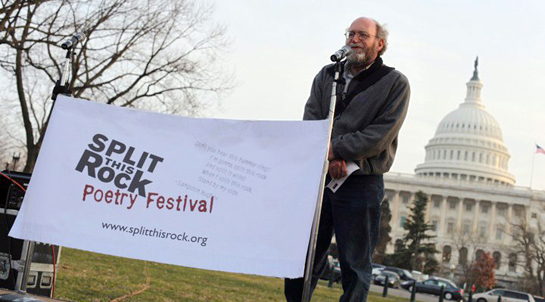
Age and knowledge and wisdom and learning are words that seem the best way to describe the Split This Rock Poetry Festival, which I attended last week. Others might use network, or protest, or activism. But poetry comes from people who will age; who gain knowledge, may become wise and are always learning. And poetry was the essence of the festival.

It’s appropriate that a “political” poetry festival would take place in our Nation’s Capitol –where else could it? Festival organizer Sarah Browning, my main man Regie Cabio, and their DC colleagues, are deeply dedicated to community, peace and the power of the word. And despite the occasional logistical challenge of getting one’s body from one place to the next, it felt as if everyone there, even the good people who work at the Thurgood Marshall Community Center, had a great time.

Patricia Monoghan and Michael McDermott, the co-founders of Black Earth Institute, invited me to join them on one of this year’s panel. Along with Patricia, Annie Finch, Judith Roche and Richard Cambridge, I spoke on the panel: Speaking for the Silence/d. Of course, being the gentle contrarian that I am, I spoke about listening — that we who speak are often speaking to indifferent, hostile or simply deeply ignorant audiences and that we have to start thinking of new ways to open ears. We each read a poem before speaking (a last minute request by Patricia M) so I read from my collection, Femme du Monde.

My Matthew Shepard Poem

My students are rightfully spooked
someone their age was left to perish
because he preferred the company of men

My mother tells me of seeing a man lynched
back in the 30’s, in Arkansas, not far from where
I grew up and grew away in the 60’s.

What I know about America is that hatred
crawls through the culture like the cracks
in the San Andreas fault.

Edifices are built to withstand the inevitable
quakes, but the quakes grow stronger..
What ever we dream harmony or a reasonable tolerance
is destroyed in the wake

of men drinking and killing. Their blood lusted
laughter howling through the night.

A Black man in Texas. A white man in Wyoming.
A doctor at his window about to eat dinner with his family.
A nurse on her way to work at a clinic.

The playing field is not level. In fact, there is no playing field.
There are men enraged by change. And women bitter about it.
And people, say
gay, Black, Latino, Chinese, Japanese, Arab, or Jewish
to blame, always to blame.

The ugly men in their same wool suits and striped ties
gibber political correctness, freedom, fairness
and fuck you
every time they claim that these are acts of individuals, not of society.
Each act alone represents

singular aberrant behavior, like murder.
I can hear them say, I mean they actually lynched that boy,
even as they call this one faggot and that one nigger.
And they really, really want women
compliant and girlish
or sexless and mothering.

And if this seems like male bashing, so be it.
If the dress shoe fits, may it pinch like hell.

The panel was rich in information and deep connection to a range of communities. Annie talked on collaboration in her Wolf Song project; Judith on her work with incarcerated girls and environmental projects; and Richard discussed the media’s mindset vis a vis our un-neighborly relationship with Cuba. Our audience was terrific–I got to meet Tracy Chiles McGhee and all the way from NYC, Marie-Elizabeth Mali and Victoria Sammartino as well as other teachers, arts group organizers, librarians, poets all. Patrica M. opened up the room for discussion and poetry and Victoria read a deeply moving piece about the incarcerated girls that she has worked with. It was truly moving.

Later that day I heard a bit of Camille Dungy’s talk on Black Nature: Four Centuries of African American Nature Poetry. Black Nature is a profoundly useful anthology that adds a different dimension to the conversation about the perception of nature by U.S. poets. That African Americans deal with the trees, rocks, cattle, sheep, flowers, ecological disasters, etc. should not be news, but for some in and out of the academy, it is. I also met Laura Hope-Gill from Ashville, NC and her colleague Trey Moore who are creating a kind of “poetry emergency response team” for communities that have had a traumatic event. Laura and Trey have some very good ideas and we attendees (age and wisdom here) – provided them with information and more ideas, but also pointed out possible pitfalls.

The final panel I attended was led by Andrea Carter Brown, and related to “historical” poems. I do use historical fact and/or myths in some of my poetry, but others are using facts and documents for their poetry. Scott Hightower’s presentation was particularly impressive because he spoke as a lyric poet (which he most definitely is) and as someone profoundly interested in unearthing the layers of story in the lives of people. Robin Coste Lewis talked about using the documents of her family, Louisianans who had moved to California – and while I didn’t say this, it does strike me that the internal migrations of people’s (Black or White) in this nation from crop failure, war, and social injustice and oppression are rarely told in American poetry.

Martha Collins talked about the development of Blue Front her amazing book length poem and Kim Roberts discussed becoming a literary historian: finding where Whitman lived while he was in DC, etc. and then writing about that. In discussion there I brought up two things: one that poor people often do not tell anything about their lives because of the profound difficulties they faced, and, the panel represented the first post- Jim Crow generation. We folk in our late fourties are the last American generation to live under legalized segregation. This is a complicated but healthy time in many ways for our Republic – sh*t is out here for all too see. How we work it through, well that’s why the Festival exists, I think – to give us more tools for gaining greater health in our ideas and ideals.

It was a great pleasure to present, and attend. Now back to the work of finding income to sustain my life, making poems, and doing what I can in this world.
Peace
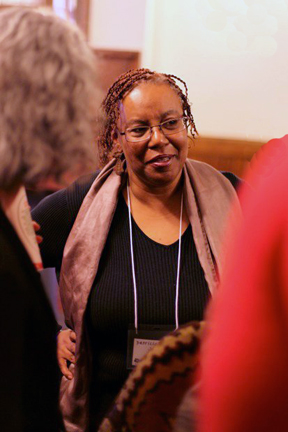
Patricia Spears Jones is an African American poet, playwright and cultural commentator. She is author of Femme du Monde (Tia Chucha Press) and The Weather That Kills (Coffee House Press) and editor of Think: Poems About Aretha Franklin’s Inauguration Hat (www.bombsite.org) and Ordinary Women: An Anthology of New York Women Poets (out of print). Her poetry is anthologized in Starting Today: 100 Poems for Obama’s First 100 Days; Black Nature: Four Hundred Years of African American Nature Poetry; Blood and Tears: Poems for Matthew Shepard; broken land: Poems of Brooklyn, Poetry After 911; and Best American Poetry, 2000. She writes the “Cosmopolitan in Brooklyn” column for Calabar Magazine and is a contributing editor to Bomb Magazine, both published in Brooklyn, NY. Mabou Mines commissioned and produced ‘Mother’ 1994 and Song for New York: What Women Do When Men Sit Knitting, 2007.

She has received grants and awards from the NEA, NYFA, the Goethe Institute and the Foundation for Contemporary Arts and residencies at Yaddo, Virginia Center for Creative Arts (VCCA), the Millay Colony and Bread Loaf. She is a fellow at the Black Earth Institute, a progressive think tank and was elected to the VCCA Fellows Council. She works as an arts administrator; poetry and creative writing instructor and fundraiser. She has taught creative writing workshops at Sarah Lawrence, Parsons School of Design, Naropa University and Pine Manor College’s Solstice Summer Writers Conference, as well as St. Mark’s Poetry Project, where she was Program Coordinator 1984-86, and for Cave Canem.

All photos by Jill Brazel