Home Blog Page 164

Evangeline Reilly: What is Dance?

0

DANCE IS: A conversation between music (or silence) and the body’s movement (or stillness). Sometimes it is an argument, sometimes it is a debate, sometimes it is an abusive relationship. At its most interesting, it is a question, or a series of questions that build on each other. It is a place for space and weight and rhythm to do exciting things.

– Evangeline Reilly

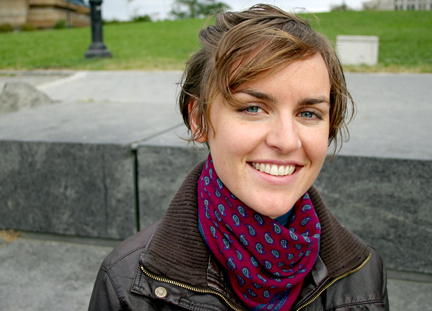
Evangeline Reilly is a playwright, musician and performer currently based in Brooklyn. She graduated in 2007 from University of California Santa Cruz. She loves songs that make people dance and dances that make people think.

CJ Holm: What is Dance?

0

Three answers:

Dance is the process of translating interior forces into external vectors.

Dance is a single moment when the dancers move, the audience moves in response, and then its over and all that
remains is the echo of movement in the minds and bodies of the participants.

Dance is serious fun.

– CJ Holm

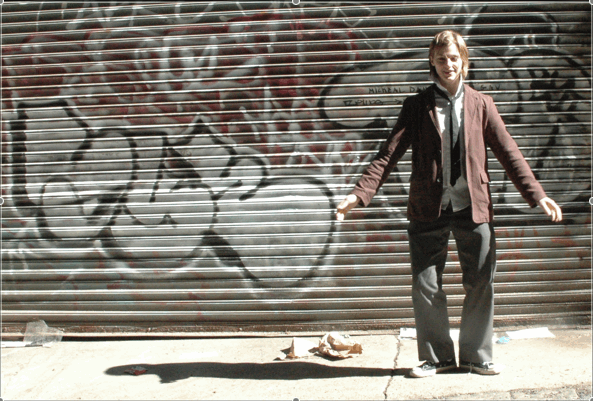
cj-holm-by-meg-rorisonCJ Holm has been making dances since 1997, most recently at Spoke The Hub’s Winter Follies, Movement Research’s Open Performance, and November’s 60×60 Dance at World Financial Center. Her work begins from the poetics of everyday actions. Her influences include science fiction and synesthesia. Website in progress at freedom-of-movement.com

Carlos Velazquez: What is Dance?

0

I’m not sure what is dance, I’m sure what movement means to me, but the whole idea of “dance” brings to my mind a lot of mixed feelings. “Dance” as a concept is attached to a series of images that direct our attention to the stages, to an artist making shapes with their body; dance as a division between the artist and the audience. And for me dance is about sharing; sharing experiences, sharing feelings, always trying to communicate about something through movement, not only as a dance. Movement as a ritual, movement as a catharsis, movement as an expression. Movement from a pedestrian walking to an abstraction of that concept. Dance is life, everybody moves around the world, in their offices, in the supermarket, in the parks, there is movement everywhere and we are so lucky to be part of that collective dance that the world creates around us. That is the real dance, the one that we don’t notice in our daily basis.

– Carlos A. Cruz Velázquez

carlos-mfa-1Born in Puebla, Mexico, Carlos started his dance training learning Mexican Folk Dance when he was six years old. Since then he has had performed with Compania Sunny Savoy and Cava~Parker Dance, among other companies and groups. He is co-founder and artistic director of colectivodoszeta and of Tlaxochimaco Mexican Artists Showcase. He holds a MFA in Dance from NYU-Tisch School of the Arts and is a Fulbright and FONCA-CONACULTA grantee.

Beth Jucovy: What is Dance?

0

For me, dance is the ultimate art form. Dance requires commitment of the total person in the most visceral, abstract and creative way. You are your body, and your body encompasses all- the musculature, the thoughts, the sensibilities, the awareness, the senses. As dancers, we keep our bodies alert, aware and sensitized. As dance performing artists, we use our bodies as the means of communication and expression . I believe that to live one’s life as an artist is in general is the healthiest and most fulfilling lifestyle. I see dance as the highest and also most natural art form.

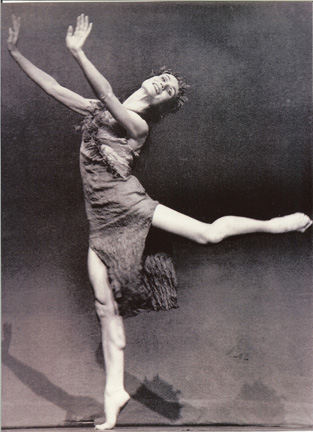
beth-jucovy-bachanale-solo-for-webBeth Jucovy is director, choreographer and dancer with Dance Visions, which she founded in 1990. She is director of her school “Children Dancing,” dance educator at the Dalton School, and a dance teaching artist with Tilles Center (aesthetic education). She is an Isadora Duncan dance specialist, a protege of Julia Levien, whom she studied with since childhood. www.newyorkdancing.net

Laura Shapiro: What is Dance?

0

To define something is to set limits or boundaries, yet many practitioners of the elusive, ephemeral medium of dance, especially in a restless, novelty-driven culture like ours, often seek to break through and go beyond the limits and boundaries of precedent and propriety. One dictionary defines dance: “to perform (make, do, accomplish), either alone or with others, a rhythmic and patterned succession of movements, commonly to music,” with the etymology of music coming from “any art over which the Muses presided, especially music and lyric poetry set to music.” These definitions notwithstanding, some dance is created and performed in silence, and some contemporary dance appears to have been created without any discernible rhythms or patterns. Interestingly, some cultures only have one word for what we call music and dance. For them sound and movement are facets of the same thing, usually involving religious, social or political ritual, rite or ceremony. For me–as a choreographer, performer and teacher–dance is as essential to everyday life as breathing and nourishment, enabling me to mediate the experiences of physical and non-physical reality in performance and practice.
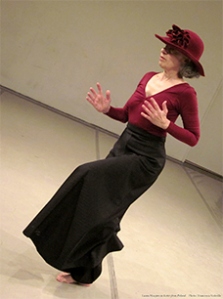
Laura Shapiro‘s independent artistic journey has taken her from New York to the Northwest, Asia and Europe. The consummate simplicity of her movement style is informed by decades of extensive study of traditional and new, Eastern and Western approaches to alignment, energy and awareness, which she now also teaches. In the New York Times, Jack Anderson described her work as having “access to magic powers,” and Jennifer Dunning wrote about her “compelling presence,” “enjoyable feminist wit,” and that “the simplicity of her theatrical touches was just right for the development of those themes.” In Attitude, Nefretete Rasheed concluded that “The power of Shapiro’s work seems to lie in its ability to suspend and sustain us in countless yet singular, incisive moments of movement.”  See www.quicksilverdance.wordpress.com for more information.