Home Blog Page 25

Three Poems by Patricia Gray

0

A Three-Day Love Affair

I fell for you fast, Venice,
the moment I stepped from the vaporetto
and onto your floating welcome.
Waif-thin as I was, you took me in,
transported me in time. I hunted
the greats who haunted your tearoom—
Byron and Proust, Dickens, Rousseau—
and sat in seats like theirs at the Florian,
sampling biscuits and delicacies, then
walked among pigeons clucking
and scolding as they mobbed
St. Mark’s Square.

That early December was cool.
The canal smelled of fish at night.
In the sinister twists of your streets,
Venezia, every shop hung
with plague-doctor masks.
I was in love with a gay man then—
a short-lived crush. My fingers sought
your handmade papers and journals,
your quill pens and ink…

I fell for you, Venice,
as I have fallen in love with men—
and was beyond lucky. You gave me
a transgressive show—that Balthus exhibit
of awkward erotic girls, a Dobyns’ poem
accompanying each painting—
then Rilke’s early journal with his drawings—
waiting in the Grassi Museum.

I knew you were magic and heathen
when I was swallowed by a costume shop,
six hands outfitting me for Carnevale in red
velvet and gold, too heavy to wear or buy.

I loved even your hawkers, Venice,
touting their fish as fresh, when my nose
said old by three days. Squid ink
stained my lips like a Goth diva’s and
remained till I was back in the States.
That’s how I wanted to be marked.
Some things you don’t want to forget.

Dark, Soft Curve

Writing a poem is like developing a photo
in the darkroom
in the old days. By bathing the photo-paper
in a chemical bath,
the imprint would emerge slowly through
a wavy liquid. You’d think,
ah, there’s her shoulder now and that dark,
soft curve of scarf
and you’d pause remembering the day and
place the picture was taken.

Lifting the photo from its bath, you use
the warmth
of your breath and hands on the paper to hasten
development and
make visible the details all but lost by a too-bright
flash. In this one moment
you can amend your mistakes, use your body
as heater and healer—
as we do in life, often in the darkest of rooms.

Crossing the Blue Ridge

Driving over the mountain and into the valley, I hear a rolling sound
like waves coming across fields that once held the fodder shocks
of ancestors’ labors, a feeling the soul misses—

remembering that the Iroquois Nation tilled these fields and moved
their farming in answer to the weather’s instructions, and even
the deep history when our planet was one big ocean,

and the mountains I love erupted in the Earth’s raw turnings,
and the valley pulled away from the foothills,
where the blue mountain stretches out in the distance.

The Blue Ridge is like my parents. It blends
Dad’s muscular caring with Mom’s mind and pillowy
curves, as if she were lying on her side on the horizon.

Patricia, you know you’re romanticizing, don’t you, pretending
the landscape is human? Admit it. You miss your parents, now
that you’re all grown up and too old to be called an orphan.

Patricia Gray’s poem, “The Taste of a Girl’s Knee” is in The MacGuffin, Vol. 40.1. Four other poems were in the Mediterranean Review. In 2023, she was awarded an Artist Fellowship in Poetry by the DC Commission on the Arts and Humanities and was a finalist for the 55th Millennium Writing Award for her poem, “Morning of Wilderness and Wind.” She lives in Washington, D.C.

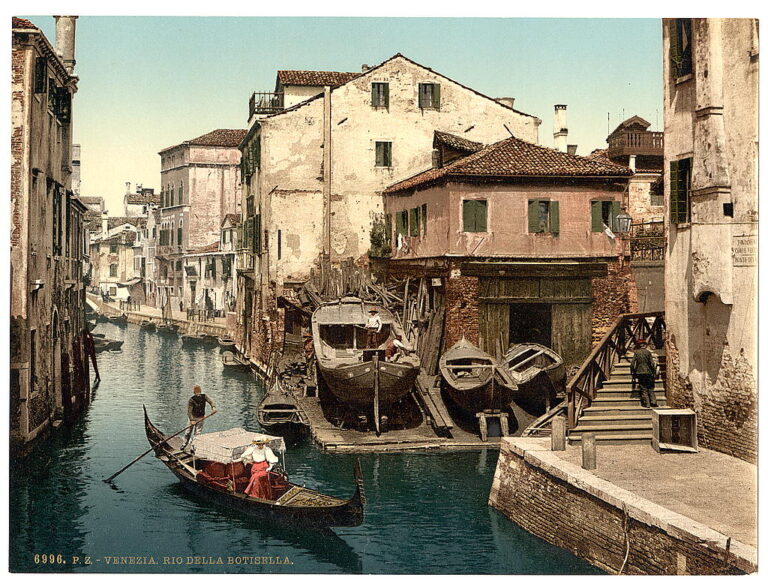
Image: The Library of Congress from Washington, DC, United States

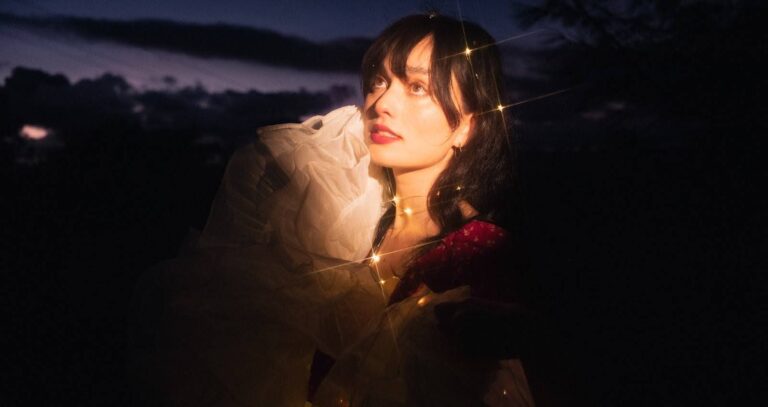
Ha Vay’s Baby I’m the Wolf is a call to the wild you’re gonna wanna answer by Hailey Wharram

0

This article is the winner of the 2024 DC College Student Arts Journalism Competition. Learn more about the 2024 competition on our website here.

In “Venus in the Sea,” the blushing lead single from Ha Vay’s 2023 EP Avalanches and Unfamiliar Ways to Die, the singer-songwriter wails “enraptured in the bluest dark, I captured your beating heart.” Just over a year later on her debut album Baby I’m The Wolf (2024), Ha Vay enraptures us all over again. Here, Ha Vay plucks Venus out of the sea and drops her into the bleeding heart of the forest, extending a hand to us so that we may follow her down the rabbit hole. Enriched with crystalline, caterwauling vocals and enchanting, literary-infused lyrics, to step through the portal into Ha Vay’s musical world is to be transported to a glistening, fern-canopied grove where feminine wiles and feminine wild collide.

Released at the tail end of June, Baby I’m The Wolf is a gossamer love letter to female ferocity—look no further than the album cover which sees Ha Vay screaming towards the sky in a berry-stained white frock for proof. Despite the deceptive docility of her delicate, cobweb-spun cadence—equal parts pillowy and entrancing—Ha Vay sings of howling at the moon and unleashing the powerful, unbridled spirit churning within her. The result of this sonic and lyrical contrast? A recognizable yet refreshing portrait of the ongoing struggle between external expression and internal repression that many women know all too well.

“This album is my experience of girlhood,” Ha Vay said in an interview with the Voice. “For me, a lot of that is sort of being someone who presents very soft and feminine. I don’t even think I realized that I did until a couple of years ago when I started making music. I was like ‘oh, I guess I have kind of a very feminine persona,’ because in my head I feel really wild and adventurous and crazy and all kinds of things. I think for me girlhood is kind of a journey of reconciling those two sides and trying to figure out how to be who I am and still feel accepted.”

In Baby I’m The Wolf’s sparkling opener “Ophelia,” Ha Vay makes it clear that “soft” and “strong” can coexist harmoniously—a thematic current which cascades throughout the rest of the record. While Shakespeare’s original Ophelia is primarily defined by her sorrow and her relationships with men, Ha Vay reimagines Hamlet’s leading lady as a starry-eyed yet self-sufficient daydreamer. “Ophelia at the window, pining for that first snow / she’s twirling like a ballerina, never caring how you see her,” she sings in the echoey first verse.

“Ophelia is really special to me,” Ha Vay said. “I’m really proud of the writing in that one and it just kind of flowed through me in a way that was really special.”

While much of the LP embraces both the mild and the wild, the title track sees Ha Vay, exhausted by being misunderstood as one-dimensional, finding solace in unabashed ferality. After a breathy, celestial beginning, the bridge roars to life with a galloping drum beat as Ha Vay repeats the song’s central mantra: “You think you’ve caught a lamb, but baby, I’m the wolf.” In conversation, Ha Vay elects “self love and self discovery” as the two core themes of the project, making this feisty anthem of redefinition and reclamation a perfect choice to represent the album as a whole.

“Ophelia” is not the only song on the record which harkens back to Shakespeare. According to the songstress, Queen Titania and King Oberon—the fae royalty of A Midsummer Night’s Dream—were similar sources of visual and thematic inspiration for this album. Likewise, “Angel! Wild! Superstar!” follows a pair of star-crossed lovers “on the hunt for a violent delight” à la Romeo and Juliet. Besides the Bard, the record also references a famous quotation from Jane Austen’s Pride and Prejudice in the sultry “Pretty Baby”: “I bewitch him, body and soul.” Ha Vay also takes ample cues from the world of cinema, citing Maya Deren’s surrealist short film Meshes of the Afternoon (1943) and a number of A24 horror films—namely X (2022), Pearl (2022), Midsommar (2019), and The VVitch (2015)—as inspirations of hers.

Above all other media, however, Virginia Woolf’s Orlando is the piece of art that consumes Ha Vay’s headspace most wholeheartedly. “I’ll never get over Orlando,” Ha Vay said. “I think everything I make is somehow adjacent to that book, and I’ve read it so many times. I read it for the first time when I was seventeen, and I feel like it hit me at just the right time to change my whole brain.”

Baby I’m The Wolf’s penultimate track “Nature’s Bride” gets its name from a pivotal passage in Woolf’s illustrious novel in which her eponymous protagonist declares “I have found my mate…It is the moor. I am nature’s bride.” A sweet surrender to the gentle grandeur of the natural world, this ode to the untamable climaxes with the protagonist breathily pleading for the earth to “entwine these vines ’round my fingers.” Underpinning the delicate piano melody, the swift and swishy muted acoustic guitar strums capture the heart-thumping euphoria of running with the wolves.

“I’ve been trying to write that song for years, and I’m really happy with how it came together,”  Ha Vay said. “I consider that to be kind of the pinnacle or the thesis of the album.”

Though “Nature’s Bride” has been trying to clamor its way out into the world for quite a while, typically Ha Vay’s songwriting process is much more intuitive and quick-moving.

“I really never spend more than like 30 or 45 minutes writing a song,” Ha Vay said. “If it doesn’t happen easily, I tend to think that, for me, it’s probably not right. It might mean that sort of the same concept comes back reincarnated in another song form at another time, but I feel like, to me, if I’m battling a song while I’m writing it, I feel like the audience can feel that battle, so it has to come naturally and as nonjudgmentally as possible.”

The fearlessness and fluidity which characterize Ha Vay’s creative process shines through all ten tracks on Baby I’m The Wolf. Ha Vay’s prioritization of “not forcing it”’ pays off in spades—each song feels thoughtful yet easy-going all at once. Likewise, in its steadfast exploration of multi-faceted womanhood, the album cleverly balances sonic and thematic cohesion with the concoction of a distinct tracklist. While all the songs are bound by a folksy pop flavor tailor-fit for the forest, melodies never feel one-note. The album staunchly side-steps monotony, ensuring each tune still feels uniquely momentous in its own right.

Against a confident chorus of electric guitars and swinging drums, “Fragile” sees our narrator as anything but; “I’m phenomenal, try me and then you’ll see.” The eerie, operatic “Vampires” features a shivering, phantasmic piano melody perfect for the Halloween season. “The Huntress” and “Moon Girl” are back-to-back, silky-smooth-talking tracks anchored by swampy basslines and bashful seduction. The latter is a particular gem, with Ha Vay masterfully locking the listener in her orbit thanks to twinkling, silver strings and howling vocals. On the eclectic, electrifying Baby I’m The Wolf, lightning does in fact strike the same place twice—actually, make that ten times.

The clarity of creative vision found across Ha Vay’s work is particularly impressive considering her greenness. Though she has been making music her entire life, Ha Vay officially began working on releasing music as a solo artist under her stage name—a name which pays homage to her Chinese heritage—during the pandemic, thanks in large part to the encouragement of her former bandmate turned producer Elliott “Woodbridge” Jacobs. You’d never know it just by listening to the polished debut record itself, but the singer is very candid about the small-scale, low-budget nature of her production endeavors.

“I don’t know how clear this is or isn’t, but the album and all of the videos and everything, it is all an extremely DIY operation,” Ha Vay said. “It’s pretty much just like three people—though sometimes more people join in—but I’m so grateful for the people who have worked on this with me and have brought this to life. In the loveliest way possible, everything is kind of duct-taped together, and it was such a team effort to really move mountains and make something out of nothing, so I just want everyone to know that—that it’s been such a journey to do it and that it still is.”

As of the release of her latest video for “He Wants The Rain,” seven out of the ten songs from Baby I’m The Wolf currently have music videos; the three remaining include “Fragile,” “Vampires,” and “The Huntress.” However, according to Ha Vay, not only will all ten tracks have videos by the end of the album cycle—all ten will combine with supplemental narrative scenes to create a short film to accompany the album. Tentatively, Ha Vay plans to release this project on Sept. 1.

These videos are largely the manifestation of a creative collaboration between Ha Vay and Emily Oreste, her best friend since first grade. Though Ha Vay is somewhat self-deprecating when she refers to her videos as “duct-taped together,” in actuality the grainy, found-footage-style visuals are endlessly charming and intimate. Each video feels like a precious peek into a clandestine life lived entirely on the protagonist’s own terms. Girls in flowy white dresses and flower crowns frolic in fields; Ha Vay explores a gothic, candle-lit house, applies rouge in a dusty mirror, prances through the snow, and spins in the starlight; Lovers come and go, but her coven proves everlasting. Ha Vay presents us with a peculiar yet alluring little world we are eager to lose ourselves in.

“We’re shooting on my producer’s Dad’s 1999 camcorder that we found rummaging around—like we didn’t have a camera or anything,” Ha Vay said. “Most of the props and so many of the costumes are handmade. So many friends dedicated so much time—like my friend Nicole designed dresses for some of the videos. People worked so hard for no money, just dedicating their time and their talents to making the music videos come to life which was just so special to me, because for me, every song is not complete without a video.”

In addition to the upcoming movie, Ha Vay is opening for fellow singer-songwriter Sarah Kinsley on tour this fall. The pair will be coming to Washington D.C. at Union Stage on Oct. 6.

“I’ve been a big fan of Sarah’s for a while, and I don’t even have a booking agent, so I guess she just had her management email me and I was so excited,” Ha Vay said. “I’ve never been on a big tour like that, so it’s a little bit daunting but very exciting, and I couldn’t be more excited that it’s with someone whose music I admire so much. I think it’s gonna be a whole new chapter. I’ve only really met listeners from California because that’s where I’ve played, so it’s gonna be amazing to meet more people. I might try out some new material as well, so it’s gonna be really, really fun.”

Rooted in delectably dreamy production and a strong sense of self, Ha Vay’s Baby I’m The Wolf is a once-in-a-blue-moon debut. For indie pop lovers looking to take a walk on the wild side, this bewitching, transcendent record is a must-listen.

Hailey Wharram is a senior at Georgetown University from Richmond, Virginia. She is majoring in English with minors in journalism and film and media studies. Hailey is an Associate Editor at The Georgetowner and also writes for The Georgetown Voice.
Meet Alex Woz, the Jewish artist fighting antisemitism through ‘70s designs by Zoe Bayewitz

0

This article is a finalist in the 2024 DC College Student Arts Journalism Competition. Read more about the 2024 competition here.

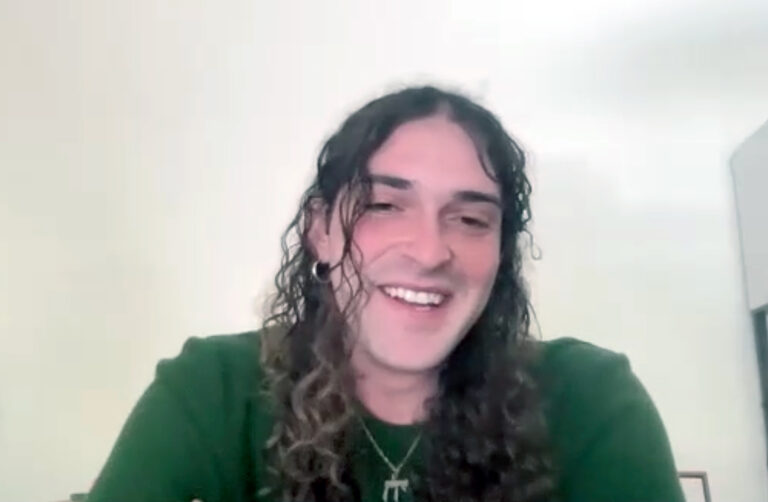
Alex Woz grew up as an Argentinian Jew surrounded by hateful rhetoric, directly targeting his identity. When his family immigrated to Los Angeles, they were met with constant and rampant antisemitism; they had rocks thrown at them and swastikas were painted on his locker at school.

“Four of the nine kids I had invited to my Bar Mitzvah at age 13 turned out to be neo-Nazi skinheads only five years later,” according to Woz’s biography.

Woz, who’s now 26, felt the need to bury his identity, accumulating shame for an aspect of his identity that was constantly ridiculed.

Meanwhile, Woz grew up to be an artist– which he always had been, drawing encouragement from his artistic mother. His art didn’t reflect his Jewish identity; he originally painted landscapes and anatomy.

“Before my art had a meaning, before it had a purpose that existed outside of myself, it was purposeless. It was voiceless. It existed for no other reason that I liked to do it,” Woz said in an interview on Monday.

The antisemitism he faced finally hit a breaking point, and Woz decided to explore his Jewish identity rather than hide from it.

“I got in touch with my local Chabad, began studying Torah, and immersed myself in the Jewish community of Los Angeles, learning as much as I could from my peers,” Woz’s biography explained.

Woz began seeing artistic inspiration in his religious studies, and changed the focus of his creations.

“When I started making artwork for the Jewish people, and once my art actually had a purpose beyond itself, I became a lot more…motivated,” he said about his Jewish artwork.

He struggled to publish his art at first because he dealt with perfectionism and criticized his own work. He also knew that publishing unapologetically Jewish art would come with a price, namely his career, which was in designing album covers.

Woz was suddenly faced with a dilemma.

He had a question to ask himself: “Are you going to commit career suicide in the name of actually representing what’s right and what you know to be inherently true?”

According to Woz, his approach to Judaism used to be a “sanitized” way–with no mention of Israel or Zionism– just the most inoffensive, secular version of Judaism there is. He knew that in order to publish his Jewish art, he had to be willing to lose “friends”; those who invalidated Israel’s right to exist, especially after the events of Oct. 7.

“If I have to commit career suicide to maybe get this out there or to encourage more people to do this, I’ll be the first one,” Woz said.

After jeopardizing friendships and career opportunities to keep his identity, he made undoubtedly Jewish, Zionist designs.

“I expected more backlash, but I actually got way more love, way more people giving applause to me,” Woz said about his transition to Jewish art. “For every message that I get that’s hate, I get 500 that are of love.”

Now, Woz is confident in the impact his art has made.

“My Tikkun, my purpose in life, which is to make art, to empower Jewish people, really revealed to me the psychology of why artists share their art to begin with,” Woz said.

Woz’s art is known by Jewish creatives around the world, with over 30,000 followers on Instagram. Students at the University of Maryland feel inspired by his unique merging of art with Jewish values.

“We can be Jewish, but also be authentic to our artsy self, which isn’t really represented a lot,” said Lily Katz, a junior sociology major at the University of Maryland. “I think it’s even more powerful to merge your own interests with Judaism.”

Woz draws inspiration for his artwork from both of his parents. His mother’s artistry encouraged him to make art; she wanted for her son what she too dreamt of.

“[At] age 12 to 13, my mom had to work in a factory in Argentina, and she would take her paycheck to the paint store to buy paints,” Woz said.

Woz’s father loves ‘70s music, and the design of that era– album covers, funky prints– attracted Woz, which influences his unique, retro style of artwork. He is drawn by “things that are weird, things that don’t make sense, things that break rules.”

“I grew up listening to, you know, all of the best ‘70s music, like Pink Floyd, Led Zeppelin, Genesis, all of these bands. And one of the things that I loved the most was the album cover,” Woz said. “The ‘70s was such a renaissance for great art and great design and great music.”

Orrin Berkeley, a senior animal science major at the University of Maryland, appreciated the modernity of his art.

“Jewish art in the past…always felt like it was a bit ancient, or at least a century old. It was very like, ‘Jewish culture is the Fiddler on the Roof,’” Berkeley said. “[His art] makes me feel as though I can be Jewish and keep it seriously, while being a modern person.”

Woz also pulls influence from E.M. Lilien, a printmaker and illustrator who captured the complex identities of Israelis in the early 1900s. Lilien photographed people in Israel and illustrated them, displaying true Jewish identities to the world.

“His work deals with Jewishness on a really real lens,” Woz said. “He showed that we are a Middle Eastern people…that we are an indigenous people, very profoundly.”

Woz continues capturing the Jewish diversity that Lilien did, aiming to represent the robust culture of Judaism and Israelis.

Woz encouraged students, especially Jewish artists, to stick with their identity, advocate for themselves and embrace their Judaism in everything they do.

He explained that Jewish artists have two options. They either have to take on the burden and pressure of being a Jewish artist, or “[create] art that’s not authentic. You’re creating art that’s not you, and that sounds like a punishment rather than a reward.”

Zoe Bayewitz is a writer and journalism major at the University of Maryland, College Park. She is the Features Editor for Mitzpeh, the university’s Jewish student publication. Her love for writing and design has channeled into music/entertainment reporting, graphic design and social media management. She hopes to combine her passions for travel, culture and the music industry with her writing and design skills, becoming a well-rounded and creative journalist.

Poet Jane Shore Stitches It Together by Ella Mitchell

0

This article is a finalists in the 2024 DC College Student Arts Journalism Competition. Find more information about the 2024 competition here.

A central thread stitches together much of poet Jane Shore’s creative works: the clothing she can’t forget.

Shore, an English professor at GW, said she once believed that her stories from growing up above her parents’ dress shop in New Jersey weren’t interesting enough to write about.

But Shore said, in a poetic sense, the idea of sleeping a floor above a shop that sold coveted women’s dresses — which she hoped to one day wear herself — symbolized her ambitions for the future. Her parents’ dress shop would go on to appear in a slew of Shore’s autobiographical poetry books like her 2012 narrative collection of poems “That Said.”

“It turned out to be something like a subject — something that I knew very, very well,” Shore said. “And it’s something a lot of people hadn’t written about before.”

Shore now uses clothing as a source of inspiration in the classroom. In her course Imitations, a class on contemporary poetry that encouraged students to write poems that mirrored or challenged the prose of selected pieces, Shore gave a simple assignment: write about an article of clothing. Shore said she was amazed by the students’ willingness to open up through poetry, divulging sensitive information about their lives linked to personal items of clothing during the workshop.

“I felt something very amazing had happened in that class, just everybody connecting in a wonderful way,” Shore said. “Just seeing what poetry can do and what teaching could be.”

Now, after a decades-long career as a poet and educator, Shore’s 35 years at GW are coming to a “clothes” as she plans to retire to her home in Vermont.

After graduating from Goddard College and receiving her master of fine arts degree from the Iowa Writers’ Workshop, Shore’s poetry career began in 1971 through a fellowship at Radcliffe College — a former women’s college that was incorporated into Harvard University in 1999.

During her time at Radcliffe, Shore said she studied under the poet Elizabeth Bishop, who she said many consider the best poet of the mid to late 20th century, and later worked alongside her at Harvard University. She said Bishop remains the most impactful teacher she’s ever had and demonstrated “amazing powers of observation” that continue to inspire Shore to this day.

“Although I’ve read many, many, many poets, I think I’ve been most influenced by her poetry,” Shore said. “It’s about the world, and it’s about people.”

As a working poet, Shore has published six books of poetry, including the 1996 “Music Minus One” and the 2008 “A Yes or No Answer,” a finalist for the National Book Critics Circle Award. She said her work is primarily autobiographical, covering everything from her New Jersey childhood to becoming a mother at 41 to her love for Vermont.

“I thought, ‘In order to be a poet, don’t you have to sort of have flowers in your hair and grow up and experience beauty and life and death?’” Shore said. “But in fact, I thought, ‘My parents own a clothing store, like my experience, even though I’m interested in all the arts, my parents, their life, what’s downstairs going on as I’m upstairs is pretty interesting.’”

Shore began her work at GW in 1989 as a Jenny McKean Moore writer-in-residence, a year-long teaching fellowship in creative writing within the Department of English. She said she applied for a tenure-track position after completing her fellowship and was pleased to settle down at a university after years of teaching at institutions across the country, including Tufts University and the University of Hawaii.

“When I met the faculty and the students, this just felt like home,” Shore said. “I just loved everybody.”

Shore said GW stands out among all of the universities she’s taught at because faculty and students bring a heightened level of commitment to the craft of creative writing.

“I think I have never met as wonderful students as I have,” Shore said. “I mean, any place I’ve gone, people have been fantastic. But every year that I come back to GW, it’s just amazing, amazing, amazing people — kind, smart, talented.”

Professor Mary-Sherman Willis, an adjunct professor in the English department, said Shore broadened students’ understanding of and appreciation for poetry, whether they enrolled in her course for personal interests or to fulfill a GPAC requirement.

Willis said Shore always created welcoming classroom environments that encouraged students to face the challenges of writing poetry, like navigating poem structure and sensitive subjects.

“There’s an exposure and a vulnerability in writing poetry that you don’t get in the rest of the school experience,” Willis said. “And she made sure that every student knew that they were in good hands, in safe hands with her, and that they were gonna have fun.”

Jillian Noble, a senior majoring in psychology, took Shore’s Imitations course as a freshman and is now enrolled in Shore’s other course offering, Around the World in 80 Poems — a course where students read and analyze a selection of poems every week and workshop their own poetry with their peers.

“Professor Shore is just one of the most genuine professors I’ve ever met,” Noble said. “The love that she has for her students, and the encouragement she provides is just crazy unreal.”

Since four years have passed since Noble last enrolled in one of Shore’s courses, Noble said she wanted to reach out and reintroduce herself before spring classes began.

But Shore beat her to the punch. Noble said the professor emailed her and another student who took Imitations to tell them how excited she was to be a part of their senior year after first teaching them as first-years.

“It was really heartwarming to know she remembered us and had been thinking about us,” Noble said.

Antonio López, an associate professor and the chair of the English department, said he has seen evidence of his colleague’s creative influence on her students’ poetry in the 18 years since they’ve known each other.

“Jane is a superb poet who sparked in her students both a genuine curiosity about how that art form works and a desire to create wonderful poems of their own,” López said in an email.

Lisa Page, the director of creative writing for the English department, said her history with Shore goes back to the 1990s when the pair met through the PEN/Faulkner Foundation, a literary award program in D.C. Page said she appreciates Shore’s strong support of other Moore fellows at GW by inviting them to her home and sometimes even renting out her home to them.

“Students loved her ability to lighten the emotional weight of creative writing; she made them laugh even as she simultaneously invited them to put their souls on paper,” Page said in an email.

Ella Mitchell is a sophomore at George Washington University studying journalism and marketing. She serves as an editor for The GW Hatchet where she covers Foggy Bottom news including local government, homelessness, unions and construction. In her free time, Ella loves reading, drinking boba tea and volunteering.
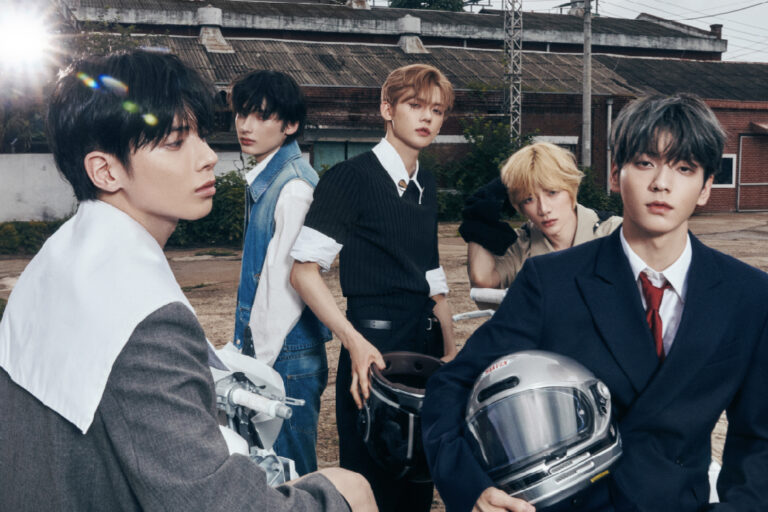
TomorrowXTogether shines bright in The Star Chapter: Sanctuary but burns out too quickly by Sagun Shrestha

0

This article is a finalist in the 2024 College Student Arts Journalism Challenge. Find more information about the 2024 competition here.

Floating high above the clouds, TOMORROW X TOGETHER (shortened to TXT) brings us over the moon, away from the harsh realities of life on The Star Chapter: SANCTUARY. With multiple tracks alluding to the concept of heaven, it’s no surprise that this EP feels otherwordly, creating a record full of both light and love.

Released in early November, the group’s seventh mini album SANCTUARY glistens and glimmers. Big Hit Entertainment, TXT’s record label, describes the EP as “a tapestry of emotions, hearts and minds racing as two people meet again under a starry sky,” telling the story of beautiful moments spent together. The tracks on SANCTUARY certainly live up to this description, with songs like “Heaven” and title track “Over The Moon” sounding like they were written in glitter gel pen. But rather than drawing out the romance, SANCTUARY clocks in at only 14 minutes and 52 seconds over the course of six songs. Though the EP follows a love story, it is a flame that burns quite brightly, but also burns out far too quickly.

In line with TXT’s lore and the group’s intensive world-building—a notable trend among K-pop artists—SANCTUARY explores the feeling of being in love. Though TXT generally releases their projects in minisodes and chapters, with The Star Chapter marking a new storyline, SANCTUARY can be consumed as a standalone since it has its own internal structure. Unlike other EPs that only focus on specific singles, the order really matters here, with attention given to the placement of each and every track.

Opening track “Heaven” depicts “that first moment together” as shimmery and shiny, relying on the repeated motif of heaven to describe what being with their lover feels like. Complete with classic love song buzzwords like like “baby,” “magic,” and “crazy,” and the bubbly build-up in the pre-chorus of “You make it, you make it, you make it feel like,” it’s not hard to envision the euphoria they’re feeling.

SANCTUARY marks a shift for TXT from the start, moving onto bigger and brighter things with love as their remedy. In their older sad songs like “0X1=LOVESONG (I Know I Love You)” (2021), they had claimed there’s “no place for me in heaven,” providing a stark contrast to their new opening. “Heaven”’s rollout also stands out from a marketing perspective, considering it was the first song off of SANTUARY to be teased and came with pre-made choreo. Opening tracks, despite their first-place position, don’t typically receive such special treatment in k-pop comebacks, and instead are set aside with the rest of the b-sides, or secondary songs that aren’t the main single, to be advertised and performed occasionally. But with a smooth drum beat, entrancing whistles, and some synth inspirations to keep the song’s energy flowing, “Heaven” sets the bar high for the rest of SANCTUARY, making clear why the song is so deserving of its spotlight.

The EP continues its usage of celestial elements in lead single (or title track, as they’re called in the Korean music industry) “Over The Moon,” which marks the next stage of a love story: anticipation for a shared future. Though the single begins with the makings of a smooth jazz track—which is not completely out of the realm of possibility for a group as versatile as TXT—“Over The Moon” quickly picks up in liveliness, calling back to the incessant need to be with a lover. First asking “Let me hold you, let me hold you closer” then describing feeling like soaring “when you’re in my arms,” the members really hone in on the romance. Choi Soobin’s impressive falsetto also serves as a reminder of the group’s overall vocal capabilities, capabilities which have taken a back seat to diverse new production choices in other recent releases. The range found in SANCTUARY, however, in both vocal capacity and production style, proves that the two can be highlighted simultaneously without sacrificing one for the other.

An ever deepening love is foretold in “Danger” where TXT seems to be falling harder, almost to the point of crashing. Despite the danger their relationship presents, they can’t see reason, because their lover is their “ride or die.” Autotuned ad libs in the background let out an occasional “oh!” as if getting burned, which is exactly how they describe this love. Furthermore, the futuristic, techno sounds give the illusion of alarms blaring—but, seemingly, in a good way somehow. In the next stage, “Resist (Not Gonna Run Away)” outlines the determination to hold what’s most dear close. As the music intensifies with a steady drumline, rapid guitar strums, and fervent clapping, the message pivots to a more possessive tone: “‘Cause I don’t wanna live without ya (I can resist) / I’ll endure anything for you (I can resist).”

Though both “Danger” and “Resist,” like “Heaven” and “Over The Moon,” are undeniably catchy, there is still something deeply underwhelming about SANCTUARY in its entirety due to the distinct lack of bridges leaving the record infectious but unfulfilled.

Private expressions of love are explored in “Forty One Winks,” which masterfully takes elements from early 2000s R&B without appropriating the original genre. Silky and smooth, the song doesn’t feel out of place among the other pop-centric tracks, evoking the same kind of soulful longing that characterizes the EP as a whole. Despite this otherwise faithful rendition, “Forty One Winks” does miss out on a bridge, relying on the chorus and post-chorus to fade out almost unsatisfyingly, without proper closure. For a group that hinges so heavily on narrative structure, leaving out a bridge is like cutting out the climax. Without this most essential story element, there is no epic buildup—not to mention it also leaves the song at under three minutes, which is frankly too short.

SANCTUARY closes out with “Higher Than Heaven,” a song about determining when someone is your one and only. At long last, one of the songs features a bridge, though the measly four lines do little to bulk up the length of the track: at two minutes and 41 seconds, it is the longest on the project. Though the mini album started with “Heaven,” an already utopic track, the group finds a new high in this tale’s happy ending, rising even further above this aforementioned paradise with their beloved. Teetering towards pop-punk instead of its bubblegum counterpart, subtle rock features in the form of electric and bass guitars provide a refreshing take on the otherwise slightly overdone pop love song, while also emulating the boy bands of the early 2010s. The ascending “high, high, high”s—especially used for promotional content—also give insight into each member’s character, allowing their individual personalities to shine through with a bit of playfulness.

Although the mini album is in some ways a treacherous journey through the stars, SANCTUARY is no fall from grace. Ethereal and angelic in all the right ways, TXT has cemented themselves as a group capable of spanning genres and styles. While the EP’s brevity endows it with a high replay factor, this choice comes with a tradeoff: the uncanny feeling that something is missing. And it is a tragedy that in so many of these songs, the missing piece is simply a bridge, a dying relic in this time and age in the music industry. While the quality of TXT’s work has not necessarily diminished beyond repair, their evident prioritization of quantity at the moment has resulted in a half-baked final product. SANCTUARY is also indicative of a wider, unhealthy trend. With multiple releases in 2024 alone, and a series of nonstop tour and event dates, TXT’s output is greatly outpacing what is feasible for a group to do. It’s no wonder why their leader had to go on a temporary hiatus citing health concerns. Though TXT burns bright at the moment, they are also at risk of burning out.

Sagun Shrestha is a senior at Georgetown University studying Government, Psychology, and Journalism. She calls Montgomery County, MD home. She also writes for The Georgetown Voice, Georgetown University’s student-run newsmagazine, and is the Leisure Executive editor, a section that takes on all things, art, entertainment, and culture.