Home Blog Page 58

Two Poems by Hannah Fischer

0

Flirting with February

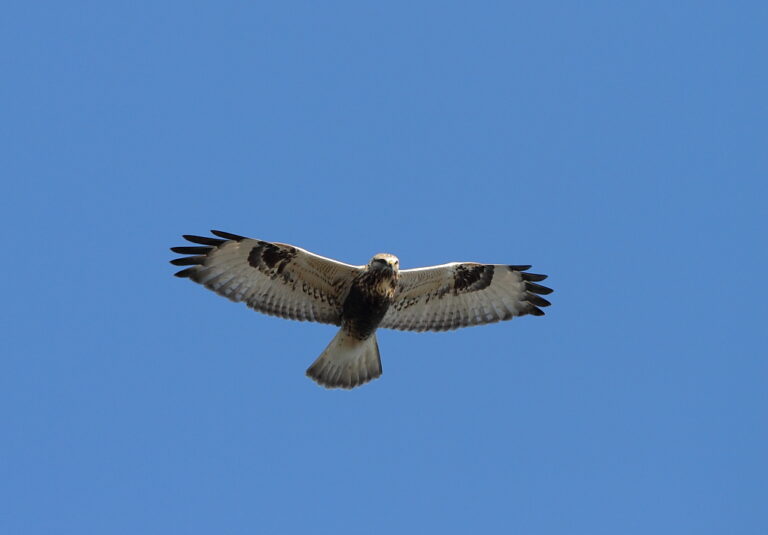
Heavy beaked bird
in the denuded trees.

He flashed his frilly pantaloons
and if this were a bar
I might have lowered my lids to him,
licked a finger and dragged it
through the condensation
left by the beers we killed.

Instead he soared
over the slate grey roof ridge,
leaving my afternoon empty
and full of February.

An Infestation of Mice in a Capitol Hill Townhouse

DC, you block
of cheese, the mice
have gotten to you
and nibbled at your side.

Your laws
lack symmetry
and your people sleep
with the pea of inequality
unsettling their dreams; they sleep
like people who hear rustling,
a whisper, like a mouse
in the kitchen downstairs.

Hannah Fischer is a librarian and nature enthusiast in Washington, D.C. She publishes the wildlife newsletter, WanderFinderon a bi-weekly-ish basis, and works of hers have appeared in Shenandoah Literary Magazine, Joyland Magazine, and Calyx. She likes clapping on the down beat, and her views are hers alone.

Image: Marton Berntsen, CC BY-SA 4.0 https://creativecommons.org/licenses/by-sa/4.0, via Wikimedia Commons

Two Poems by Sage Yamashita

0

Blind Spots

I remember as a child once
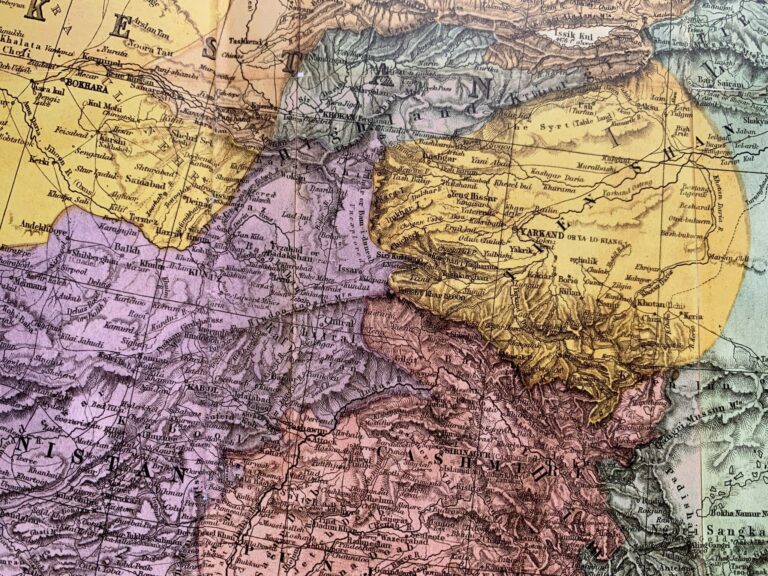
Seeing a map
A replica of an old and ancient map.

On the edges of the map were written the words
“Here be dragons”
And I was suddenly alive.

I remember the thrill I felt that dragons were in the world
My head swam
And my body buzzed as it sang “Dragons!” over and over.

When I look at the unmapped sections of my soul
Where I have written only
“Caveat Rimor: Here Be Dragons,” I feel the same way.

And just like those ancient explorers I’m tempted to ask
If the thrill is hope and excitement
Or abject terror.

Then I roll up the map.
Such things are not for me to know.

Numbing

The news is terrible today.
Fire, flood.
Conflict everywhere.
Pictures of people hurt and dying.
And children dead.
Children
Like my children.

I’m eating popcorn while I watch the news
More for something to do with my hands than any desire for
Popcorn.
The popcorn is stale and greasy. There’s too much butter on it.
The butter coats my fingers until a layer of artificial fat
Is thick enough to protect my frail skin from the least little thing.
The downside of course is that I can’t play video games now.
I can’t do anything with my hands like this.
The fake fat on the stale popcorn feels like mittens
Like childhood memories of playing in the snow.

I fall asleep on the couch.
My hands are warm on a cold winter night
When, like a child,
My mittened hands play in the snow.

Sage Yamashita graduated from Albright College in Reading, PA with a BA that has nothing to do with poetry. He currently works a day job that has nothing to do with poetry, so of course he spends all his extra time writing it. He lives with his spouse and two children outside Baltimore, MD.

Image: anonymous author of the map, Public domain, via Wikimedia Commons

Three Descent Poems by Brandy Whitlock

1

The Descent of Discourse

Such conspicuous consumers, utilizing
calls and patterns, colors and scents,

faces and stances and gaits, sensitive to
the foggiest gesticulations, the slightest

seismic vibrations, we are always in
danger in dialogue. There’s mischief

and worse. So we learn whole lexicons
for alarms and threats, edibles and sex

and intoxicants, boasts and laments,
absorbing the slang of pain and play,

the vernaculars for pleasure, hunger,
shame, elaborate analogies for intimacy

and tedium and awe. Still, for most
of the conversation, we are completely

lost. And we look ridiculous, twisting
and sidestepping, caught in a constant

state of doublespeak, but we can’t stop
once we start, and we can’t say who

or what put this absurd dance on us,
what’s creature and what’s culture.

We have so many expressions—such
specificity—but so often we mistake

complexity for chaos, what’s spoken
for what’s heard. Nearly any signal is

costly, honest or not, but we babble
on incessantly, compulsively—giddy,

awkward—until we are exhausted by
the monumental effort it takes to

make any sense at all, until protecting
and pressing against each other in

the darkness and silence is no less
beautiful than a brand new word.

The Descent of Dreaming

We are rife with advantages. Handy,
cerebral, we fool ourselves into thinking

we can see what’s invisible, touch
the intangible. We are nothing if not

resourceful. Unwittingly, we actually eat
with our eyes, feel with our ears, make

believe we can experience a world
anyone else experiences, disposed,

as we are, to dreaming, concocting
meaning from the meaningless. We

learn to notice most what’s useful, and
these mirages, these myths, they are

instructive. They teach us it’s possible
to choose who will be the monster

in the story and who will be the martyr,
what will be the poison and what will

be the cure. They disguise the inescapable:
that we can never go back, and we’ll never

see the end coming, and in the meantime
we can’t avoid feeding the chaos churning

inside us, living these lives of unchecked
perplexity and conjecture. We can’t help

but be untrue. Delicate, transitory, we are
all singular experiments of sensory fidelity,

impossible to duplicate or corroborate,
exceptional jumbles of electrical impulses,

peculiar, wondrous knots of lightning
strikes sparkling through carbon.

The Descent of Dependency

We are made of complicated, bloodshot
rock, freak accidents, and exponentially

accumulating secrets, and we are carved,
in part, by the peculiar ways we learn to

court joy, by the spells we craft to conjure
and keep it, by how easily and gracefully

we can receive it. Mainly, though, we are
cut by pain, bent by the kind and quality

of respite we invent, by how frequently
and brazenly we seek any degree of relief.

We can never cop to all the ways we use
each other, all the ways we’re susceptible

to suggestion, to withdrawal, to abuse, all
the ways we’re wasted. Most losses cannot

be recovered, only reconsidered or reframed,
and we are reckless with everything precious.

Plagued by pyrrhic victories, unmitigated
calamities, by uncanny, madcap conspiracies,

we can’t seem to learn the world well enough
—even with its explicit, moralizing warnings,

despite our flagrantly risky and excessive
testing. We can’t trust ourselves around

the story. Revising unwisely, blacking out
too much too often, we are provoked by

pure dread, by the trouble we have feeling
we have any power whatsoever. We pick up

the saddest habits, entertain the most toxic
propositions, sanctify the scariest spirits,

until we suffer far less from the diseases
we catch than from the ones we create.

Our nature is wayward. Our lives come quick
and intemperate, and we won’t be set straight.

Brandy Whitlock is a librarian and educator living in Baltimore, Maryland. Her poems have appeared in literary magazines like New Orleans Review, Calyx, Salt Hill, The Baltimore Review, The Tusculum Review, and Denver Quarterly.

Image: David S. Soriano, CC BY-SA 4.0 <https://creativecommons.org/licenses/by-sa/4.0>, via Wikimedia Commons

Four Poems by David Lott

0

pastry case

the pastry case

is an aquarium of still lifes

where works of pain au chocolat float

alongside those of éclair and chouquette


to begin to make one yours

you don’t need a fishing net


or a seat at Christie’s

or language, even


just stand outside the glass and point

glimpse

the pandemic

had put parades

on pause

yet I happened to glimpse

several red-uniformed

men and women

stepping peppily as one

from the dark mouth of a carwash and into the bright sunshine

while escorting to the curb

a big, dark blue, newly-rinsed Lincoln

that they were drying briskly

with fluttering white handtowels

it was a surreal

5-second slice

of a 4th of July

a mini-reenactment

of something that in no way should have felt historical

it came and went with an eeriness

still…I almost stuck around for the next car

dreamt (#417)

dreamt I was starring in an info-mercial

except on closer examination

it was an in-poem-ercial

instead of selling exercise equipment

to enhance the physique

I was all about the metaphysique

hawking haiku

slinging sonnets

unloading odes

vending villanelles

peddling pantoums

you get the picture

at the end

I rode off into the sunset

on a ghazal

on the wing

it’s asking too much

to be the Yvan Cournoyer

of poems

yet the stick-handling

in gliding the stylus

across the smooth glass of this tablet

allows for dreams

David Lott’s poems have appeared in Beltway Poetry Quarterly, Arlington Literary Journal, Arete, Light, Closed Eye Open, the anthology This is What America Looks Like, and his bilingual collection New to Guayama/Nuevos en Guayama. He is an associate editor at Potomac Review and poetry editor at The Sligo Journal, both sponsored by Montgomery College, where he has taught English language and literature since 1992.

Image: Mudflattop, CC BY 4.0 https://creativecommons.org/licenses/by/4.0, via Wikimedia Commons

School, Studio, and Back for DC Rapper Lightshow by Leah Cohen

0

This article was a finalist in the 2023 DC College Student Arts Journalism Competition. This article was first published in the Georgetown Hoya.

Lightshow, a rapper native to Washington, D.C., would do anything if it meant getting out of trouble with his mother. His tactic of choice: sweet-talking her with handwritten poems before she even walks through the front door.

“I was at school and got a call home for talking around in class,” Lightshow said. “I knew I was going to be in trouble when I got home. I always got home before my mom. While I was there, I tried to whip her up something nice.”

Lightshow, born Larinzo Lambright-Williams, always prayed that he’d have the words to talk his way out of trouble. Did it ever work? Maybe that day. But little did he know at the time that these poems, which he wrote in hope of saving himself from a “whooping,” would help launch his career as one of D.C.’s biggest rappers — one who has now worked alongside big-name acts like 21 Savage and 2 Chainz.

Born and raised in D.C. — 10th Place SE in Congress Heights, to be exact — Lightshow’s hometown still inspires his writing and his music.

“The world around me affects it, D.C. affects it. Everything around me, what I want to be, what I don’t want to be — it can’t not be influenced by the things around me,” Lightshow told The Hoya.

Lightshow said the District has attributes both good and bad, describing D.C. as a place where you can walk by beautiful cherry blossoms at the Tidal Basin while a robbery is happening just two blocks away.

“It’s a paper-thin balance and I understand both sides,” he said. “I am inspired by that, and overall ways you feel, and emotions. What goes on in my city greatly affects my music and what I speak on.”

True to his city, Lightshow is represented by 86 America, his own D.C.-based record label. But the rapper also emphasized the importance of exploring other places. 

“The music scene in D.C. gets you prepared for whatever you want to do,” Lightshow said. “But you can benefit from stepping outside of where you’re from. People appreciate the struggle and stories of the people here, but the more you get out of your area, the more there is for you.”

When he works in his D.C. studio, it’s more of an individual process than a collective effort. In order to grow his career, Lightshow has traveled to New York, Los Angeles, Houston and Florida to get his music heard and work with different influential people in the industry. 

Lightshow has worked with some of the biggest names in rap — his song “Need a Lighter” features 21 Savage, and he’s opened on tour for 2 Chainz and the late Nipsey Hussle. He says these collaborations have defined his career. 

Lightshow is currently in Atlanta working on a new album, entitled “Brighter Than Light.” Since 2012, Lightshow has released 11 albums and describes his work on the upcoming one as the “most fun” he’s ever had. Although there is no official release date yet, the album is finished, and he expects to roll it out sometime this year.

“Being able to really lock in the studio and not have as many distractions around me helped me to lock in what I had to say,” Lightshow said. “Having time to work on it made me have patience and allowed it to be that much better. Working with the best producers and engineers makes you want to bring your best.”

Lightshow said he always pushes himself in production, noting that the end result is never where he originally thought he would end up.

While working on his record, Lightshow is also pursuing a new dream. He graduated high school over a decade ago, but the 31-year-old recently decided to return to school and pursue a bachelor’s degree in philosophy. Lightshow is currently balancing a full first-year course load at Georgia State University.

“When I do my school as soon as I get it, I always have time,” he said. “School during the day, music all night and morning.” 

Even as a full-time student, Lightshow still manages to spend anywhere between 12 to 17 hours in the studio, allowing him to pursue both music and a new career. The two are not mutually exclusive, though — his coursework has provided inspiration for some of his lyrics. After a class reading of Plato’s “Allegory of the Cave,” Lightshow incorporated the concept into one of his lyrics.

“That wouldn’t have happened if I hadn’t had that fresh on my mind from school and the studio,” he said. “School helped open up my mind. I’m learning so much it applies to the music I’m making and lifestyle.”

After graduation, Lightshow plans to get a J.D. degree and practice law, as he credits teams of lawyers for getting him where he is today.

“If it wasn’t for legal people around me that cared what I was doing, and me as a person that was able to see through decisions I made, I would probably be in jail somewhere,” he said.

A childhood dream that’s always been in the back of his mind, Lightshow woke up one day and decided going back to school wouldn’t be such a big distraction from his music. To an outsider, music and law may seem like wildly different career paths. But to Lightshow — and those in the industry — the overlap is evident.

“When you think of government and obscenities, music is one of the things that pushes the limit on freedom of speech and what you can and can’t say — it toes the line,” Lightshow said. “Music burns in my soul, it’s something I have to do. Maybe that will change in terms of the way I talk about things, I don’t know yet. I’m chasing two dreams at once right now, as long as time permits.”

Realizing he’s been given second and third and fourth chances to succeed in life because of the help of others, Lightshow is going to do what he loves — challenge himself now, and help others later. 

With a new album on the way, fans will have plenty of opportunities to catch Lightshow live — maybe even on campus at Georgetown. While we anxiously await “Brighter Than Light,” Lightshow’s music is available to stream on Spotify, SoundCloud and Apple Music. And, if you want to do D.C. the Lightshow way, here are some of his favorite spots in the city:

Favorite Monument: The Capitol

Favorite Restaurant: Nobu

Favorite Neighborhood: 10th Place SE and Georgetown

Favorite D.C. Meal: Chicken with mumbo sauce and french fries at The Hamilton or anything at Ben’s Chili Bowl

Favorite D.C.-area artists: Wale and Marvin Gaye

Leah Cohen is a current junior at Georgetown University studying English with a minor in journalism. She enjoys the opportunity journalism gives her to talk with people and share their stories with others.