tail feathers, black, brown, trimmed in white, stutter, relax.
Look another second for a light,
a lifting, an indication that something is gone.
She stares, harmed by silence.
I open the door, motion her through.
Fourth of July, Petworth
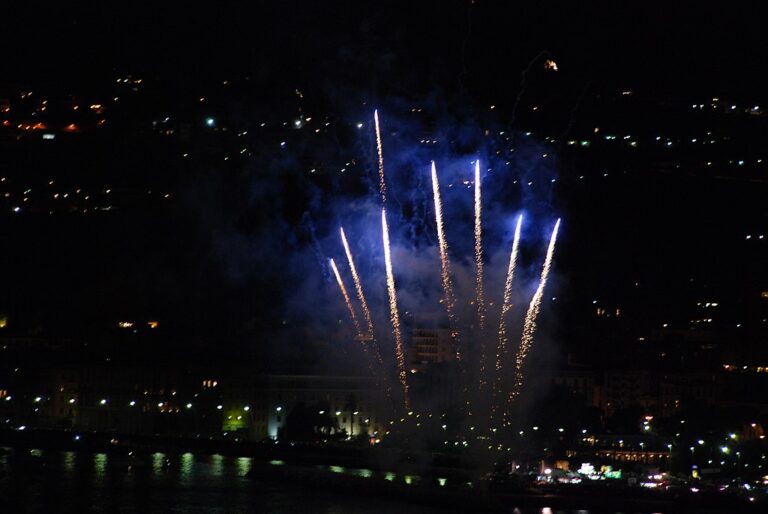
Green sparks buzz, screech through the cedar, the intersection ablaze with spinning wheels. The crepe myrtle hides the flames of bottle rockets.
Boys, exhausted, sleep. We drink wine on the porch, jump as the neighbors set off booms; laugh at the lull when the police cruise by.
Mortars echo like cannon fire, sounds of joy and revolution and war. And for a second, we are scared, like the baby who will wake every two hours, cry at the sound of closed doors for two days.
Two stray embers separated from a peony’s crackle, float orphaned through the smoking sky, refusing to burn out.
Mary Cassatt Plays Cards
Hands on knees, she leans forward, bends elbows. Clever hint of smile. That black dress. No time for your nonsense, shows her hand, twists the cards as her thumbs touch. You still won’t win. Visibility is concealment. You can’t destroy what is completely seen. She knows, cuts her eyes to the side. Her life spent painting relegated to a contemporary of Degas. Look at how she played that one: center of the gallery. Draw in around her, learn her name, sense her face, know the artist you thought mattered loved her. She’s beaten you by showing everything.
Katherine Anderson Howell writes and parents in Washington, D.C. She is a licensed esthetician, independent scholar, 2020 Best of the Net nominee, and a Pushcart Prize nominee. Her work can be found in places as varied as Whale Road Review, Misfit Magazine, and Burnt Pine, among others.
Image by Antonio Manfredonio, CC BY-SA 2.0 <https://creativecommons.org/licenses/by-sa/2.0>, via Wikimedia Commons
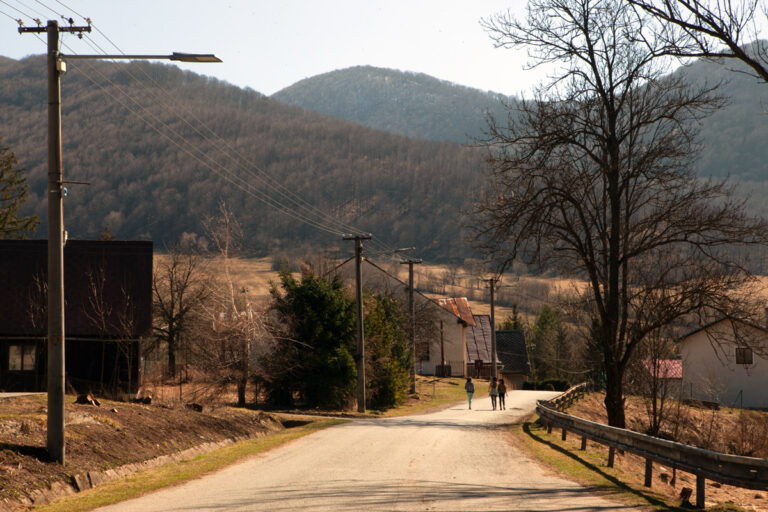
I’m in Bardejov, Slovakia with my camera, looking for a link to my past. Photography has never been my primary trade, but rather a complement to my writing over the past decade. A month earlier I had never heard of this northeastern Slovakian city. Nevertheless, there I was, following my family line back to Slovakia on a tip from a newly discovered distant cousin on a genealogy website–all with the unabting enthusiasm of a puppy tracking a scent.
My ancestry search began with a DNA test the year prior. I always knew I had Jewish heritage, but I never considered it in terms of peoplehood or culture. It was just a religion I didn’t grow up in. However, seeing my DNA results displayed on a pie chart changed my perception and fueled a desire to know more. I realized my Jewish heritage was an irreplaceable part of my genetic makeup.
I moved to Germany two years before my adventures in Bardejov, hooked on the overseas experience after a summer in India and nearly a year in Costa Rica. Germany wasn’t by any means the end goal, but it was where the opportunity first arose to live in Europe. I could experience a vast array of cultures and languages and visit them all by train.
The Rhine river was flowing outside my office window as I reviewed my DNA results. Out of pure happenstance–or fate if you believe in such things–I was in the cradle of Ashkenazi civilization, a relatively short trip away from the shtetl of my ancestors. I had to see what I could find.
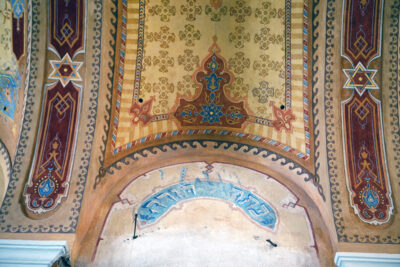
Partially restored synagogue ceiling in Slovakia
A local researcher meets me within hours of my arrival in Bardejov. He’s the archetype of a good-natured grandfather: opinionated, jovial, and occasionally contemplative. One minute he’s laughing, the next he’s lamenting the loss of the local Jewish population and the incomprehension of a people targeted for extermination simply for being.
I can’t for the life of me figure out why he’s offered to show me around the region and visit the restored synagogue. In the end, I chalk it up to his grandfatherly charm. It reminds me of when my father met my sister-in-law for the first time and channeled his excitement by driving her down every single side street in Northeast Ohio, pointing out this or that along the way despite her obvious car sickness.
Moving around town, I realize I don’t know what I’m looking for. All I know is that any link I find to the past is bound to be abstract at best. It’s not like popping by your childhood home, decades after you’ve moved out, looking for the handprints you left behind on the garage cement; it’s stopping by a neighborhood halfway across the world after two world wars because of a tip from a guy you met online.
Like far too many corners of Europe, almost all traces of Jewish life have vanished in Bardejov. Even the lives of those who passed long before the Shoa are hard to imagine. Some details are still there, but they’re easy to miss, like the small piece of faded doorpost where a mezuzah was once set.
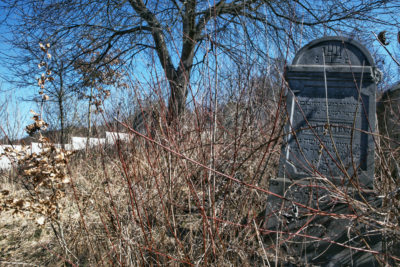
Easier to spot are the tombstones, at least the ones left standing. A wall protects a Jewish resting place not far from that lost mezuzah. There’s a Hebrew inscription at the gate with a number you can call to get in. But inside, it’s virtually empty. The tombstones have all been destroyed, save for a few slabs of stone left standing amongst the wild grass. I take a photo of the emptiness as my host explains that the tombstones were desecrated and turned into cement for roads.
“Reconnecting” by Joe Baur; A tombstone emerges among the brush in a cemetery in Bardejov
We continue to another cemetery. This one was left remarkably unscathed in comparison; perhaps because it’s slightly more inconvenient to access, being situated on a small hill.
I keep my camera ready by my side. At this point, I let instinct tell me when to frame a shot. I capture a few wide shots of the cemetery with the tombstones standing in neat rows. Only a couple appear to have lost their grip on the soil. As I wade between tombstones and loose, naked springtime branches, I decide to capture a closeup of a headstone. I’m surprised by its ornateness. Something this old, I expected a worn slab sticking out of the ground with faded text. The Hebrew is as legible as a Haaretz headline.
Later, I leave my camera at the hotel and go for a run. Meandering around the trails, I wonder what it means to return to the shtetl of my ancestors. Do I feel more connected to my Jewishness? Is my Yiddishkeit activating like a lion returned to its natural habitat? Or am I just happy to be traveling someplace more peaceful and low-key than Paris or London?
Weeks later, I’m watching a film about a far-right, anti-Semitic Hungarian politician who discovers his own grandmother is Jewish and survived the Holocaust. Rabbi Boruch Oberlander joins the politician in a long journey to try and make amends while reconnecting with his heritage. In one scene, the two walk side-by-side in a Jewish cemetery. Rabbi Oberlander explains to his student why they made the journey.
“You come to the cemetery to think. We have to remember those who lived these lives and also the fate of the Jewish people. So coming back here is in fact reconnecting with your ancestors…”
A light bulb suddenly blazed inside my brain. I need to remember these lives, and appreciate how my life is tied to the fate of the Jewish people. I decide to dive deeper, to learn and experience more. Who were my ancestors, and where did they go? I return to the genealogical puzzle that is my Jewish heritage, determined to solve the next mystery and find the next shtetl.
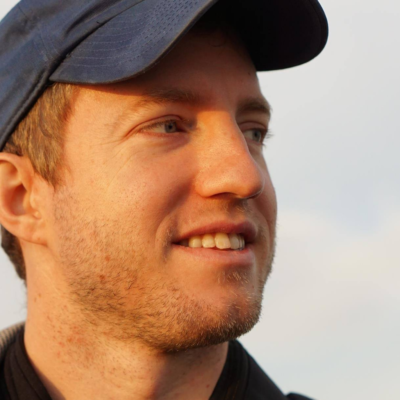
Joe Baur was born outside of Cleveland, Ohio. In 2015, he received his Masters in Peace and Conflict Studies from the University For Peace in Costa Rica while reporting for The Tico Times. After a brief stint back in the United States, he moved overseas to Düsseldorf, Germany where he published “Talking Tico: (Mis)adventures of a Gringo in and Around Costa Rica” on his time in Costa Rica and served as Managing Editor for trivago Magazine––a digital travel outlet. Three years after his initial move to Düsseldorf, he relocated across the country to Berlin where he regularly reports for the Jewish Telegraphic Agency and pursues other writing, photography, and filmmaking projects that often focus on identity. Website: www.joebaur.com.
Joe Baur is an artist featured in “Authenticity and Identity”, a visual arts exhibition curated by Ori Z. Soltes on display at Adas Israel Congregation, Washington, D.C., April 6 to May 15, 2021. To learn more about the exhibition visit https://authenticityandidentity.com/.
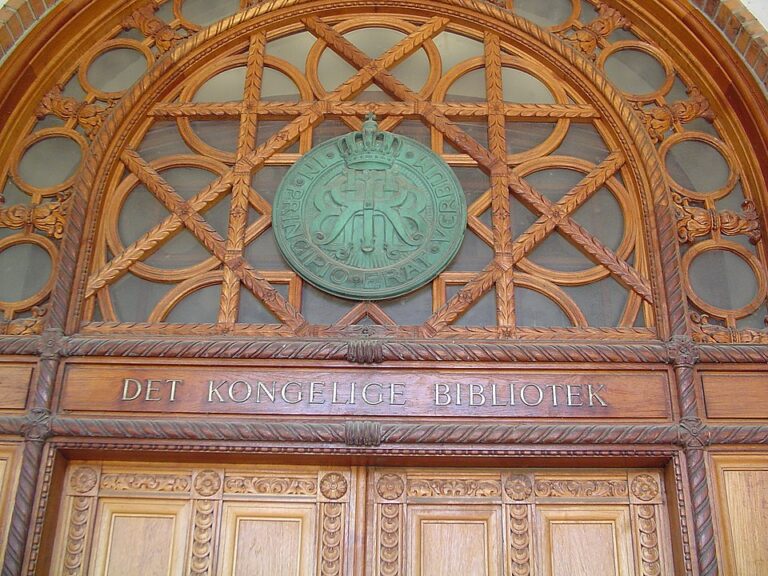
I remember this library as hidden in trees, perched on the hillside, pierced by birdsong.
I looked out from the second floor to see the oak trees, not the cars parked up and down Atlantic Street or the woman my age pushing her cart of stale bread, hamburger meat, and limp greens home from the bus stop.
I think about Bellevue Library in these days of quarantine. Some patrons have become ghosts waiting at Metro’s closed stations for the trains that no one living rides anymore. I think about the women I wrote with when we were birds perched on the hillside, singing.
But this time I’ll see the woman my age pushing her cart of fresh greens and pineapple to juice. She is walking home past the library, her library, not yet open these days of quarantine.
Imagine That You Are Walking After T-Square, 2020, by Tara Hayes
Lines drawn onto the wash of color could be walls, steps, billboards, tiles. The design in the corner could be a Chinese character or graffiti.
You could be walking the corridor to the Orange or Red Line. Except for the fierce blue. No ceiling in public could be that pure.
You are outside. If there are trees, they are part of the wash of color, some green, some brown.
This may be winter, before you stayed indoors, sketching on napkins from cafes that may never open again or from the place on Centre, the Chinese takeout that still delivers.
It may be spring, a scene glimpsed from a window while drinking homemade coffee and reading the obituaries online.
This may be fall or next summer, the future when you can walk outside without a mask, brush past people you do not know, sit inside a café, take a bus to see a movie, even leave this city.
Look long enough and benches emerge just as flowers and bushes, stained glass windows and the last wooden gingerbread emerge when you are walking.
Even in your imagination, you don’t sit down.
Marianne Szlyk is a professor at Montgomery College. Her poems have appeared in of/with, bird’s thumb, Setu, Verse-Virtual, Solidago, Bourgeon, Muddy River Poetry Review, Writing in a Woman’s Voice, and the Loch Raven Review as well as a few anthologies. Her books On the Other Side of the Window and Poetry en Plein Air are available from Amazon. She has revived her blog-zine The Song Is… as a summer-only publication: http://thesongis.blogspot.com. She and her husband the wry poet Ethan Goffman lead It Takes a Community, a poetry group that is now flourishing on Zoom.
Image: Public Domain, https://commons.wikimedia.org/w/index.php?curid=220717
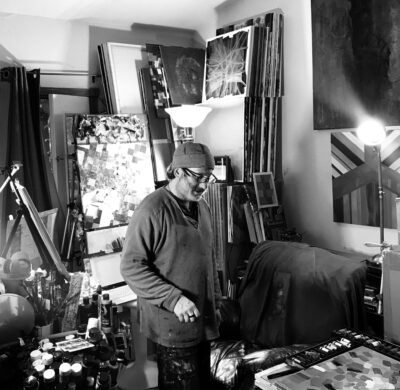
Space in Napa, California is quite dear, so I have always worked in a small corner of my bedroom. While it’s a limited size, 4-by-6-foot space, the vaulted ceiling lets me work with canvases up to 6-by-6-feet. Room is tight, but I organize things in a way that allows me to fit six vertical easels and three flat double-sided worktables arranged around my chair. All of the pieces are mobile, so I can work on more than a dozen large pieces at any one time.
I paint during all available daytime hours (and into the evening when possible), so if something is not going right or I am not feeling a particular piece, I simply move onto another. Over the past three years I’ve progressed from averaging one finished piece per week (working solely in metallic inks), to one piece every three days, to four or five finished acrylic pieces a day.
Storage is my biggest concern, which is why I have rendered many pieces on flat canvas, creating storage in flat-file portfolios up to 18×24 inches. As I learned working in small kitchens, the key to a productive workflow is to clean up as I go and never allow any clutter to accumulate. Every night, I break down my station (including moving anything flat because of my three cats), and I reset the next morning. It guarantees my space is always reasonably presentable, too.
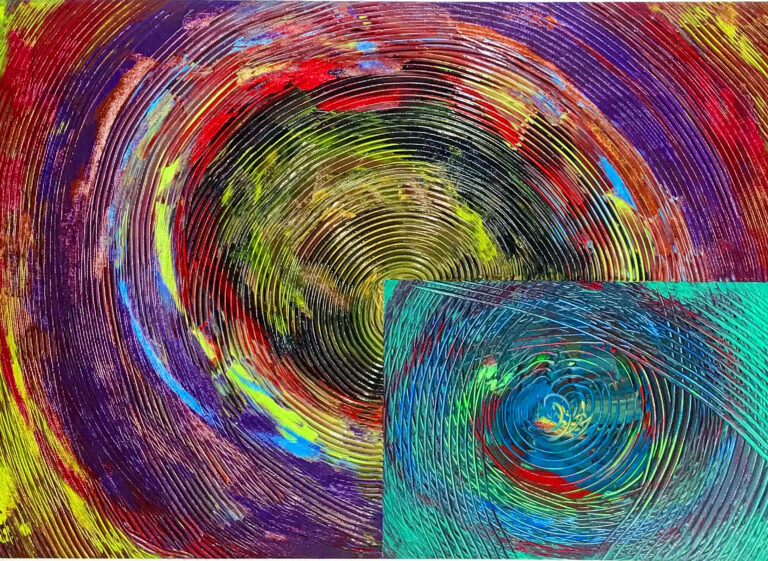
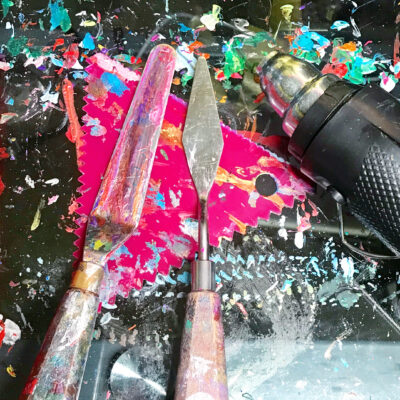
I approach my art with a pretty broad set of tools, including palette knives, cake knives, offset scarpers, toothed combs, cake decorating tools, broad flatbrushes, a giant compass, a heat gun, a hairdryer, and metallic, fluorescent, color-shifting acrylic paints. I primarily paint with palette knives, but I occasionally use brushes for certain pieces.
I start some pieces with a quick sketch; others I lay out grids or curves before adding paint, especially for more complicated geometrical work. A typical piece uses many layers of tape to create particular forms or shapes, which are then painted via knife skimming, or underpainted and dried before a second layer of paint is added inside the same tape form. A comb is used to create texture and patterns within the second layer, allowing the first layer to come through and influence the light and tone of the second. Depending on the piece, this process may be repeated hundreds or thousands of times.
I often work with knives sans hard edge limitations. The skimming takes on impressionistic overtones as the edges themselves become part of the canvas. I try to move as fast as I can, maximizing my painting time even if that means switching from piece to piece.
I don’t really have a style, but I do have an approach—to fool the eye and then convince it to participate in the visual experience itself. I liken much of my palette knife’s optical and geometrical work to that of handprinted monotypes. I use a mobile form to create the images, skimming layer upon layer of paint onto taped and re-taped canvas sections.
Most evenings, once the painting is done, I turn to the unglamorous aspects of being an artist: sending submissions; updating databases, image files, and portfolios; emailing clients; maintaining social media; and keeping track of accepted work. At any given time, I have multiple physical and online exhibitions occurring globally. I sell through multiple avenues, including galleries and online portals like Threadless and Etsy. Even though I sometimes struggle to keep up with the business side of being an artist, there’ll always be time to sell my pieces later in life. Right now, my focus is on creating.
Josh Stein is a lifelong multi-mode creative artist, musician, writer, teacher, and adult beverage maker. With formal training in calligraphy, graphic design, and color work; more than two decades as a researcher, teacher, and writer in cultural analysis in the vein of the Birmingham and Frankfurt Schools; and a decade and a half as a commercial artist and designer for multiple winery clients; he brings his influences of Pop art, Tattoo flash and lining techniques, and Abstract Surrealism and Expressionism to the extreme edge where graphic design and calligraphy meet the Platonic theory of forms. The resulting metallic inks and acrylics on canvas delight and perplex, moving between the worlds of solidity and abstraction.
Josh Stein is an artist featured in “Authenticity and Identity”, a visual arts exhibition curated by Ori Z. Soltes on display at Adas Israel Congregation, Washington, D.C., April 6 to May 15, 2021. To learn more about the exhibition visit https://authenticityandidentity.com/.
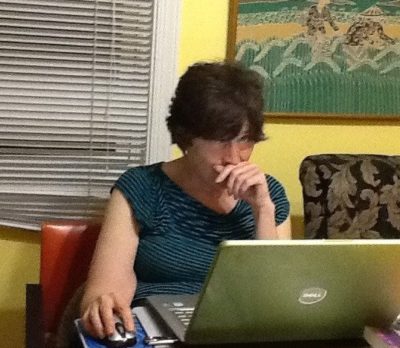
I am incredibly fortunate to have an art studio I can escape to—especially during these pandemic days when my husband and two sons are working and schooling from home.
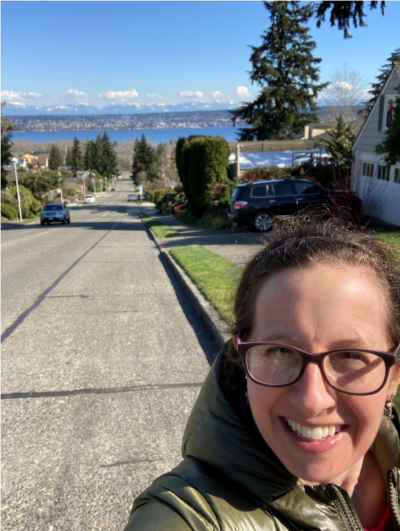
I only live a mile from my studio, but I have to walk straight up a huge hill and then all the way down the other side. On my way to my studio, I admire the persistent weeds that peek out in between the cracks of the sidewalk and the moss that grows on just about anything here in the Pacific Northwest. At the bottom of the hill, I reach Magnuson Park, home of the Sand Point Naval Air Station Historic District and a network of soccer fields, dog parks and—most important to me—miles of recently restored wetlands home to frogs, beavers, and countless birds.
A quick selfie on the walk to her studio.
My studio is in an Art Deco Navy Administration building from the 1930s that now houses over 30 artist studios. My studio is on the third floor, not far from the Officer’s Club where, pre-pandemic, there were conferences, parties and other events. These days, it is eerily quiet with only the occasional humming and singing of one of my studio neighbors.
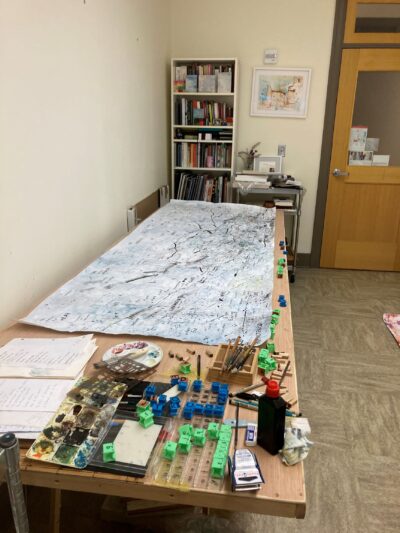
I have a large window that lets in natural light as well as motion sensitive overhead lights that click off when I don’t move around a lot—like when I’m working on one part of my painting for an extended period (the lights click off to fulfill environmental codes for the newly renovated building). I usually work on a table (and occasionally on the floor), with my work flat in front of me.
I consider painting as an act of meditation. I use watercolor, inks, stencils, stamps and freehand writing to create map-like paintings. When I’m making the repeated dots and lines of my paintings, I stop thinking about the everyday mundane events and obligations in my life as a mother, and I start thinking about more spiritual and expansive ideas about the environment, geological history, the Mystery and Grandeur of the universe, and the fleetingness of each moment.
Kessler’s studio space
I think about how we live in a world that is mapped all the way from outer space right down to our front-doors, and yet we still have no idea why we are here, or what here really means. I recently presented a show called, here is the Place. The title played on the fact that in Hebrew the word for ‘the Place’, ha-Makom, means a specific physical place, but is also one of the Hebrew words for G-d.
I use words in my paintings. I collect words from poetry books, novels, science texts and Jewish texts; I add to and re-combine those phrases to create a map of thoughts about the world and universe we live in. Recently, I’ve been reading a lot about the current geological epoch which many geologists propose to call the “Anthropocene” because of the significant impact humans have on the earth’s geology and ecosystems.
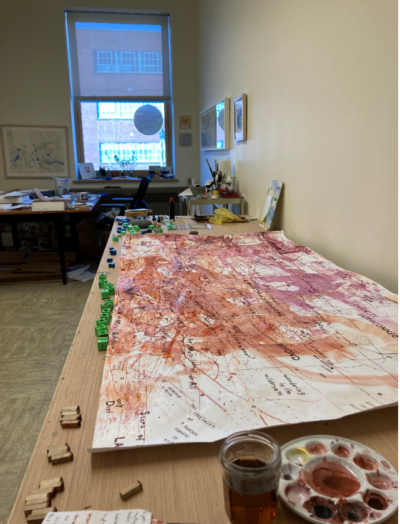
In the studio: “This Ungraspable Whole“
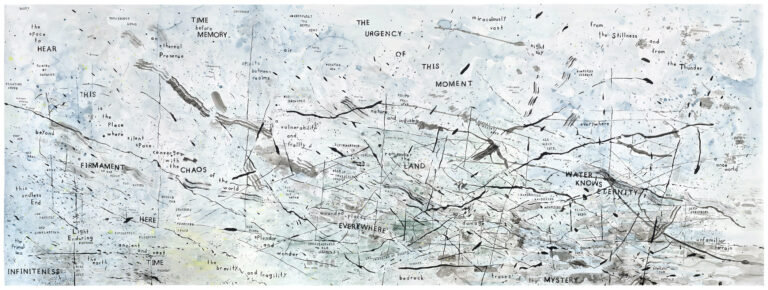
Last month I finished a painting titled, “The Urgency of this Moment,” 8 feet long and 3 feet high and painted using black ink and Payne’s-grey watercolor. I began the painting right after the Black Lives Matter protests started; I felt the urgency of racial and environmental justice, and how they directly relate to the pandemic and climate change. One area of the painting reads, “The place where silent space converges with the CHAOS of the world” and another reads “seas of invisible things.” Although the pandemic and climate change are scarcely visible to many of us, these global crises are upending the whole world.
I’m currently working on another large map painting titled, “This Ungraspable Whole,” which is 6 feet long and 3 feet high and is painted using burnt orange and mahogany inks. These earth tones reference geologic layers and tectonic plates but also an otherworldly place with phrases like “the mystical journey,” “a digital landscape,” and “an odyssey to nowhere.”
My maps explore feelings of uncertainty and ecological grief for the environmental changes happening around us. There are species becoming endangered and extinct, coastal cities flooding, forest fires growing stronger, and viruses spreading faster. Awareness of these facts can be overwhelming, and it feels like we’re all wandering around in the dark without a map. I hope that my maps—which embrace the fact that we don’t truly know where we are in this life—may exist as a kind of prayer for guidance for individuals and our planet.
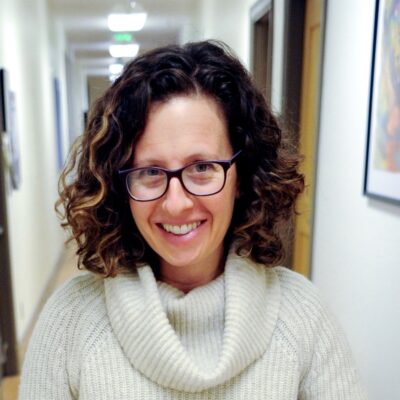
Headshot: Karey Kessler
Karey Kessler is a member of Shift Gallery in Seattle and her work is in the flat files of the Pierogi Gallery (New York City) and is included in the books: The Map as Art (Princeton Architectural Press, 2009), by Kitty Harmon and From Here to There: A Curious Collection From the Hand Drawn Map Association (Princeton Architectural Press, 2010). Her art was also published in the academic journal Imaginary Cartographies, English Language Notes (Issue 52.1, 2014) and most recently in Le Paysage est une traversée (Editions Parentheses, 2020). Kessler has shown her work widely, including exhibits at the Pennsylvania Academy of Fine Arts Museum (PA), the Weatherspoon Art Museum (NC), the Tacoma Art Museum (WA), Shift Gallery (WA), and most recently at the Bellevue Art Museum (WA). Her work was included in Time Sensitive, at the Broto: Art-Climate-Science convention in 2020 (Provincetown, MA) and in 2019 she was a resident in the SciArt Initiative Bridge Residency. From 2018-2020 Kessler had a temporary public art piece, A Path of Wonderment and Connection, along the Rainier Valley Greenway in Seattle. She currently has an installation, once, there was WILDERNESS here, on the Tacoma Tollbooth Gallery in Tacoma, WA. Follow her on Instagram at @kareykessler and visit here website: www.KareyKessler.com
Karey Kessler is a featured artist in “Authenticity and Identity”, a visual arts exhibition curated by Ori Z. Soltes on display at Adas Israel Congregation, Washington, D.C., April 6 to May 15, 2021. To learn more about the exhibition visit https://authenticityandidentity.com/.