Of course, a price like this can’t buy perfection.
Feel free to ask me questions and take notes.
You get the feed lot’s smell from that direction.
The stream is muddied by a neighbor’s goats.
Let’s step inside. The gun rack’s over there.
This far from town, you’ll want a gun somewhere.
(First published in Think Journal)
J.D. Smith’s fourth poetry collection,The Killing Tree, will be published in July by Finishing Line Press. His other books include the poetry collectionsLabor Day at Venice Beach (2012) andSettling for Beauty (2005), the humor collectionNotes of a Tourist on Planet Earth (2013), the essay collectionDowsing and Science (2011) and the children’s picture bookThe Best Mariachi in the World (2008). Awarded a Fellowship in Poetry from the National Endowment for the Arts in 2007, he has published poems in print and online publications in the United States and other English-speaking countries includingThe Awl, The Bark,Light, Nimrod, Tar River Poetry andTerrain. His reviews and essays have appeared in publications including American Book Review, Boulevard, Gastronomica, the Los Angeles Times and Pleiades, and his poetry and prose have appeared in several anthologies. Smith works as an editor and writer in Washington, DC, where he lives with his wife Paula Van Lare and their rescue animals. He tweets @Smitroverse and maintains the pages http://jdsmithwriter.com and https://www.facebook.com/JD.Smith.Poet.and.Writer/
Kelly Ann Jacobson is a Professor of English and the author of many published books, including the novel Cairo in White, the poetry collection I Have Conversations with You in My Dreams, and anthologies such as Unrequited: Love Poems about Inanimate Objects. She also writes young adult fantasy novels under her pen name, Annabelle Jay.
I grew up in the suburbs of DC, in Vienna, Virginia, and I can remember sitting in my grade school classroom enthralled by the paintings in the textbooks. I felt like I could just look at the pictures and not even have to read the text. I was inspired early, in that way, by visual storytelling.
By the time I got to middle school I was using my drawing skills to try and avoid other subjects (like math and reading.) I remember a book reading assignment in 7th grade where we were supposed to read a biography and write a report, and rather than actually reading a book and writing a report I drew a portrait of John Lennon and stapled it to the front of some book about Lennon. The teacher later told me she knew I hadn’t read the book but gave me a good grade because of the drawing. I was probably hooked from there.
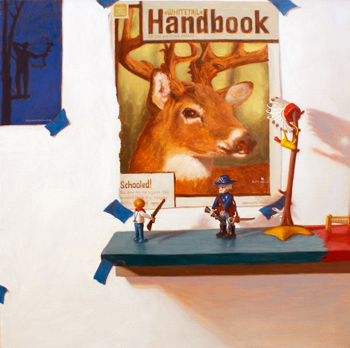
CrossRoads #2, 2016 by Nathan Loda; image courtesy the artist
I started painting seriously in high school and went to college for art at Shepherd University in West Virginia. While in graduate school I did a workshop with Bo Bartlett, who works in a style and aesthetic similar to Norman Rockwell, or Andrew Wyeth. He taught me how to use under-painting, and a grisaille (a grey scale under-painting for portraits) and I use those techniques in my paintings. The viewer can sometimes see the warm reddish tone of the under-painted sienna glowing through a glaze of paint in the shadow areas of the completed paintings, as well as around certain edges. The evidence of the under-painting in the final product allows the viewer to see some of the process and it also associates my technical approach to the American Realist school of painting. The lineage of painting methods and techniques is exciting to me because I feel I’m part of a legacy as an artist. I consider myself an American Realist painter in the line of Thomas Eatkins and Winslow Homer.
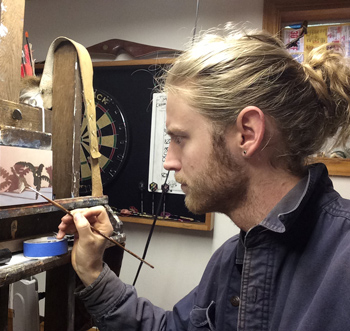
I live and maintain a studio in Vienna, Virginia, and teach as an adjunct faculty at nearby George Mason University (GMU). I paint daily. Lately I’ve been working in the studio early in the morning, taking a break for lunch and then heading to teach in the afternoon. If I have a show immediately upcoming I typically get back in the studio after dinner and put in a couple more hours.
My current show includes fifteen oil paintings I’ve been working on for the last eighteen months, including work I produced since and while finishing my MFA (spring 2015) at GMU. All of the paintings are oil on canvas or panel and the paintings use an array of subjects – including childhood toys, books, and family photographs — to try and create open-ended narratives.
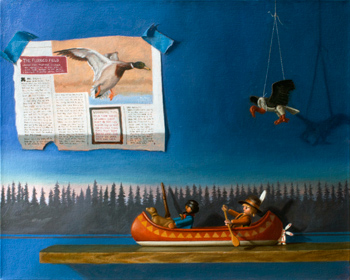
The Voyageurs by Nathan Loda; image courtesy the artist
The subjects in these paintings were inspired by my search into my own identity, and connected to that, my exploration of what is authentic and meaningful to me as an artist. I’ve felt in the past that I was just trying to be like other artists. While that’s a normal part of training in the arts, as a professional I’ve tried to really confront myself with the simple questions: what does a Nathan Loda painting look like, and what is original and genuine to me and my story? That focus has led me to thinking about my childhood and my early interest in historical visual storytelling. What are the meaningful visual memories from my childhood, and why were they meaningful?
A while ago I found some of my youthful playthings stashed away in the corner of the attic at my parent’s house. I pulled them out and thought, “wow, maybe I could use these toys to stage narratives, that may be kinda fun.” The first paintings were really just a trial to see if they would be at all interesting. As the series has developed I’ve gotten more and more invested in using the toys and objects to explore beyond my own childhood into influences on the development of our country and culture. Disney’s Davy Crockett King of the Wild Frontier, Mark Twain’s Adventure’s of Huckleberry Finn, and my childhood Play-mobile toys of Cowboys and Indians have all become subjects in my artwork.
I hope you’ll come check out my current show, “Histories, Heroes and Small Moments” at the Adah Rose Gallery April 28- June 5, 2016, and I appreciate your comments.
Nathan Loda is an American realist oil painter and adjunct faculty at GMU. Loda received an MFA degree from George Mason University in 2015 and a BFA in painting from Shepherd University in Shepherdstown, WV in 2011. During his undergraduate studies he had the opportunity to travel through out Latin America and spend a semester abroad at the Lamar Dodd School of Art in Cortona, Italy. Loda has exhibited in numerous galleries and exhibitions across the country and his work hangs in private and public collections. His commissioned works for restaurants such as Founding Farmers Tysons and businesses such as KO Distilling in Manassas VA, have been published in Interior Design magazine and numerous local newspapers. He has been a semi finalist for the Bethesda Trawick Prize for Contemporary Art and recipient of several prizes and honorable mentions in juried shows. Nathan is represented by The Adah Rose Gallery in Kensington, MD. For more information see: www.nathanloda.com, www.adahrosegallery.com, www.artsy.net .
This article was selected as the winner of the 2016 DC Student Arts Journalism Challenge, an annual competition designed to identify and support talented young arts writers.
In his early twenties, Jordan Eagles said he tried to donate blood to a blood bank but was turned away.
The Food and Drug Administration ban men like Eagles from donating blood because the organization classifies them as “men who have sex with men,” a group the FDA says has a greater chance of transmitting HIV. But those who oppose the ban, such as the Gay Men’s Health Crisis organization, say scientists have dramatically improved testing for HIV in blood, making the ban unnecessary and a threat to global health since over 1 million lives could be saved each year if the FDA would allow the group to donate blood.
Jordan Eagles Blood Mirror, 2015; image courtesy American University Katzen Arts Center
The FDA’s rejection of Eagles’ blood inspired him to create “Blood Mirror,” an exhibit currently on display at the Katzen Arts Center, which began Sept. 12 and will close Oct. 18. In 1983 the FDA instituted the exclusive policy, but this May, the FDA proposed a change that would allow MSM to donate blood after a year of celibacy. The exhibit stands as a protest piece against the FDA’s original policy and the proposed change. Eagles uses the blood of nine men who are unable to donate blood to illustrate his concerns about the legislation.
Before creating “Blood Mirror,” Eagles never considered using his art as a form of protest. While attending New York University in 1998, Eagles began exploring his spirituality by working with animal blood. He then learned about the preservation of blood and techniques to manipulate blood in his art.
While Eagles was partly motivated to create “Blood Mirror” after his experience trying to donate blood nearly 15 years ago, he was also motivated by history. In 2013, he showcased his art at an exhibition at the Mütter Museum in Philadelphia, and a Civil War exhibition was held in conjunction with his exhibition.
“I started thinking about the civil war and how there are no longer red states or blue states and how we’re all one in our blood,” Eagles said. “But I started thinking about the notion of equality, and how in our blood we actually are not all equal.”
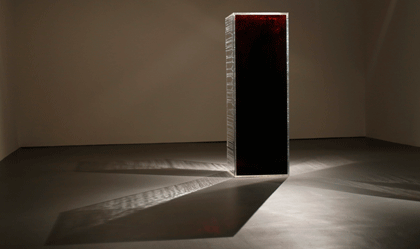
Eagles’ “Blood Mirror” exhibit consists of five parts. Upon entering Katzen, a large blood-soaked flag adorns the wall. A TV mounted on the wall plays a 44-minute video of interviews with the blood donors on loop. The 7-foot-tall “Blood Mirror” sculpture takes center stage, and viewers can see their reflection in the dark red panel filled with blood.
Eagles kept the waste from his project and built a secondary sculpture where he suspended everything in resin.
“Essentially, [this sculpture is] the garbage,” Eagles said. “If the FDA will treat us like garbage, we might as well make a sculpture out of this garbage.”
In another room, Eagles places several large panels of blood on projectors to illuminate all of the walls for the “Blood Illuminated” aspect of his exhibit.
Viewers can also check out a microscope containing a slide of the blood of all nine donors mixed together. Eagles said the piece represents the ability of science and technology to test blood for HIV. He believes homophobia may partly be behind the FDA’s discriminatory policy, but distrust in science also contributes to the FDA’s ban.
“We have a country that doesn’t even believe in global warming,” Eagles said. “There’s a discrepancy between what scientists tell us and what policymakers choose to put into action.”
Eagles started working on the “Blood Mirror” two years ago, and he describes the piece as a work in progress. The piece won’t be completed until the FDA changes its discriminatory policy, according to Eagles. He built the sculpture so that he could continue to add more blood to it, and, while it currently holds the blood of nine men, the art piece can hold the blood of up to 170 men.
Oliver Anene, an LGBT activist from Nigeria who is on political asylum in the U.S. and Loren Rice and Ty Spicha, a married transgender couple, serve as three notable donors.
Slate writer Mark Joseph Stern moderated a panel discussion on Oct. 6 that included Glenn Cohen, an Assistant Professor of Law at Harvard Law School who specializes in bioethics, Scott Schoettes, a Senior Attorney and HIV Project Director at Lambda Legal who lives with HIV, and Kelsey Louie, the CEO at Gay Men’s Health Crisis. Toward the end of the discussion about blood equality, Anene and fellow donor Howard Grossman joined the panelists.
“At the GMHC, we believe [LGBT people’s] rights are so important that we can’t settle [for the new policy],” Louie said at the panel. “We need to demand more, and the GMHC has a long and successful history of demanding more.”
The FDA has not contacted Eagles about his exhibit. Eagles and Katzen extended several formal invitations to the FDA to participate in the panel discussion, but the organization declined, and Jordan placed an empty chair with a placard saying ‘FDA’ symbolized this rejection.
“The dirty little secret is, I don’t think the FDA is actually concerned with HIV,” Schoettes said at the panel. “I think they’re concerned with the next big thing, and there is a belief that whatever that next thing is is more likely to propagate in the gay community.”
After the panel discussion, the Rock Creek Singers of the Gay Men’s Chorus of Washington, D.C. performed, and viewers were free to wander the exhibit.
“I really hope [after this panel] everyone has a renewed interest in the issue,” Anene said. “I feel there isn’t enough conversation on the [blood ban].”
Eagles said he wanted his showcase his exhibit in D.C. due to the location of the FDA and other policymakers in the nation’s capital.
“A voice in my head told me, ‘Jordan, if you do this project, you can make a difference, and you can raise awareness,’” Eagles said. “I have no experience with social justice work or community organizing, but I’ve been learning on the job.”
This April marked the 150th anniversary of the resolution of the Civil War, one of the major events in history that influenced Eagles. But his work emphasizes that the FDA’s policy still fails to grant equality in blood, despite over a century of technological progress.
“We’re not living in 1983 anymore, this is 2015,” Eagles said. “We’ve come a long way, and we need to start to break the stigma of HIV and start trusting science.”
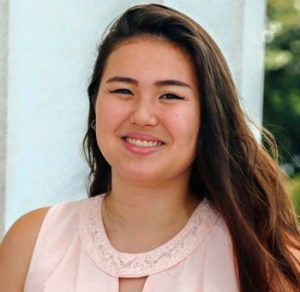
Adena Maier is originally from the California Bay Area and is now a sophomore majoring in International Studies at American University. Her specialization is environmental sustainability and international development, and she is particularly interested in Asia and the Pacific. She is the Arts & Entertainment Editor for The Eagle, American University’s student newspaper. She talks incessantly about pop culture, she loves dogs, and her journalism role models are Veronica Mars and Rory Gilmore.
You can read her work on American University’s The Eagle.
This article was selected as a finalist in the 2016 DC Student Arts Journalism Challenge, an annual competition designed to identify and support talented young arts writers. It originally appeared in The Diamondback, the University of Maryland’s independent student newspaper.
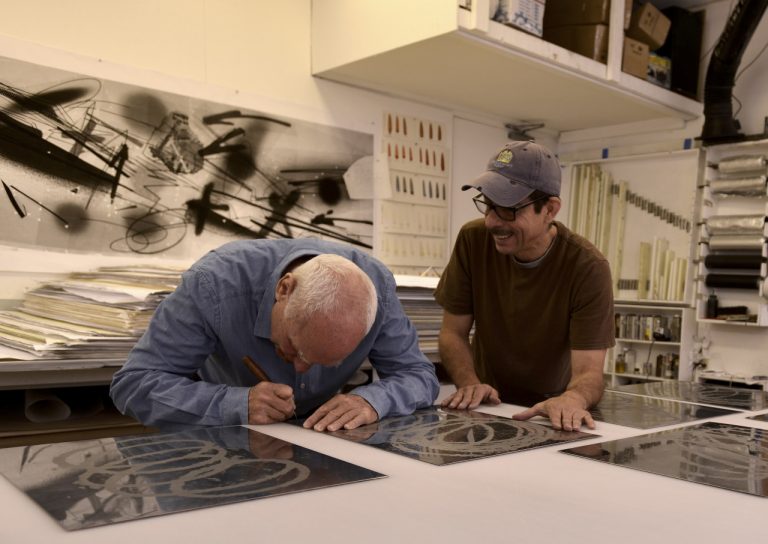
Sidney B. Felsen referred to the pivotal figures of modern art history as he would old friends, recalling crucial moments in those annals as if they’d happened yesterday.
“That’s Richard Serra stomping on it, while he’s developing a piece,” Felsen said, gesturing to a photograph of the famed sculptor tramping on a paintstick print at the Los Angeles studios of Gemini Graphic Editions Limited, which Felsen co-founded almost fifty years ago. “Actually, he’s dancing to it, is what it is. There’s music playing, and he’s jumping on it so he can get some texture.”
Speaking in a tired but assured monotone at a National Gallery of Art press preview last week, Felsen looked exactly how one expects such a consummate patron of the arts to look. He wore a pinstriped seersucker suit, Panama hat, salt-and-pepper beard, bowtie and scarf with the panache few people can pull off nowadays.
He seemed like somebody forged in a hugely interesting past but intent on unabashedly existing in the present. So it is with much of the modern art on view in this 17-artist show, which opened Sunday. The works interplay with the artists of old, but manage to look exciting and new at the same time.
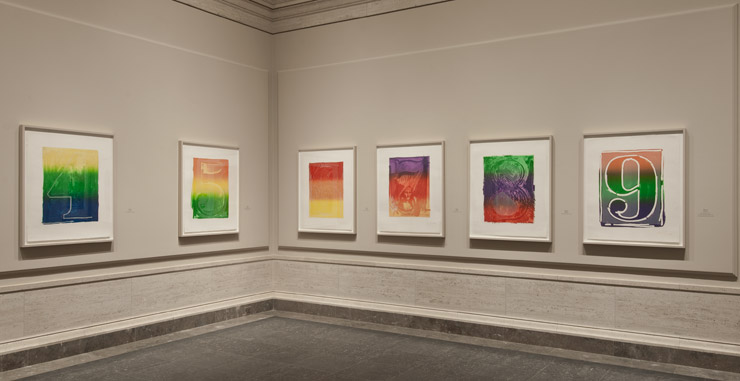
Installation view of Serial Impulse at Gemini G.E.L at National Gallery of Art (2015), Jasper Johns series. Image courtesy NGA
And so it is with Gemini G.E.L. itself, which since 1966 has managed to evolve and innovate rather than drift into stagnation. This progress was shown by the new generation of Gemini leaders present at the preview, as well as the fact that, though this is the National Gallery’s fourth Gemini-centric show, it still manages to craft new angles on beloved artworks.
The list of artists on view reads like a who’s-who of late 20th-century American art. Roy Lichtenstein innovates, Frank Stella perplexes, Jasper Johns dazzles and Robert Rauschenberg, well … it’s hard to explain.
These artworks show progression in two senses: the serial sense that governs the exhibition’s curatorial theme, and the technological sense that has made Gemini so notable.
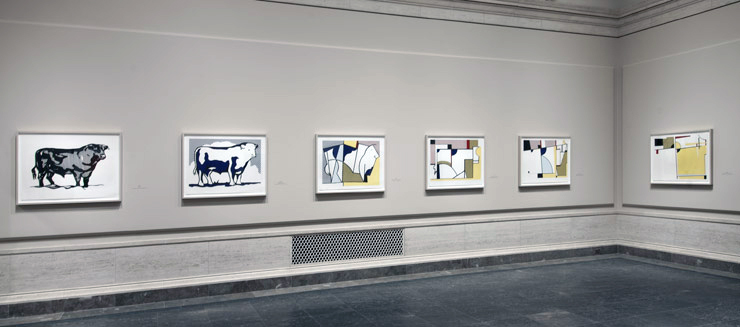
In “Bull Profile,” a six-part series by Lichtenstein, the titular Holstein becomes more and more abstract with each print. The progression from a woodblock-style print reminiscent of Albrecht Dürer to pseudo-neoplasticism recalling Piet Mondrian could be a trying one. Instead, Lichtenstein guides us through with steady hand and cheery palette, ensuring we’re comfortable as we watch him work magic.
Installation view of National Gallery of Art exhibit – Lichtenstein Bull series
In a set of stylized number prints, “0 through 9,” Johns uses a spectrum of color in which the top color layer of one piece becomes the middle segment in the next. Additionally, the voyage begins with the three primary colors and ends with the three secondaries.
Throughout “The Weather Series,” David Hockney references old artists to tell a pictorial story. “Rain” and “Snow” recall Japanese printmaker Katsushika Hokusai. “Mist” resembles Claude Monet’s light studies of Rouen Cathedral. “Sun” evokes the work of Johannes Vermeer — whose incomparable “Woman in Blue Reading a Letter” is on short-term loan to the Gallery until December 1. “Wind” brings all the elements together as scraps of painted paper, flying about above the Melrose Avenue sign that points toward Gemini.
The works’ technical progression through five decades of evolving printmaking at Gemini is similarly notable. Felsen explains the process: “During the proofing session at Gemini is when the artists come in and they do their creating, and it’s a time of trial and error and much experimentation. … And it’s very often that there’s a need for new materials or new processes.”
Examples of diverse media include the Serra paintstick works Felsen described or the silken Rauschenberg series on display.
Serra explores famous bluesmen in works that exhibition curator Adam Greenhalgh said had “a sonic, booming quality … that seems entirely appropriate.”
Rauschenberg combines pop culture and news images in the transient medium of hanging fabric.
“Some of the most important and influential artists of the past five decades have conceived and produced groundbreaking series, both print and sculpture, at Gemini G.E.L.,” National Gallery Director Earl Powell III said at the preview.
Felsen saw this as an honor.
“We’ve been very fortunate, and throughout the years we’ve worked with several of the most accomplished artists of our time,” Felsen said. “I think we’ve also been fortunate that a great amount of very important art has been done in the workshop that developed then to becoming a part of art history.”
The chronicle of art history presented by Gemini’s day-to-day operations attracted the National Gallery early on. And when the Gallery came knocking in 1980, Felsen said with a knowing sarcasm, “we played it cool and immediately said ‘yes.’” The Gallery’s Gemini archives were thus established.
Through the intervening years, the National Gallery has hosted four Gemini exhibitions, each expanding on the success of the previous one, drawing hundreds of thousands of visitors to see the fantastic prints.
Powell announced that some of the Gemini archive’s highlights will be part of a major exhibition next summer called “Three Centuries of American Prints.” Felsen said the prestige of being part of the National Gallery was “impossible to measure.”
“And for those of you that might remember the days of Lou Gehrig,” he said, “I want to paraphrase an expression that he made, that all of us at Gemini are some of the most fortunate people that ever existed on the face of the Earth. That’s it.”
“The Serial Impulse at Gemini G.E.L.” runs through Feb. 7, 2016 at the National Gallery of Art.
Evan Berkowitz
Evan J. Berkowitz is a journalism student at the University of Maryland, where he is design editor and art critic for The Diamondback, the independent student newspaper. His writing has also appeared in Washington Life Magazine; Connections Magazine at the Peabody Essex Museum in Salem, Mass.; TeenLife Media; and The Boston Globe Green Blog. Originally from the Greater Boston area, he owes his love of art to his late grandparents, longtime PEM docents, and his writing ability to many devoted teachers at Lincoln-Sudbury Regional High School, especially Nathaniel Armistead and Timothy Jason.
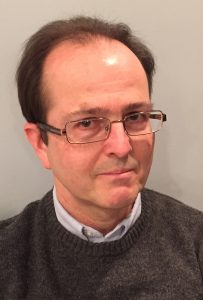 J.D. Smith’s fourth poetry collection, The Killing Tree, will be published in July by Finishing Line Press. His other books include the poetry collections Labor Day at Venice Beach (2012) and Settling for Beauty (2005), the humor collection Notes of a Tourist on Planet Earth (2013), the essay collection Dowsing and Science (2011) and the children’s picture book The Best Mariachi in the World (2008). Awarded a Fellowship in Poetry from the National Endowment for the Arts in 2007, he has published poems in print and online publications in the United States and other English-speaking countries including The Awl, The Bark, Light, Nimrod, Tar River Poetry and Terrain. His reviews and essays have appeared in publications including American Book Review, Boulevard, Gastronomica, the Los Angeles Times and Pleiades, and his poetry and prose have appeared in several anthologies. Smith works as an editor and writer in Washington, DC, where he lives with his wife Paula Van Lare and their rescue animals. He tweets @Smitroverse and maintains the pages http://jdsmithwriter.com and https://www.facebook.com/JD.Smith.Poet.and.Writer/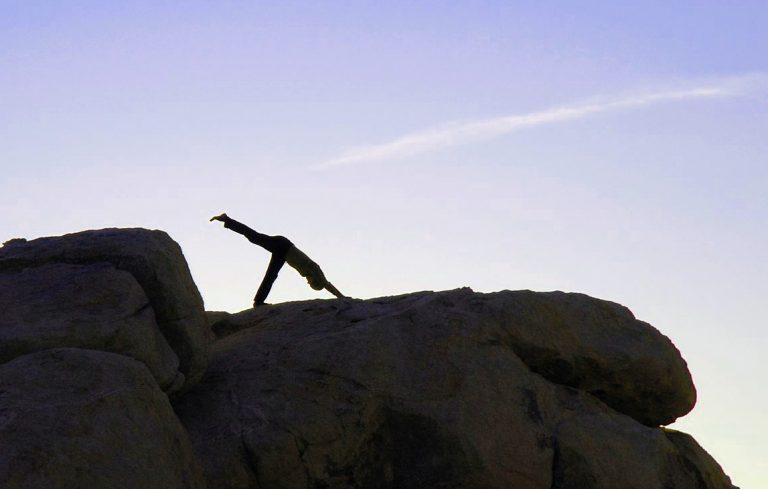
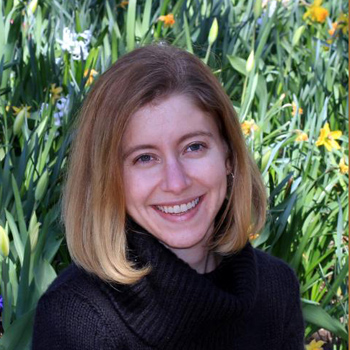 Kelly Ann Jacobson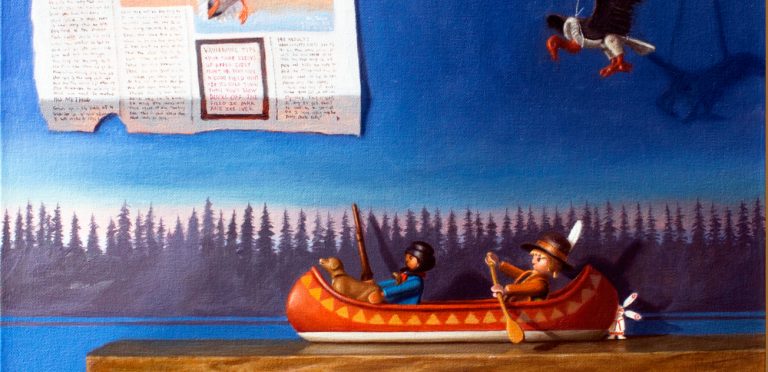
 Nathan Loda is an American realist oil painter and adjunct faculty at GMU. Loda received an MFA degree from George Mason University in 2015 and a BFA in painting from Shepherd University in Shepherdstown, WV in 2011. During his undergraduate studies he had the opportunity to travel through out Latin America and spend a semester abroad at the Lamar Dodd School of Art in Cortona, Italy. Loda has exhibited in numerous galleries and exhibitions across the country and his work hangs in private and public collections. His commissioned works for restaurants such as Founding Farmers Tysons and businesses such as KO Distilling in Manassas VA, have been published in Interior Design magazine and numerous local newspapers. He has been a semi finalist for the Bethesda Trawick Prize for Contemporary Art and recipient of several prizes and honorable mentions in juried shows. Nathan is represented by The Adah Rose Gallery in Kensington, MD. For more information see: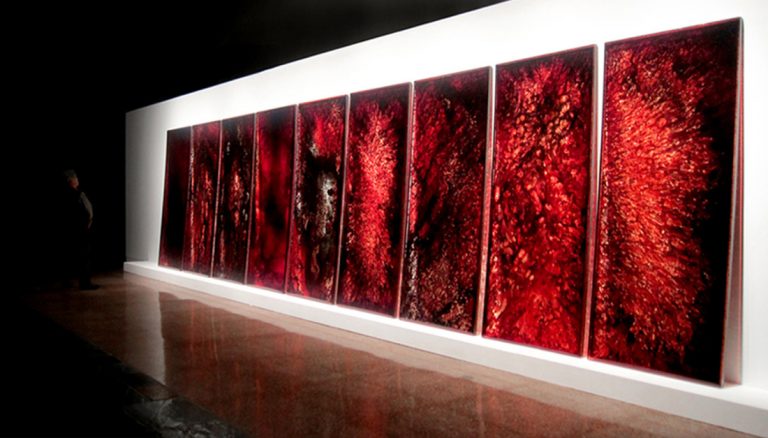
 Adena Maier is originally from the California Bay Area and is now a sophomore majoring in International Studies at American University. Her specialization is environmental sustainability and international development, and she is particularly interested in Asia and the Pacific. She is the Arts & Entertainment Editor for The Eagle, American University’s student newspaper. She talks incessantly about pop culture, she loves dogs, and her journalism role models are Veronica Mars and Rory Gilmore.