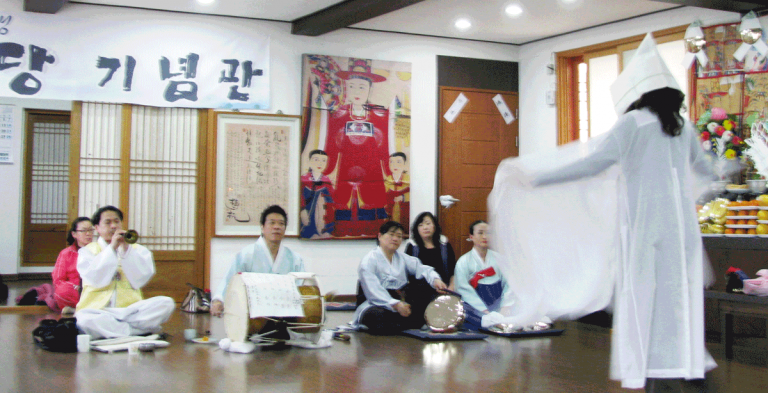
In 2009 while living in South Korea, I traveled near the Demilitarized Zone, a 250 mile long and 2 ½ mile wide heavily armed swath of land between North and South Korea, to visit and write an article about the then 79 year old Kim Keum Hwa. Ms. Kim, the country’s leading shaman, helps clients heal from illness or cope with a crisis through dance, music, chants, and channeling ancestors. During my second visit, she surprised me by asking me to get up and dance. A disciple helped me slip into traditional shaman ritual attire, a pointy white hat and robe with sleeves extending well beyond my hands. Using my dance improvisation background, I bowed, raised my arms, spun, and undulated, availing myself to the inspiration of the moment which I hoped honored their several hundred year tradition based in Buddhism, Taoism, and Confucianism. Obviously pleased, for the duration of the day, she and several of her disciples encouraged me to pursue a path as a shaman.
The encouragement toward a healing practice was not unfamiliar. Over the years in dance studios, my hands have often migrated to my partner’s body to rest in place or move in ways that resulted in a healing. “How did you do that,” asks my pain-relieved dance partner whose astonishment matched my own. I didn’t know. I felt energy. Intrigue led me to follow impulses. I vowed that upon returning to the U.S. I would look into the mystery of my energy sensitivity.
I identified myself as teacher, a dancer, a poet, and a writer, not a healer. How does one switch from the classroom, the stage, and typing at a computer to promising clients relief from physical, emotional and spiritual ailments? When I completed Reiki training in 2011 and my teacher gave me the green light to find clients, I didn’t feel ready. I subsequently enrolled in a Healing Touch program and decided to document my final year of training in poetry. Those poems have since been revised and assembled into my newest collection called Her Body Listening, which is currently under consideration at a press.
Martha Graham famously said, “Movement never lies. It is a barometer telling the state of the soul’s weather to all who can read it.” My dance background taught me techniques to investigate sensations and to follow chi, and my approach to poetry is similar. My intent isn’t to write about an incident that has taken place (with its emphasis on the past) but rather to be present-centric. I welcome nonlinearity; lines lead one direction, then may turn based on sound or play. When I place my hands on someone for healing, I similarly follow energy. I listen.
What occurred repeatedly in the final year of my training is realizing how I “Othered” parts of myself. I dismissed impressions that didn’t correspond with immediate understanding. While I practiced energy healing with clients initially, I frequently caught myself doubting the sensations, the gut feelings, and images that popped up in my mind. Events such as these were the result of an active imagination, I thought, the fodder for writing fiction (which I do comfortably.)
My time in Korea showed me my cultural blind spot; I was a cynic. I was an unknowing heir to Puritanism’s discrediting heightened sensory perceptions as hokey, superstitious, or worse. Koreans regarded such cynicism a poverty of spirit, a psychological pathology. My cultural prejudice has since dissipated and I consistently provide relief to folks suffering from a range of ailments including depression, anxiety, chronic pain, and a weak immune system.
A refusal to accept parts of ourselves is tantamount to a self-inflicted violence. Embodiment relies on feeling into and coming to know our many selves, our fleeting and indelible emotions and sensations. Moving nimbly from one to another, experiencing a flow in being, is energizing. Connecting inwardly with integrity allows us to similarly connect outwardly with another and our surroundings.
I write poetry and I dance to connect with myself and the beyond of myself. I do energy healing for the same reason.
Let Pretense Go
This she is also an I. I am listening. There is this way of knowing. With bones, breath, a sideways
glance, a whisper. She walks across grass and down the corridor, struts in rhythmic balance in
ethereal laugh, a restorative planetary sigh. Unlike a convulsion. Unlike hate locking doors in
trigger unhappiness. Peepers and crows call. The wasp and June bug land and perform a
symphony of silence, of wait and reveal, of taking in and giving back. There is this way of
listening to the rush of rain, desire besting lush, another pour of coffee, another elbow yank,
another look of misgiving, a furrowed crown, skin clenching after what will not yield. I am
listening to my best step forward. Ancestors string pearls, glean futility for fertility, a promise
of human touch that does no harm and grows a field without mowing down. Anticipate a voice
beckoning impulse that cannot be ignored. Endure this. Breathe its passage. Insist upon nothing.
Assert melancholy’s beauty, its dance in the desert. Oh ecstasy.
Leg in sand. Arm in escape. Thigh introverting plasma glory. Gore from before gone.
I glisten newly born, red faced, mouthing words while stumbling, bumping walls and doors,
the arrogance of surfaces and obstinacy of angles. I pushes, I slides, I gasps the pain of
delight and the light of dark. Take her there. Take me with you.
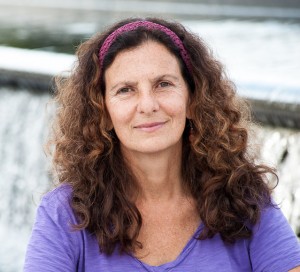 Cheryl Pallant has four published poetry books, most recently Continental Drifts (Blaze Vox Books) and Morphs (Cracked Slab Books), four chapbooks, and the nonfiction book, Contact Improvisation: an Introduction to a Vitalizing Dance Form (McFarland and Company). Poetry, fiction, and nonfiction have appeared in numerous print and online journals throughout the U.S. and abroad in places like This Land Press, Fence Magazine, All Things Healing, and in anthologies like Hope Beneath Our Feet (North Atlantic Books) and Introduction to Prose Poetry (Firewheel Editions). Her article on Korean shamanism was published in Shaman’s Drum. She won the Theresa Pollak Prize for Excellence in Writing, was Bechtel Finalist for Teachers and Writers Magazine, and twice received an NEH in partnership with Richmond Arts Council. She teaches writing and dance at University of Richmond and previously taught at University of Tulsa in Oklahoma and Keimyung University in South Korea. She leads her workshop, Writing From the Body, around the country and abroad and does energy healing through The Wellness Space in Richmond, Virginia. To learn more about the artist visit www.cherylpallant.com.
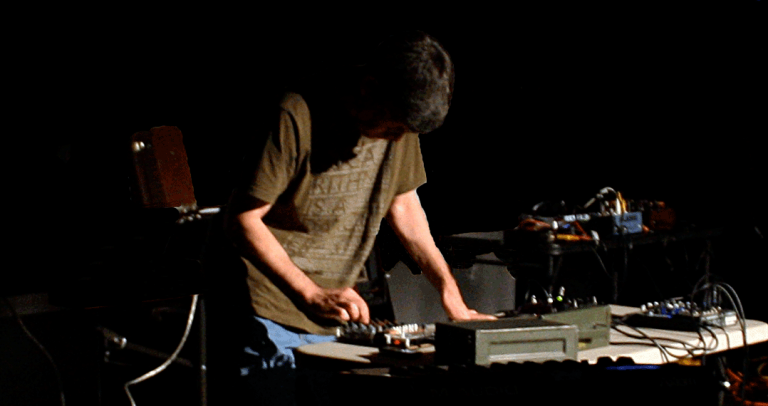
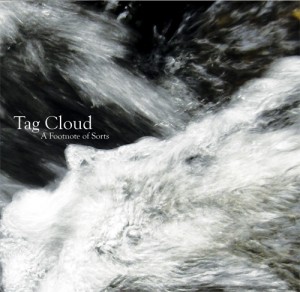
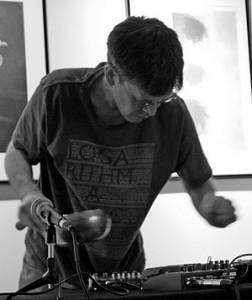 Chris Videll performs as Tag Cloud, which started in 2009 as a series of obscure experiments with field recordings and has come to include analog electronics, fx, cheap keyboards, metal percussion, shruti box, etc. Best described at this point as “electroacoustic sound sculpture and carpets of drone”. In addition to his solo work, Videll has collaborated with BLK w/Bear as BLK Tag, worked with DC-based electronic musician Blue Sausage Infant (Chester Hawkins), founded the duos Lab Mice with Gary Rouzer and Cable Rot with Doug Stailey, and the trio Safe, Fast & Effective with Dave Vosh and Keith Sinzinger. He also plays in various ensembles featuring experimental musicians from the DC area and beyond. His music has been released on the Zeromoon label, the UK labels Front & Follow and Trace Recordings, The most recent release under the Tag Cloud name is A Footnote of Sorts, available on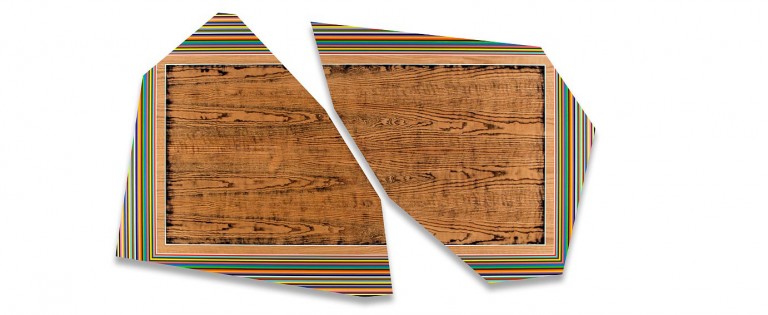

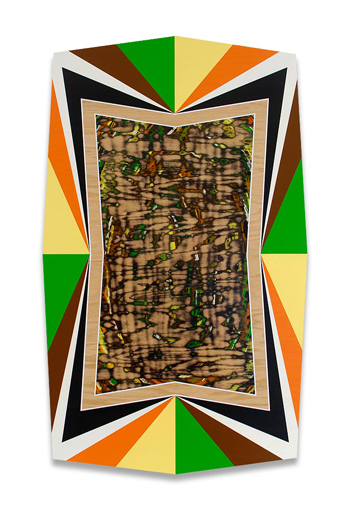
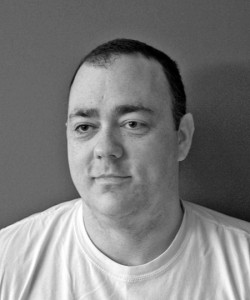 J T Kirkland has had solo exhibitions in New York, NY, Washington, D.C., Indianapolis, IN, and Richmond, VA, in addition to many curated group exhibitions across the country. In 2013, Kirkland’s work was published in New American Paintings – South Region. In 2012, he was awarded a Professional Artist Fellowship by the Virginia Museum of Fine Arts. In January 2010, Kirkland was an artist in residence at the Vermont Studio Center. Kirkland was awarded the Robert Riddick Memorial Award from the Rawls Museum, selected three-times as a semi-finalist for the Sondheim Prize for artists in the Mid-Atlantic region, and won a Cummings MFA Grant. His work was acquired by the University of Kentucky Art Museum for their permanent collection. In addition to his studio practice, Kirkland has curated numerous exhibitions, published art criticism, and served as Director of Exhibitions for a contemporary art gallery in Washington, D.C. His work is represented by Blank Space Art in New York, NY, Guthrie Contemporary in New Orleans, LA, and Adah Rose Gallery in Kensington, MD. You can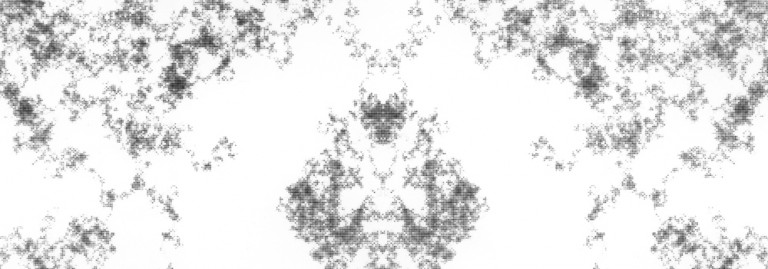
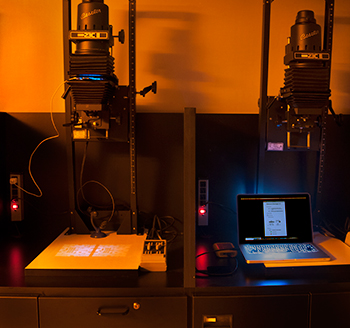
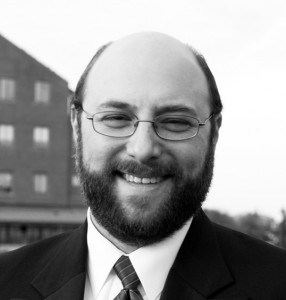 Steven H Silberg is an image-influenced, material-based, process-oriented, cross-media artist with a background ranging
from photography to book conservation. Working in image, video, and interactive installation, he engages each medium as a literalist. For him, the structure and process leading to the image is as
important as the composition and content. By highlighting the construction of the image, Silberg allows his viewers to both engage the work aesthetically and engage with the technology creating it. Created in Baltimore, his work has been enjoyed regionally, at venues including Baltimore’s ArtScape, the University of Maryland, and the Delaware Center for the Contemporary Arts; nationally, at the University of Texas, Dallas, Missouri State University and Orange Coast College in California; and internationally at the Third Beijing International New Media Arts Exhibition and Symposium. Silberg was selected as the winner of the Washington Post’s 2010 Real Art DC competition and the 2014 IMPRINT artist by Maryland Art Place. Silberg received his MFA from MICA in 2004 and his BFA from the University of Delaware in 1997. He teaches Foundations courses in Photography, Video, & Digital & Electronic media at UMBC, MICA, and Howard Community College. More of Silberg’s work may be viewed at
Steven H Silberg is an image-influenced, material-based, process-oriented, cross-media artist with a background ranging
from photography to book conservation. Working in image, video, and interactive installation, he engages each medium as a literalist. For him, the structure and process leading to the image is as
important as the composition and content. By highlighting the construction of the image, Silberg allows his viewers to both engage the work aesthetically and engage with the technology creating it. Created in Baltimore, his work has been enjoyed regionally, at venues including Baltimore’s ArtScape, the University of Maryland, and the Delaware Center for the Contemporary Arts; nationally, at the University of Texas, Dallas, Missouri State University and Orange Coast College in California; and internationally at the Third Beijing International New Media Arts Exhibition and Symposium. Silberg was selected as the winner of the Washington Post’s 2010 Real Art DC competition and the 2014 IMPRINT artist by Maryland Art Place. Silberg received his MFA from MICA in 2004 and his BFA from the University of Delaware in 1997. He teaches Foundations courses in Photography, Video, & Digital & Electronic media at UMBC, MICA, and Howard Community College. More of Silberg’s work may be viewed at 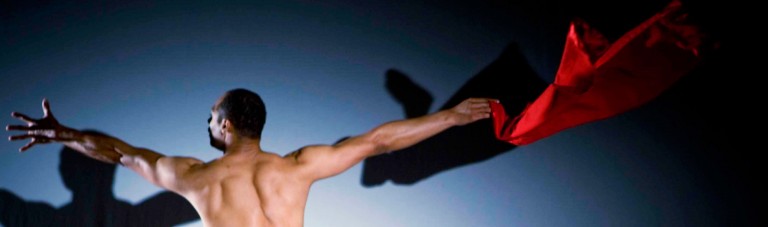
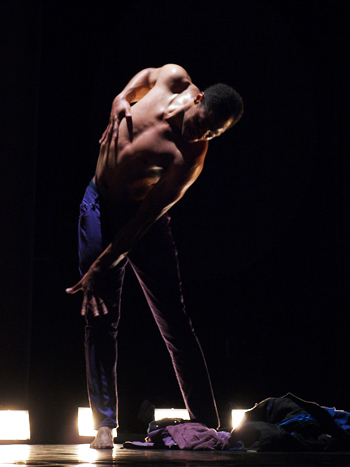
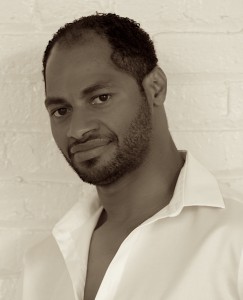 Helanius J. Wilkins, a native of Lafayette, Louisiana, is an award-winning choreographer, performance artist, and instructor currently in residence in Fort Worth, TX. He is a Visiting Lecturer at Texas Christian University in the School for Classical & Contemporary Dance. His honors include the 2008 Pola Nirenska Award for Contemporary Achievement in Dance and the 2002 and 2006 Kennedy Center Local Dance Commissioning Project Award. He founded and directed EDGEWORKS Dance Theater, a critically acclaimed all-male dance company of predominantly African-American men from 2001 – 2014. A graduate of SUNY Brockport, Wilkins earned an MFA from the George Washington University. In addition to performing the works of nationally recognized choreographers, he has enjoyed creating, presenting, and receiving commissions for choreography throughout the United States and abroad. Foundations including the New England Foundation for the Arts (National Dance Project), D.C. Commission on the Arts and Humanities, and the National Endowment for the Arts have supported his work. Most recently he has been engaging in extended residencies as a Visiting Lecturer or Guest Artist in Residence in university settings including Slippery Rock University (PA), American University (DC), and the University of Colorado – Boulder.