Home Blog Page 142

Human After All: Distinguishing the Human from the Computer by Sean Stempler

1

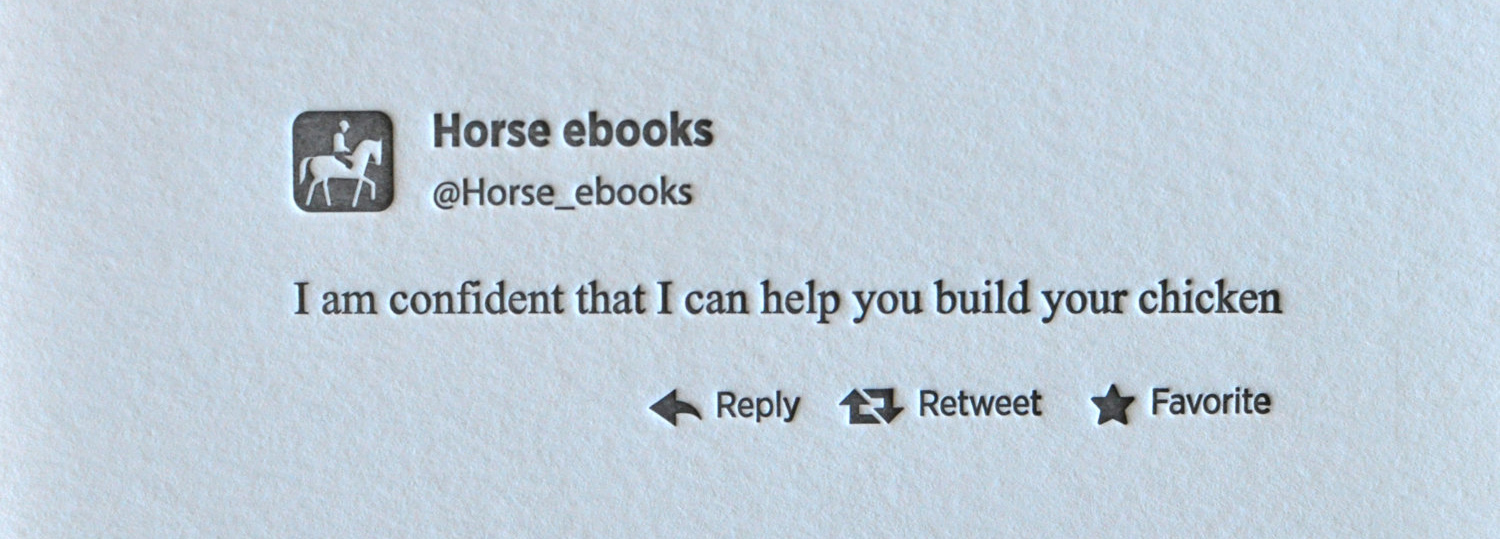
In a world where Twitter inhabitants connect with their friends, share their daily lives and identities with the general public, @horse_ebooks offered a beautiful and bewildering glimpse at the heart of the internet. It was a text bot with over 200,000 followers. The account, unquestionably an international phenomenon, transcended the boundaries of memetics and spontaneous retweets into the realm of worldwide discourse, even making appearances in academic publications. It questioned at the universe like most people gaze up at the stars while simultaneously demonstrating an absolute lack of humanity.

Almost equally mystifying was Pronunciationbook, the YouTube channel responsible for such clips as “How to Pronounce Gnocchi”, “How to Pronounce Ke$ha”, and “How to Pronounce Acai”. For nearly three years, the channel seemingly plucked words from random from dictionaries and across the Web, hitting on a strange side of popular culture by, oddly enough, providing standard English pronunciations. All appeared mundane, if not a bit inhuman, until the channel released a video simply entitled “How to Pronounce 77”.

In one of the greatest revelations to which the internet has ever borne witness, Jacob Bakkila, creative director at Buzzfeed, and Thomas Bender, formerly vice-president of product development at Howcast, have stepped out of the shadows to reveal the fruits of nearly three years of work. When did this happen? The two most bizarre fusions of human insight and mechanical constraint ever released upon Earth were not, in fact, products of a mysterious and ever-evolving Internet, but the workings of a couple of guys who asked the most brilliant and relevant existential question of our times: how do we distinguish computer from human.

The answer is harder to arrive at than we once may have thought; anonymity in writing is far easier to come by in the modern age than ever before. Physicality has become a non-essential quality of things in our world, reflected in our increasingly apparent lack of understanding of the real impacts of the internet. This uncomfortable unknown is what led tens of thousands of people worldwide to presume that @horse_ebooks was nothing more than an automated piece of script trawling the web for random snippets of text, that its philosophical ramblings were the miraculous products of chance and interconnectivity of communication.

Turing Test be damned; @horse_ebooks has proven more of a threat to the tangibility of humanity than any supercomputer AI. That’s the remarkable elegance of the project: dredging up the thematic core of sci-fi works from Asimov’s novels to The Matrix, shouting to the universe that something just doesn’t make sense. The very notion of machines challenging our cognitive superiority and human spirit makes us very uncomfortable. Inverting this fear forms the basis for Bakkila and Bender’s pieces, which ask us if we can distinguish computer-like speech from something actually generated by a computer, a sort of reverse-Turing Test. As it turns out, humans are exceptional at masquerading as machines attempting to be human.

PronunciationBook factors smoothly into this examination by stabbing at the universal desire to find patterns in chaos. Though the esoteric YouTube channel never received the same sort of ontological attention as @horse_ebooks due to its usage of a distinctly human voice, it nonetheless built a massive following of investigators determined to uncork its bottle of mysteries. A firestorm brewed with the release of the aforementioned countdown videos, beginning with “How to Pronounce 77”’s chilling proclamation that “Something is going to happen in 77 days”, followed up by the downright disturbing pronunciation of 76, which stated that “I have been trying to tell you something for 1183 days. Something is going to happen in 76 days.” Whereas @horse_ebooks didn’t fully attempt to reach humanity, PronunciationBook reflected a fusion of man and machine, the voice of a person passing on the ramblings of a random text generator.

Throughout the several-month-long countdown, PronunciationBook rapidly transitioned from these brief apocalyptic prophecies to phrases of nonsense, then to several-minutes-long narratives about intertwining character arcs and surrealist events, and finally to an unsettling weeks-spanning sonnet which waxed romantic about systems. The so-called 77 Days community online speculated about terrorist attacks, political uprisings, plots of war in the Middle East, religious movements, and a whole lot more.

Adding to the mystery, the last 20 seconds of each video culminated in a quiet orchestra of machine noise. 77 Days’ army of tech-savvy investigators developed an algorithm that decoded the whirring to produce an image. Growing day-by-day, the resultant spectrogram horrifyingly built up to a figure in a suit.

After almost three years of waiting, PronunciationBook released a video entitled “How to Pronounce horse_ebooks”, and Bakkila and Bender acknowledged the accounts as conceptual art pieces. The video further complicated matters by revealing the pieces as viral marketing for Bakkila and Bender’s upcoming choose-your-own-adventure game, Bear Sterns Bravo. While this felt like a mundane result, Bear Sterns Bravo continues the pair’s investigation into systems and modern paradoxes. The disturbing figure from the spectrogram was eventually revealed as the antagonist of Bear Sterns Bravo, Bear Sterns CEO Jackie Dalton. Dalton constantly wears a stock ticker in front of his eyes, becoming one with his capitalistic machine.

Reactions to the reveal were, needless to say, diverse. Everything from unrestrained outrage to bewilderment and assenting claims that the connection was somehow obvious the whole time burst forth from all corners of the internet and major publications like the New Yorker. Chief among the choruses of questions and thoughts about the two projects was, strangely enough, a classical one: were the two accounts “real” art?

The avant-garde has consistently been deemed trivial and worthless by contemporaries, only to be hailed by historians as unappreciated brilliance. Whether these works will end up being enshrined in the pantheon of artistic advancements remains to be seen, but their contemporary value as art, in my eyes, is incredibly strong. Even if the only thing @horse_ebooks ever did was make a reader chuckle, and all PronuncationBook managed to do was spawn an even more notable parody account, PronunciationManual, both projects captured an element of the zeitgeist of the 2010s. Somehow, the mad ramblings of both masked men hit just the right notes in just the right way as to make it all mean something. Even if they angered you, they angered you for a reason.

The most shocking truth that the project revealed is more deeply unsettling than anything the accounts ever released: the answer to our first question, how we go about distinguishing computer from human, might be completely irrelevant. “Everything happens so much” doesn’t need to come from either man or a machine to be such a uniquely thoughtful 26 characters.

Sean Stempler

Sean Stempler is a rising Junior and an English and Journalism student at Georgetown University. He is Managing Editor for the Georgetown Independent, as well as a staff writer and editor on other publications like the Anthem and Georgetown Radio’s The Rotation. In his spare time, he freelances for several online publications, including recent work for Game Cupid. His work is collected in an online portfolio, seanstempler.wordpress.com.

This article is a finalist in the 2014 DC Student Arts Journalism Challenge, an annual competition designed to identify and support talented young arts writers.
Take Me to the River By Richard L. Dana

At the end of May I’ll be going to Montevideo to participate in a collaborative project with six Uruguayan visual artists. Coming with me will be eight artist friends, fellow members of Take Me to The River (TMTTR), an international artists’ collective, of which I am a co-founder and project director.

TMTTR was born in 2002 when my friend Mansoora Hassan, who was living in Cairo at the time (but calls DC home), was asked by the Egyptian Minister of Culture if she would like to arrange an exhibition there. Mansoora invited me and two other DC-based artists (Judy Jashinsky and Betsy Stewart) to exhibit with her. Because we are four very different artists, we needed a theme to make the exhibition cohere. After much discussion, we decided the theme should be water. Then, at a meeting in my studio before the exhibit, Al Green’s song Take Me To The River was playing in the background. Great song! About water. The Nile and the Potomac. One thing led to another, and the Cairo exhibition grew to be eight artists: four Americans and four artists from other countries living in DC. The Cairo exhibit became the first expression of the artists’ collective, Take Me To The River.

Now there are 16 permanent members of TMTTR, including Joan Belmar, John Brown, David Carlson, Eglon Daley, Victor Ekpuk, Mansoora Hassan, Deirdre Saunder, Betsy Stewart, Andres Tremols, and me. We’ve staged projects in Cairo, Washington, DC (twice), Pretoria, Wichita Falls (Texas), Istanbul, and Aix-En-Provence. Projects are in the planning stages for New Orleans and Sao Paulo.

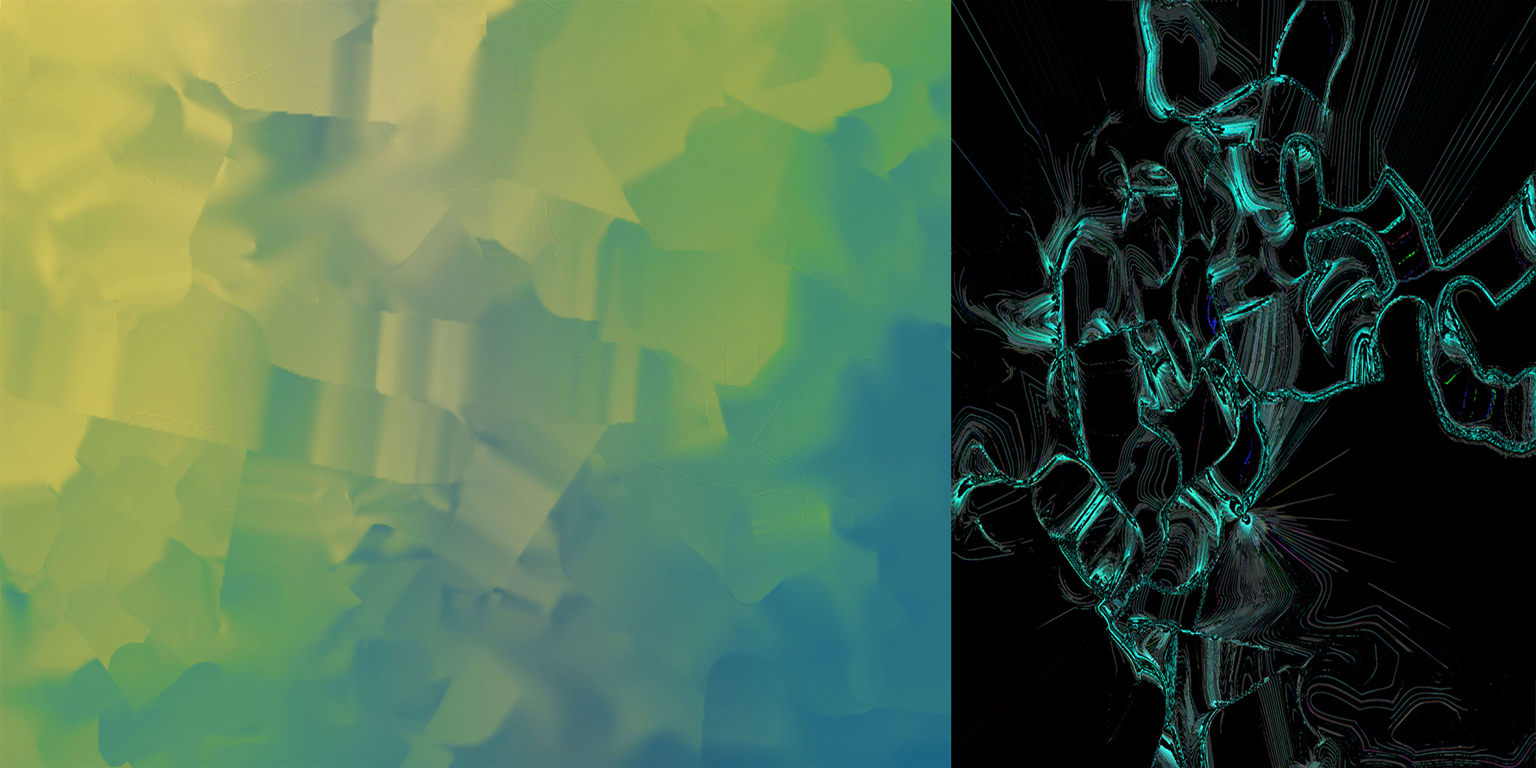
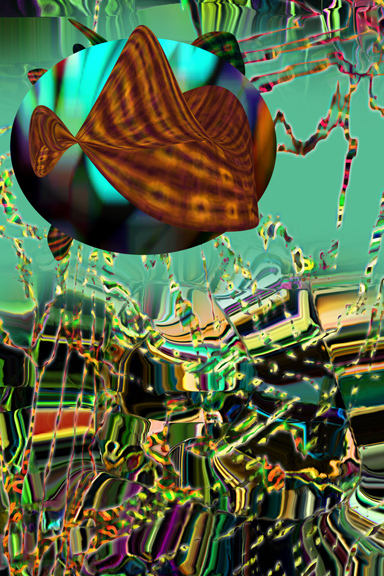
SHINY-TOXIC-REEF-EVENT
Shiny Toxic Reef Event by Richard L. Dana, 2014

The upcoming Uruguayan collaboration came about through my friend Vivienne Lassman, an independent curator here in DC, who is also a close friend of Jessica Racine-White (daughter of dearly departed DC art patron Herb White). Jessica, who has a second home in Montevideo, mentioned to Vivienne that she wants to get more involved in the Uruguayan art scene. Vivienne, who has served as a TMTTR curator in previous projects, told Jessica: “You’ve got to get TMTTR to do a project in Montevideo.” From that suggestion, to help make it happen, Jessica identified for us a group of six Uruguayan artists who already work together in the same workshop. Over e-mail, a dedicated Facebook site, and phone calls, we devised a collaborative project with several parts.

First, the fifteen artists were divided into five groups of three; each group has a mix of Uruguayan and TMTTR artists. Through a dialogue and the exchange of imagery via the internet, each group is creating a triptych, all of which should be more or less completed before TMTTR artists arrive in Montevideo. When I and the other TMTTR artists arrive in Montevideo, we will work with our Uruguayan colleagues for ten days to create a large-scale collaborative work; each artist will have a wooden surface of the same size to work on. The artists will be looking at each other’s work in progress and visually jamming, as musicians do. The Uruguayan artists have arranged for an exhibition of the project’s work at one of Montevideo’s most prestigious art venues -The Iturria Foundation.

I come to the art world from an international affairs perspective. My first career was as an international economist, specializing in technology transfer issues for a variety of DC-based consulting firms, and as a Soviet affairs expert. My last “real” job was as a civilian employee for Air Force Intelligence, where I was the current intel expert on Soviet / East European political, economic, and ground force issues. In that job I worked deep in the Pentagon in a vault. But all during school, college, and afterwards, I painted feverishly in my free time, and morphed into a full-time artist in the early 90s.

For more than a decade, TMTTR has given me wonderful opportunities to travel and present my work. In creating with people in these other places around the world I become more immersed in a location’s culture, and gain more understanding of it. TMTTR is personally important to me because it is a bit like a family, with members like brothers and sisters. We don’t always see eye to eye, and conversations can get lively, but in the end we move forward together into a new experience.

When creating art alone in my studio I must take it on faith that the long studio hours will result in some positive contribution, however small, to the world I live in. Through Take Me to The River projects, even again as the contribution may be very small, I feel as if I am more directly and concretely doing a good thing, promoting understanding and harmony between people around the world. The upcoming project in Uruguay will be the first TMTTR project in South America, and the first to feature collaborative work with other artists, something we are all very excited about.

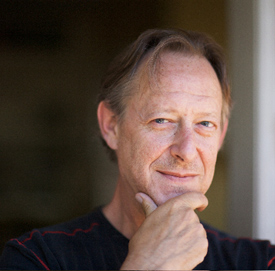
Richard-Dana-275Richard L. Dana is a self-taught artist who creates art, both large and small scale, in a range of media, including digital art, mixed media painting, drawing, and installations. He has exhibited extensively in the United States and internationally in 25 one-person and over 100 group exhibitions. Selected venues in the United States include the Corcoran Gallery of Art (Washington, DC), the Chrysler Museum (Norfolk VA), the Octagon House Museum (Washington, DC), the Drawing Center (New York, NY), Tribes Gallery (New York, NY), the Print Center (Philadelphia, PA), the International Monetary Fund (Washington, DC), Maryland Art Place (Baltimore, MD), the Washington Project for the Arts (Washington, DC), the Wichita Falls Art Museum (Wichita Falls, Texas), and the Troyer, Fitzpatrick, Lassman Gallery (Washington, DC). Internationally Mr. Dana has exhibited in museums, galleries, and biennials in the following countries: Belgium, Brazil, Egypt, Germany, Italy, Japan, Kazakhstan, Morocco, Russia, Senegal, South Africa, Spain, Taiwan, Turkey, Uzbekistan and Vietnam.

Immersion, a project of Take Me to the River, featuring fifteen artists from seven countries, will open on May 30th, 2014 at the Iturria Foundation in Montevideo, Uruguay.


Full Fathom Five by Liz Lescault

My and Alison Sigethy’s organic sculptures will be shown together in May in an exhibit titled “Full Fathom Five” at VisArts’ Gibbs Gallery in Rockville. This is our second collaboration, allowing us to revisit and expand on our previous work. Our first collaborative exhibition, “Fathom,” took place in May 2013. In this exhibit, as in the last, we’re creating an immersive gallery experience for viewers, including an interactive soundscape.

Alison and I share similar aesthetic sensibilities. Although we work in different media, Alison primarily with glass and myself with clay, both of us create sculptural forms that relate to the natural world in a non-literal way.

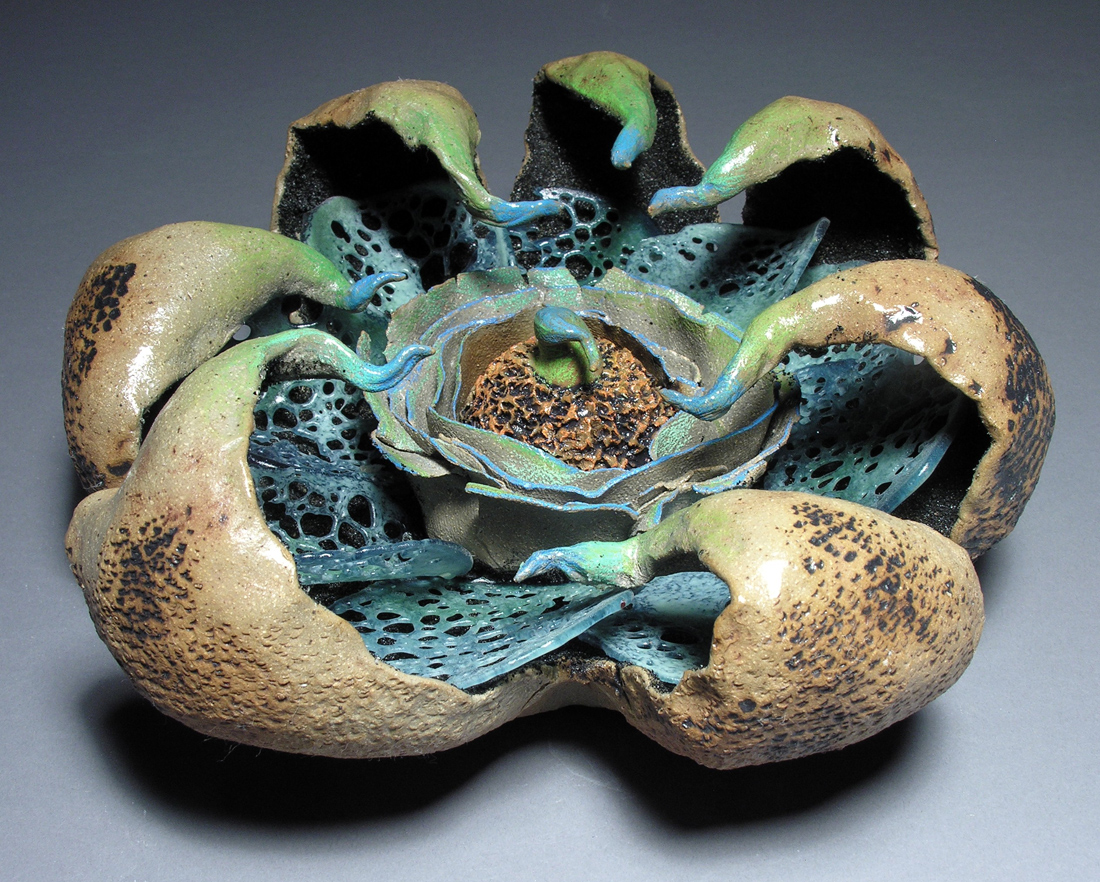
A Lure, 2013, Lescault and Sigethy, 5 inches x 11 inches
ALure, 2013, Lescault and Sigethy, 5 x 11 inches

My sculptures combine visual elements from nature, including imagery from the ocean depths, the detritus of the forest floor, and microscopic life. My goal is to create work that can be simultaneously sensual and scientific, beautiful and ominous. Alison’s glass forms are also organic, and abstract. Her pieces embody contradictory ideas of beginning and end, rebirth and decay, without preference. Her goal, she’s told me, is to create dialogue about the continuum of life and our place in it.

The idea to collaborate was spontaneous. There was little forethought, just an on the spot mention of the possibility and an immediate acceptance of the idea. Our collaboration was seamless, and in many ways simple. Throughout we were of the same mind.

The process we used for creating our collaborative sculptures involved each of us developing a form or forms and turning them over to the other to complete. Alison gave me a multitude of small glass forms; delicate, lacey and colorful… very different from my own work. Viewing and handling the work was a pleasure in and of itself and it piqued my fancy. The forms I created in response were designed to hold her work as if the glass pieces were growing or blooming out of my clay form.

Alison and I involved John Vengrouski, a sound designer, to create a sound environment for our work to exist in. John regularly creates soundscapes for galleries, theater, dance and film, and the song movements John created are, at core, tone poems… emotional mood setters. Their intention is to create a sense of reverie. As a collaborative work, they are also pointedly intended to complement a set of visual pieces, not replace them or reduce them in the audience’s attention. Our intention is to create a true multi-level collaboration engaging the audience’s attention and focus, and I’d love to hear what you think of the exhibit.

Liz Lescault and Alison Sigethy, Full Fathom Five: Going Deeper, April 30-June 1at VisArts at Rockville, 155 Gibbs Street, Rockville MD. The opening reception is May 9 from 7-9.

Liz Lescault is an accomplished ceramic artist known for her vessel forms and luscious glazes. Liz lived in Botswana and Lesotho where she studied traditional African ceramic techniques and in France where she studied watercolor. A selection of her work is part of the permanent collection of the National Museum of Botswana.

Liz has exhibited widely in the Washington Metro region both in solo-exhibitions and group shows. She was awarded a 2012 Maryland State Arts Council Individual Artist Award. In 2013 her work was selected for the “Sculpture Now 2013” Exhibition curated by Florcy Morisett and for “Siting Presence” curated by Sarah Tanguy. She also organizes and curates art exhibitions, and teaches art in her home studio. www.lizlescault.com

Featured image is: Blue Peristome, Alison Sigethy and Liz Lescault, 2013, Ceramic, 8×13 inches

Cafe Society by Jack Hannula

Yesterday I spent several hours working on one of my current projects, a travel-guide for painters. I do most of the work at my in my condo-studio in Adams Morgan and at a nearby café, Tryst. I moved to Washington D.C. in 1991 with my son, who is now 27 years old, and for fifteen years I worked in the federal government after having spent a lifetime as a practicing landscape architect, including seven years as a professor. Until relatively recently my son, Karl, lived with me. Raising Karl in DC allowed me to develop deep connections with this lovely and vibrant city.

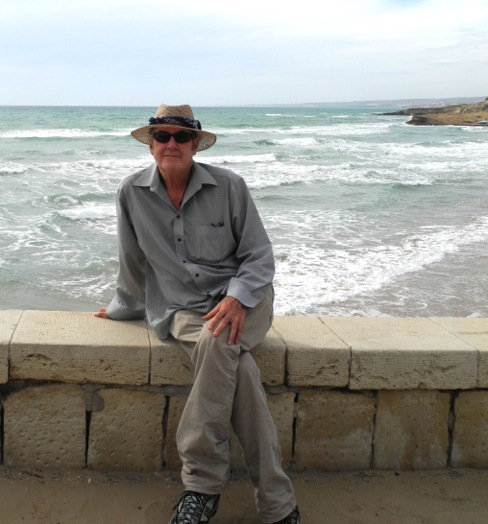
The author in Italy.

Having trained in architecture and environmental design, many of my paintings are landscapes, or cityscapes. For nearly twenty years I’ve been traveling to Europe with friends for extended painting travels. Over the years I’ve found the best places to paint, and my current project is assembling paintings of the Italian and French countryside for a travel-guide for painters. My first publication will be entitled An Artists’ Odyssey: Painting Sicily.

I’ve been working on this project for four years, including five painting and research trips to Italy and Sicily. While on those trips, I identified two-dozen extraordinarily scenic towns and villages for touring and landscape painting. My lavishly illustrated book describes how to get there, and where to stay and paint.  My writing will allow me to share my travel and art experiences in Italy and France.

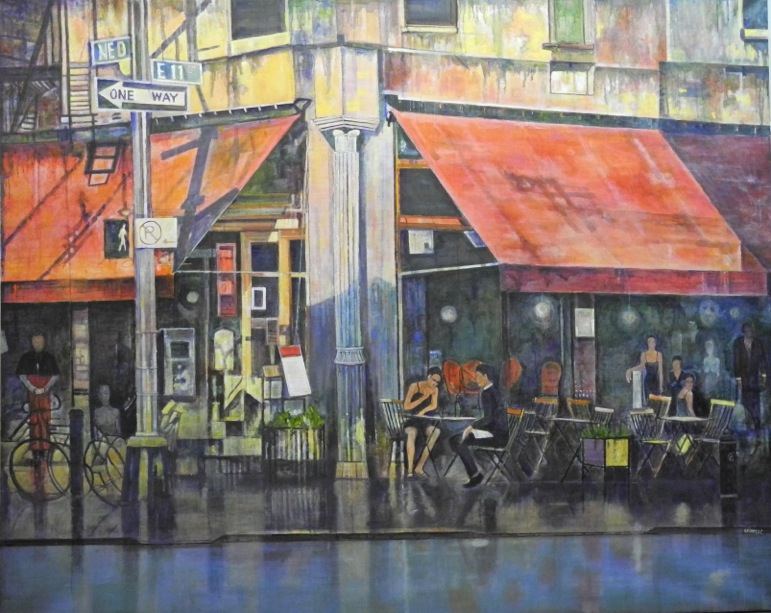
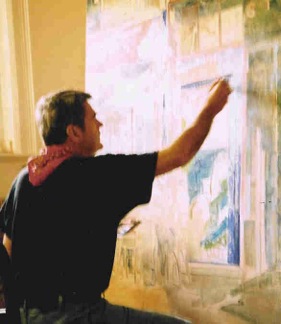
I spend some time each week working on new paintings, unrelated to the travel guide. Most of my painting time goes into my large, almost mural-sized, city-scenes and streetscapes, for which I am best known. The City of Washington purchased a collection of my scenes for its public art collection, and those paintings now hang in the offices of City Councilmen, including Councilmen David Catania and Jim Graham. I’ve been painting city-scenes consistently since arriving in DC more than twenty years ago, and I estimate I’ve painted 75-100 total. Many are now historical, the buildings having been torn down or businesses changed. I believe I am the only active artist in DC who focuses primarily on city scenes.

I’ve been active in the DC arts community as an exhibiting painter for a while now, including sixteen years as a member of the Arts Club of Washington, two of those years as its President (2011 and 2012).

You can now see some of the paintings I’ve completed over the past half dozen years hanging at Tryst Café in Adams Morgan right now. My show, titled The Café Society II, is showing until May 6, 2014.  What I enjoy the most about painting is the act of painting, a time when I enter “the zone”, a state of joy and clarity.

Jack HannulaJack Hannula began a life of art with childhood inspiration and instruction from his artist-teacher mother. After earning a B.S. in Environmental Design from the University of Massachusetts/Amherst, Jack went on to receive a diploma from the Conway School of Landscape Design and in 1977, a Masters in Landscape Architecture from Harvard University’s Graduate School of Design where he won the prestigious Webbel Prize for “excellence in landscape design”.

Jack is accomplished in a variety of media including drawing, watercolor and oil. He is currently writing a book, Artists’ Odysseys: Painting Sicily & Italy. Jack is also a poet, writing in the Romantic style (www.LandscapesAndSonnets.com).

Jack has held professorships at the University of Georgia and the Universite’ de Montreal; and also served as a Peace Corps volunteer in Kurdistan, Iran where he designed parks and did landscape art. Jack has always considered landscape design a form of “living art” and the ultimate “installation art”.

Today, Jack resides in Washington, D.C. where he was President of the Arts Club of Washington (2011 & 2012), and where he also served as Exhibit Committee Chair, officer and member, Board of Governors since 1998 (www.artsclubofwashington.org).

Jack was also a member of the International Artists Support Group (IASG) where he served as President from 2000 – 2002. He has exhibited his art extensively in Washington; internationally – in India, China, Russia and Egypt: and in New York at the Kushnir-Taylor Gallery and Amsterdam-Whitney Gallery (2004-2007). He currently exhibits his art at the Arts Club’s Spilsbury Gallery in downtown Washington. Jack was the Spilsbury Gallery’s founder (2007). His vibrant city scenes and landscapes, large and small, are in private and public collections. Much of his art may be viewed on his website: www.jackhannula.com, and on his Facebook and LinkedIn “Artist” Pages.

The View from Baoying Window by Chris H. Lynn

I consider myself a moving image maker. My work is primarily based on landscapes and aspects of the quotidian. My purpose is to capture some sense of the beauty, poetry and mystery of the mundane with each work I create. The mundane is a consistent inspiration to me.

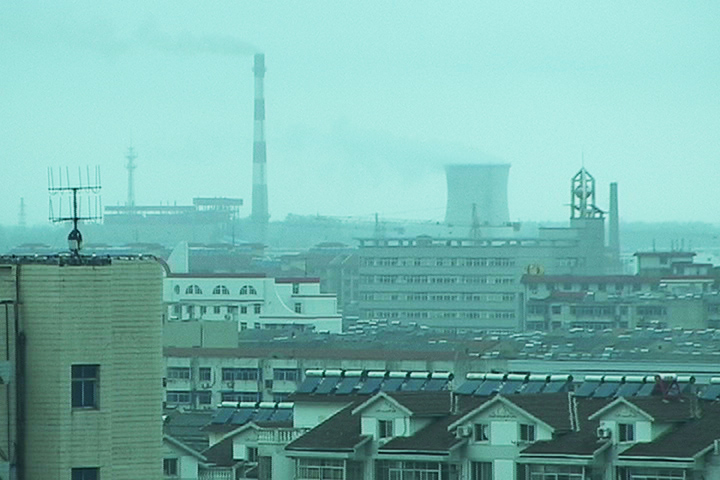
My most recent project, Baoying Window, will be screened at the historic and prestigious Anthology Film Archives in NY City on May 13, 2014. Baoying Window is a digital film that features multiple window views of a city. Baoying is located in the Jiangsu Province of China. I was sent there on a teaching assignment with no intentions of filming in this remote region, but the atmosphere created an inspiring impression. The industrial landscape coupled with the lack of a clear sky conveyed a distinct, spectral, quality I wanted to capture in film.

The images and sounds of Baoying Window document passing storms and rain during a few summer afternoons. The predominant images are of a nuclear power plant in the distance, drops of rain on the window screen and a few interior shots of roses in a hotel room. Each sequence ends with a slow dissolve; within a sequence, each frame’s composition is important because it creates a rhythm within the work as a whole. The aural landscape consists of strong winds howling infrequently, children’s voices echoing in the street, car horns, and the minimal sounds of the interior space.

A still from "A View from Baoying Window", a film by Chris Lynn
A still from the movie, “Baoying Window”, by Chris H. Lynn

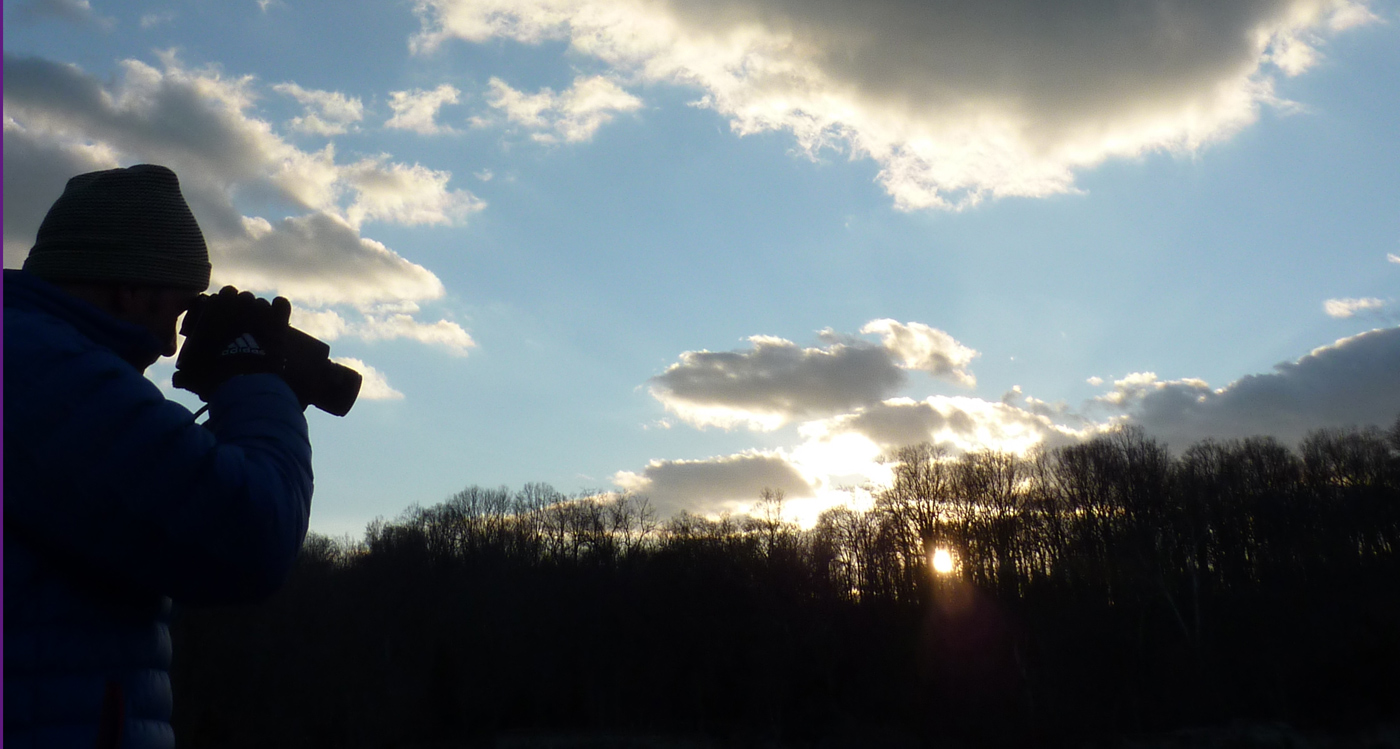
I chose to shoot this piece digitally because I can record a lot of footage at less expense that way.  The audio was captured with the camera’s built-in microphone. The overall shooting took a few days, but the editing process required a number of weeks. The digital format allows me to edit and reconstruct images and sounds in a musical manner. Though I have worked on projects with deadlines in the past, Baoying Window wasn’t created on a deadline.  As an educator, I am used to deadlines, but prefer to set my own time limits with certain projects of my own.

I feel that landscapes are the most fitting subjects to explore because of their suppleness. My interest is in exploring the subtle, inner rhythms of light and sound in the environment (urban or rural) (exterior or interior) and how these rhythms can be presented audio visually. Within the landscape framework you are able to express moods, emotions, and hopefully transformative experiences. Landscapes can also serve to illustrate time passing, and the quiet simplicity of drifting moments and their unassuming rewards.  The viewer is free to participate and create any construct (narrative) they wish or they can just absorb the film as it unfolds.

Filming and recording the sights and sounds of a landscape is a way for me to engage in my surroundings in a profound manner. I enjoy gazing out, observing, listening closely, and later reconstructing the environment in a new way through film and sound.  I record frequently, and consider the audiovisual art form endlessly captivating.

Recently, I have ventured into what are called ‘expanded cinema’ performances, and have worked with sound artists creating live and recorded audio-visual pieces and poetic adaptations. I am also working with sound artist Una Lee on a multipart Miniature Landscape Correspondence series.

Baoying Window will be premiered in Farewell from a Dying Star, the latest segment of The Improbable Made Probable, a roaming series showcasing contemporary avant-garde cinema curated by Lorenzo Gattorna. I’m thrilled to be included, and hope you’ll come see an upcoming screening and let me know what you think.

FilmmakerChris H. LynnChris H. Lynn is a filmmaker, sound artist, educator, and curator.  His digital images and super 8 films capture the subtle rhythms of light, movement, and sound in urban and rural landscapes. His work has been screened in a variety of venues, including the Corcoran Gallery of Art in Washington D.C, the BFI in London (UK), and the Anthology Film Archives in New York City. In addition, several of his films were added to the permanent collection of the International Streaming Festival in the Netherlands. His work will be featured in the upcoming book titled Cinema and the AudioVisual Imagination, published by I.B Tauris. Chris also curates the Experimental Film Program Urban/Rural Landscapes for the Utopia Film Festival in Greenbelt, Maryland and has curated the 2010 Takoma Park Experimental film festival in Md. He also programs films for Sonic Circuits. You can read more about his work on his blog, Framingsounds.com.